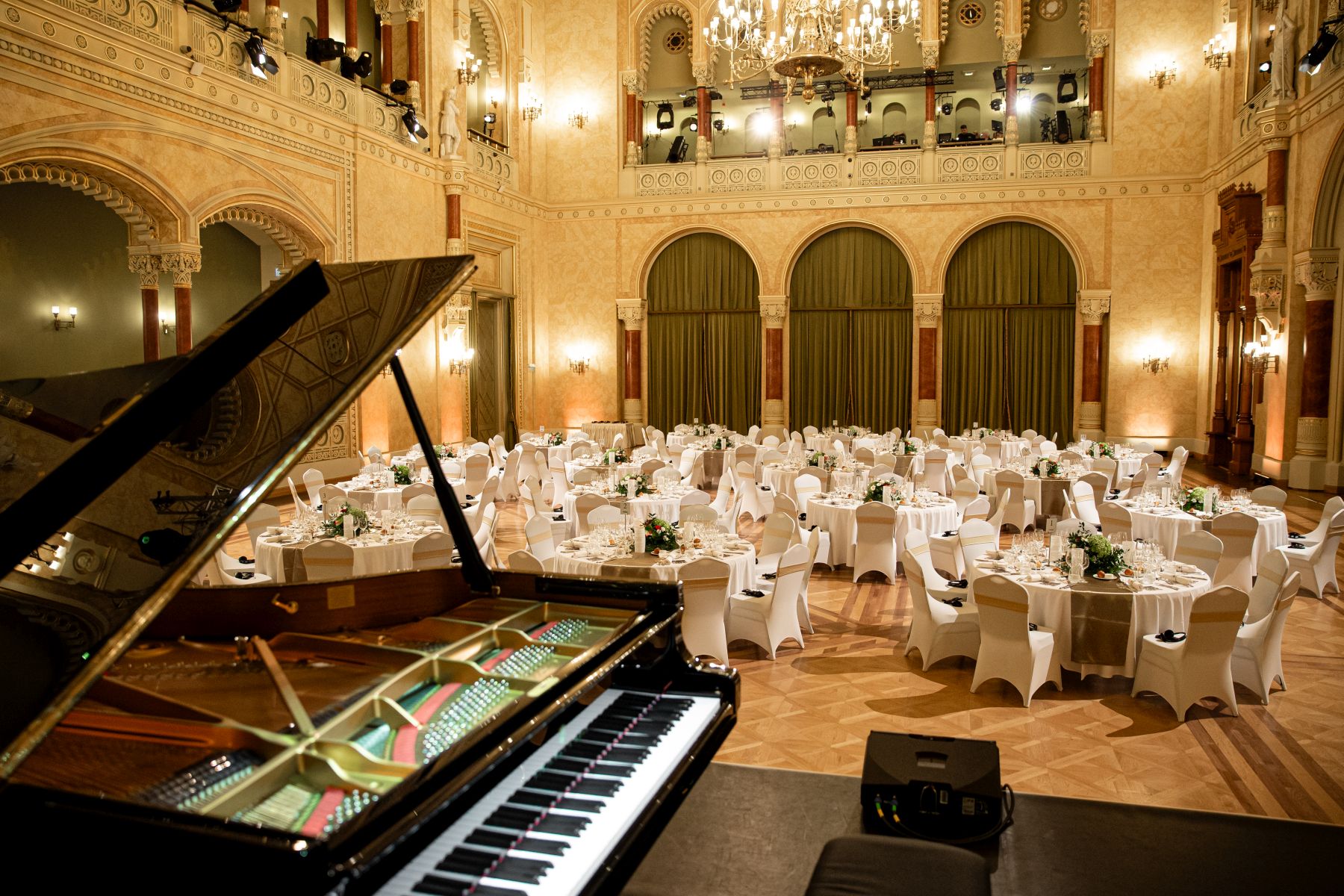
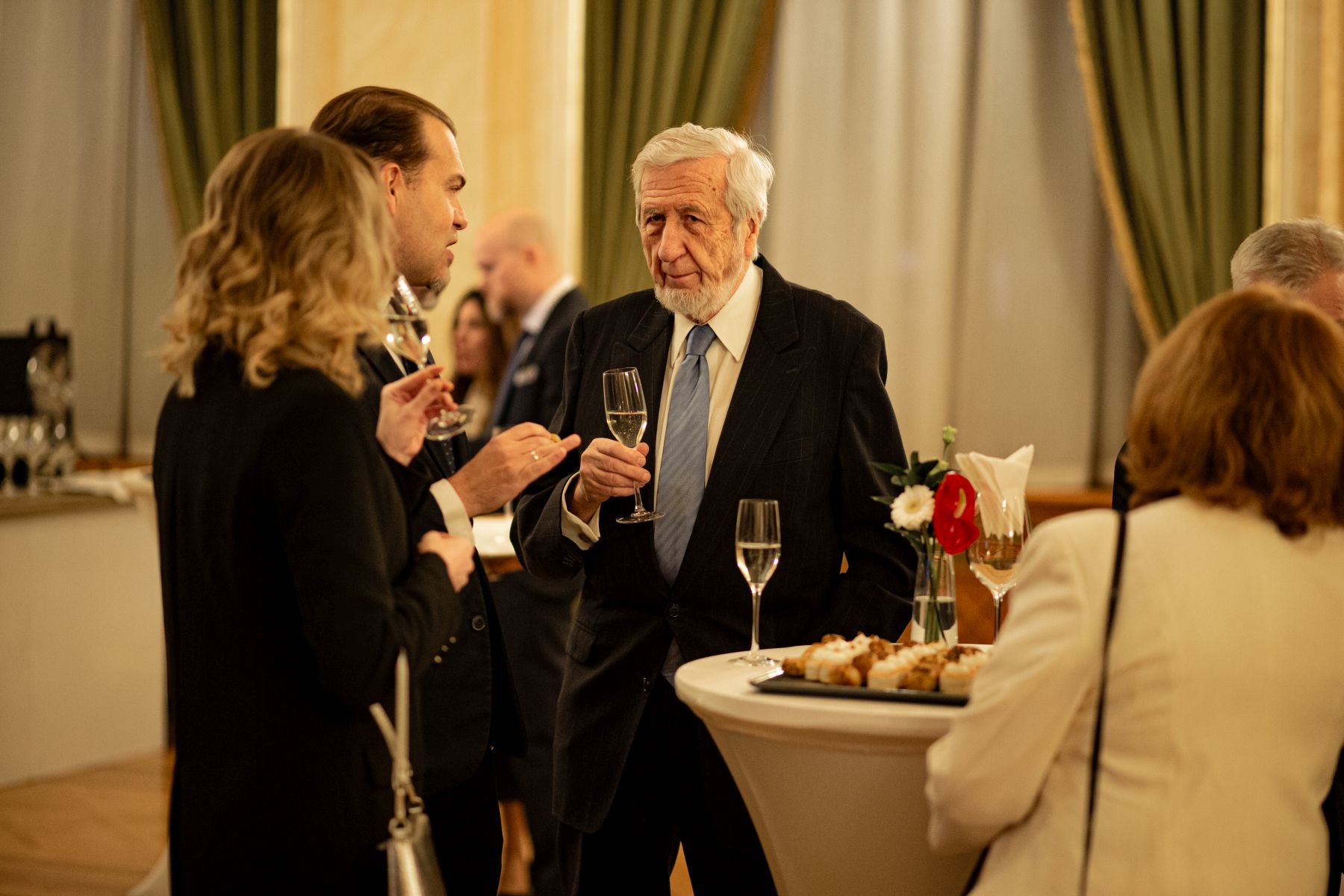
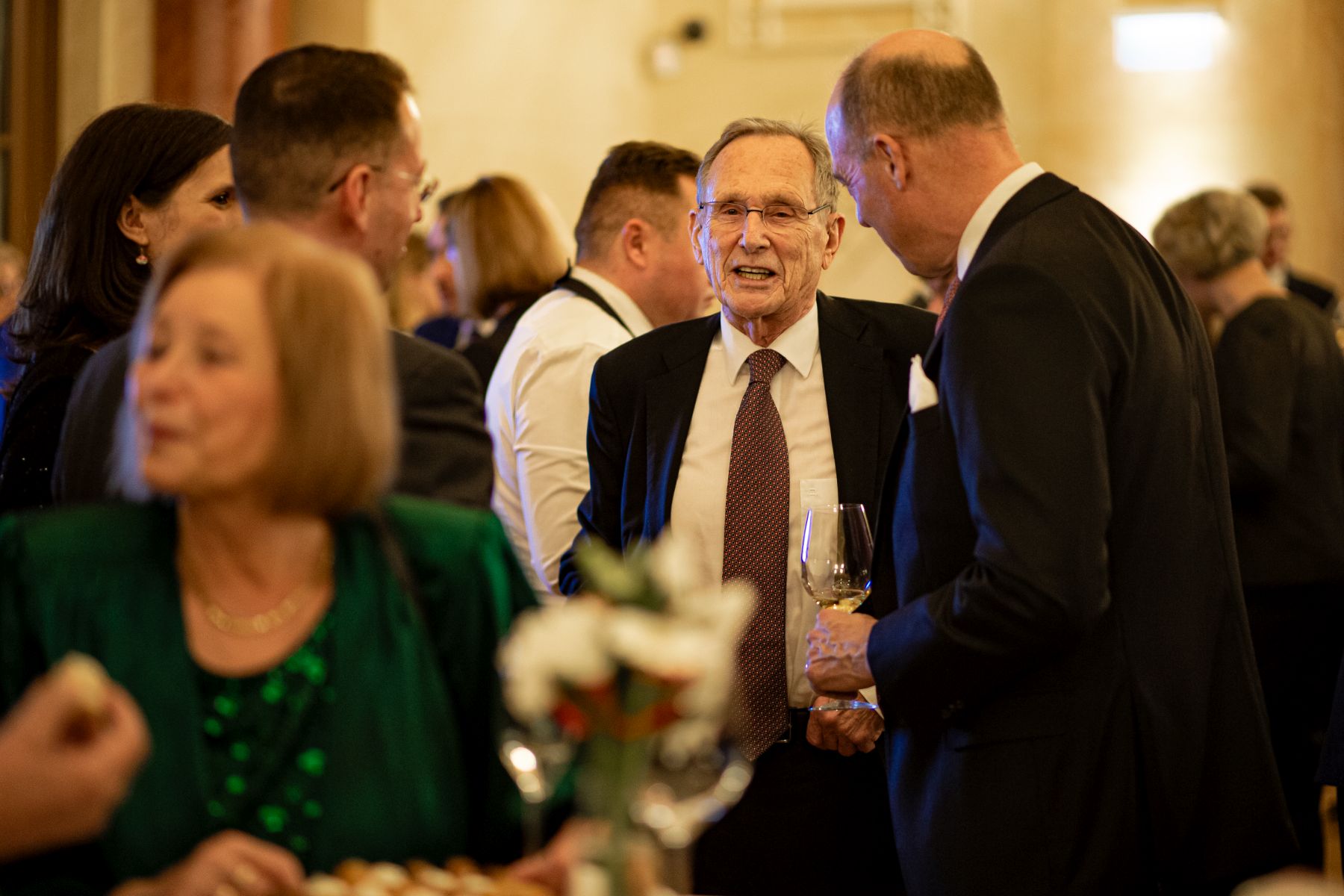
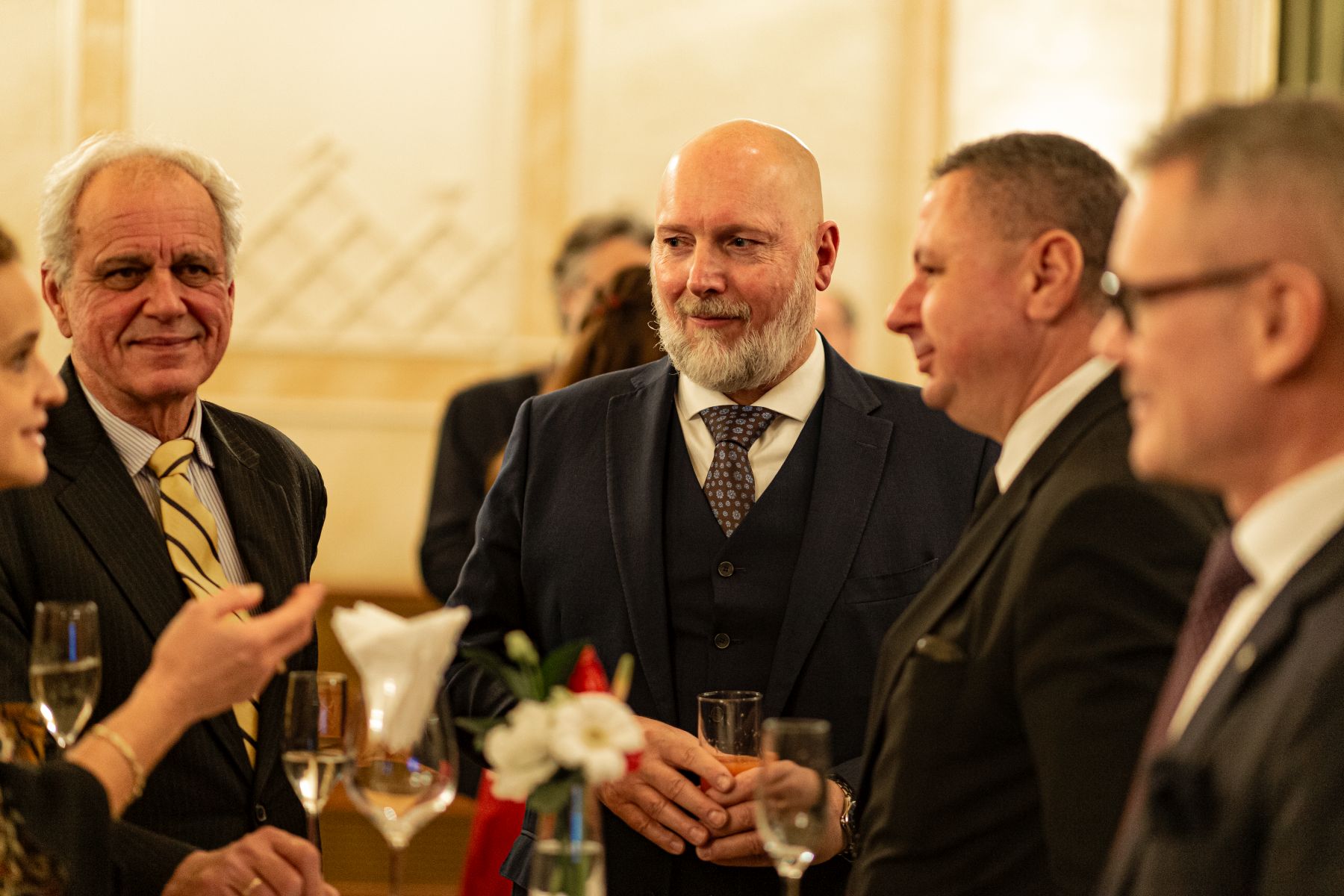
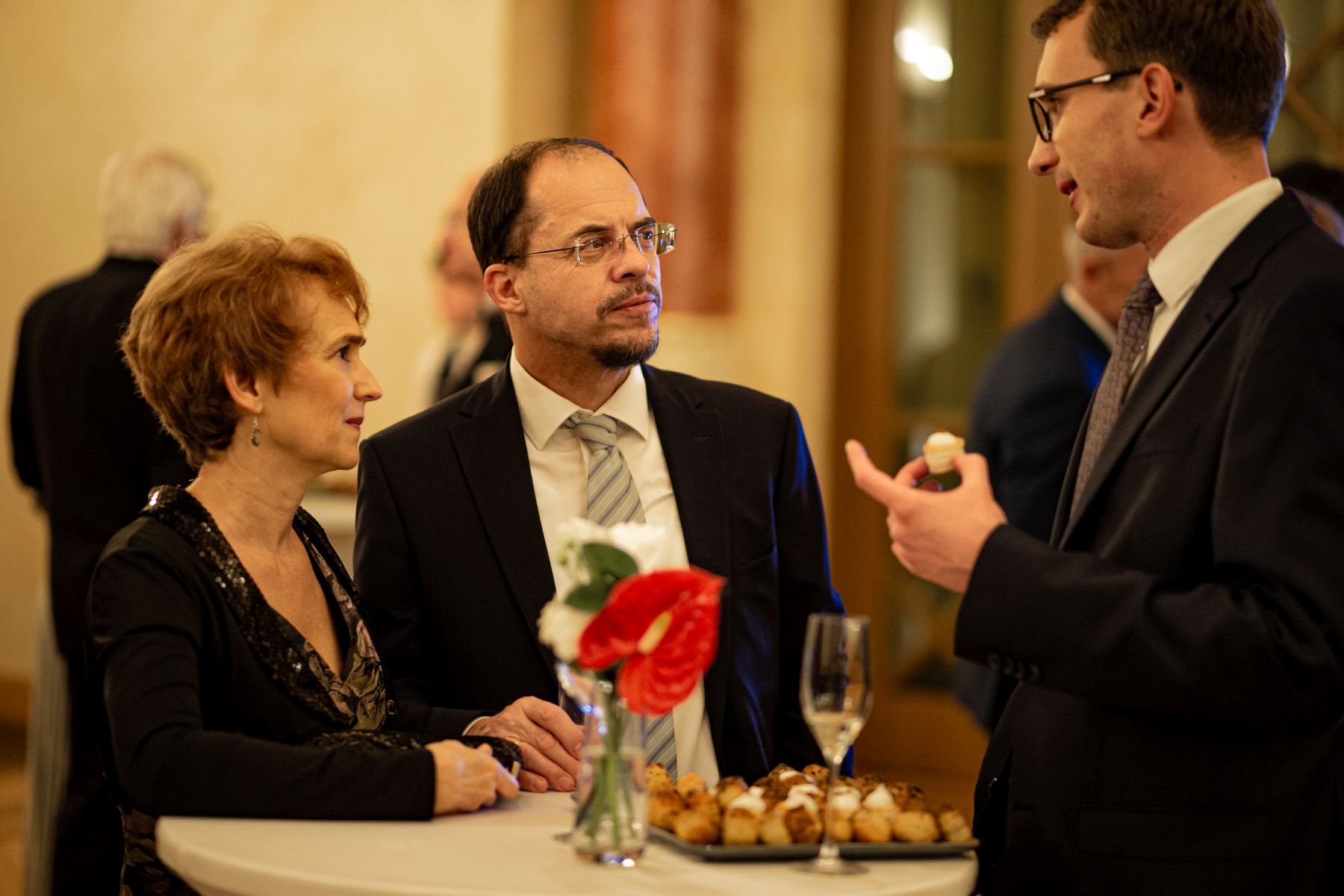
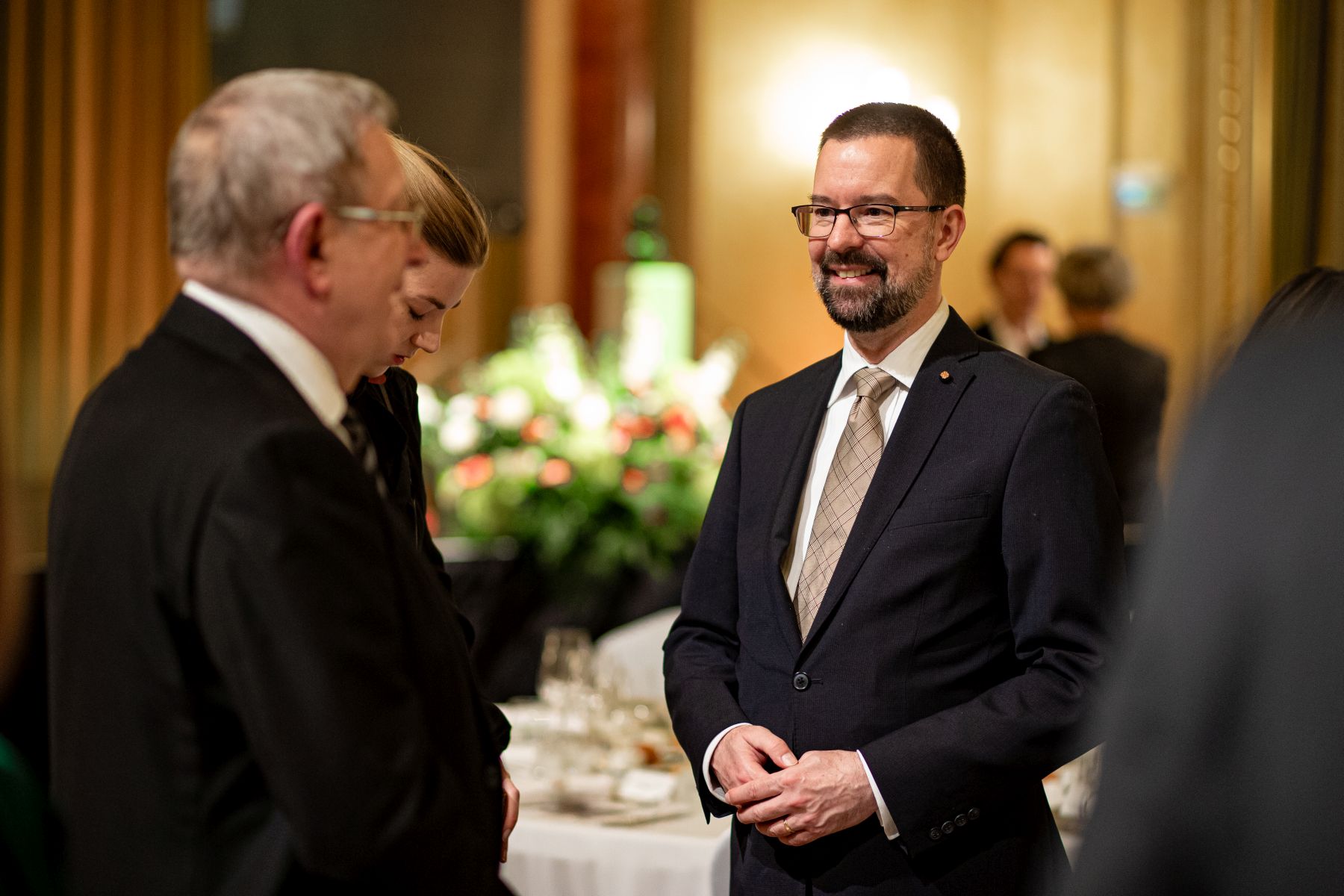
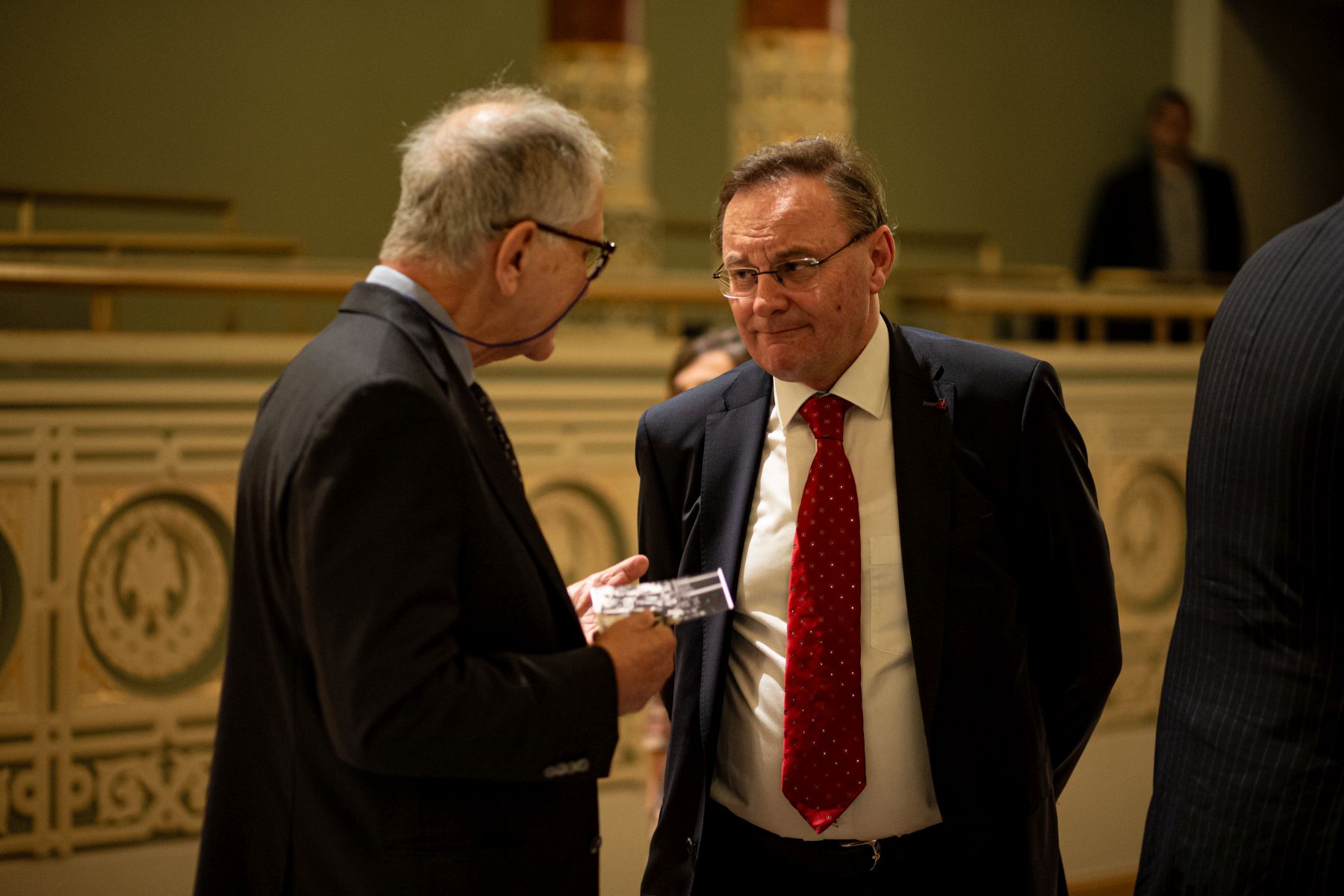
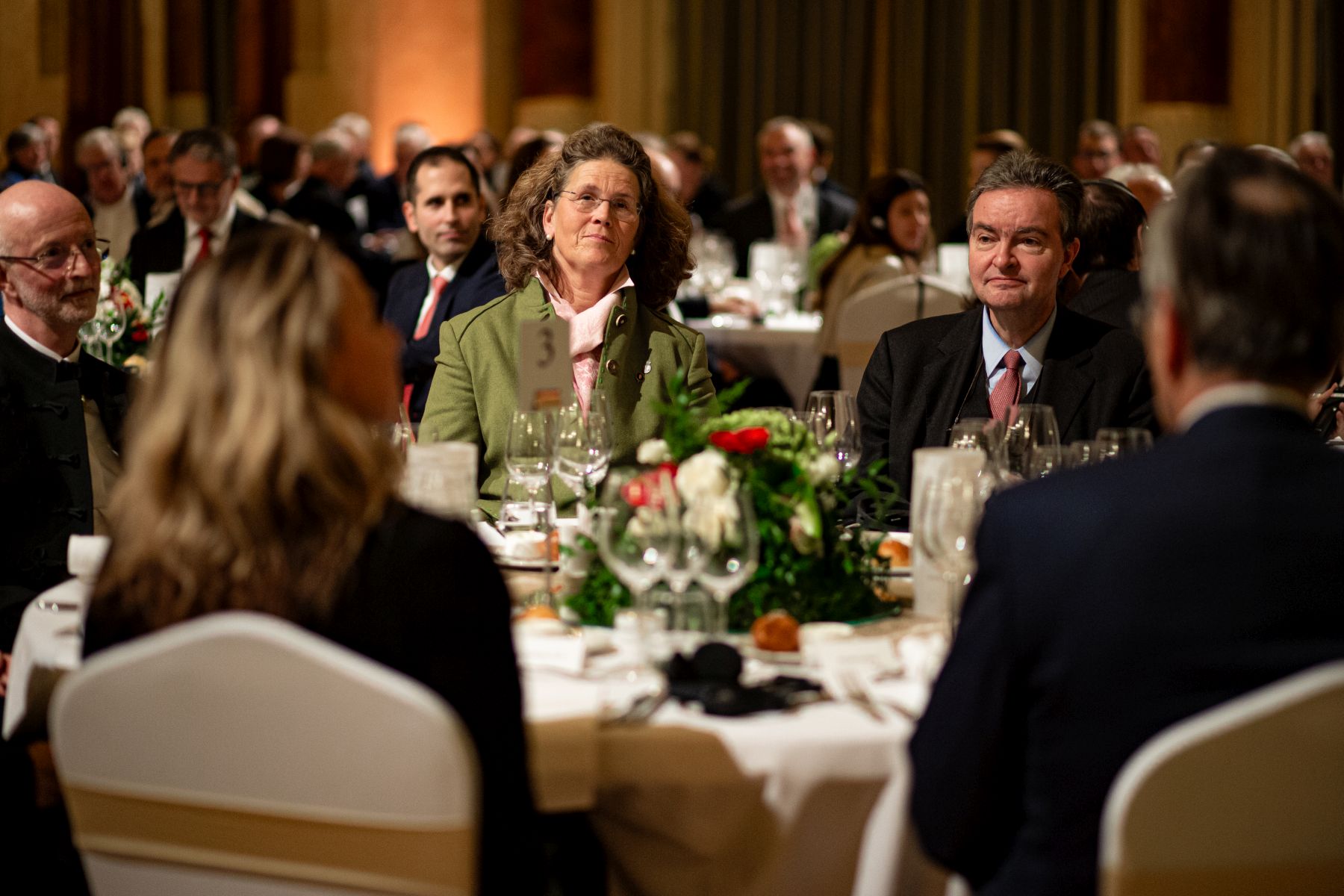
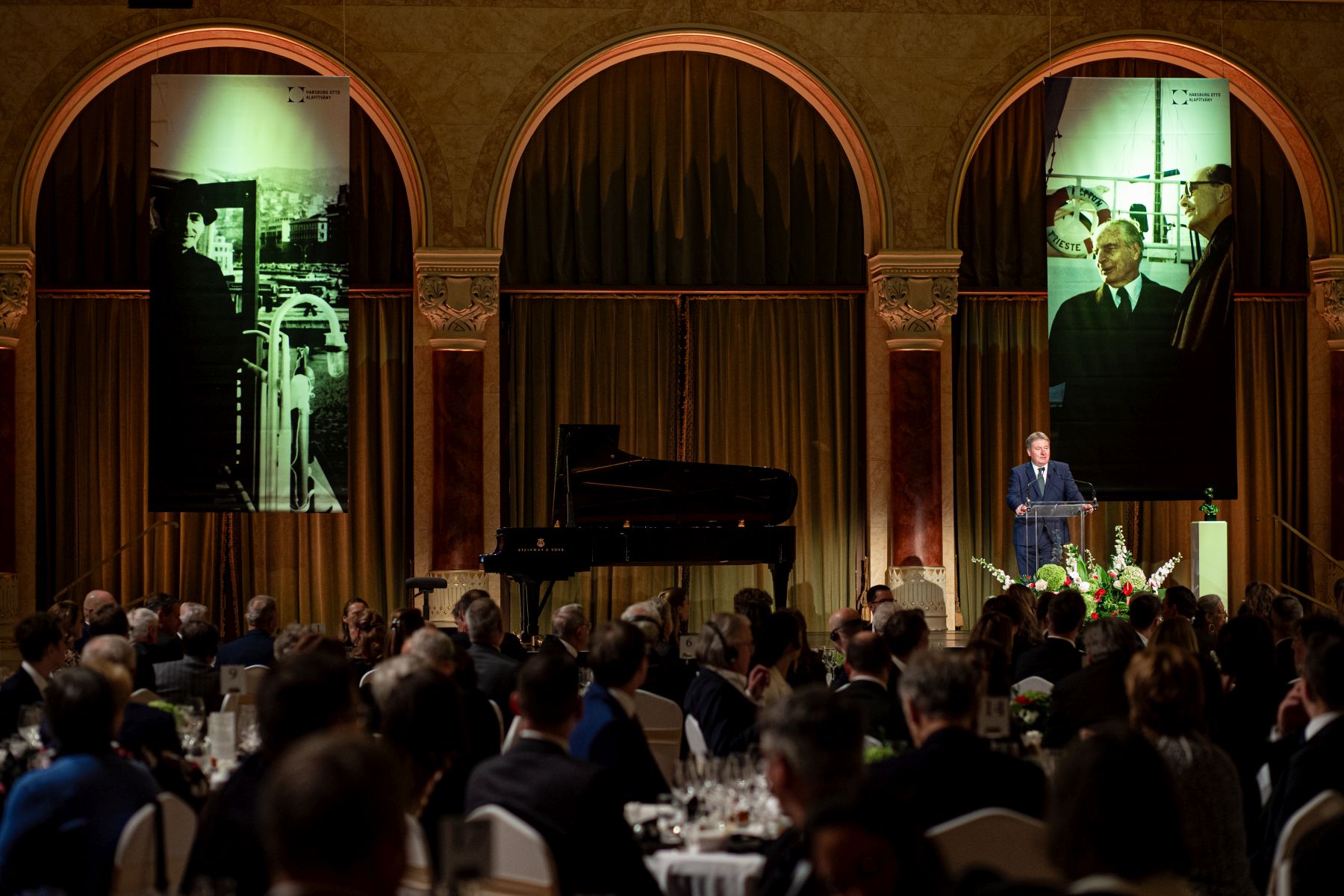
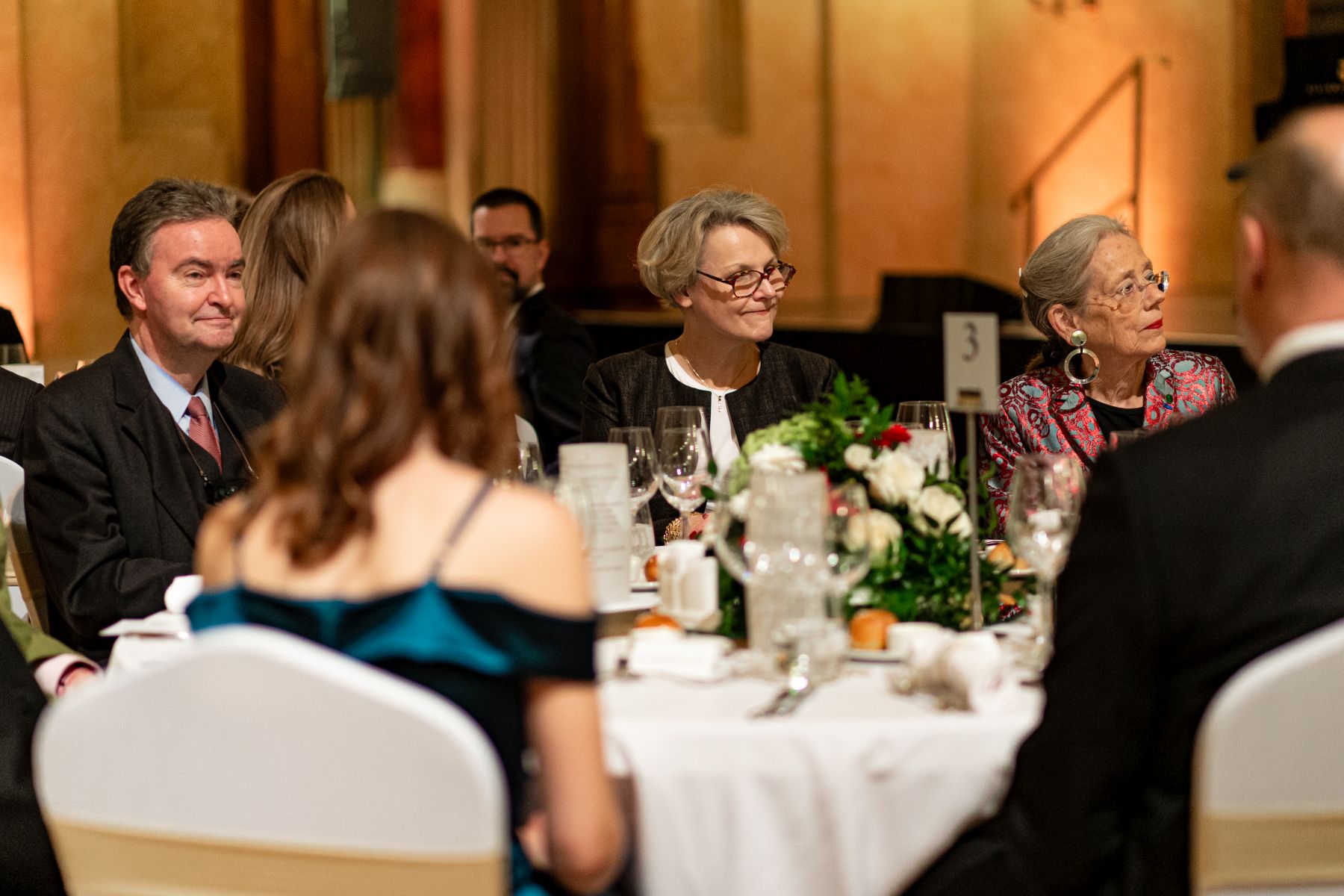
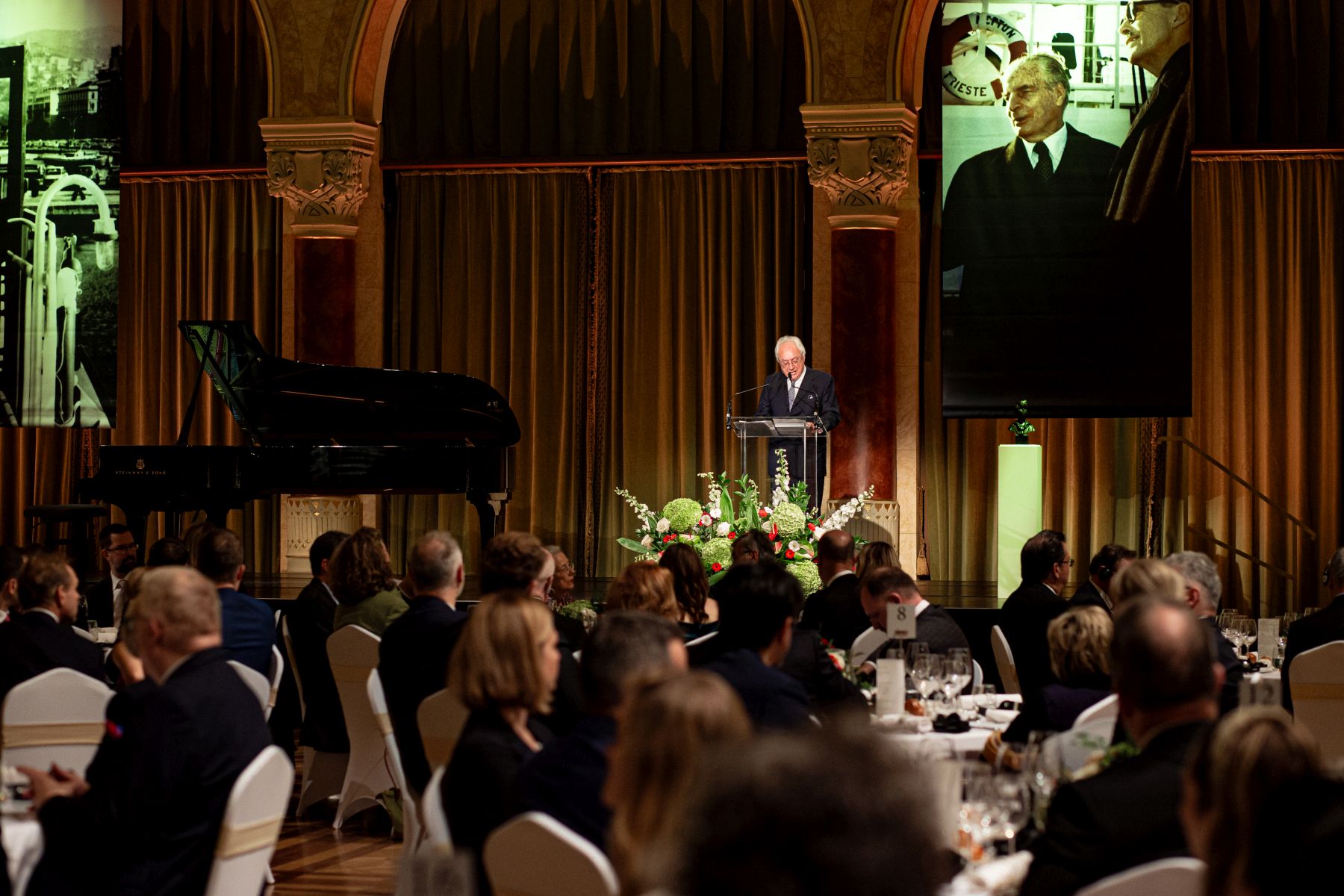
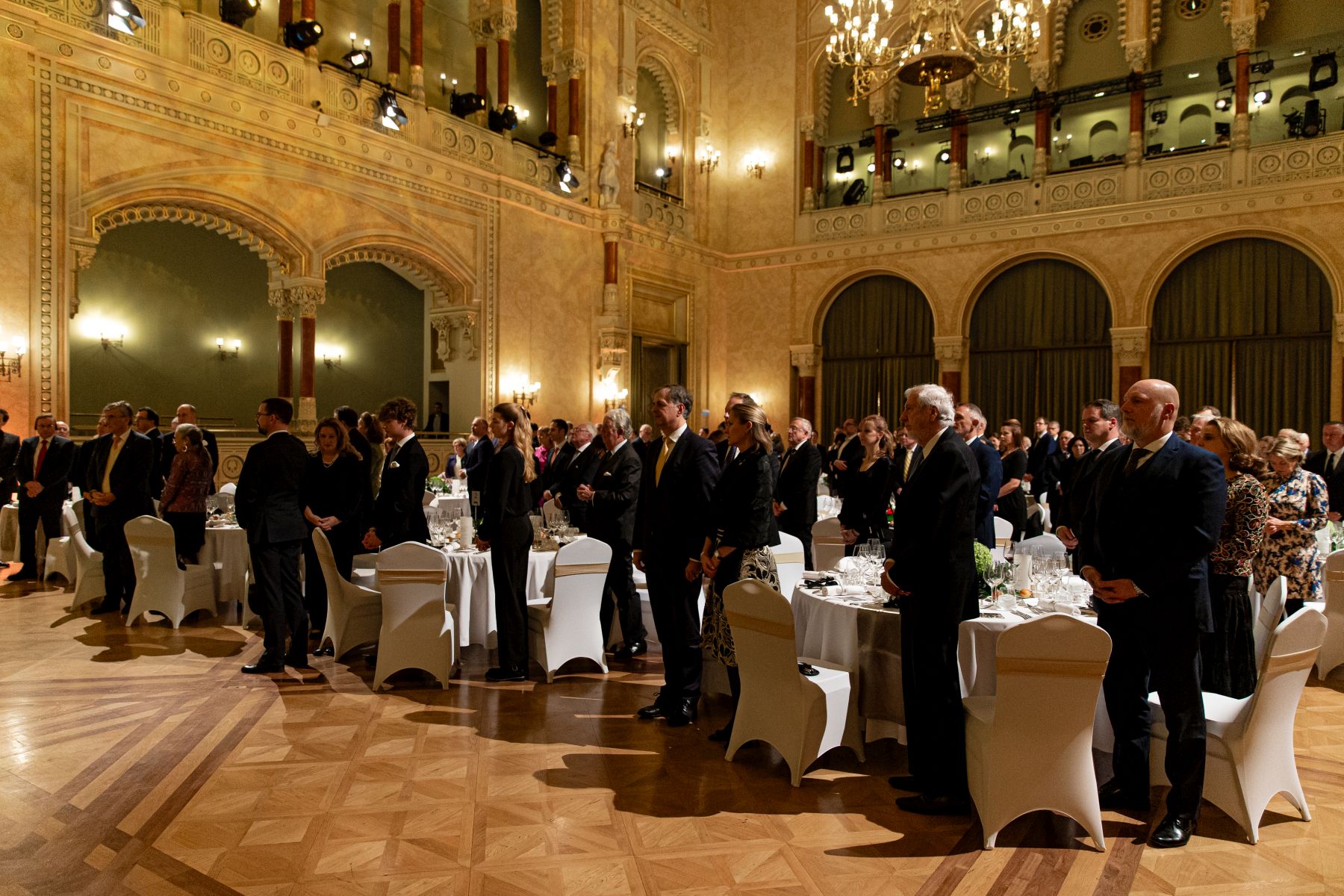
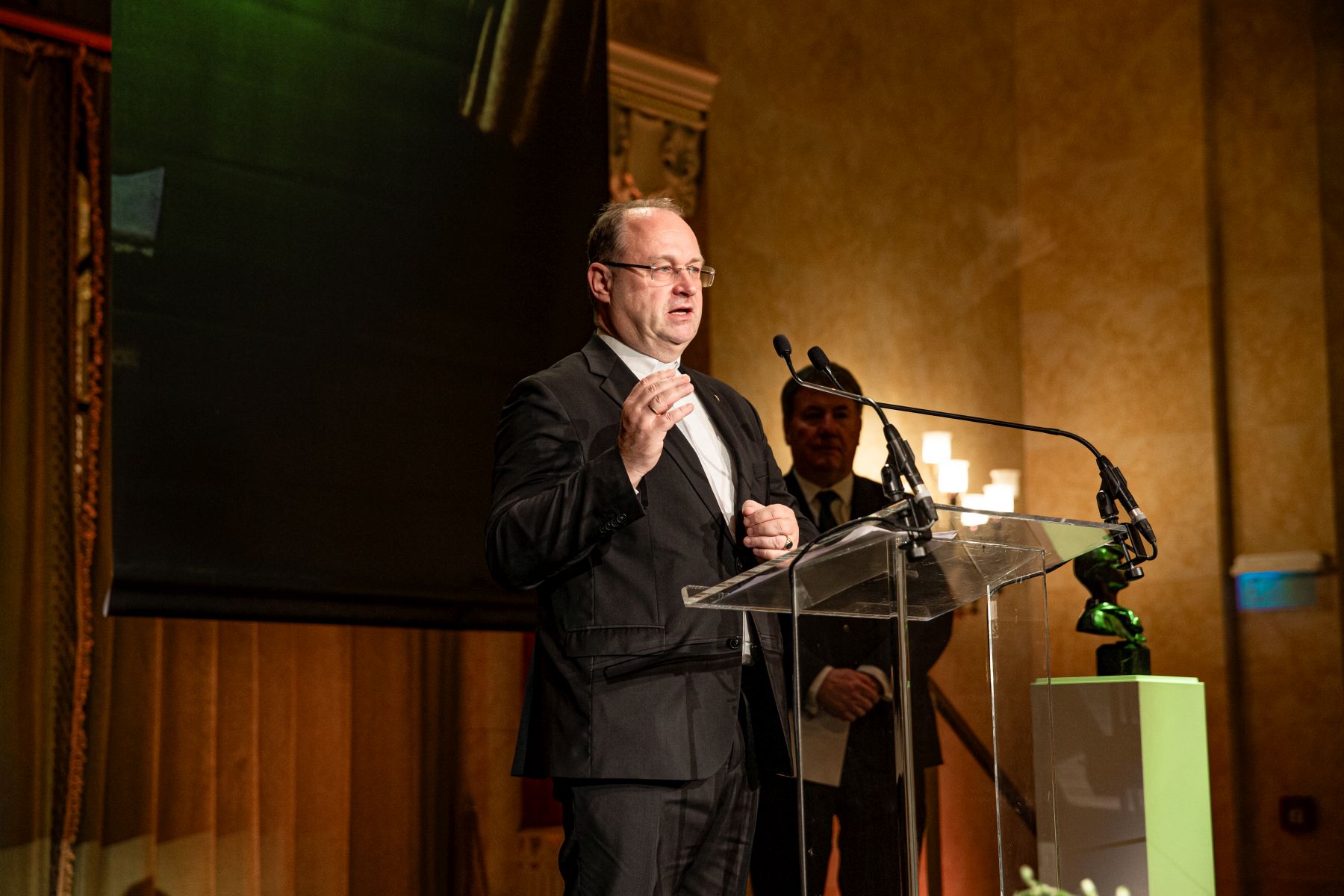
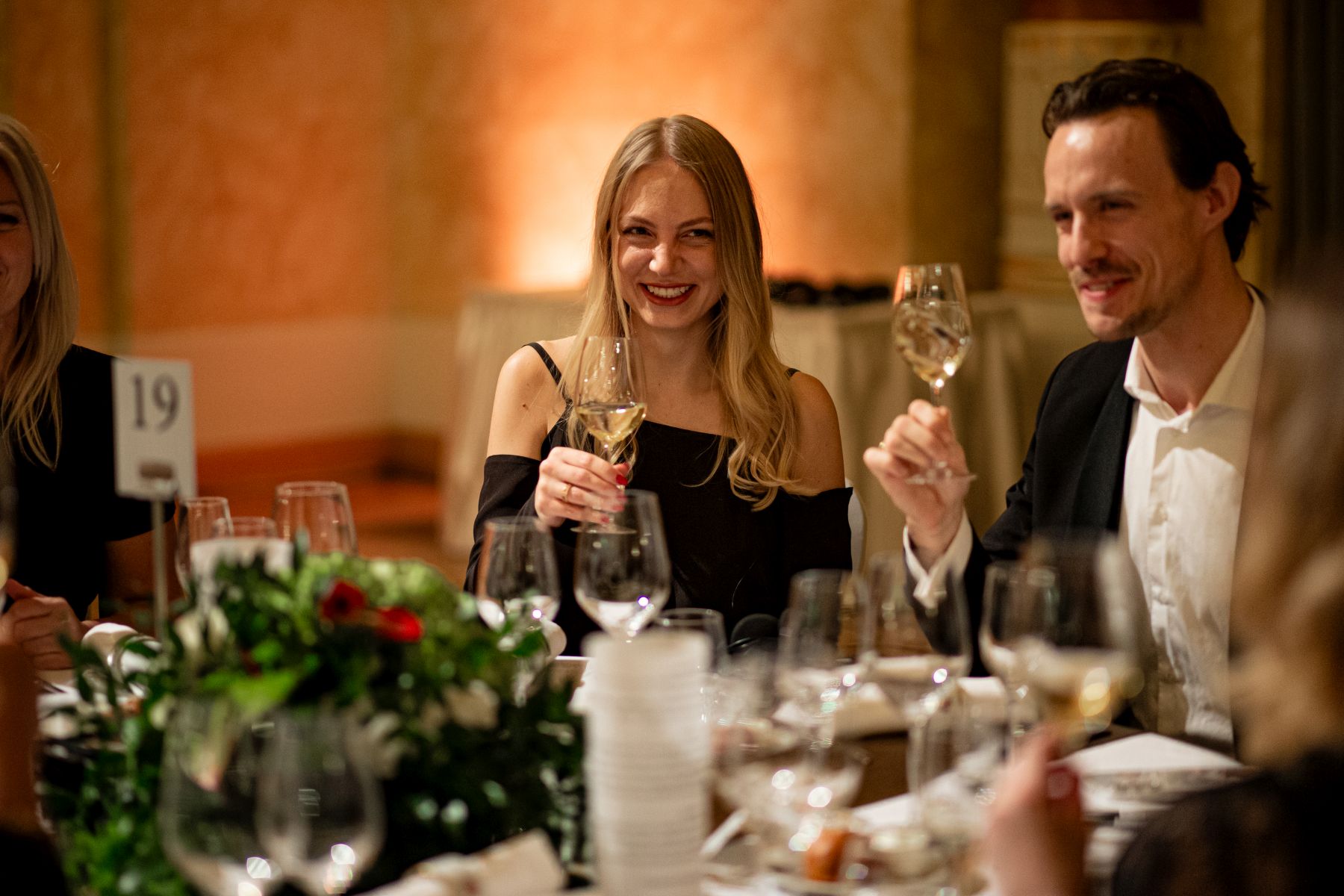
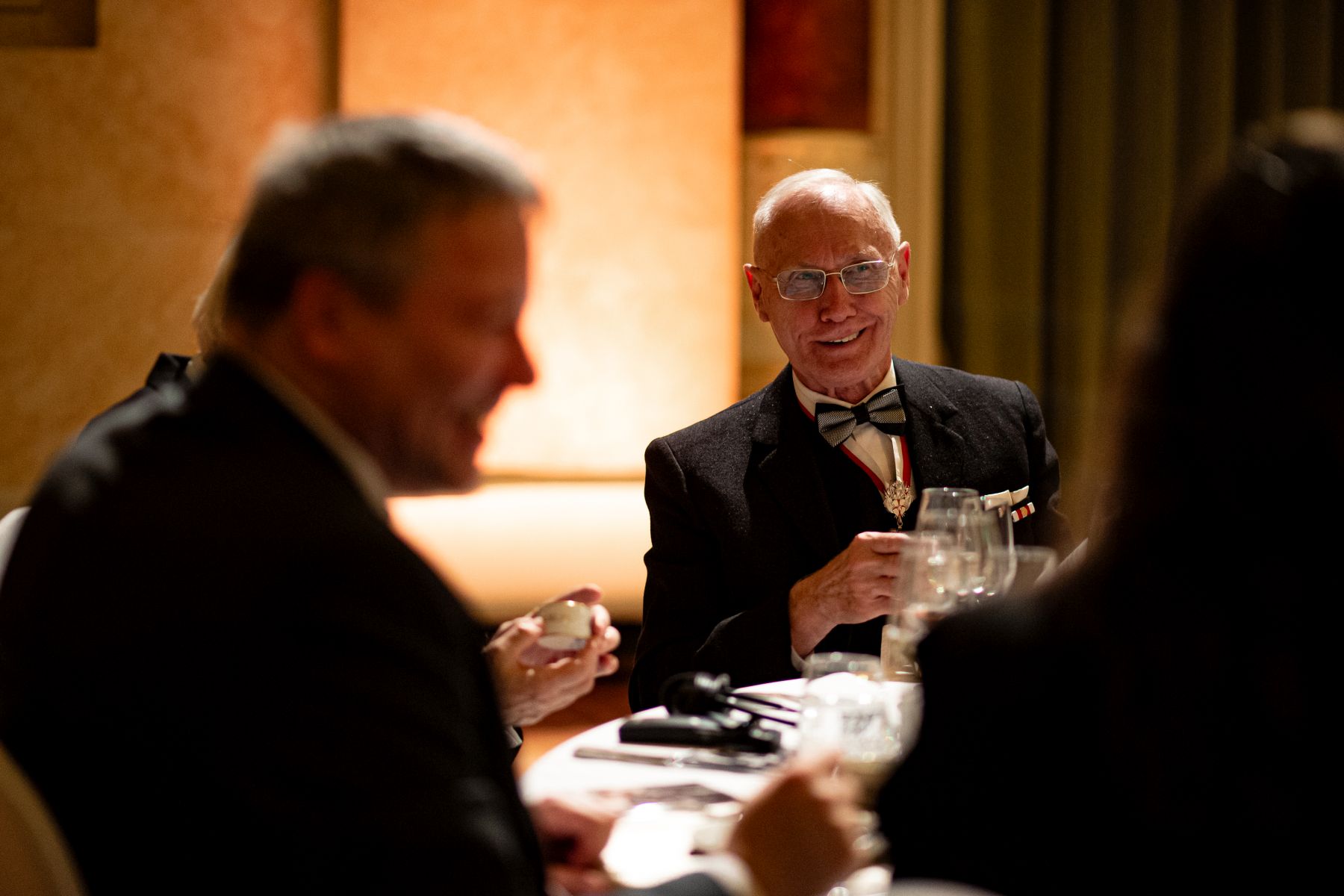
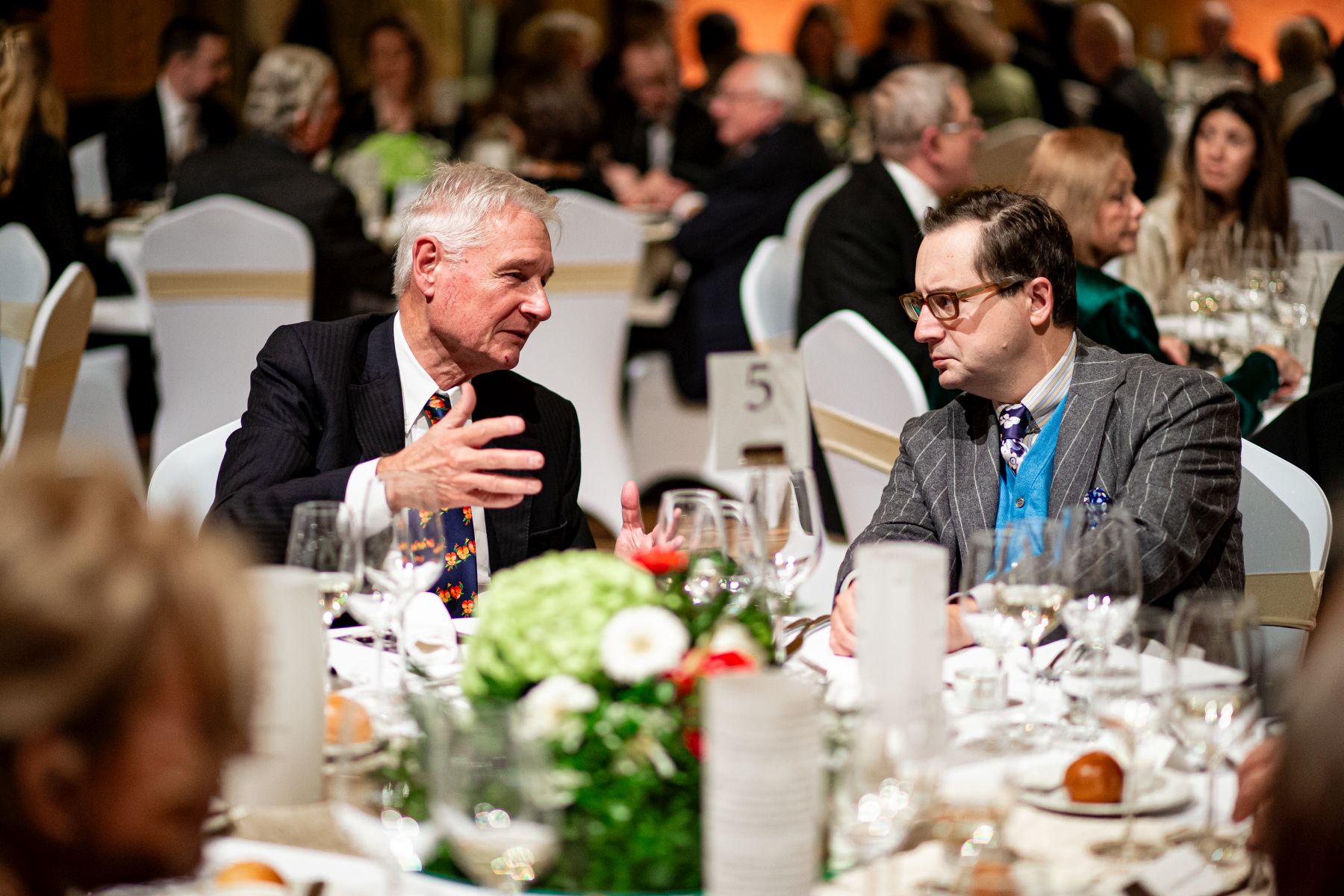
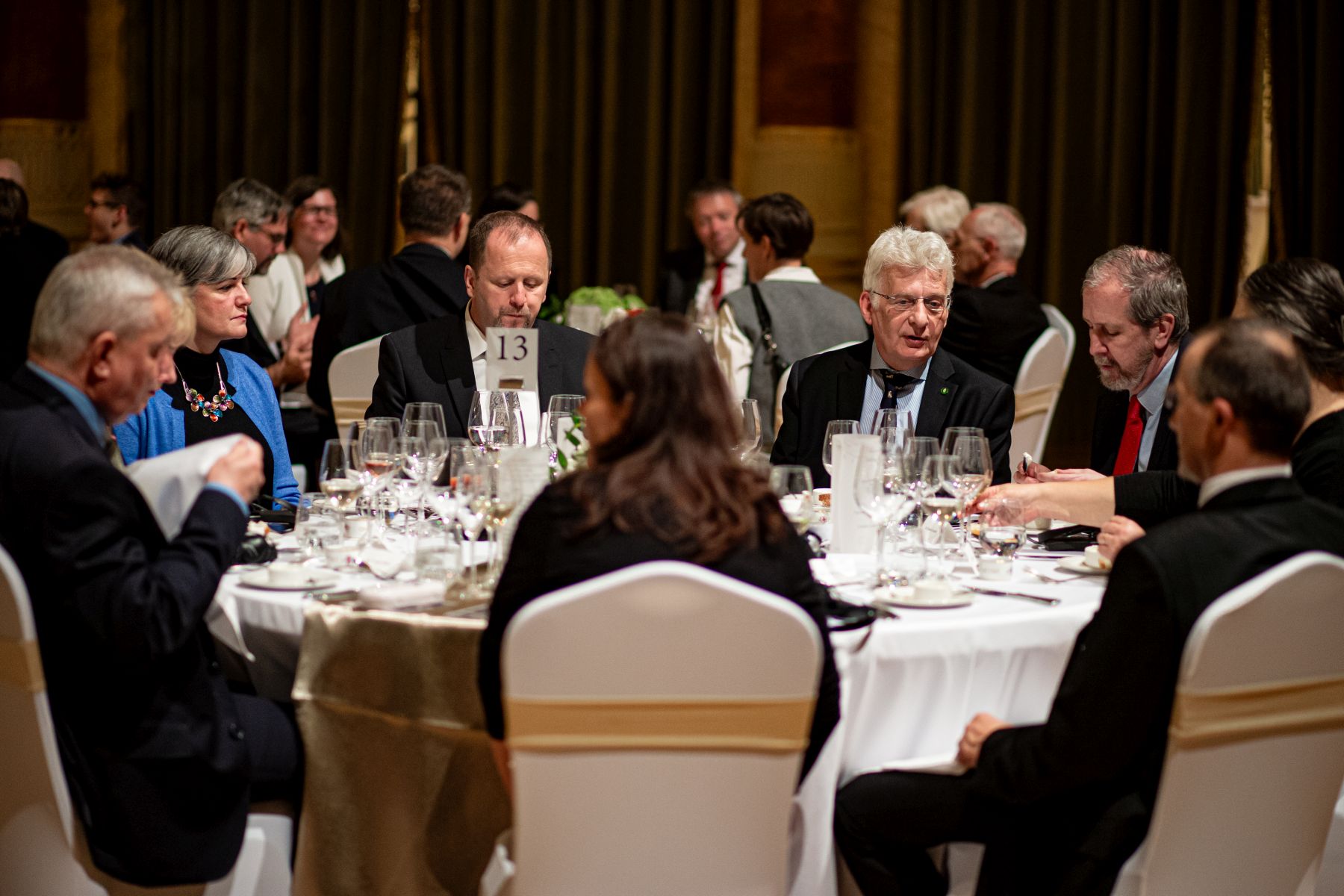
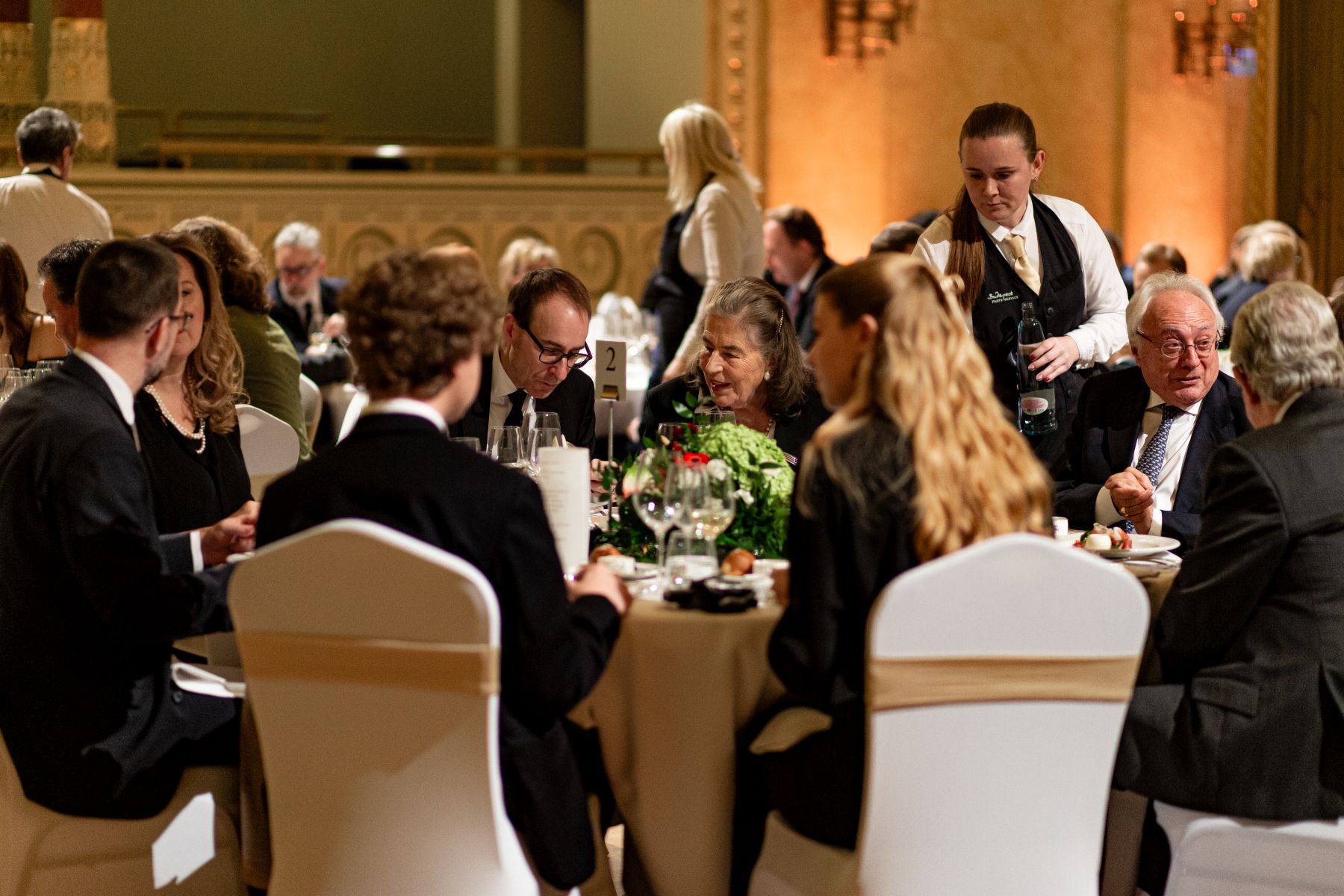
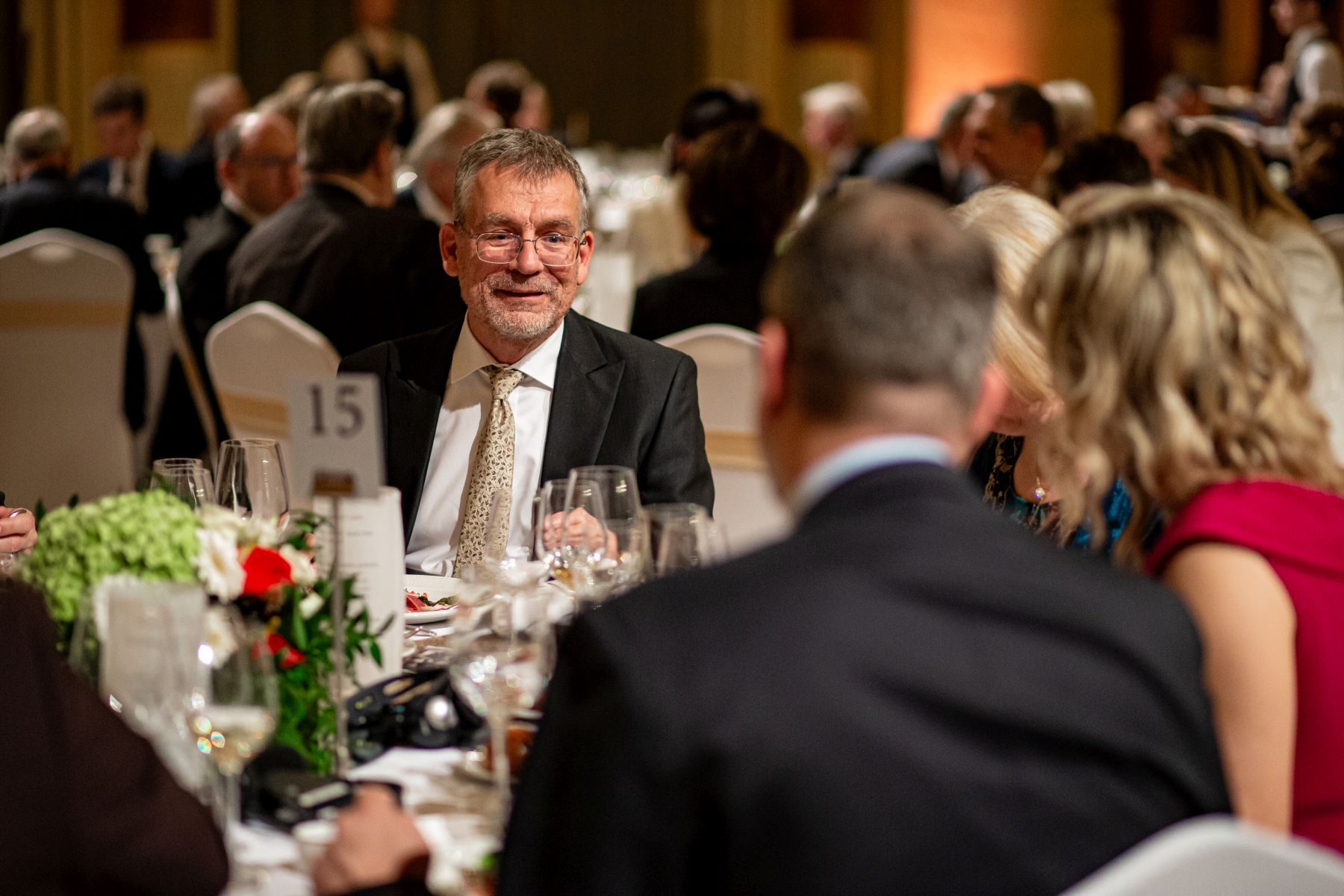
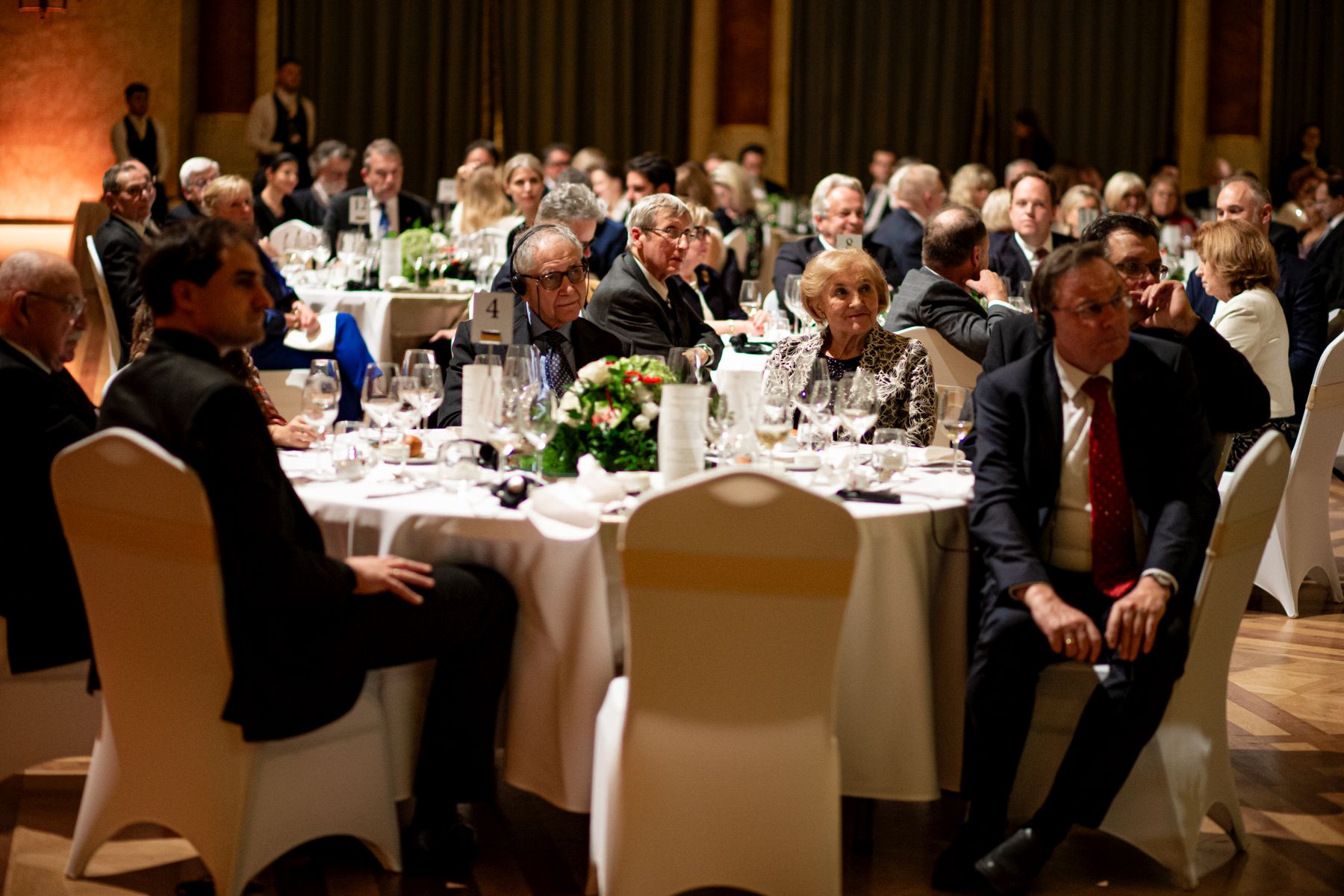
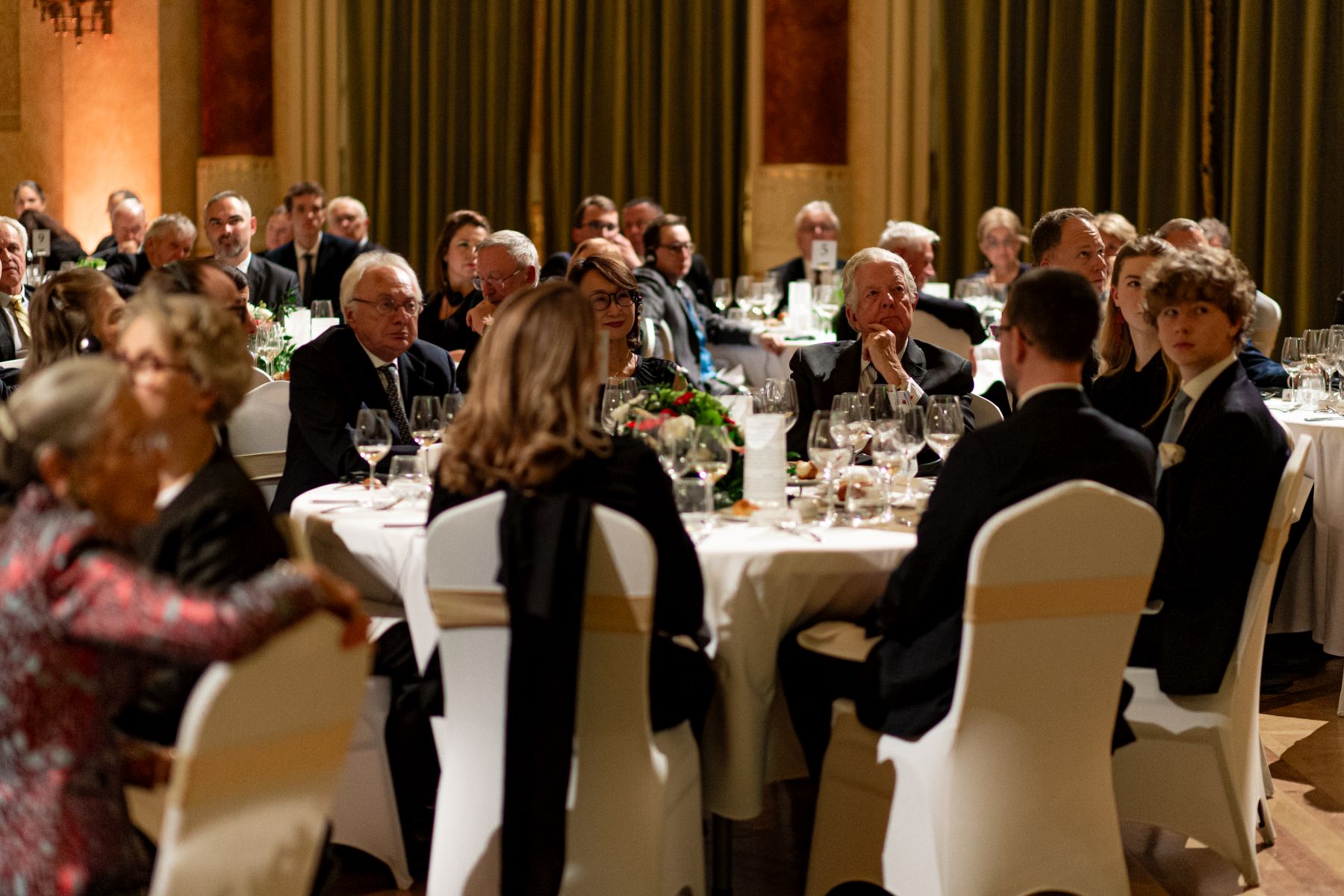
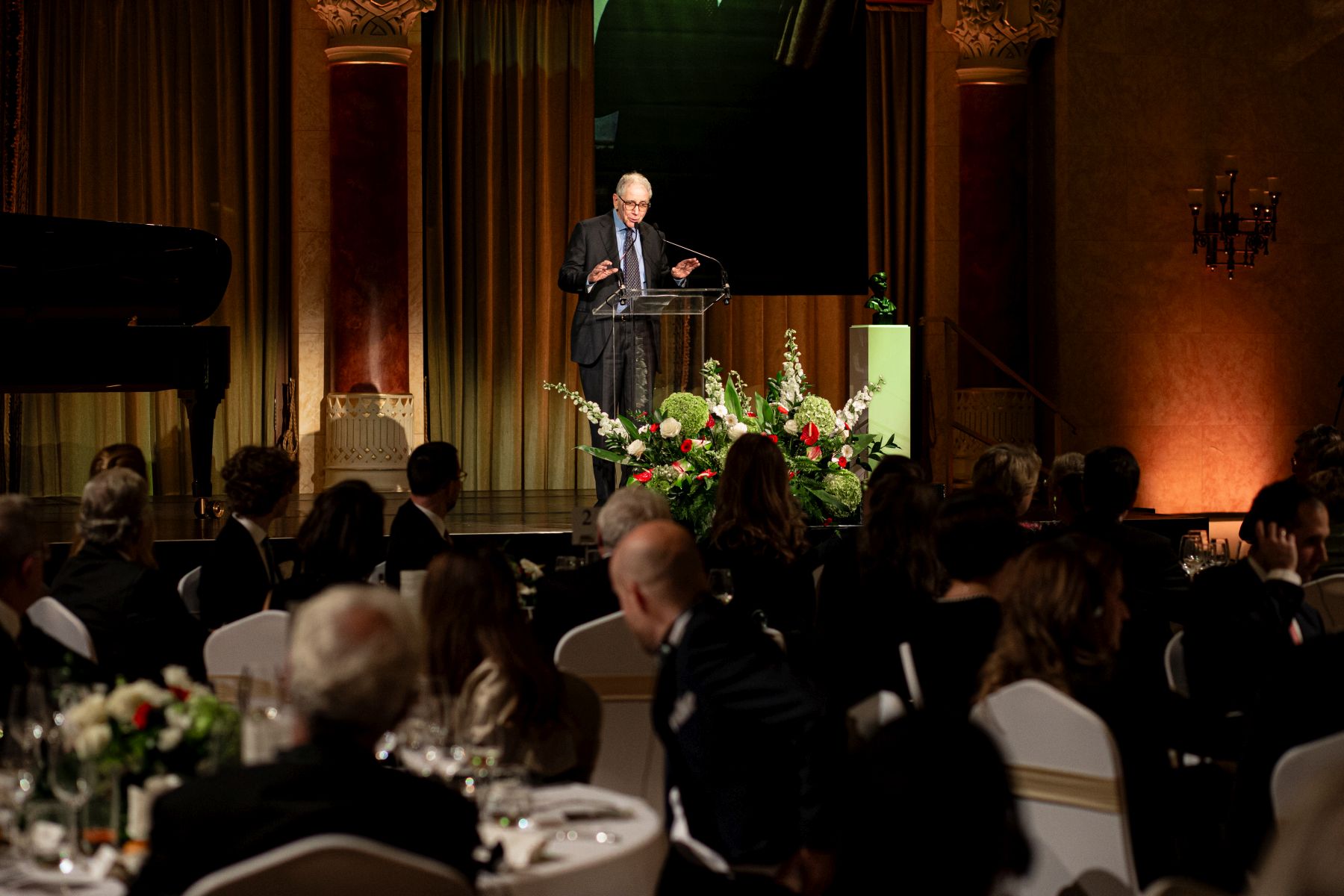
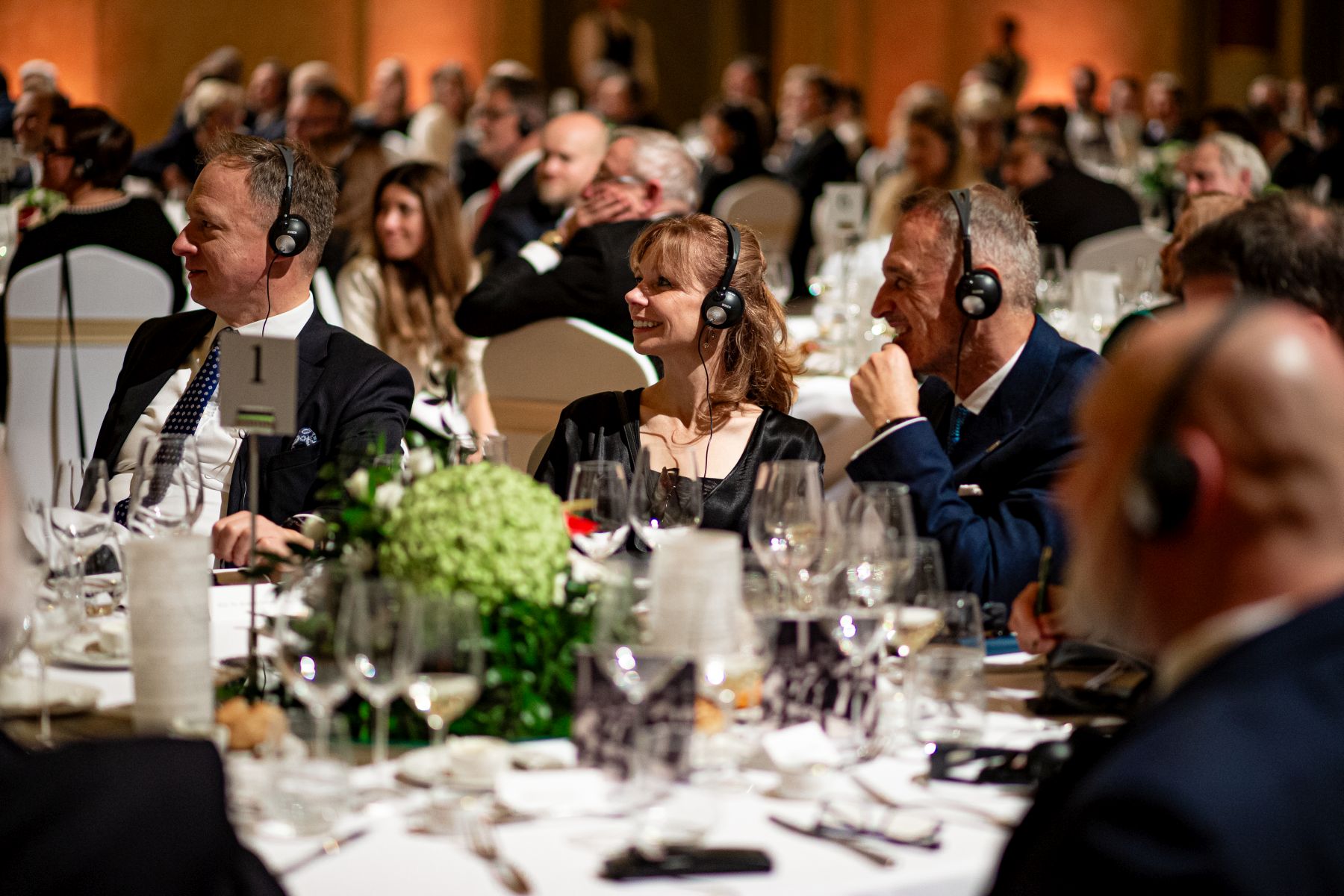
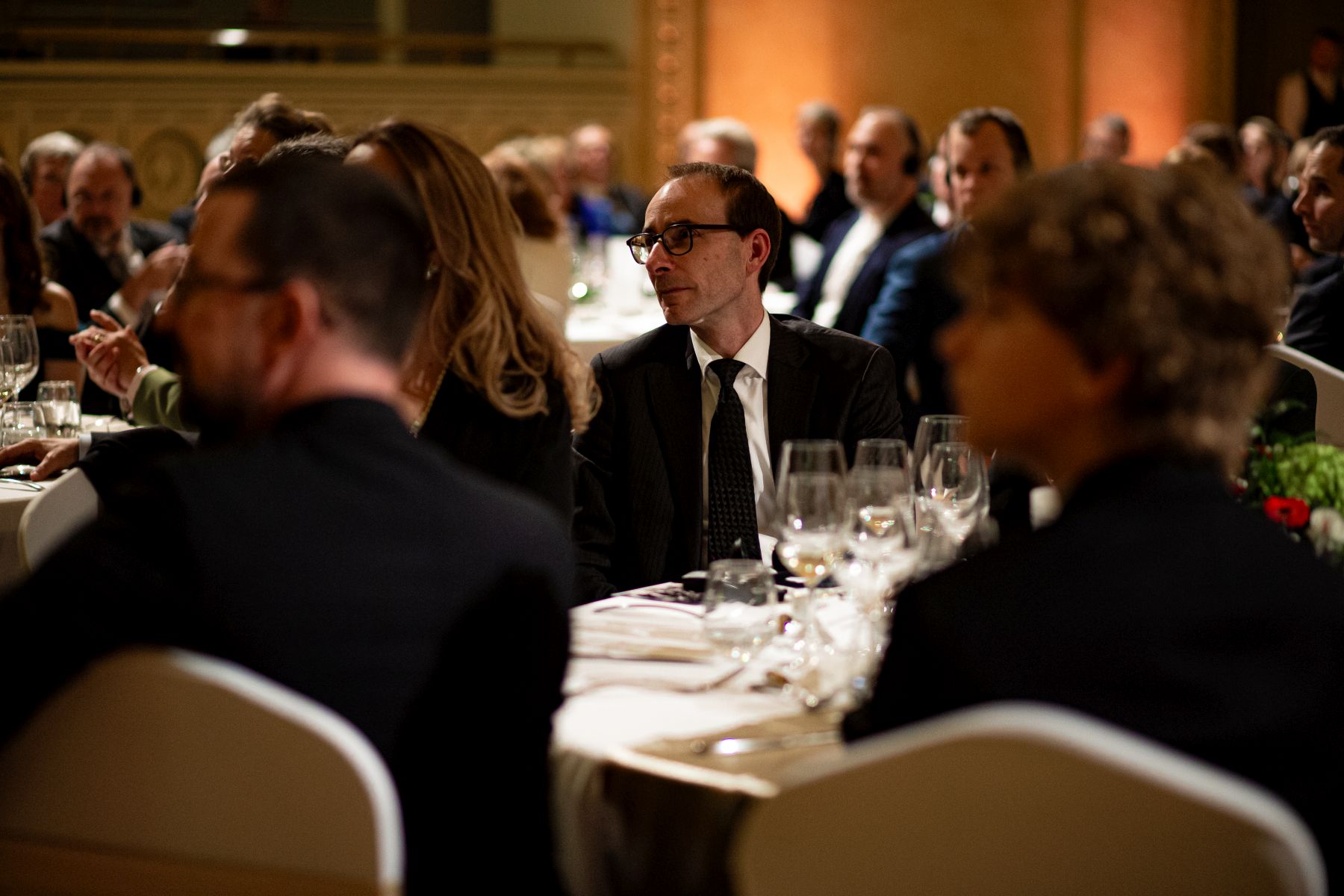
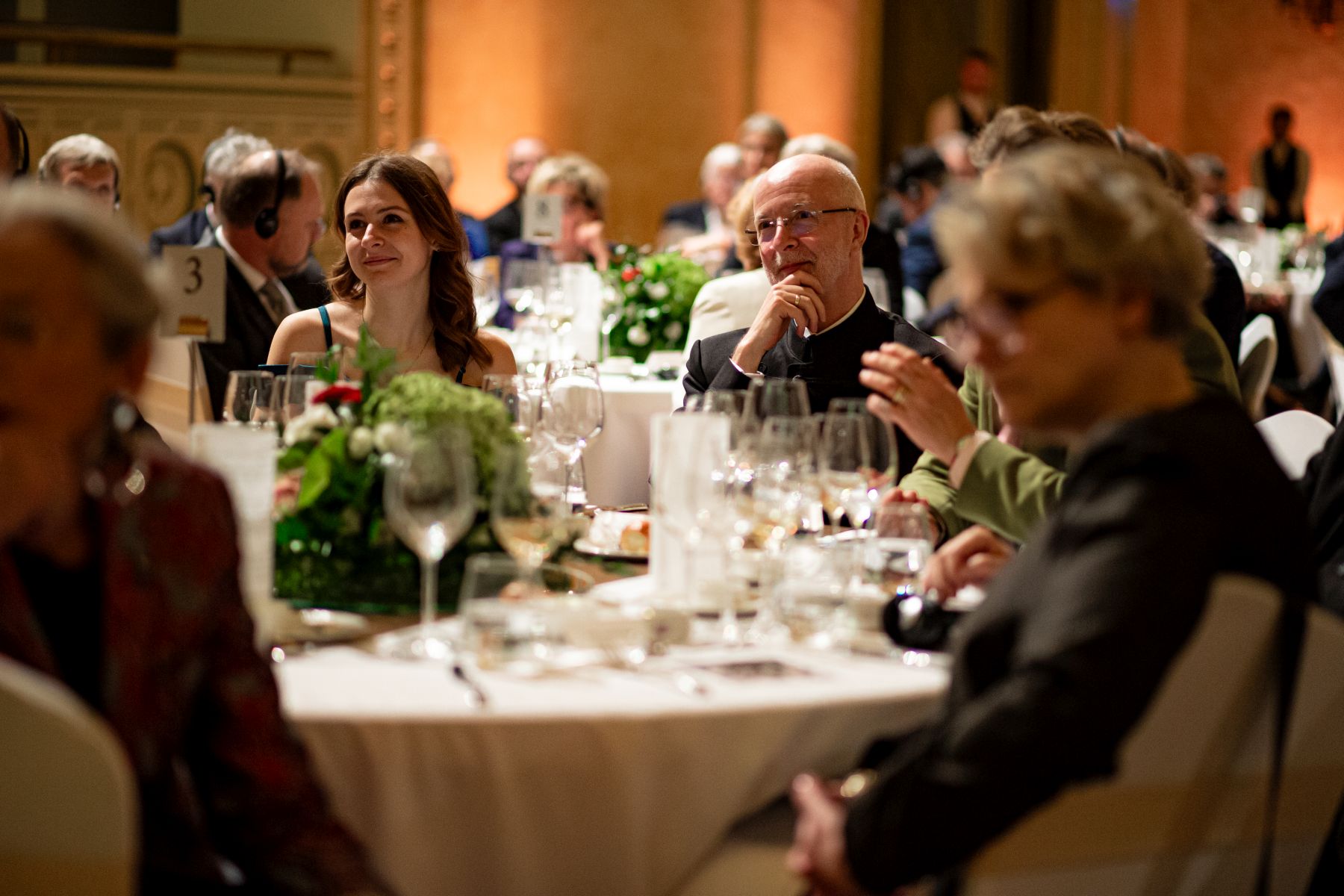
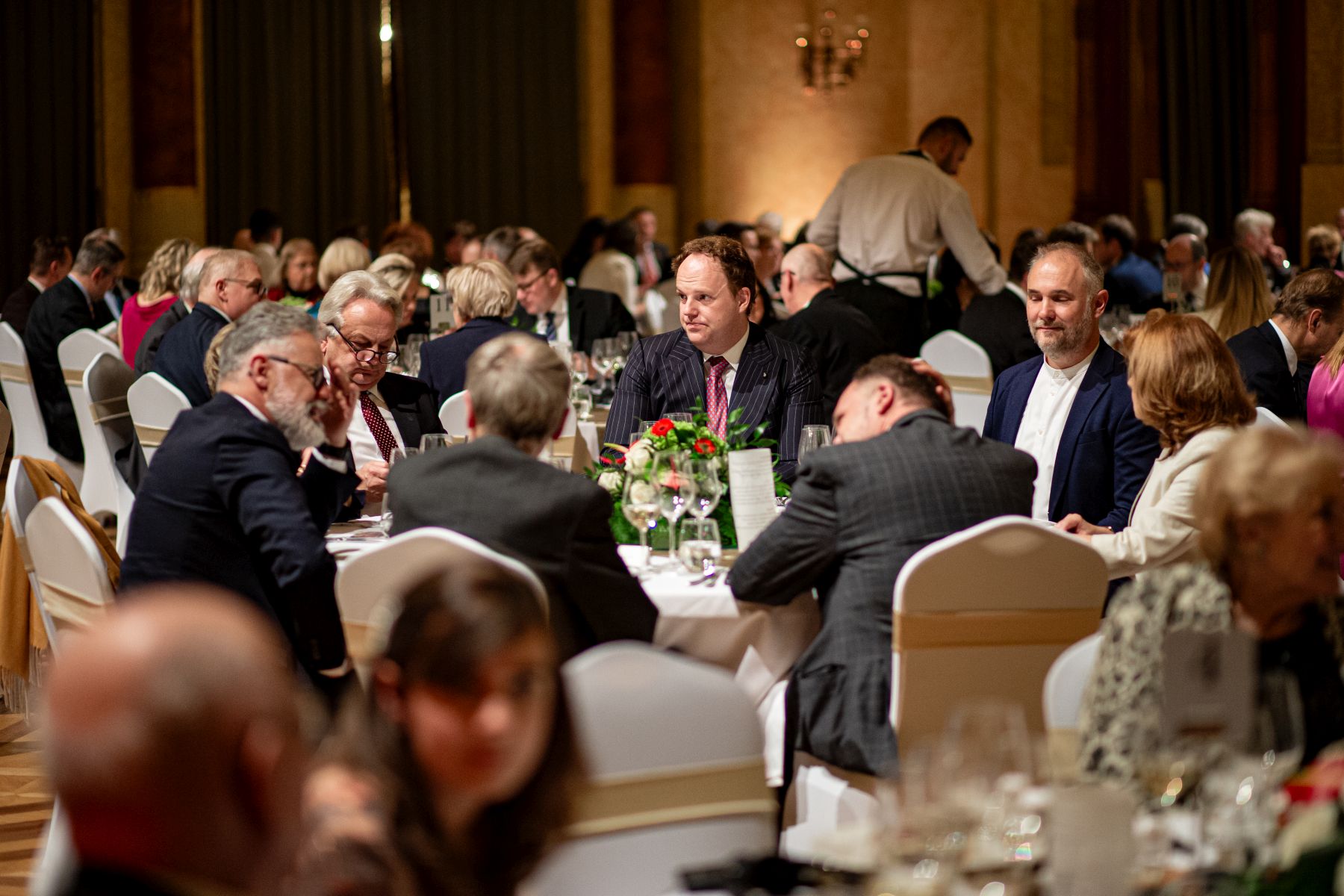
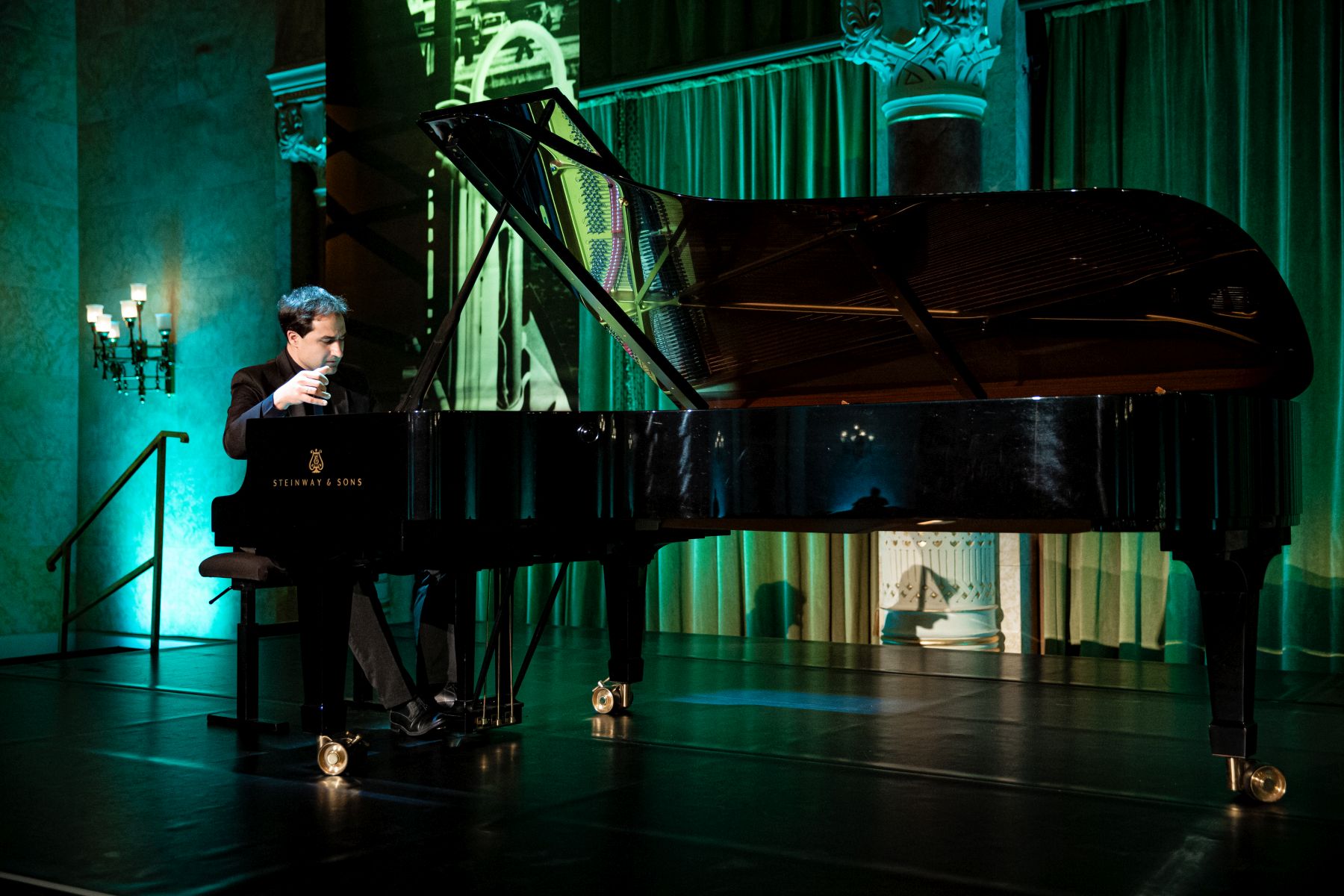
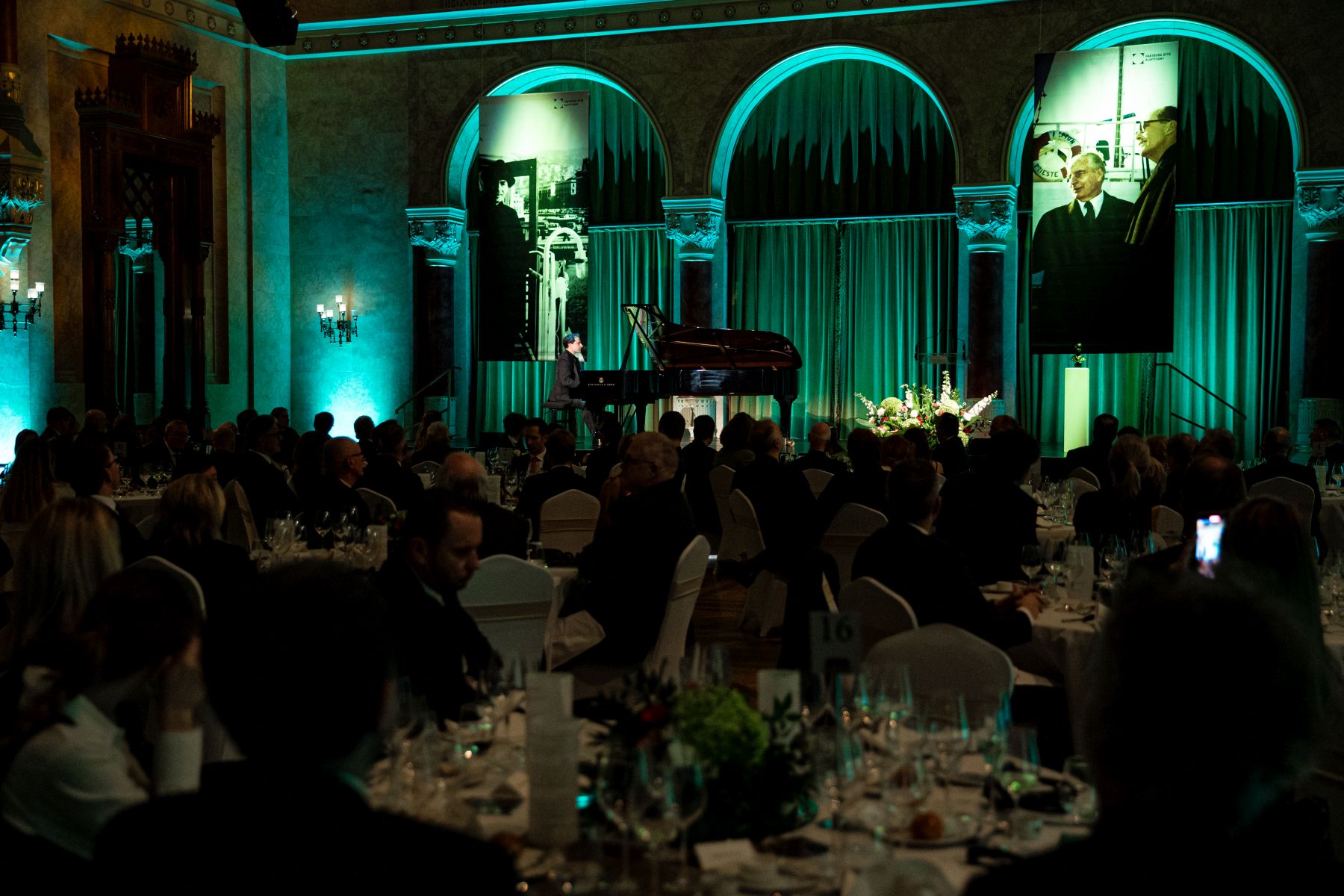
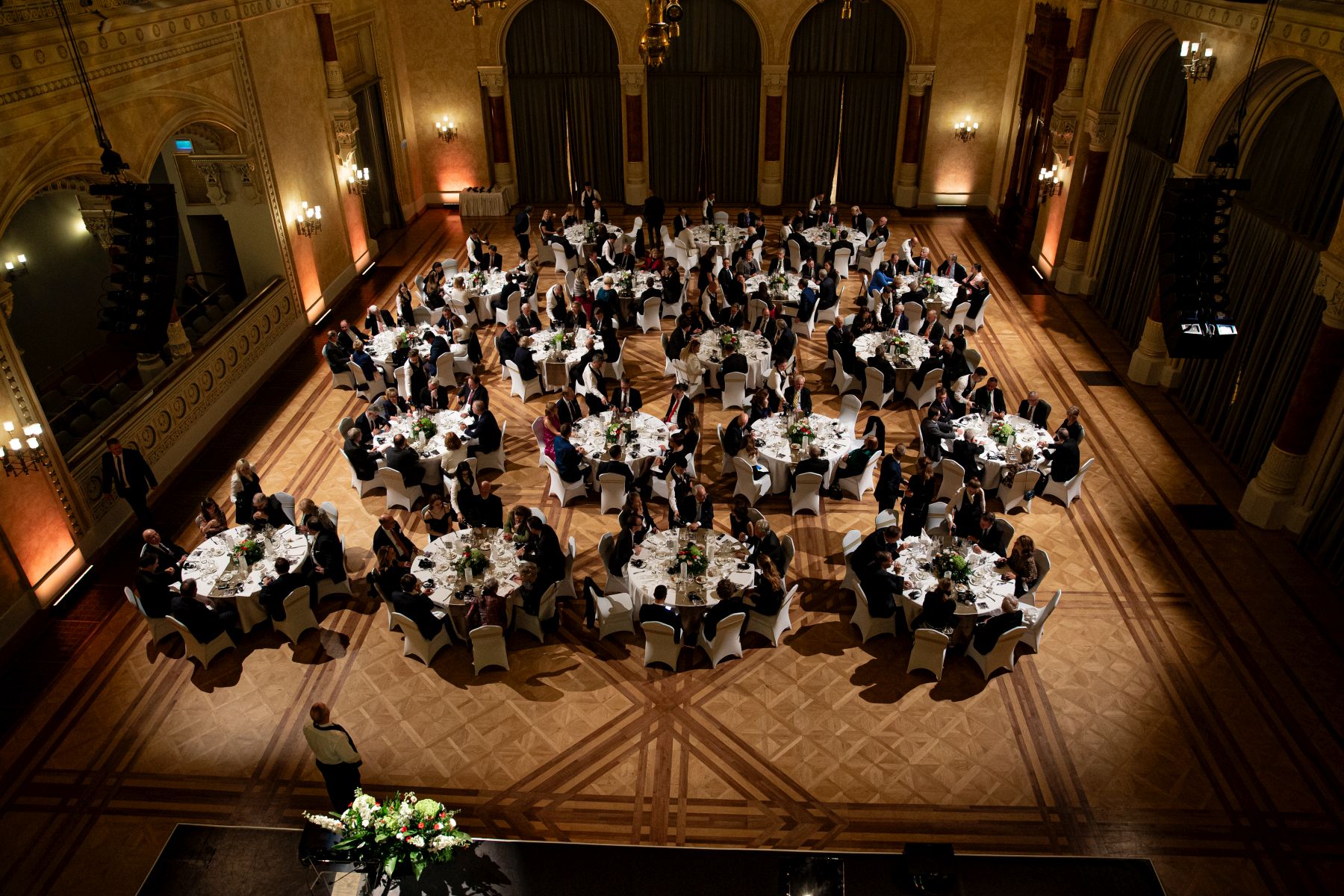
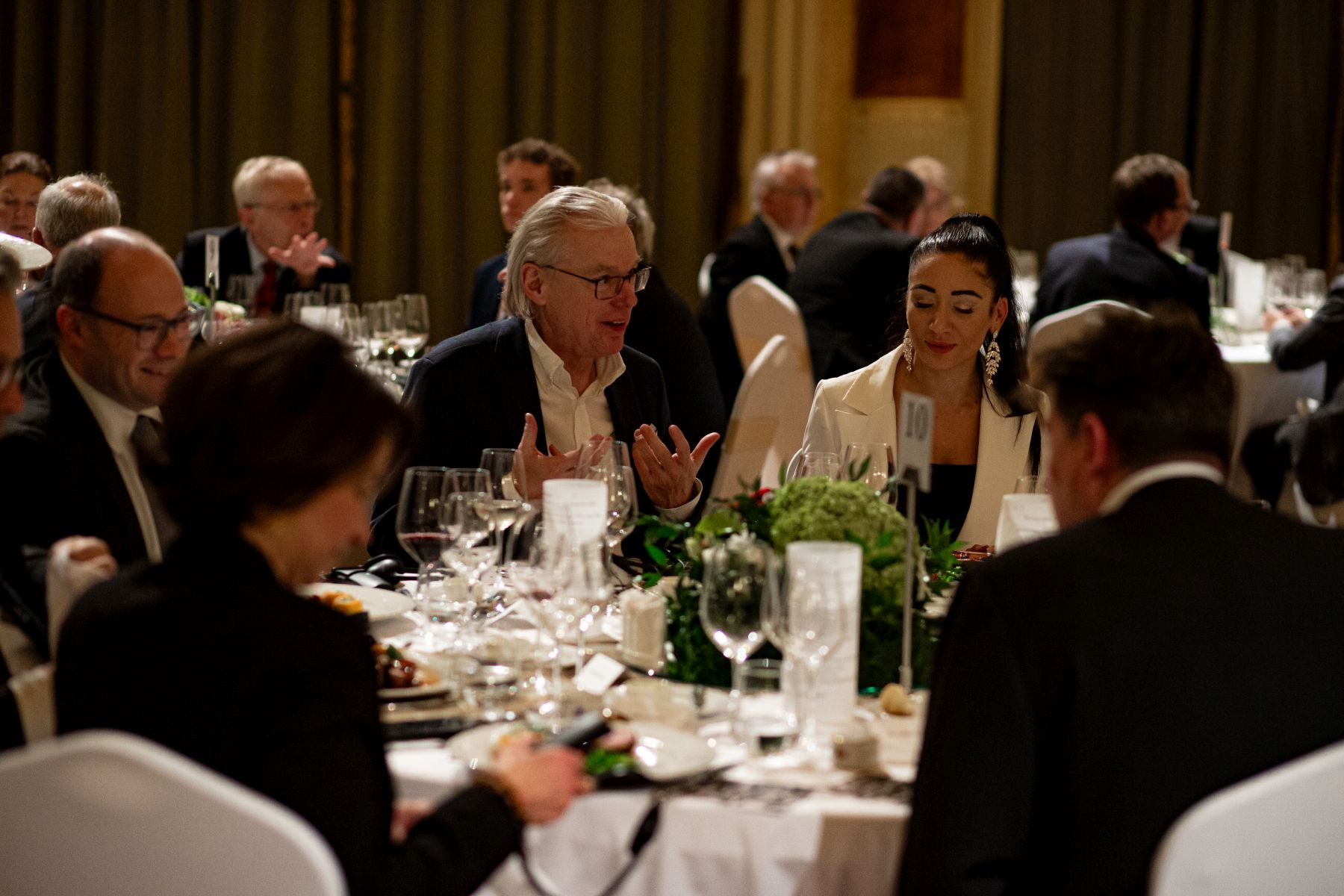
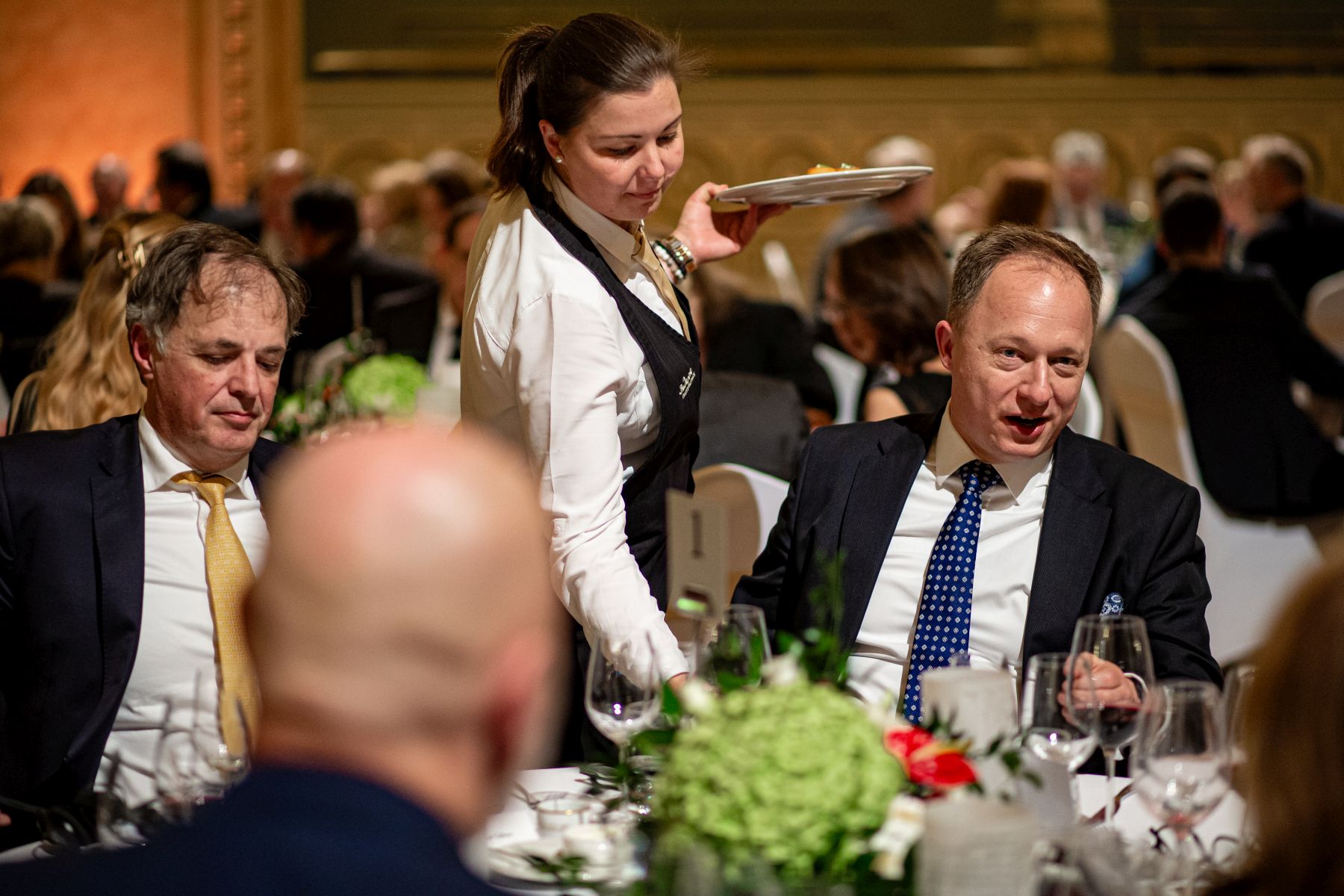
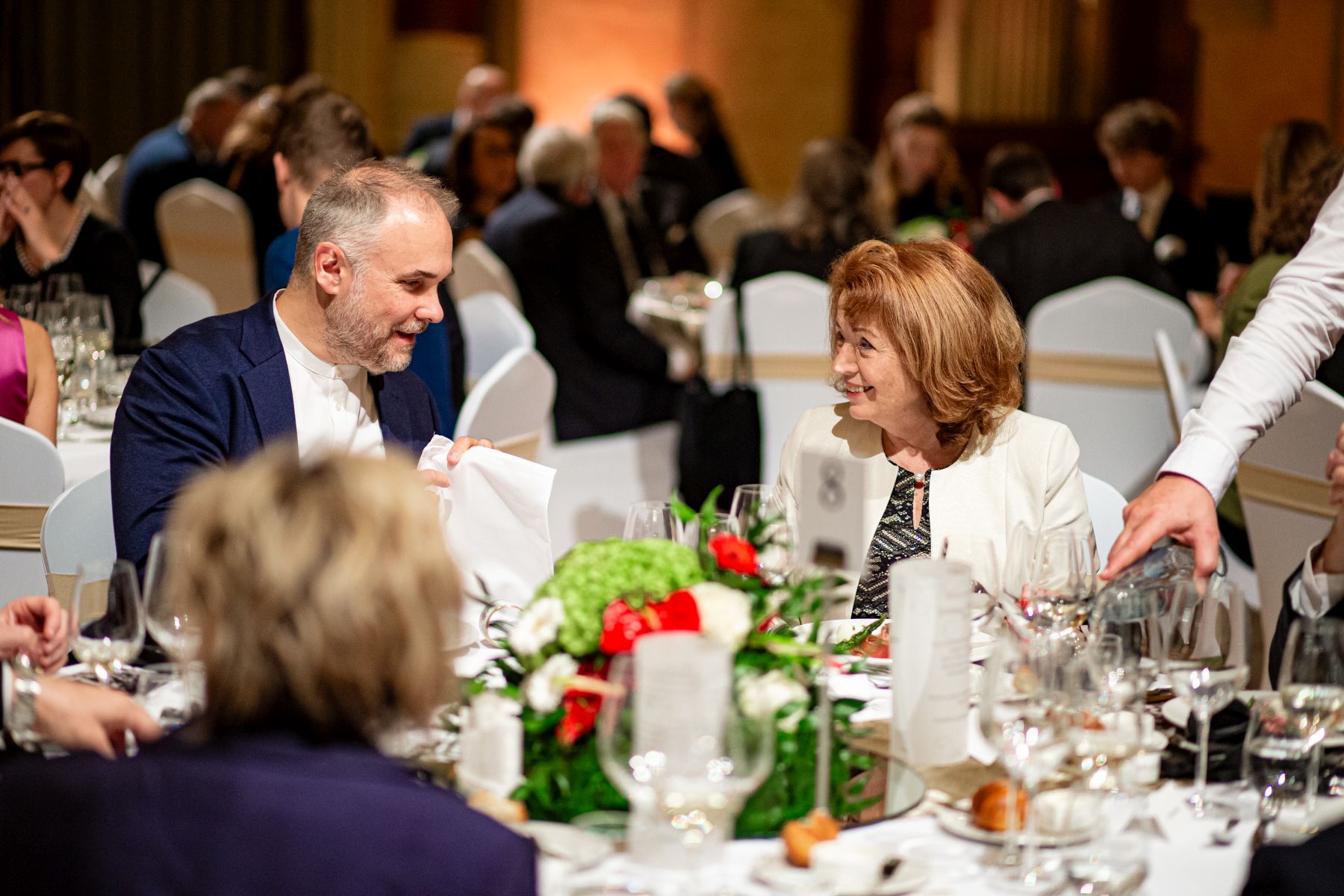
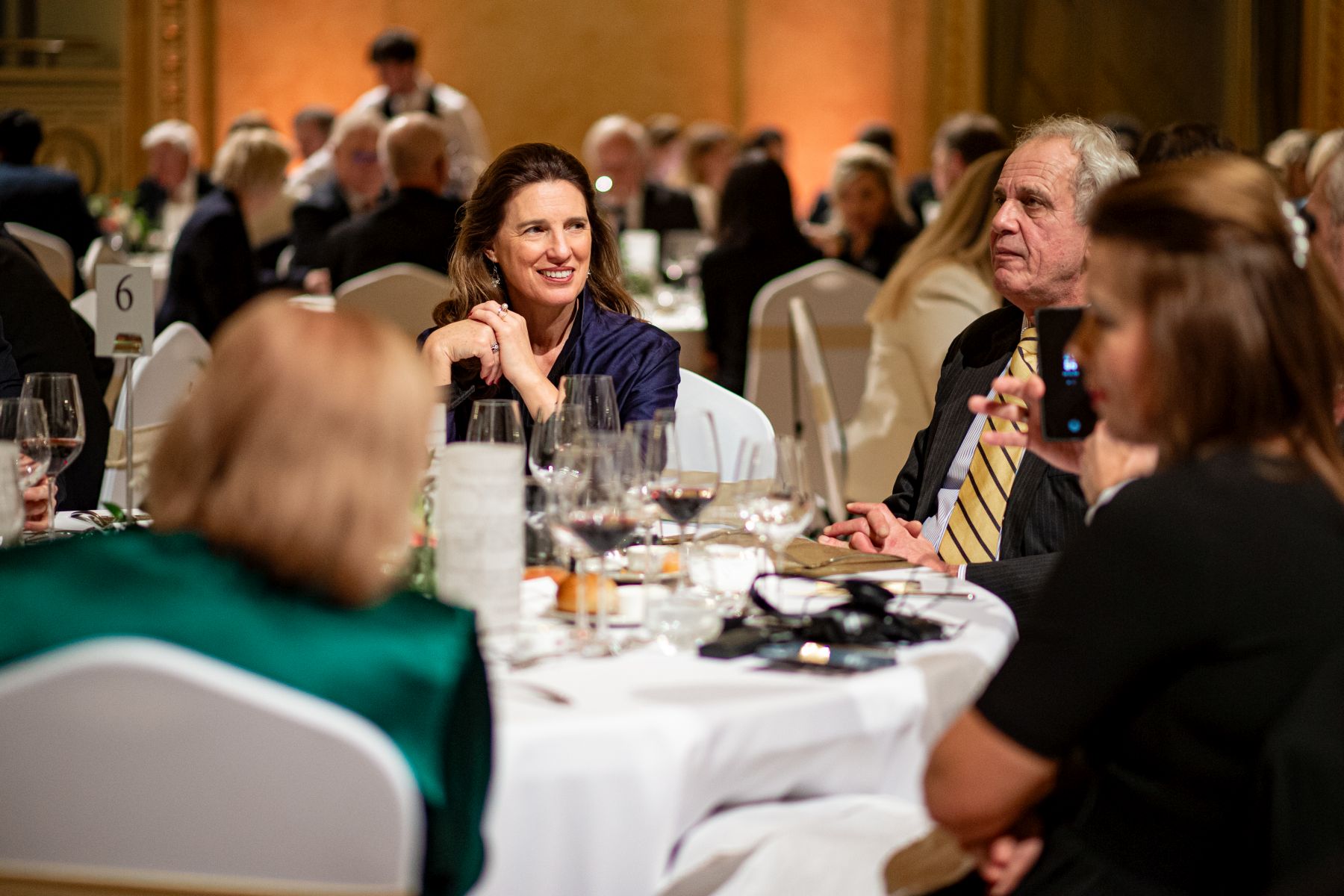
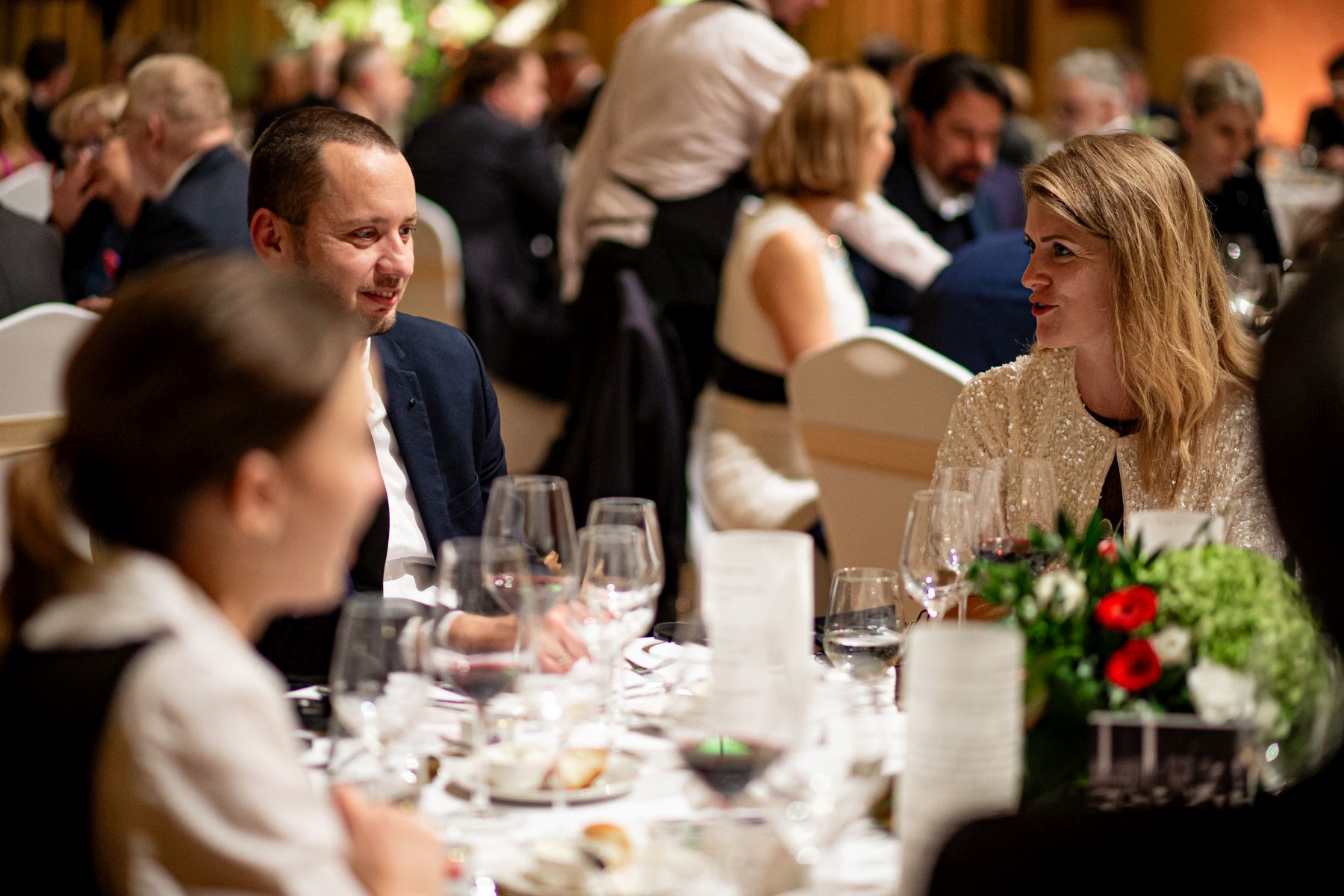
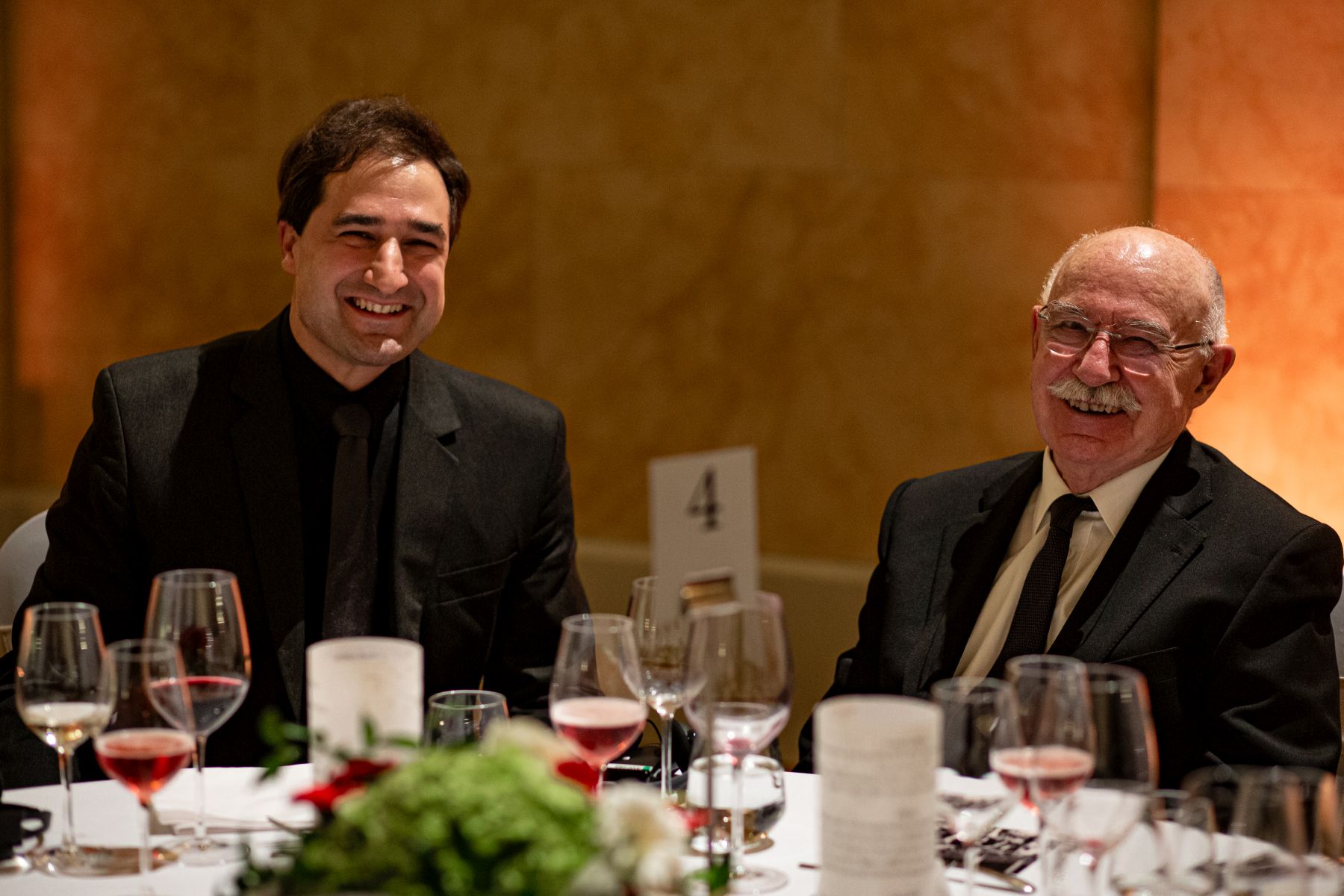
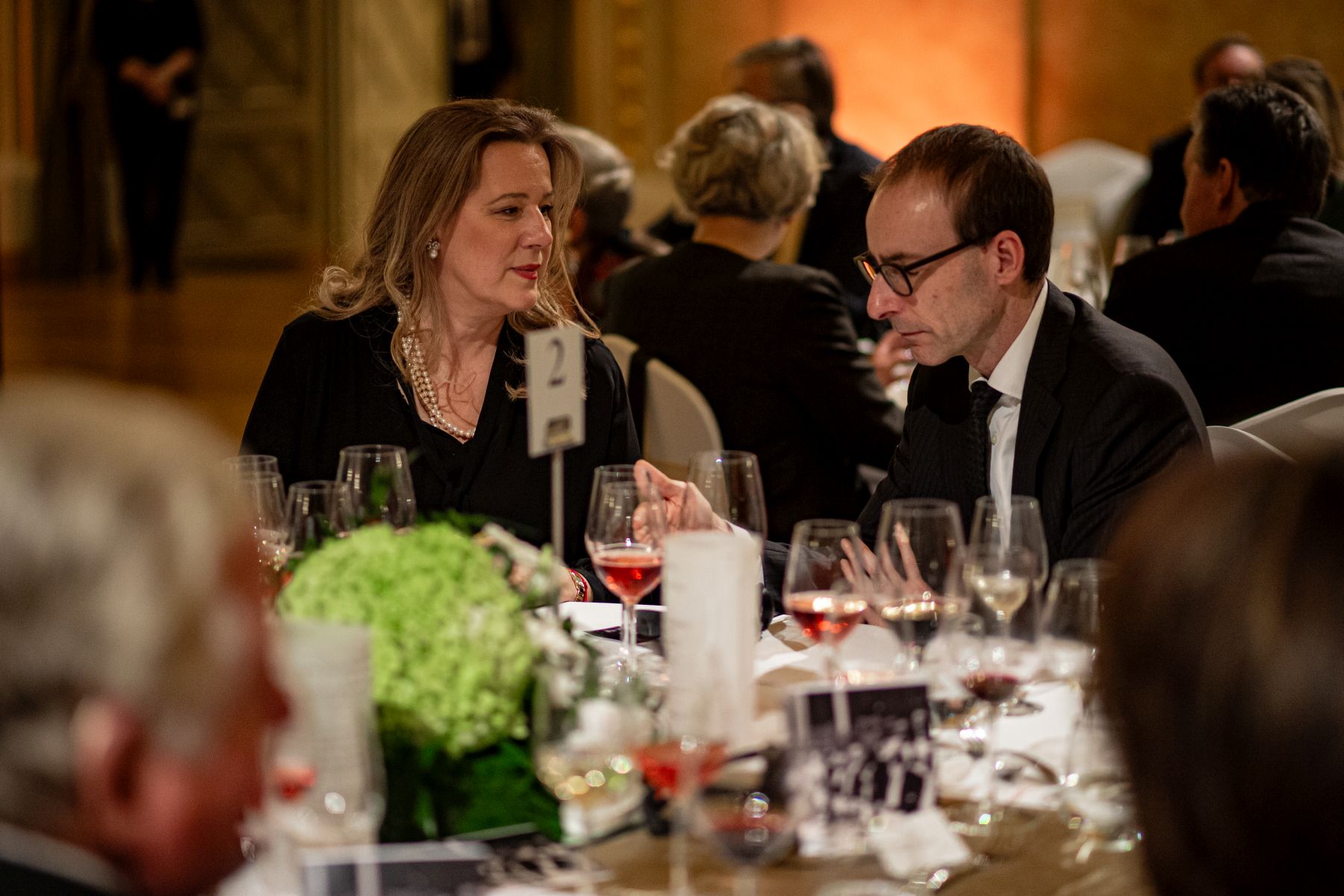
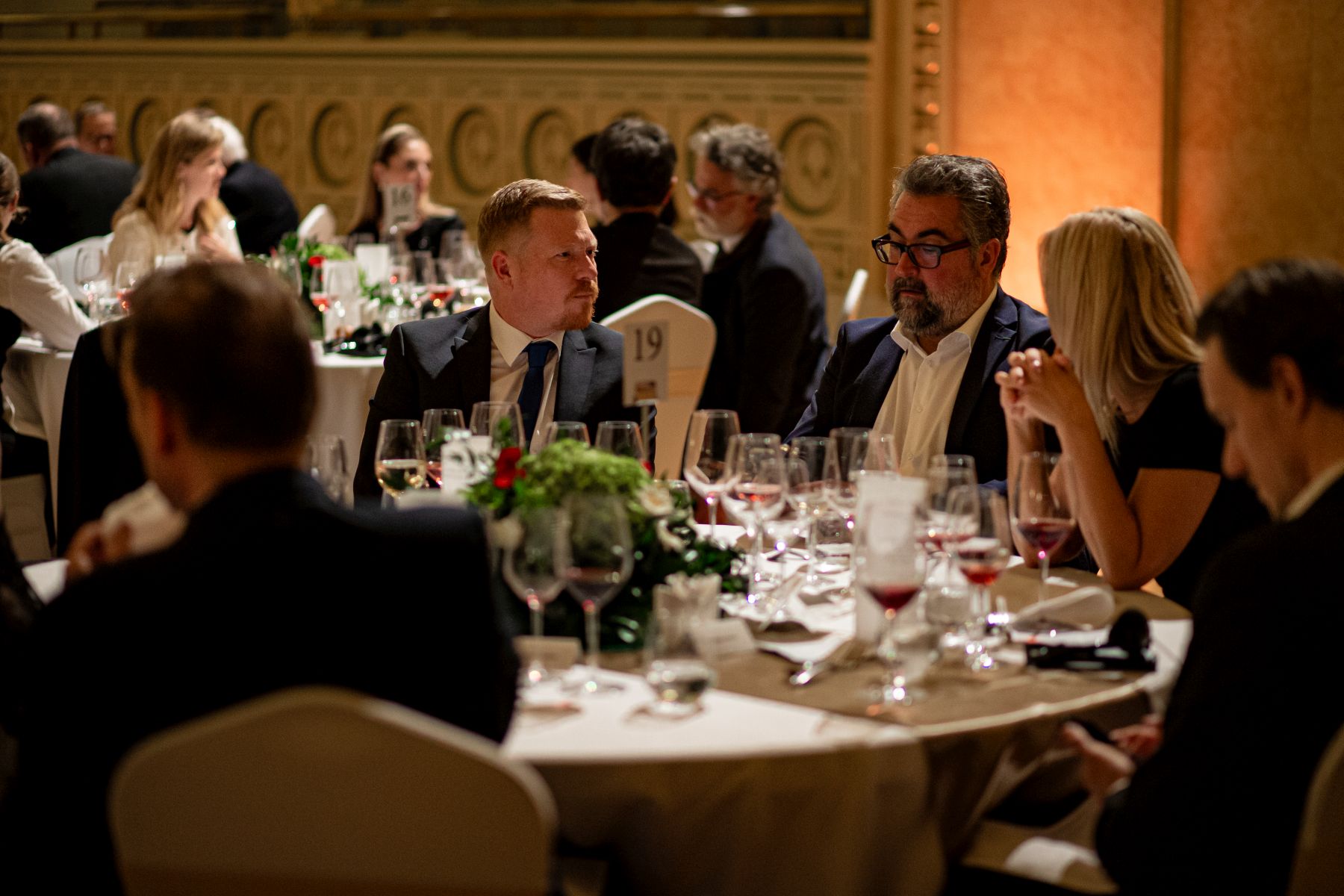
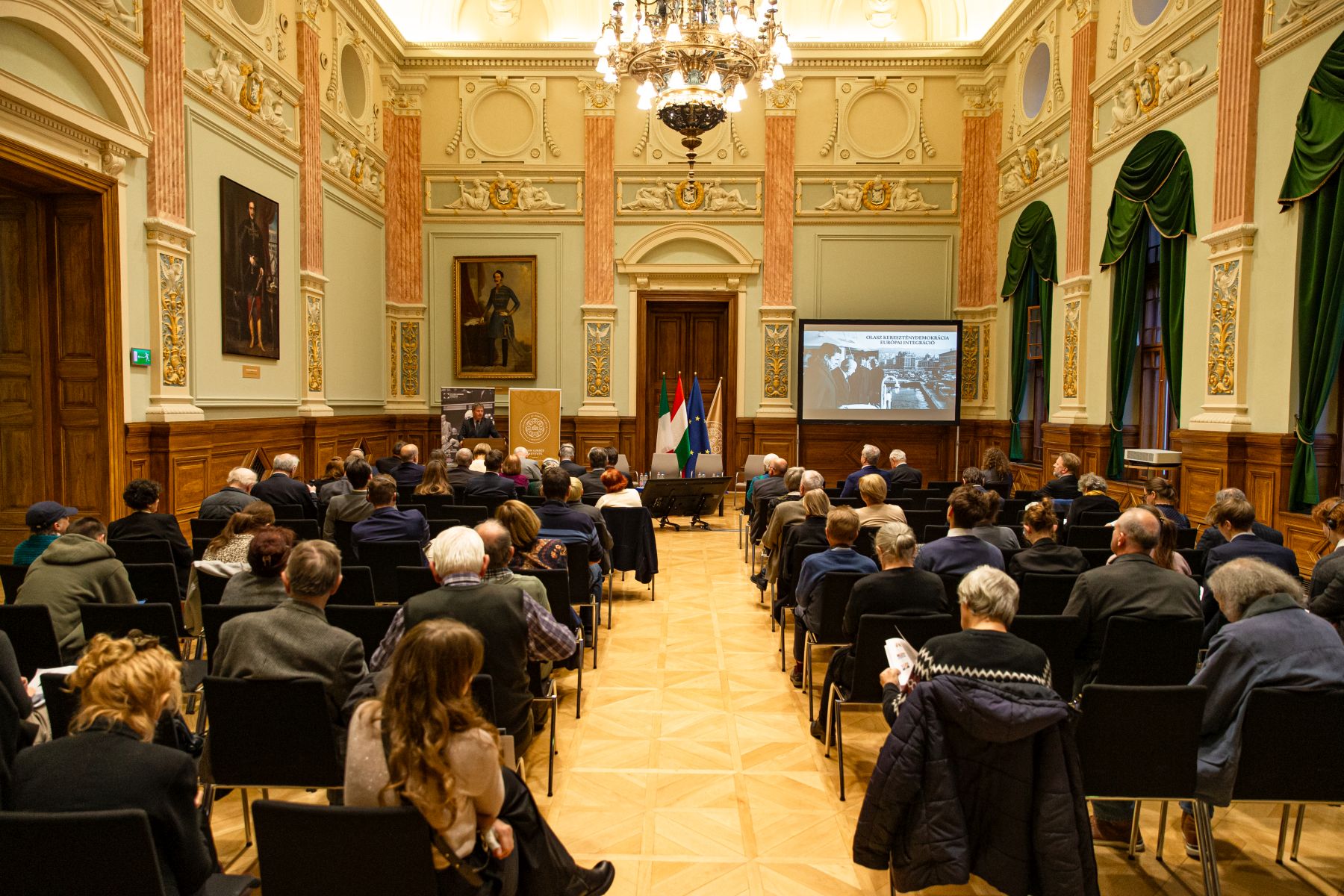
In keeping with tradition, we invited our friends, partners and colleagues to the Vigadó of Pest to celebrate the 113th anniversary of Otto von Habsburg’s birth. The event, held on 22 November, was attended on behalf of the family by his son, Georg von Habsburg-Lothringen, and his wife, Princess Eilika of Oldenburg, as well as by the doyen of the Hungarian branch, Michael von Habsburg-Lothringen, together with his spouse, Archduchess Christiana. Among our guests, we had the privilege of welcoming ambassadors of several European countries; as well as András Zs. Varga, President of the Curia; Tamás Vargha, Deputy Minister of Defence; Ernő Schaller-Baross, Member of the European Parliament; and Imre Vejkey, Member of the National Assembly. Former members of post-transition Hungarian governments – Géza Jeszenszky, Péter Ákos Bod, and János Martonyi – were likewise present.
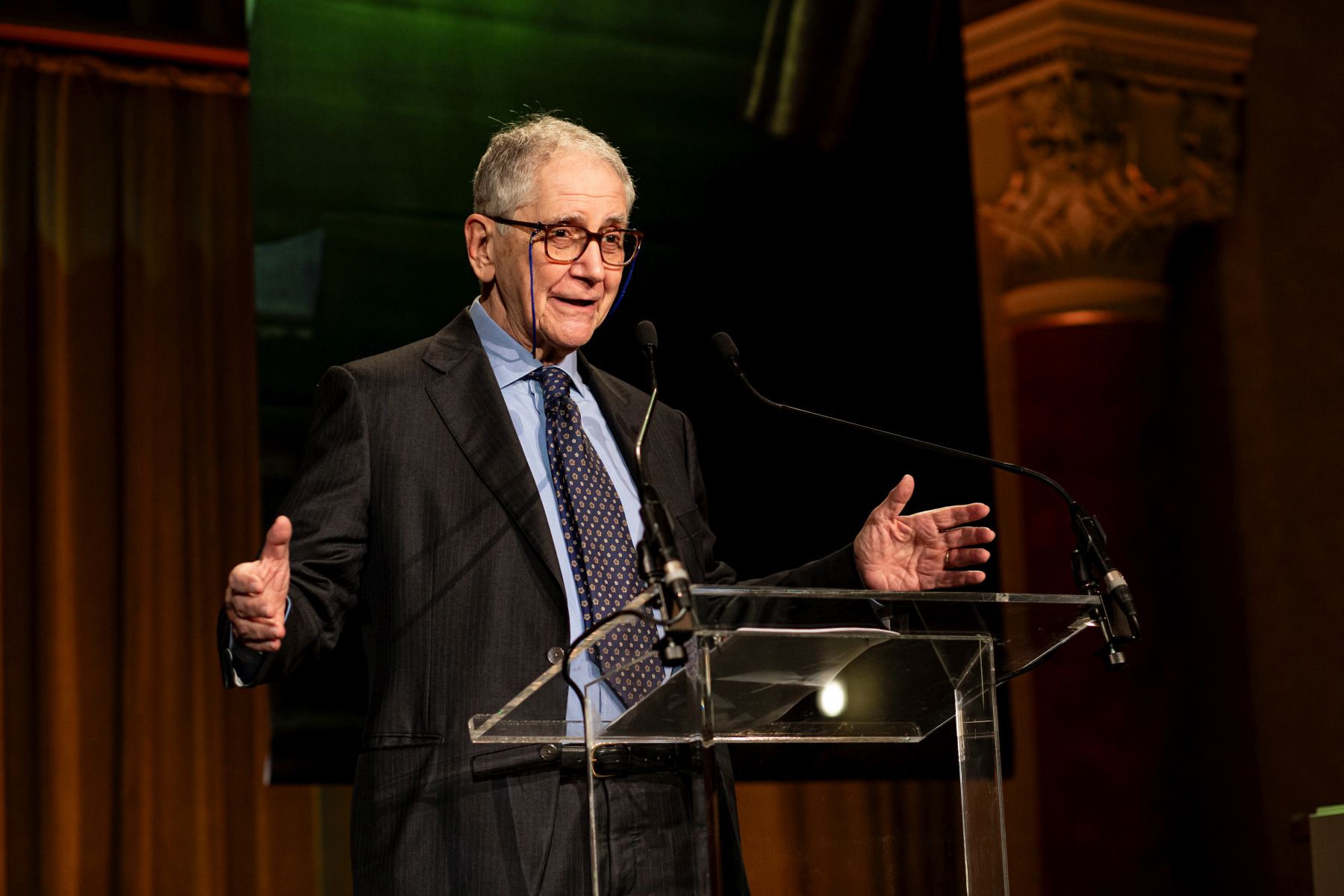
The guest of honour, Rocco Buttiglione, first met Otto von Habsburg more than four decades ago at a small private gathering convened to consider ways of supporting the Churches of the Central and Eastern European countries. As the Italian Christian Democratic politician recalled, their aim at the time was not yet to overthrow communism; they were merely reflecting on how Christian culture might be kept alive in states governed by totalitarian regimes. Otto von Habsburg, he noted, was a steadfast figure in the group: never despondent, his optimism unshaken by any circumstance. “Hope is not a superficial idealism,” the former crown prince reminded his interlocutors; rather, it is an anchor fastened to true values, protecting the fragile vessel of both individuals and communities amid the turbulence of high politics.
What message would our namesake convey to the people of today, to Europe’s political leaders? Buttiglione posed the question as someone who had once stood by his side. Communism has collapsed, and the vast majority of the continent’s peoples now live in peace within a common homeland, a Union whose enlargement remains underway. Yet these achievements are overshadowed by no less pressing challenges: preserving Europe’s competitiveness, meeting the objectives of the Green Deal, addressing migration and the need to find a resolution to the war raging on our doorstep. These urgent issues compel far-sighted leaders to return to the fundamentals of integration: to the individual who understands and embraces their identity, and who, paradoxically, can experience personal freedom most fully through their ties to family, local community and nation. This was the attitude of the knight who never abandoned the fight – Otto von Habsburg – and it should encourage us, his late followers, in spirit.