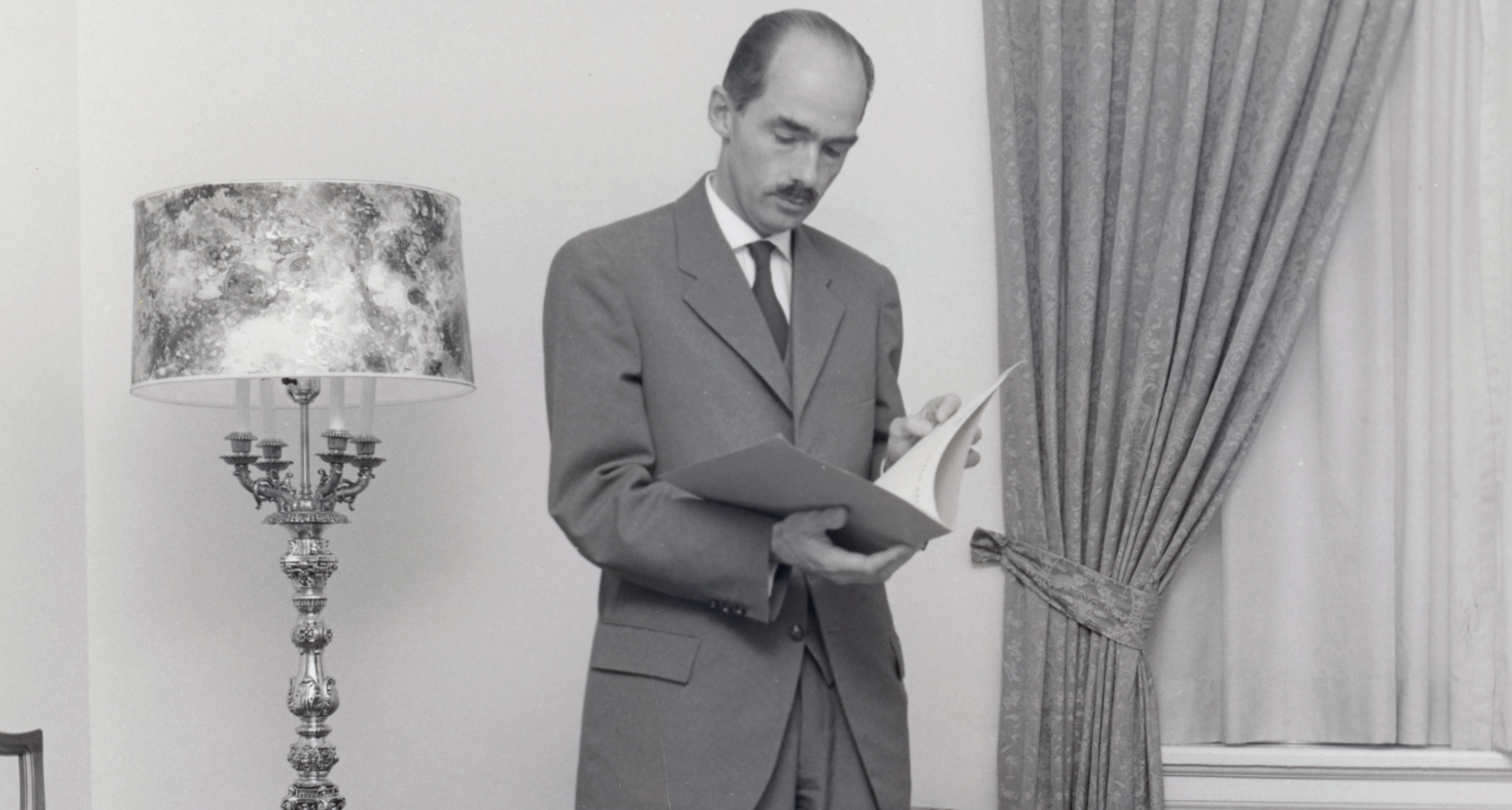
Otto von Habsburg in the United States, c. 1963
On the occasion of the 80th anniversary of the founding of the United Nations, the Institute of History of the Eötvös Loránd Research Centre for the Humanities at the Hungarian Academy of Sciences, in cooperation with the Committee of National Remembrance, has published a substantial edited volume examining various aspects of the international organisation that are also relevant from the perspective of Hungary.
The volume, titled Hungary at the United Nations: Diplomacy, Human Rights, Presence. Studies of Hungary and the United Nations Research Group, 2025 (eds. Lídia Balogh, Pál Germuska, Gusztáv D. Kecskés), was released in December 2025 and includes Gergely Fejérdy’s contribution, Otto von Habsburg and the Hungarian Cause at the United Nations.
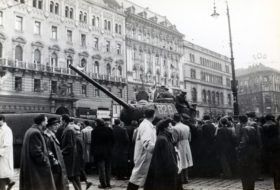
The study demonstrates that our Foundation’s namesake regarded the United Nations with scepticism from the outset, as he did not consider it guaranteed that the organisation would be capable of fulfilling the objectives it had set for itself. Nevertheless, in the autumn of 1956, he concluded that, from the perspective of advancing the cause of the Hungarian Revolution, the United Nations might represent the most appropriate international forum. He therefore took the initiative to have the Hungarian question placed on the organisation’s agenda. The inertia of the world body soon led to disappointment; however, between 1956 and 1963, Otto von Habsburg continued his efforts to keep the cause of the Hungarian Revolution alive, primarily with the assistance of the semi-official Hungarian diplomatic representation in Madrid. The essay draws largely on previously unknown documents from Otto von Habsburg’s personal papers, offering new perspectives that enrich historical research on the period.