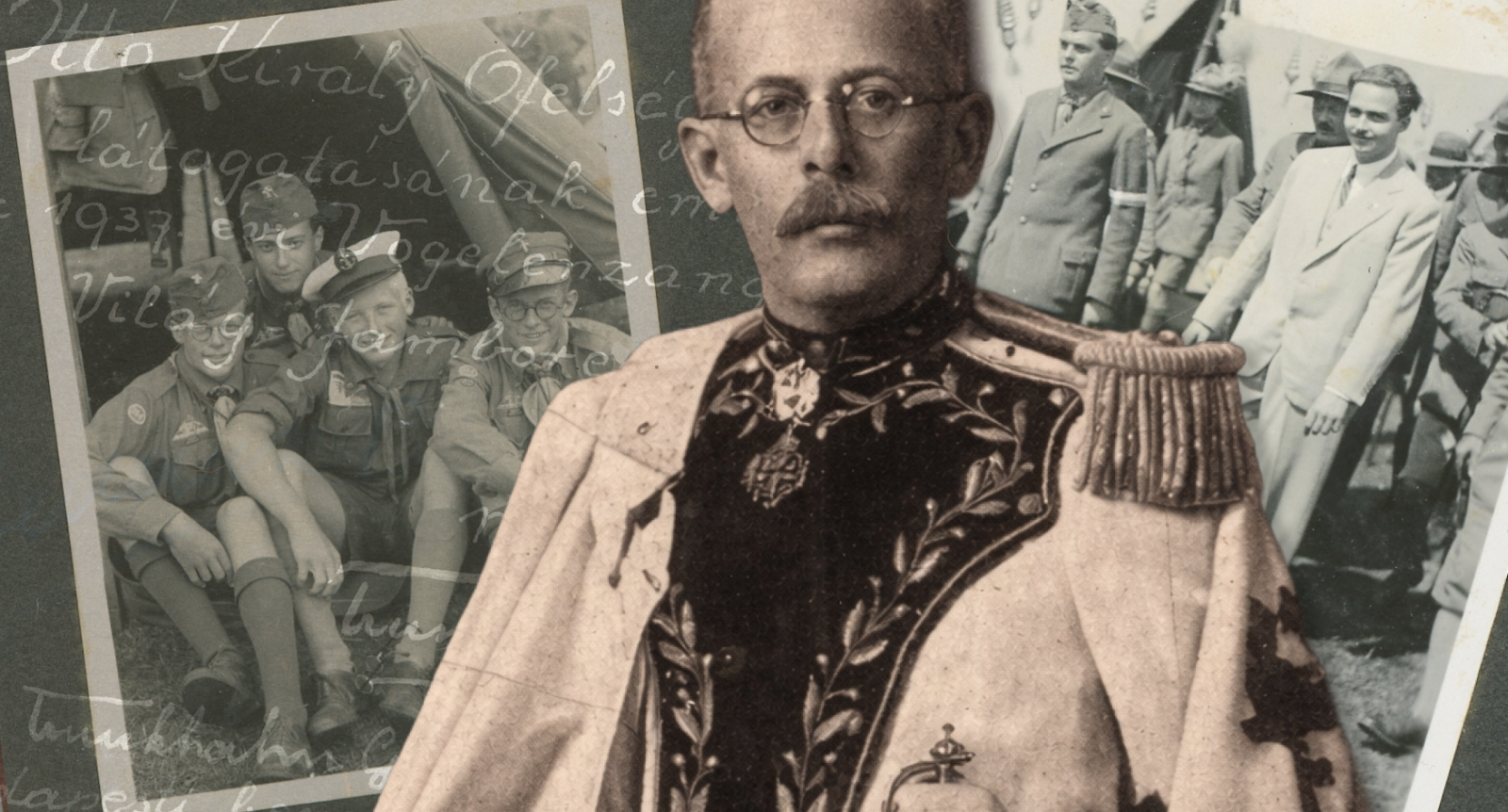
Created to commemorate the event, the album not only captures leading figures of Hungarian Scouting between the two world wars, but, through the story of the Trunkhahn family, also provides insight into the twentieth century history of an upper-bourgeois household, from social prestige to postwar persecution.
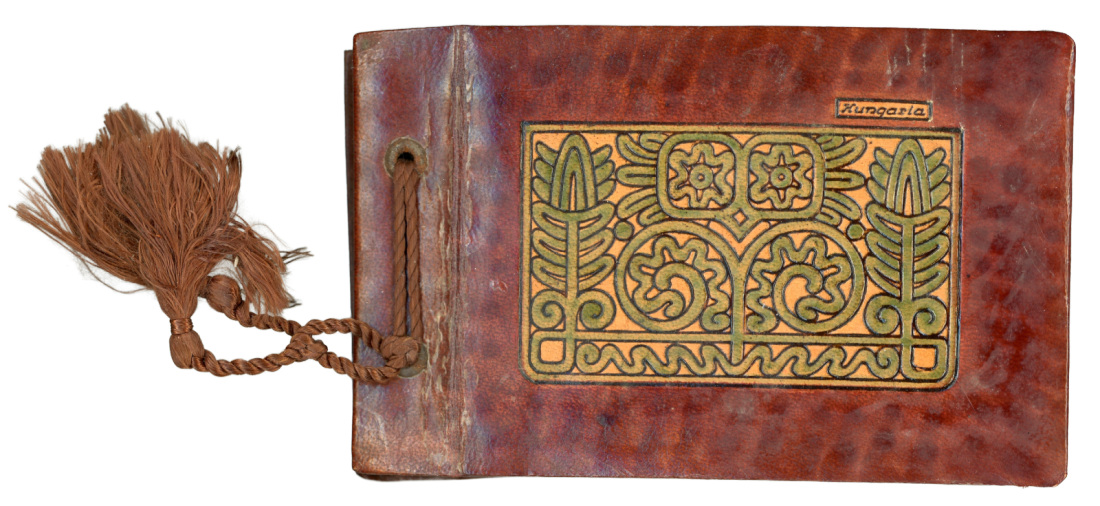
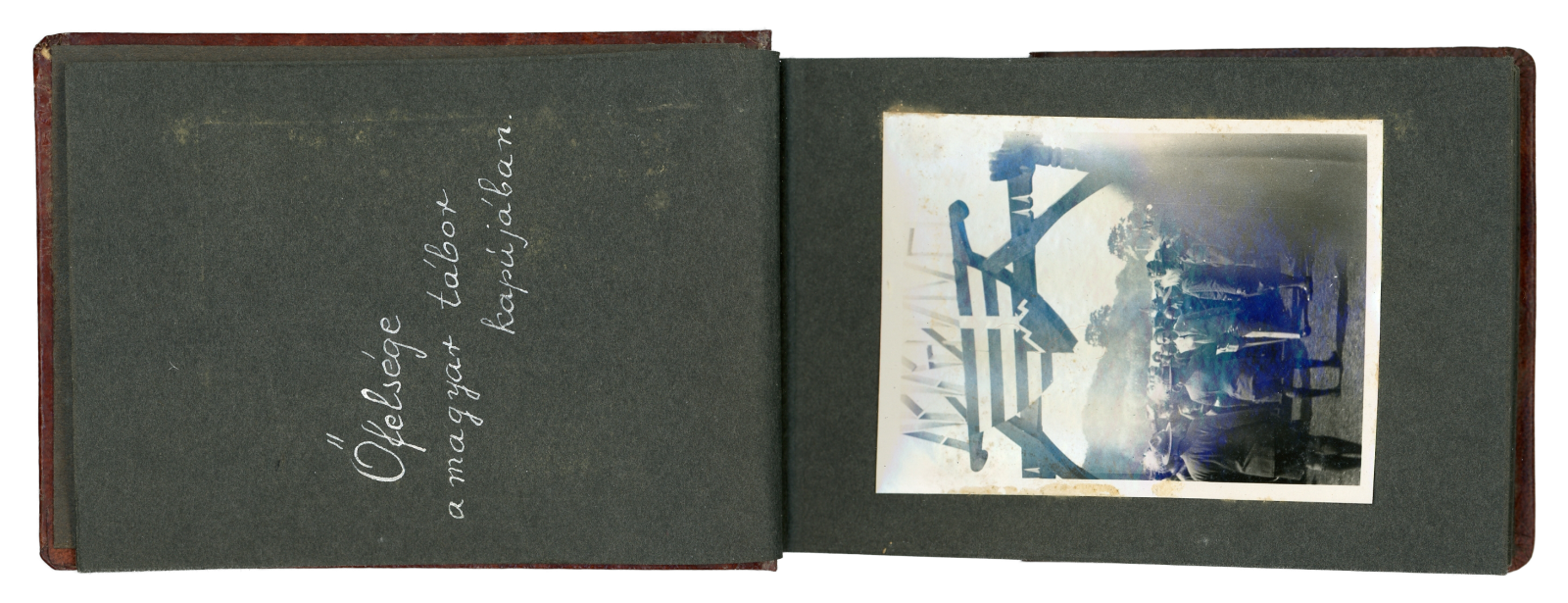
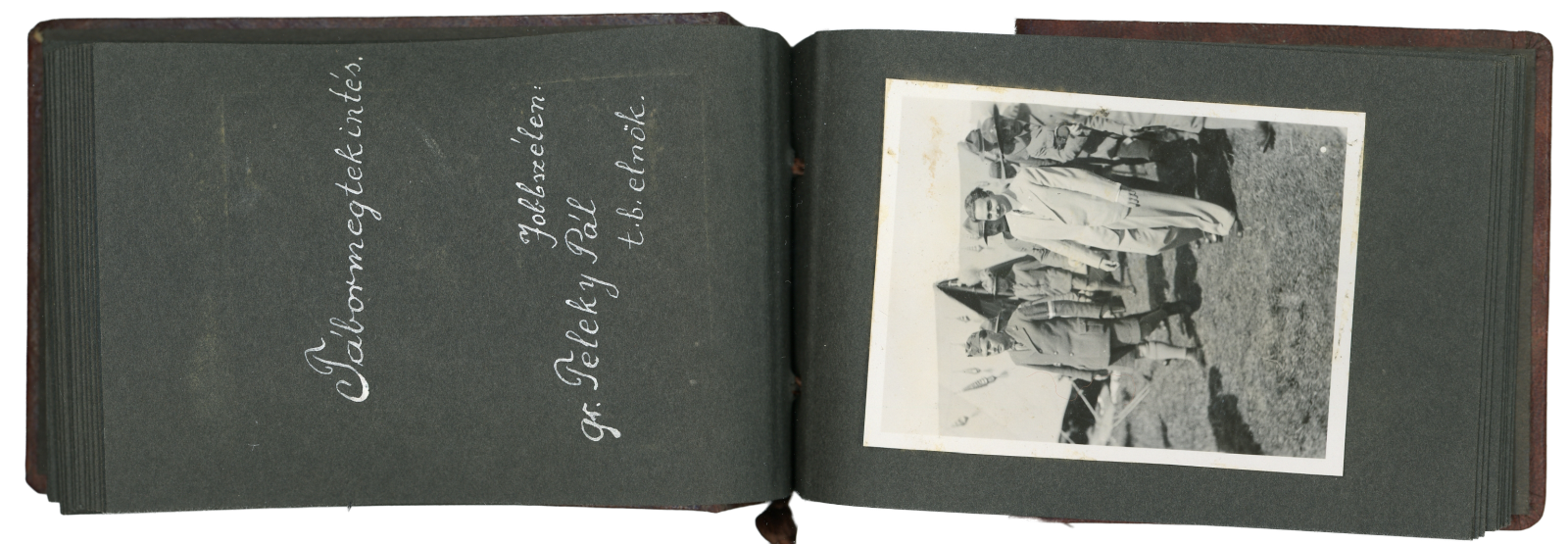
The small, leather bound album decorated with Hungarian motifs, arrived as part of the estate of Count Heinrich Degenfeld (1890–1978) and was added to our Foundation’s photo collection. It had originally been sent to Otto von Habsburg on the occasion of the 1937 World Jamboree in the Netherlands, which he himself visited, including the Hungarian camp. The photographs feature several prominent personalities from interwar Hungary, among them Count Pál Teleki and Dr Antal György Papp, both members of the Hungarian Scout Association.
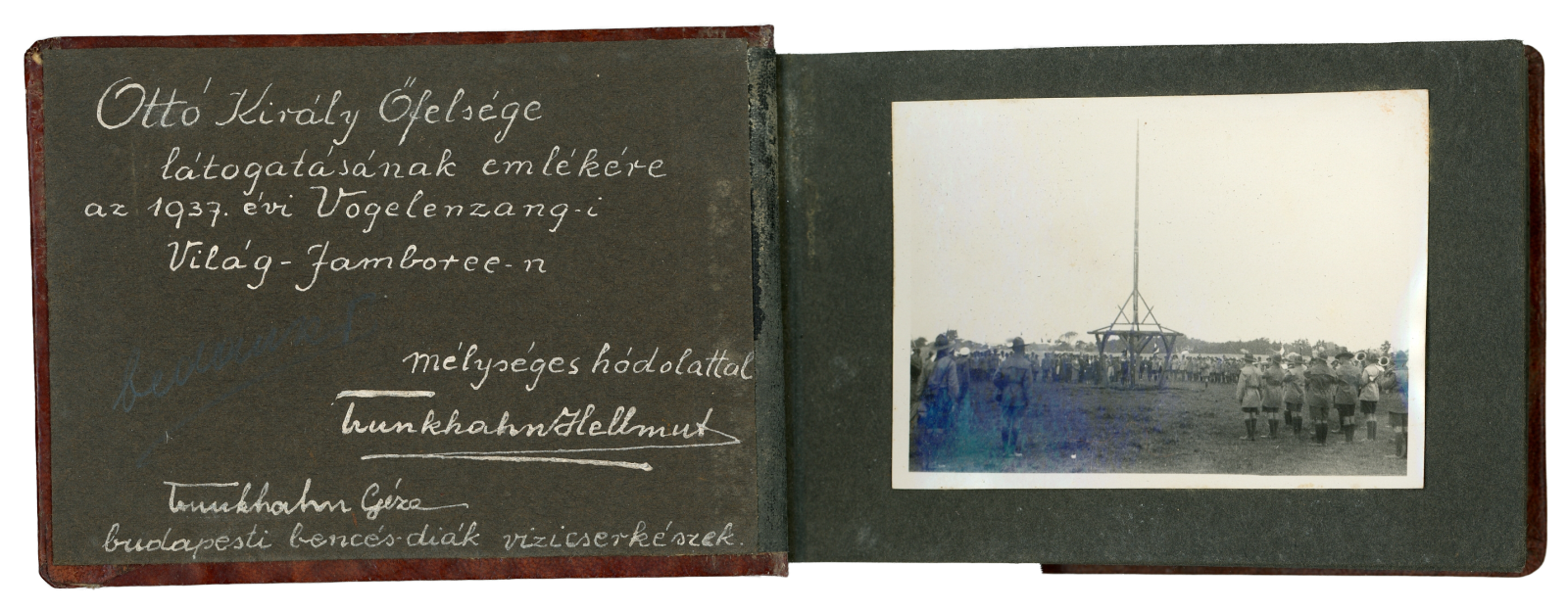
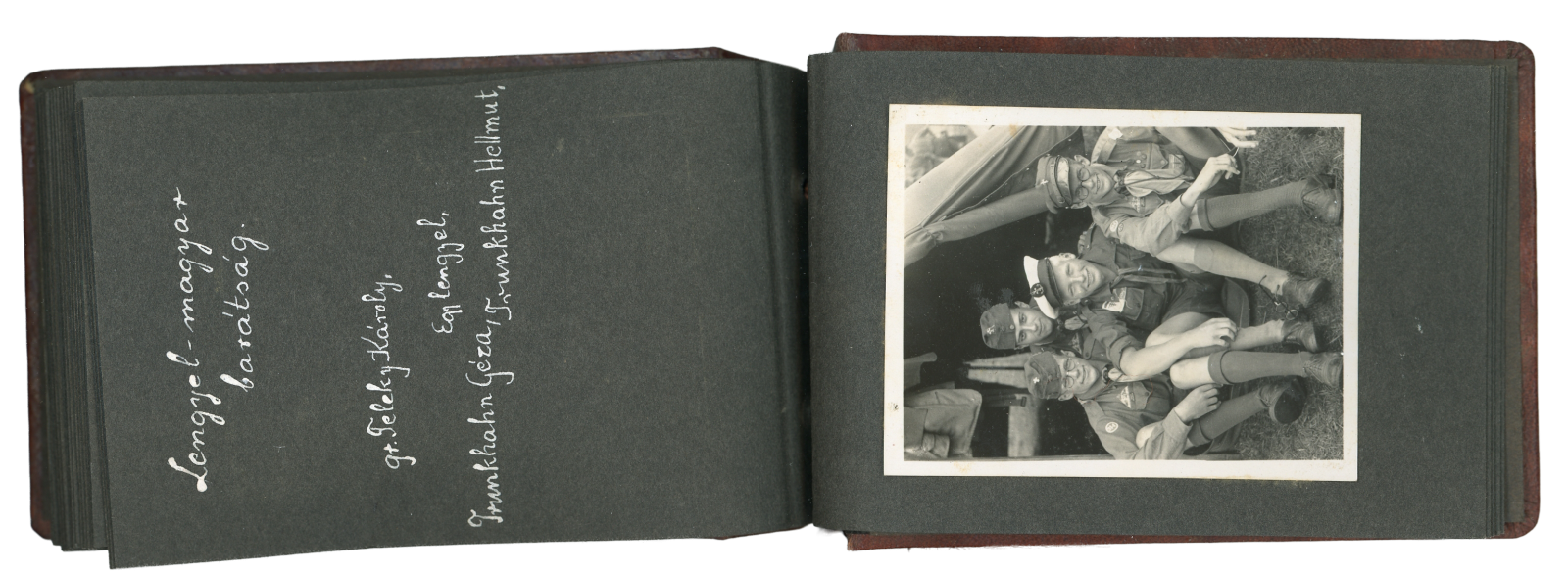
Behind the images, however, there gradually emerges a mosaic-like portrait of a twentieth century upper middle class family. The album was put together by Hellmut and Géza Trunkhahn, sea scouts and students in the eighth and sixth grades at Saint Benedict School in Budapest, who also appear in the photographs themselves. Sea scouting, a branch of the movement focused on water-based activities, remains one of the most successful areas of Hungarian scouting to this day.
They were not alone in their legitimist sympathies within the family. Their father, Leopold Trunkhahn (Lipót) (1882–1944), described himself at the time as the country’s “only Catholic woollen cloth manufacturer.” He initially produced military uniforms, and later supplied clothing for upper class families as well. According to a report in the journal Társadalmunk, he sent garments as a donation to Queen Zita and her children during their exile, for which he received a letter of thanks from the former Queen. He was also a member of the central leadership of the National Legitimist People’s Party in Buda and its surroundings. The family’s social standing is clearly reflected in the fact that, when Archduke Joseph Francis of Austria was invested into the Order of the Holy Sepulchre in May 1935, the Trunkhahn children served as page boys. The occasion is recorded in the memoirs of Miklós Esty, a papal chamberlain who attended the ceremony. Leopold Trunkhahn himself was also involved with the order, serving as a commendator (commander and patron).
The father died on 6 November 1944, and his woollen mill was inherited by his sons. In 1945, proceedings were initiated against the Trunkhahn brothers by the new regime. The political police accused them of treason and of sympathising with the Nazis. According to “exposé” articles published in the press, the family attempted to smuggle their stock to Germany and, recognising the gravity of the situation, even planned to destroy the factory. In this context, they reportedly resisted Soviet forces on the factory premises, which rendered the complex unusable. The family was last mentioned in the press in September 1946, and the factory was nationalised in 1948.
Only fragmentary information survives about the brothers’ later lives. Civil records and immigration lists indicate that the elder son, Hellmut, emigrated to the United States in 1951 and died in Gary, Indiana, in 1964. It is not known when his younger brother, Géza, left the country, only that he died in Munich in 2009. The album thus stands as a silent witness to a time when the brothers were still together, living in the carefree world of their scouting years.
Zita Lőrincz