“The purpose of my journey is essentially to study the political, social, and economic conditions. I have no doubt that this region will play an extremely important role in shaping global economic and international political developments” — with this conviction, Otto von Habsburg set out for Tokyo in February 1962. His brief visit was followed by a whole series of further journeys.
A few years ago, our Foundation began exploring the details of this unique nexus, and since then we have presented our findings at several events held in Japan. These occasions have provided an opportunity to emphasize that our namesake held in high regard the Far Eastern country’s ability to carry out its modernization in harmony with its rich cultural traditions, and he considered this experience a guiding example for Europe as well.
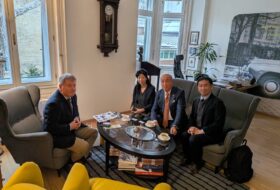
For many years, our Foundation has maintained excellent relations with Japan’s ambassadors accredited to Hungary, and it is therefore a particular pleasure for us that Mr. Tetsuya Kimura, who assumed his post in Budapest this January, also paid a courtesy visit to us. The Ambassador is well acquainted with the broader Central European region. He began his diplomatic career in Vienna at the time of the political transition, from where he was able to closely follow the processes of transformation — including the Pan-European Picnic held under the patronage of Otto von Habsburg, as well as the accelerated transition of 1989–1990 that followed — and nearly three decades later, he again represented his country in the German-speaking world as Consul General in Munich.
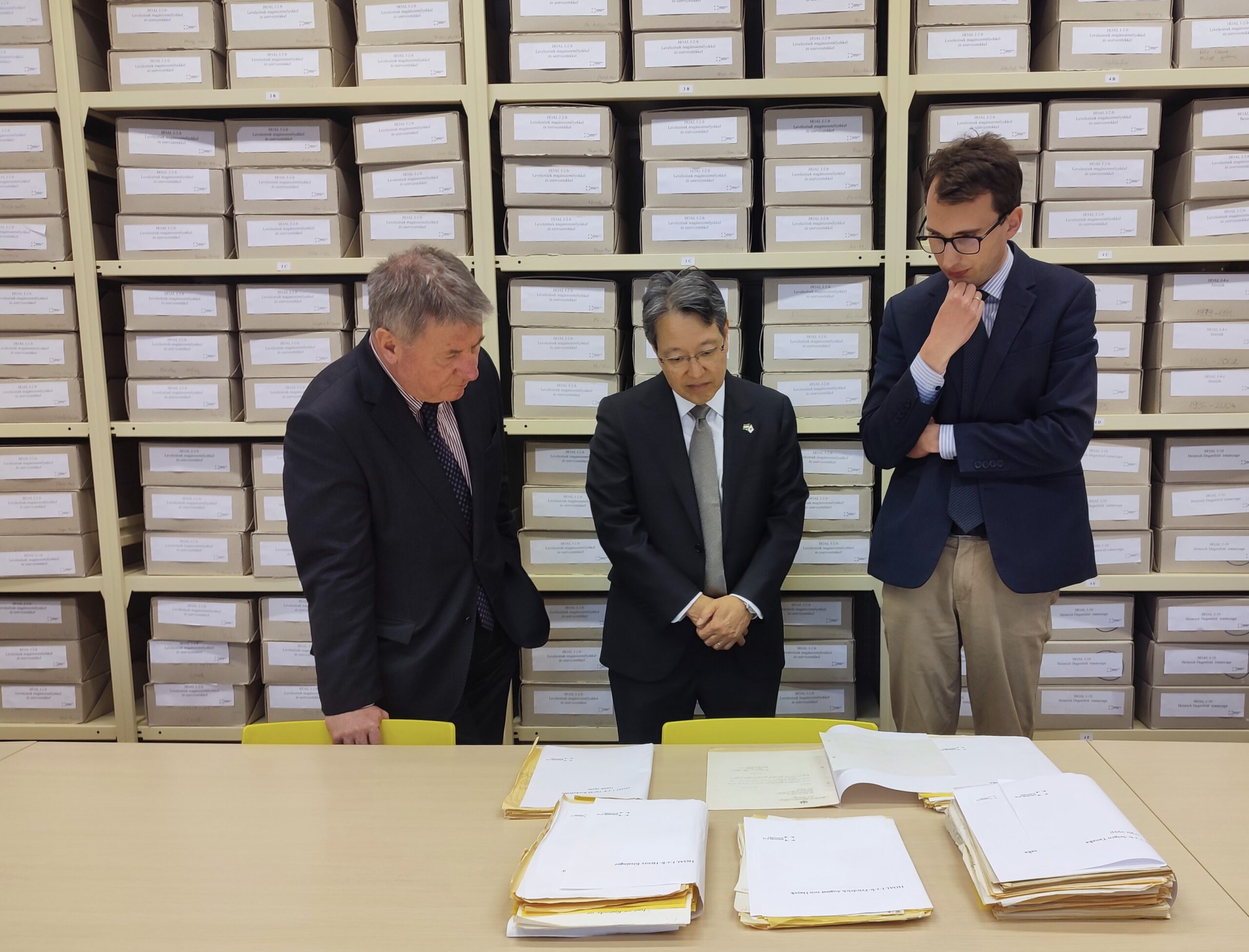
We briefed the Ambassador on the events organized by our Foundation in recent years in Tokyo and Osaka, as well as on the further programs emerging from these initiatives. While viewing our archival materials, discussion also turned to Otto von Habsburg’s extensive network of contacts in Japan, in which members of the Imperial Family also played a significant role. As the diplomat had worked alongside the Imperial Family for many years, he noted this with particular interest. The documents preserved in our collection also shed light on our namesake’s intellectual bridge-building efforts among American, European, and Japanese political leaders.
In the spirit of Otto von Habsburg’s legacy, we are convinced that modern, democratic Japan — which at the same time respects its traditions and dynastic institutions — should be a key partner for Hungary.