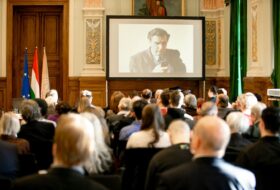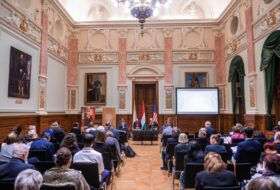
The foundation, named after Count József Károlyi – who maintained close ties with Otto von Habsburg and his family – has been organizing international conferences on current public affairs topics every year since 2000. This year, the focus was on the questions of integration and religious identities.
The event was opened by György Károlyi, grandson of József Károlyi and a member of the Board of Trustees of the Otto von Habsburg Foundation. In his remarks, he emphasized that Europe is becoming an increasingly pluralistic society, where examining the role of religion is particularly important. He also pointed out that the ideas formulated and implemented by the founding fathers and committed proponents of European unity – including our namesake – can still provide guidance today.
The invited speakers examined, within the European context, the politicians involved in the early stages of integration, the diverse development paths and public roles of Christian democracy, as well as the issues of secularization and religious pluralism. Several internationally renowned scholars associated with our Foundation participated in the program, including Professor Steven van Hecke, who provided invaluable assistance in organizing a conference on Otto von Habsburg in Leuven; Luigi Gianniti, board member of the Alcide De Gasperi Foundation; Frank-Lothar Kroll, professor at the Technical University of Chemnitz; and Gergely Rosta, professor at Pázmány Péter Catholic University and the University of Münster.
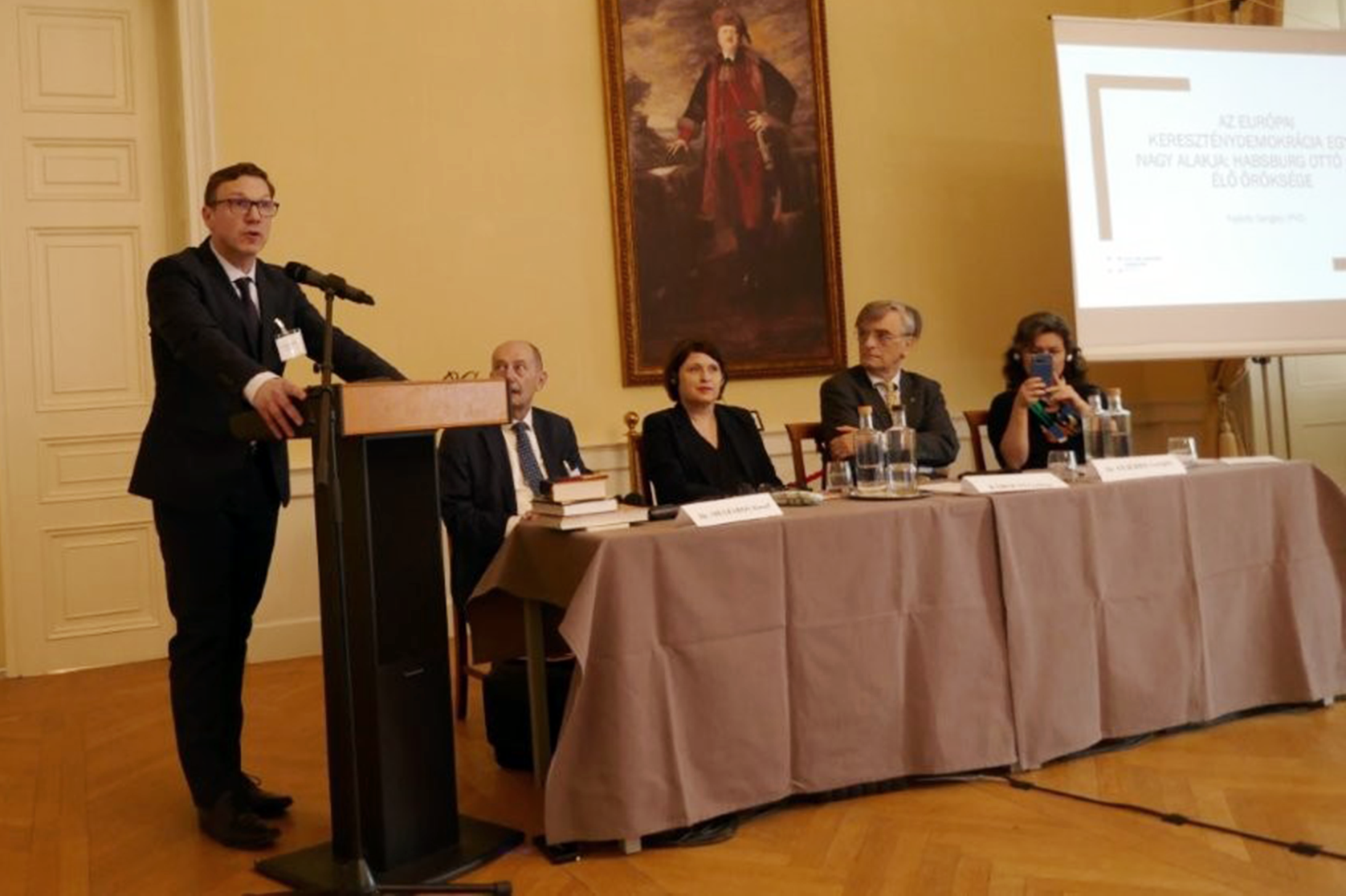
Gergely Fejérdy, our Deputy Scientific Director, delivered a lecture on the enduring legacy of Otto von Habsburg and also moderated one of the panels. In addition to presenting his biography, he highlighted that although the former Crown Prince was a committed Catholic, he did not emphasize his religious convictions or “use them as a label,” but rather believed in the power of personal witness. He stressed that our namesake regarded a Europe built on Christian cultural roots, as well as interdenominational and interreligious dialogue, as fundamental. His public activity was defined by his opposition to Nazism and Communism, from which he drew strength, courage, and hope primarily from his faith. The principle of subsidiarity also played a key role in his thinking, ensuring for him a decentralized, value-based functioning of European cooperation. In conclusion, he quoted Otto von Habsburg’s words recalling his father’s death: “God does not expect people to bring Him reports of victory. He grants success. From us, He only expects that we do the best we can.”
The lectures will be published later this year by L’Harmattan Publishing, making the ideas formulated in Fehérvárcsurgó accessible to a wider audience.