Source Criticism and Memories of the Last Coronation Banquet
Their exchanges began in the early 1970s, when George Lang – born in Székesfehérvár and known in Hungarian as Láng György – was working on his landmark book The Cuisine of Hungary. By then, he had built an international career that took him from Budapest to America. Seeking to ensure the accuracy of the historical details, in the summer of 1970 the author approached Otto von Habsburg, who had witnessed the last Hungarian royal coronation as a child, and asked him to verify the chapter in his forthcoming work dealing with the banquet held at Buda Castle on 30 December 1916.[1]
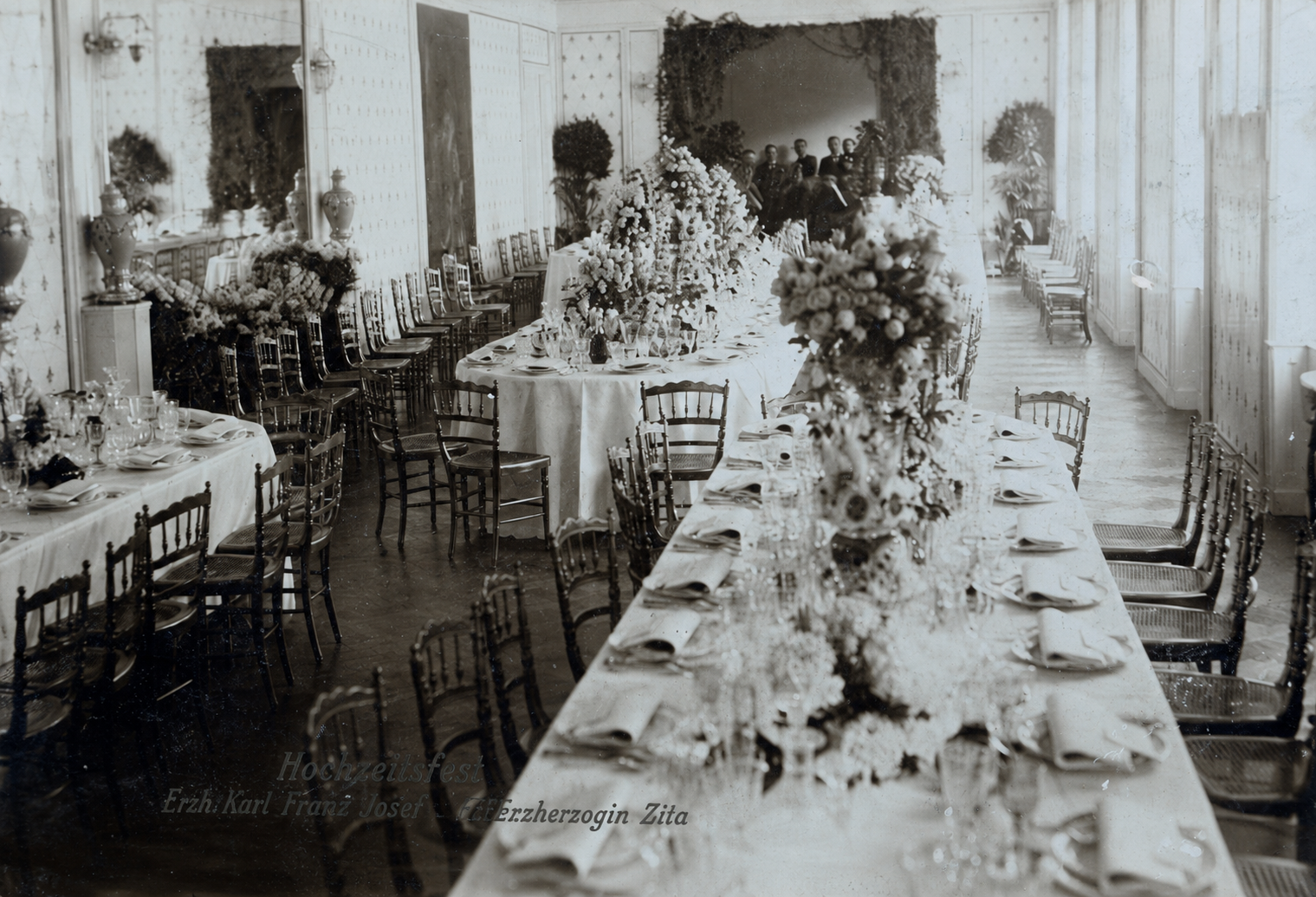
In his reply of 31 August 1970, Otto supported Lang’s research with rigorous source-critical observations and recollections of his own.[2] He clarified that the table had been covered not with silk but with “artistically woven linen damask”, and drew attention to the ceremonial character of the eighteen-course menu. Given the strict protocol surrounding the occasion, he described it as a peculiar form of symbolic dining, intended primarily as spectacle and representation. He also firmly corrected the misconception that the dishes had actually been served:
“This is incorrect. The high-ranking attendants who bore the dishes presented the food and then, without placing it on the table, immediately carried it away and returned it to the representative of the respective county. Each dish was presented to the King as an act of homage, but was returned untouched to the counties.”
King Charles IV and Queen Zita did not, in fact, partake of any of the food brought before them, as the entire presentation was purely ceremonial. Although this source-critical review is documented in detail in the archival material, Lang’s culinary monograph ultimately contained no separate chapter on the coronation banquet. The correspondence preserved in our collection thus records an episode omitted entirely from the finished book – perhaps fittingly, given that no meal took place in the conventional sense. Writing about the publication and its author’s overseas mission, György Márer observed in the Hungarian-American newspaper Szabadság that George Lang could be regarded as the “English interpreter of fine Hungarian flavours”.[3]
The “Gundel Year” – In the Spirit of Historical Authenticity
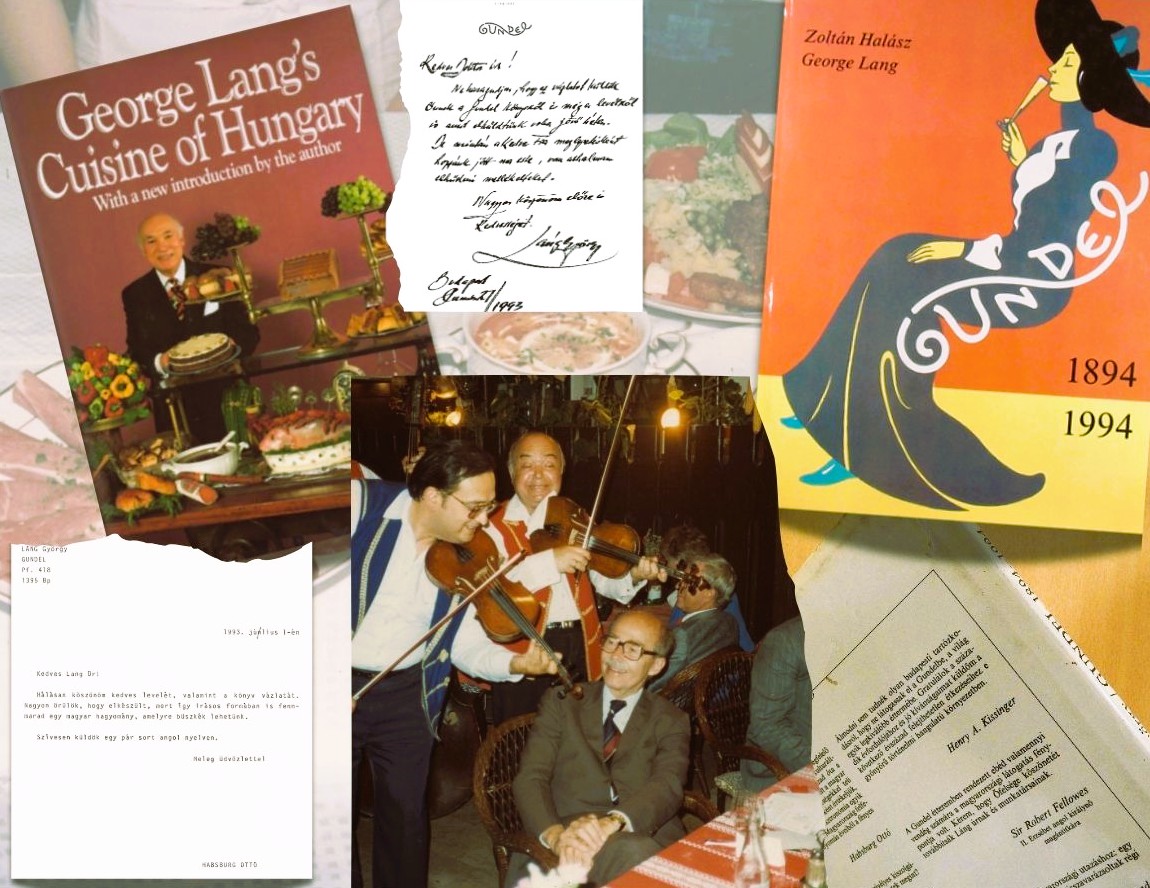
Relations between the Habsburg family and George Lang grew considerably closer in the 1990s, when Lang, together with Ronald Lauder – a businessman, diplomat and philanthropist who likewise had Hungarian roots – acquired the Gundel restaurant in Budapest’s City Park.[4] In June 1993, as preparations were under way for the centenary celebrations, Lang once again wrote to Otto von Habsburg. He asked the Archduke to pen a short recommendation for the back cover of a commemorative volume, in recognition of the culinary and cultural continuity of the former Austro-Hungarian Monarchy.
Reference: HOAL I-2-c-Láng György
The lavishly produced volume, titled Gundel 1894–1994, was co-authored with cultural historian Zoltán Halász and published by Helikon. Otto’s endorsement appeared alongside contributions by such distinguished figures as former US Secretary of State Henry Kissinger; historian John Lukacs; Robert Fellowes, known for his service as Private Secretary to Queen Elizabeth II; the internationally renowned conductor Sir George Solti; and specialist writers from The Times and The New York Times.
As numerous photographs in our collection attest, Otto von Habsburg accumulated considerable experience at dining tables over the course of his long life.
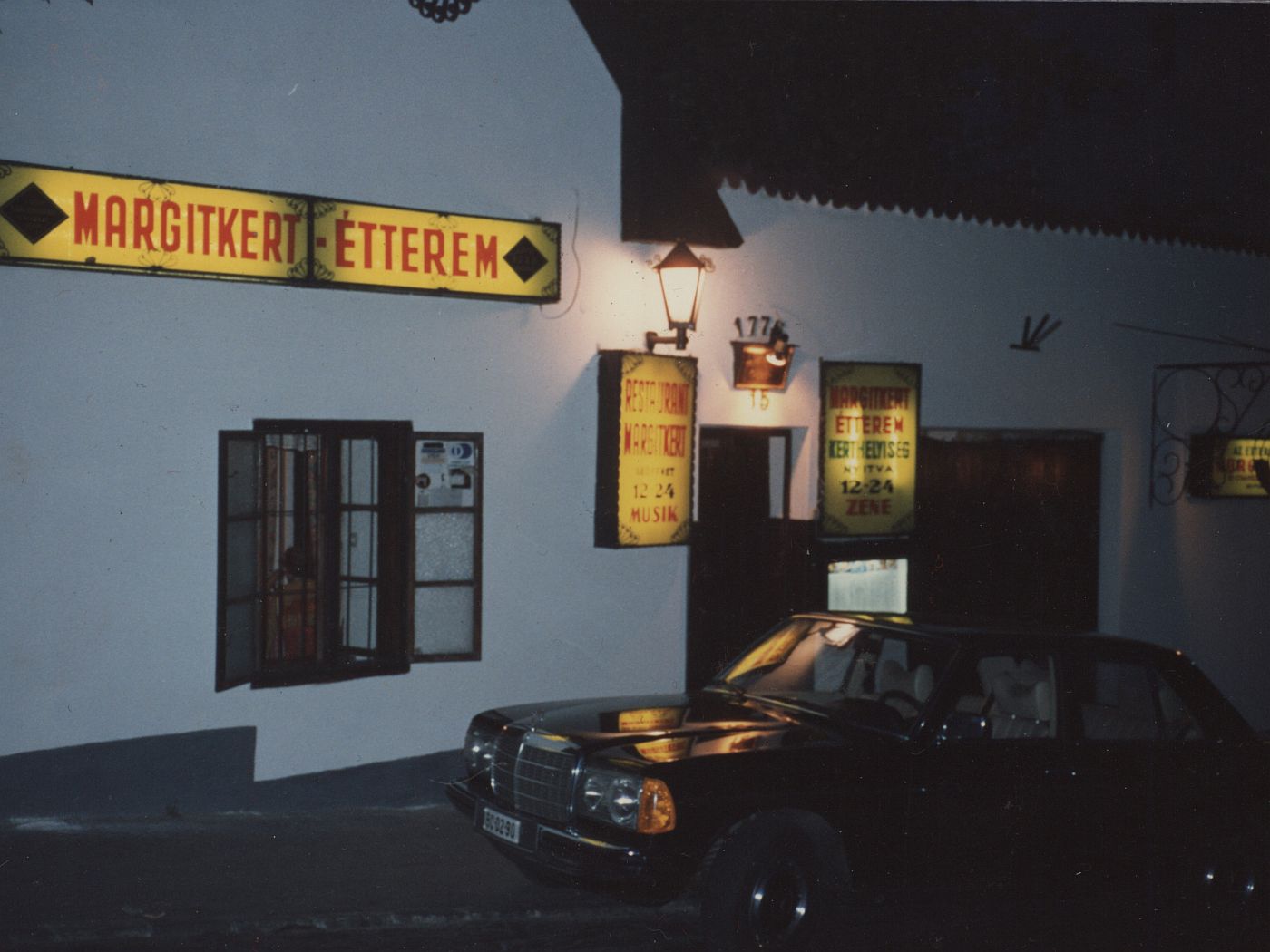
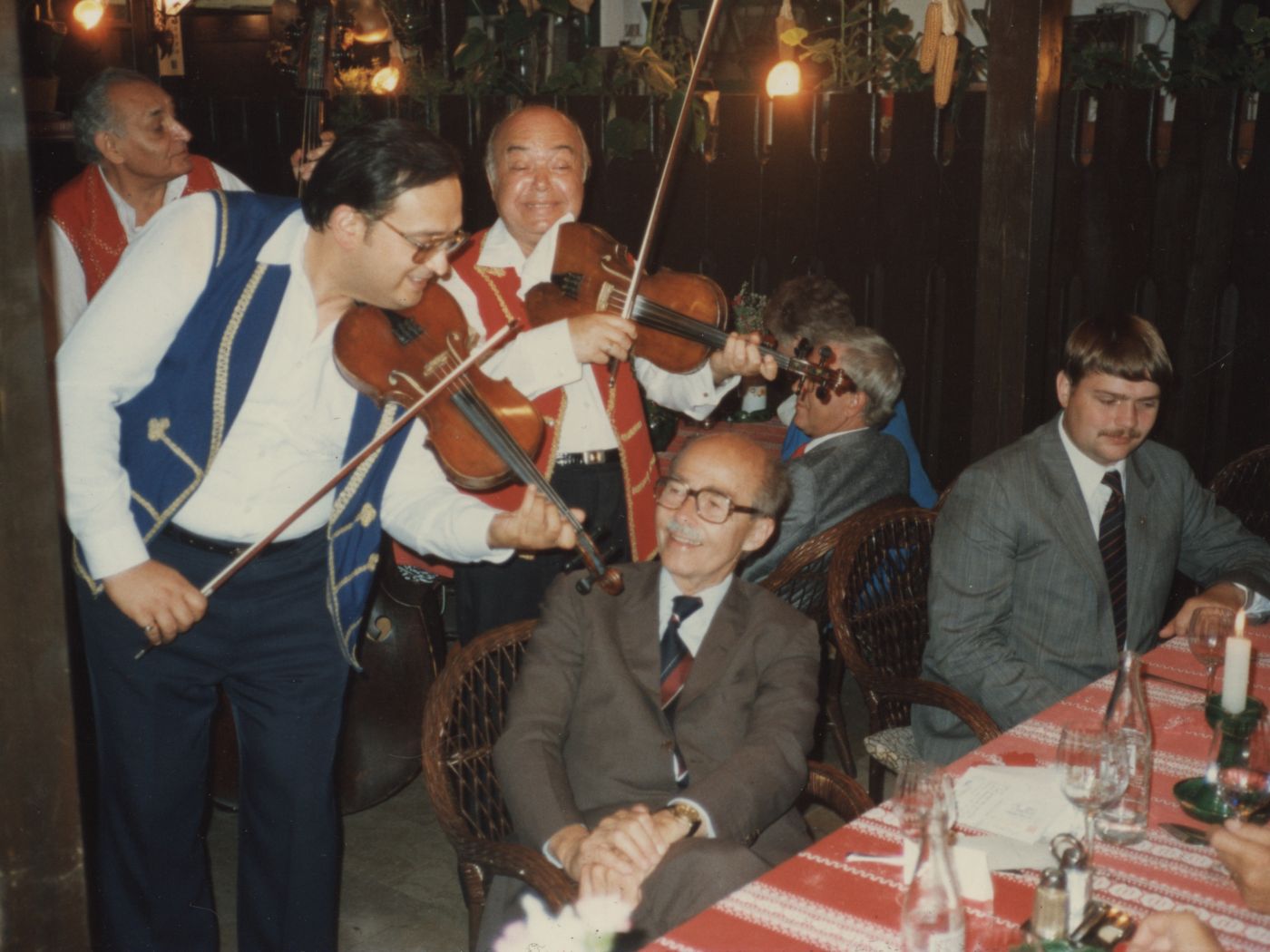
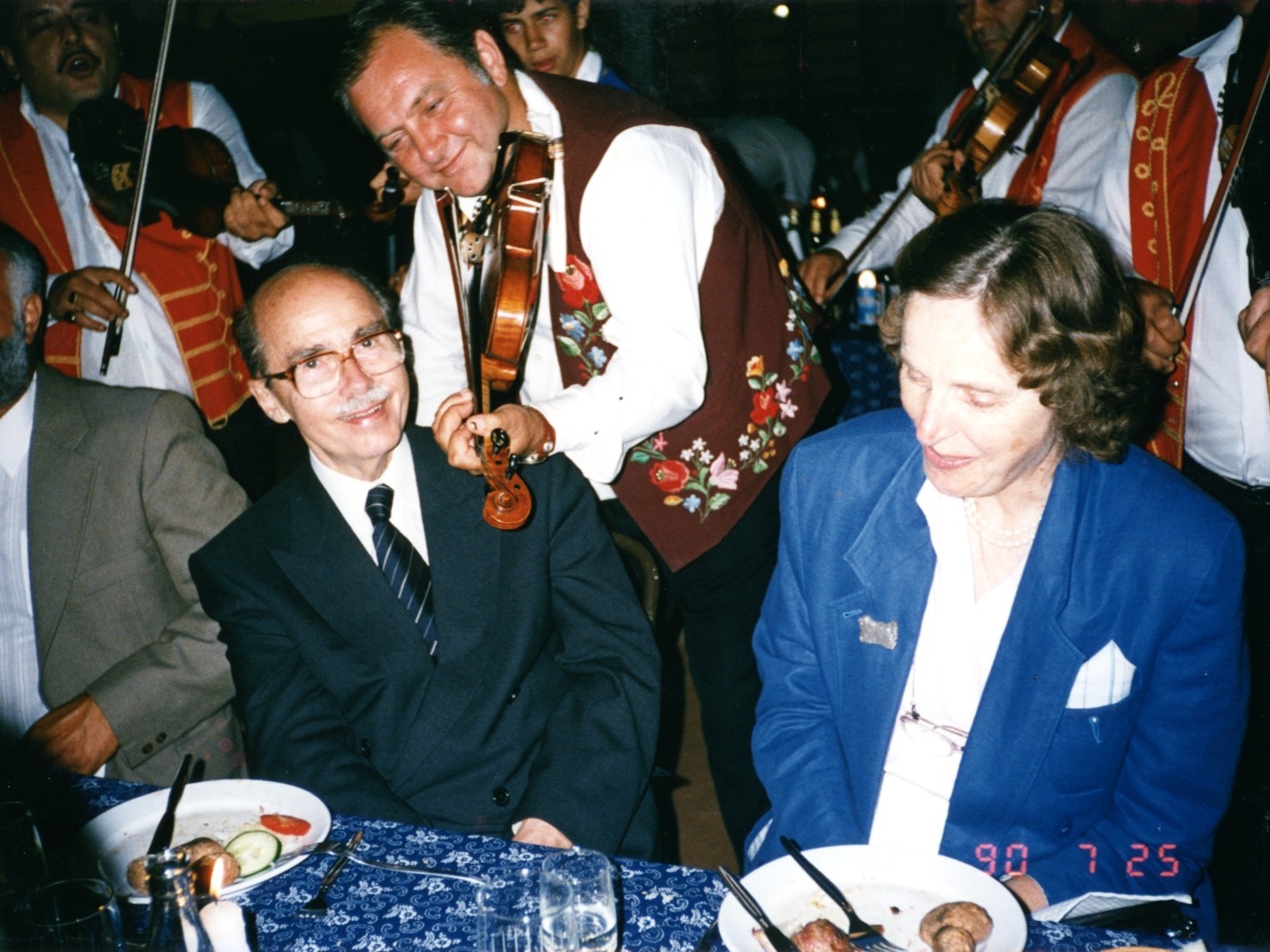
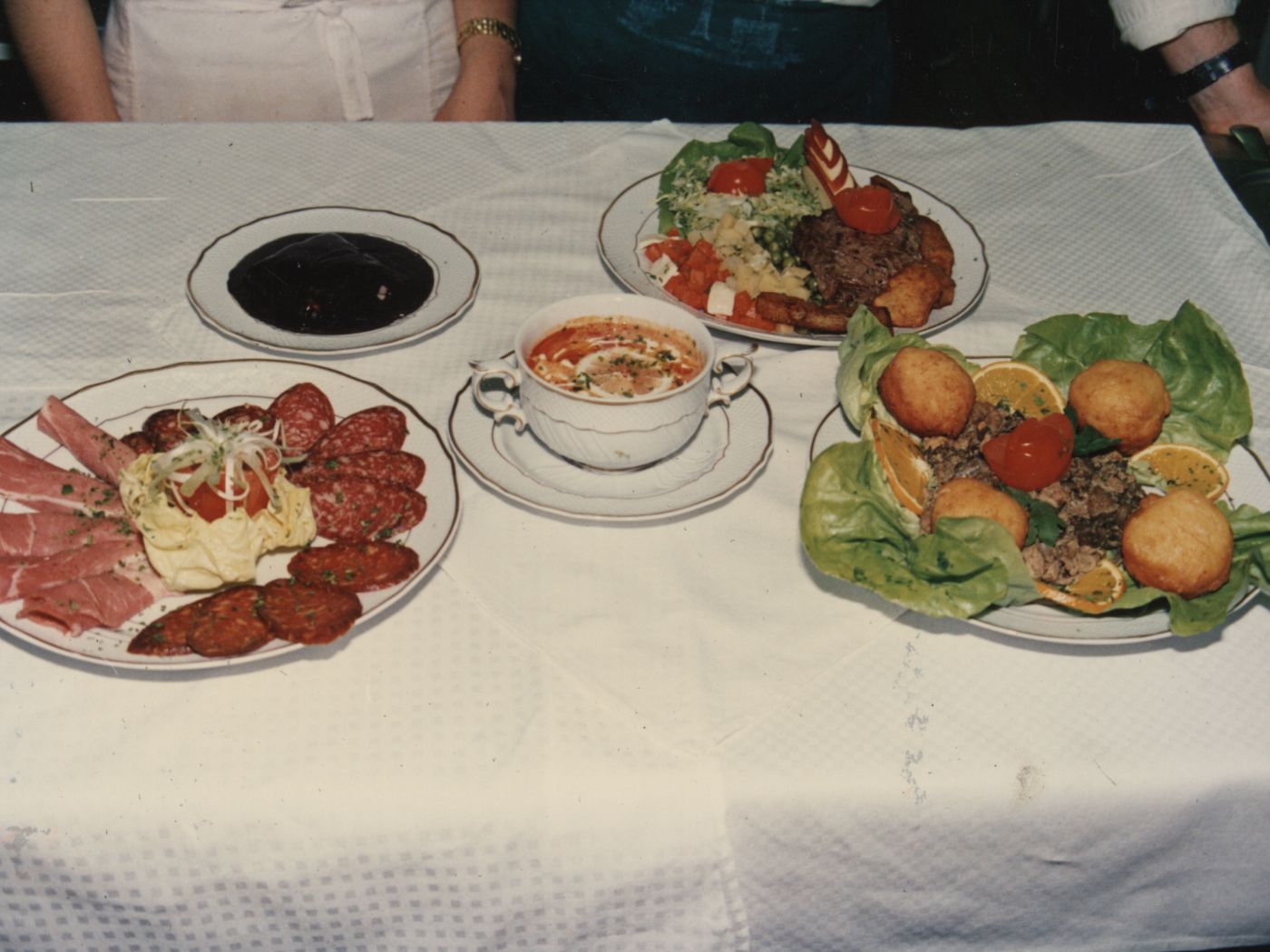
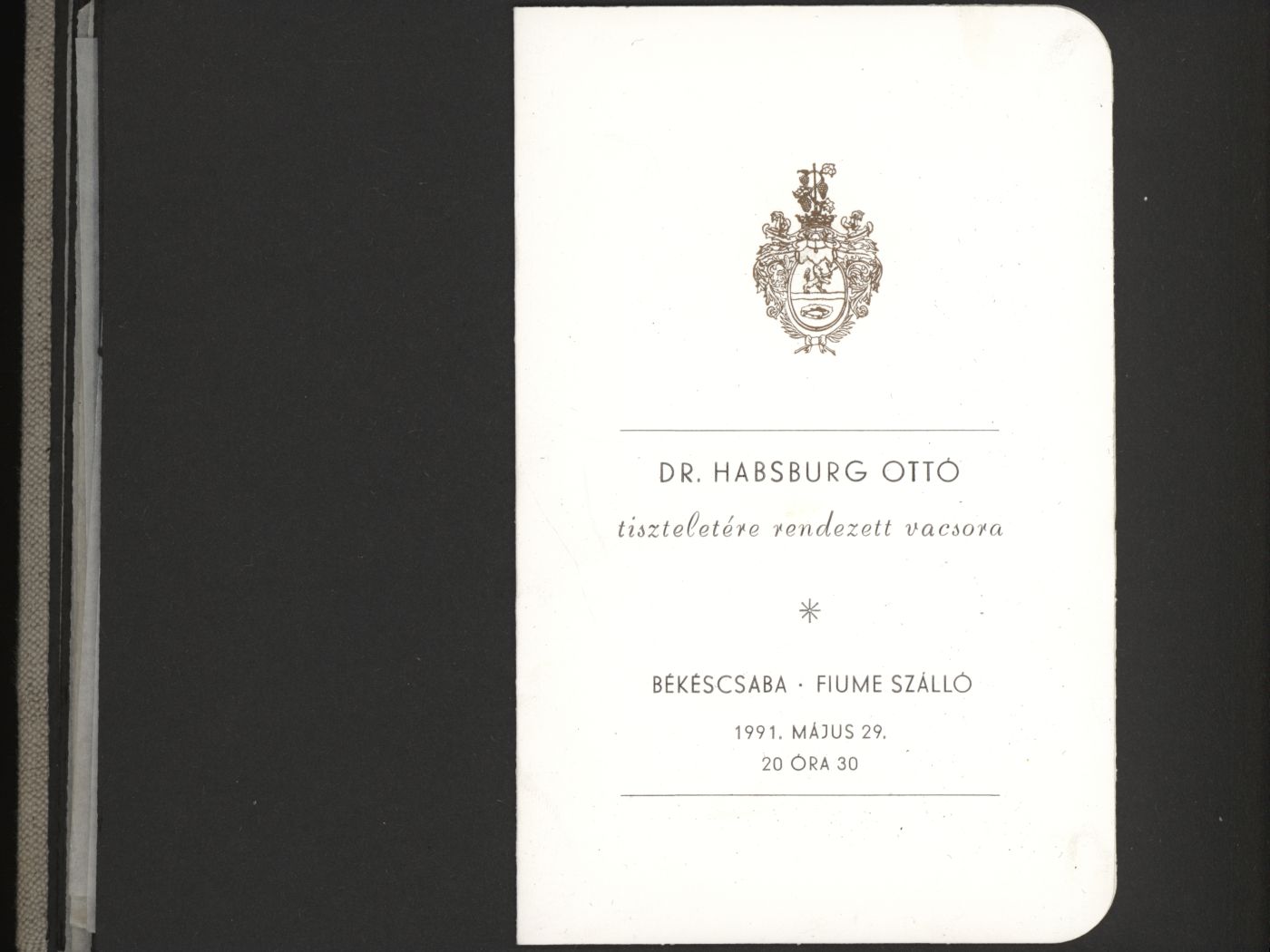
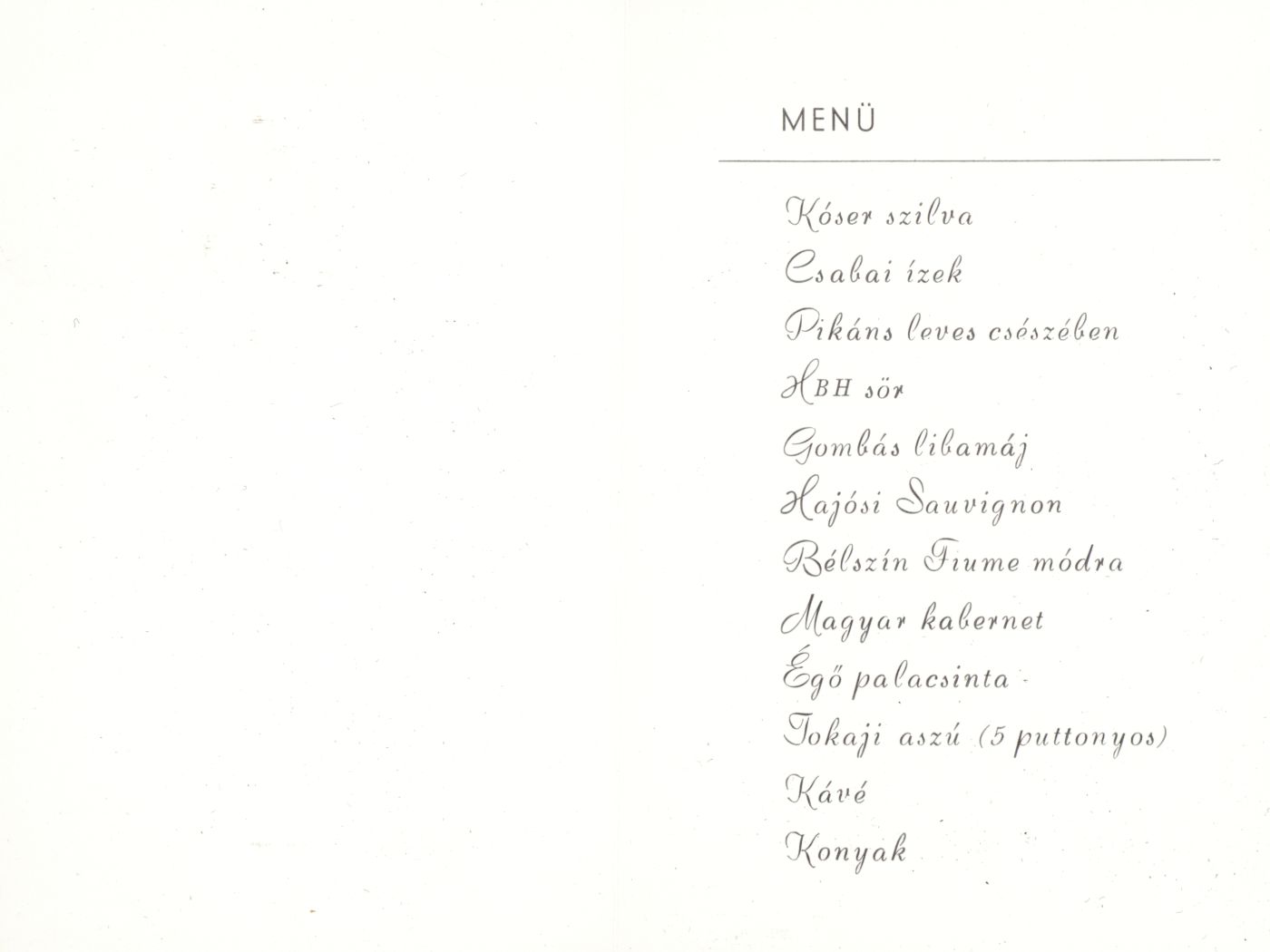
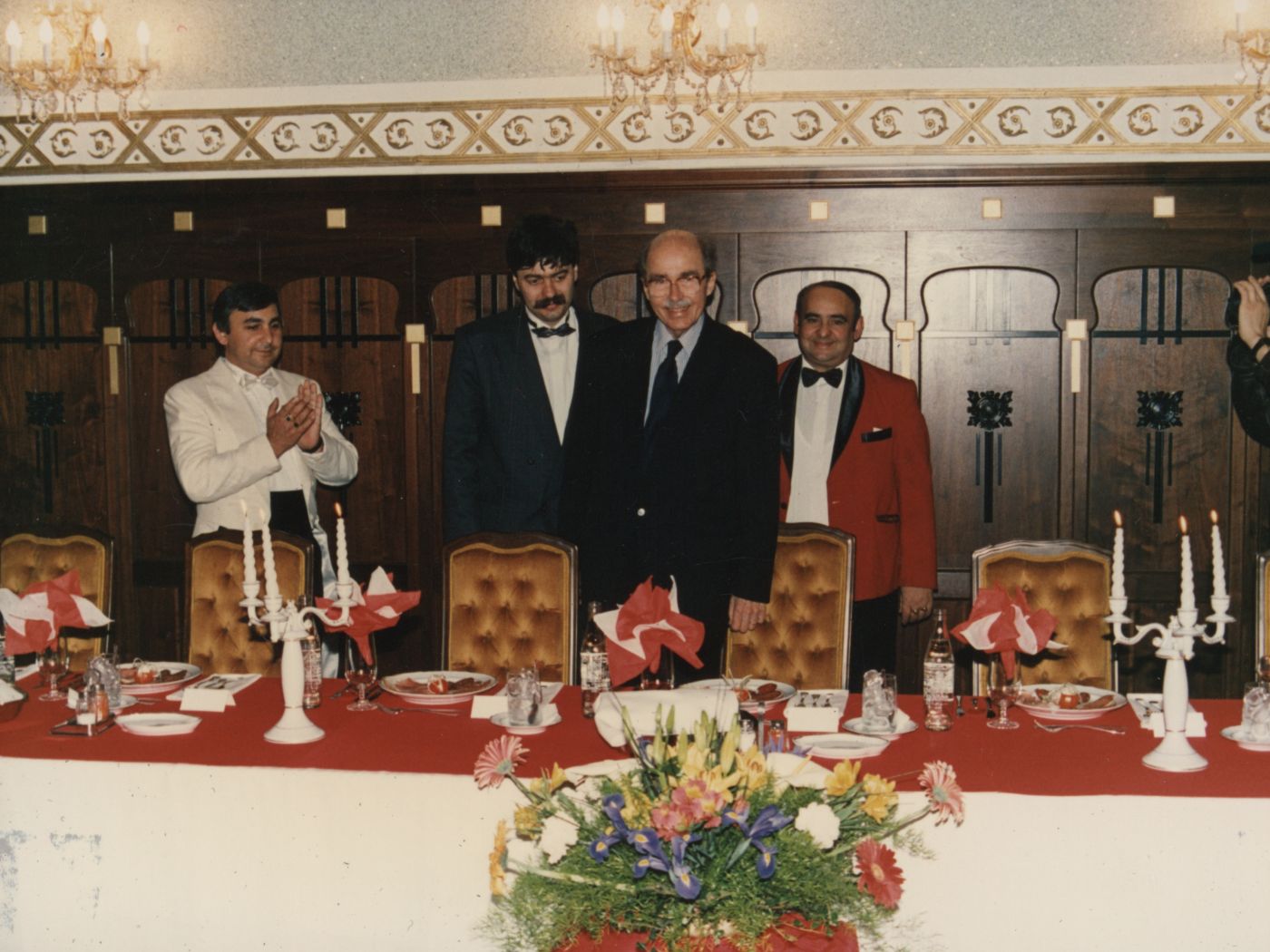
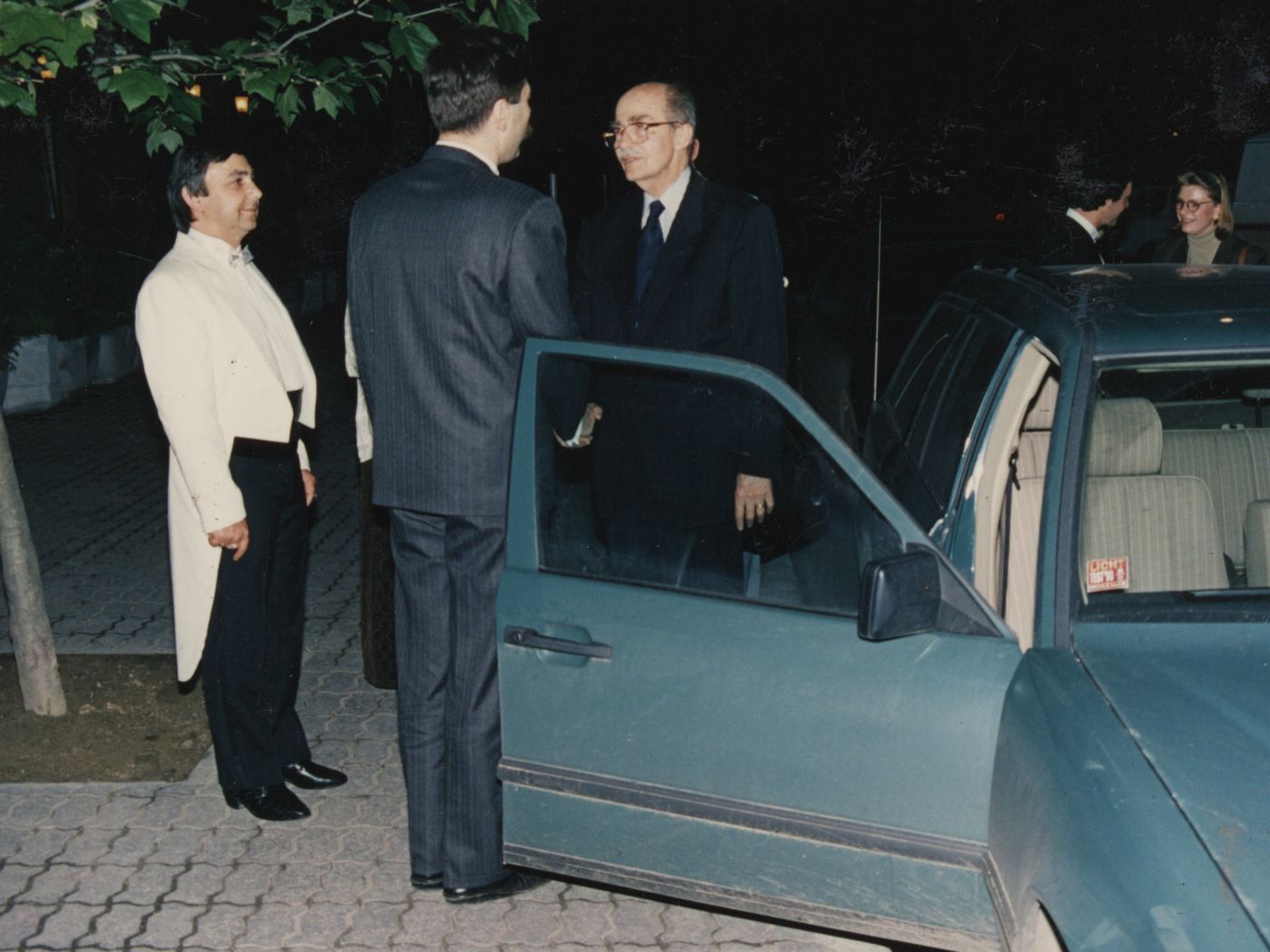
Otto von Habsburg visiting Hungarian restaurants (the lower photographs show Hungarian television personality Ádám Fásy, best known for the entertainment programme Fásy Mulató, in white tie)
In the endorsement, Otto placed gastronomy within the broader processes of social and cultural change – in a manner reminiscent of Norbert Elias’s approach to the history of civilisation – and linked the development of culinary culture to the formation of national identity.
“The art of cuisine and the selection of wines, together with the creation of the proper setting in which to serve them, is one of the foremost signs of a country’s cultural refinement. For a century, the Gundel restaurant has been closely bound up with the Hungarian nation, through periods of splendour as well as hardship. We regard it as an encouraging sign that Budapest today is home to one of the strongholds of European gastronomy, reflecting Hungary’s upward path from the years of oppression towards a bright future.”
The close ties between the Habsburgs and Gundel are also reflected in the restaurant’s role as the venue for several family occasions, including the wedding banquet of Archduchess Walburga in December 1992 and that of Georg von Habsburg in 1997. A dedicated regulars’ table bearing Otto von Habsburg’s name to this day serves as another tangible reminder of this enduring connection.
The correspondence between Otto von Habsburg and George Lang not only provides direct archival evidence on the events of 1916 and the protocols of the former royal court; it also adds nuance to our picture of Lang himself. His letters testify to the profound attachment to Hungarian and Central European history and culture that remained a defining feature of his career across the Atlantic.
Gaálné Barcs Eszter
[1] HOAL I-2-b-Láng György, 22 July 1970.
[2] HOAL I-2-b-Láng György, 31 August 1970.
[3] https://ekonyvtar.sk-szeged.hu/jadox/portal/displayImage.psml?docID=23180
[4] https://adt.arcanum.com/hu/view/MagyarHirlap_1991_10_A/?query=demeter+k%C3%A1lm%C3%A1n+L%C3%A1ng+gy%C3%B6rgy&pg=212&layout=s