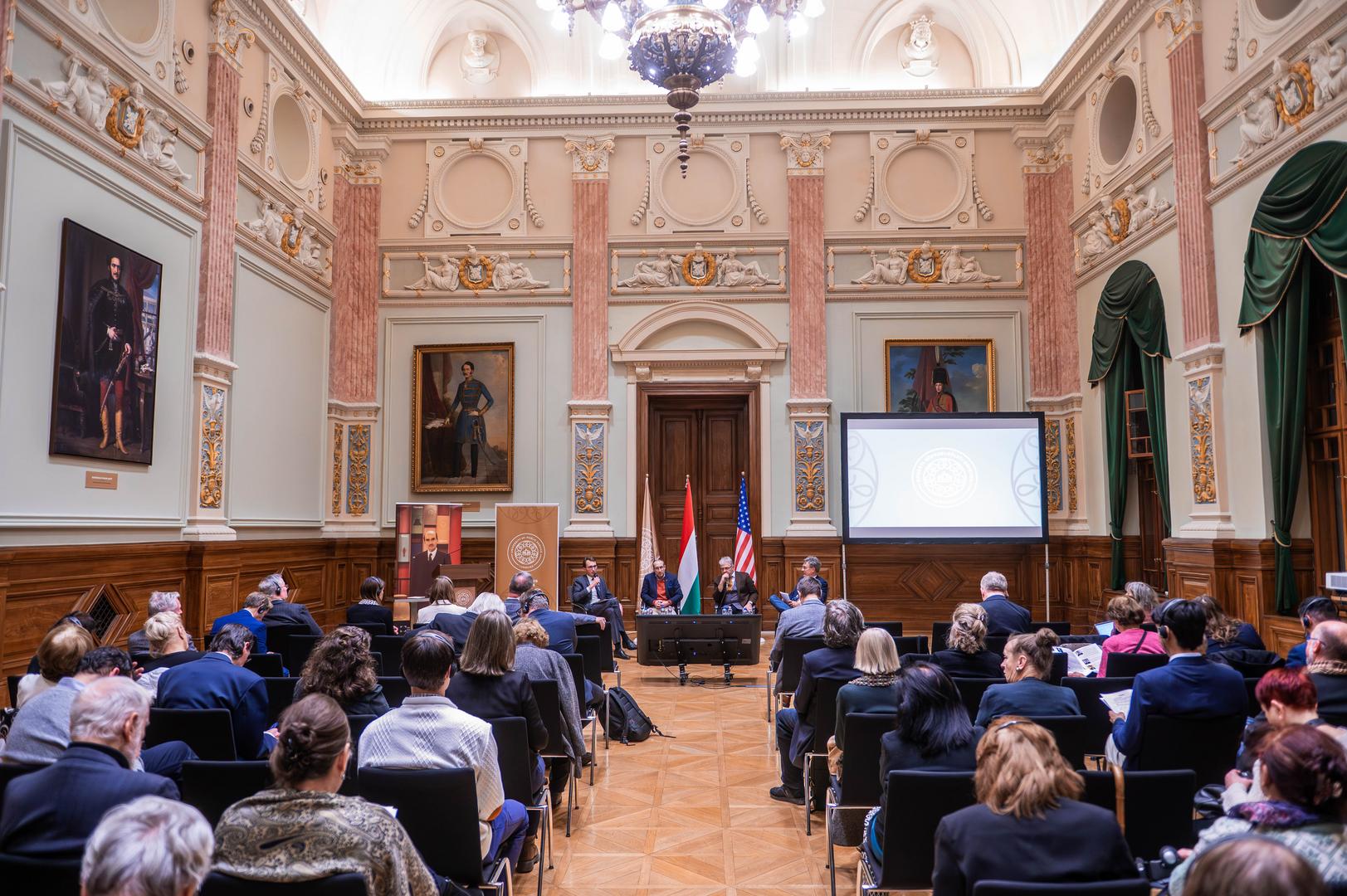
The event was opened by Gergely Deli, Rector of the Ludovika University of Public Service. In his introductory remarks, he praised the Hungarian–American historian’s diverse and productive scholarly work in the fields of Hungarian, American and European history, as well as political thought. He emphasised that the preservation of John Lukacs’s memory and legacy is in line with the University’s strategic objective of promoting and strengthening an Atlantic-oriented political outlook.
Gergely Prőhle evoked the figure of the historian through personal recollections. The Director of the Foundation reflected on that throughout his long life, Lukacs never lost his joy of life, valuing and taking pleasure in the many gifts of existence. A sociable personality, he readily shared his vivid stories, did not deny himself a good red wine, and occasionally performed couplets and chansons accompanied by his own piano playing.
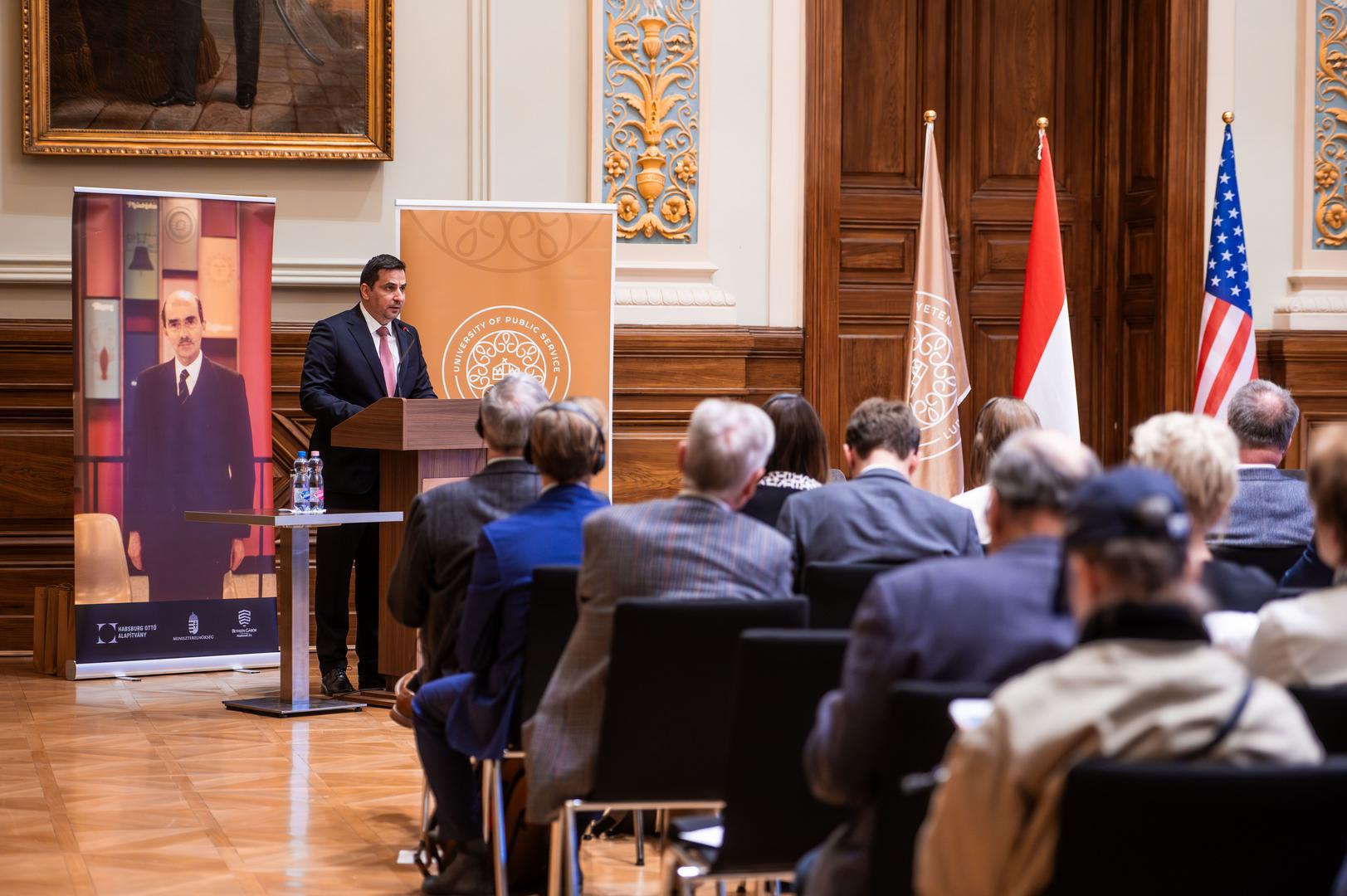
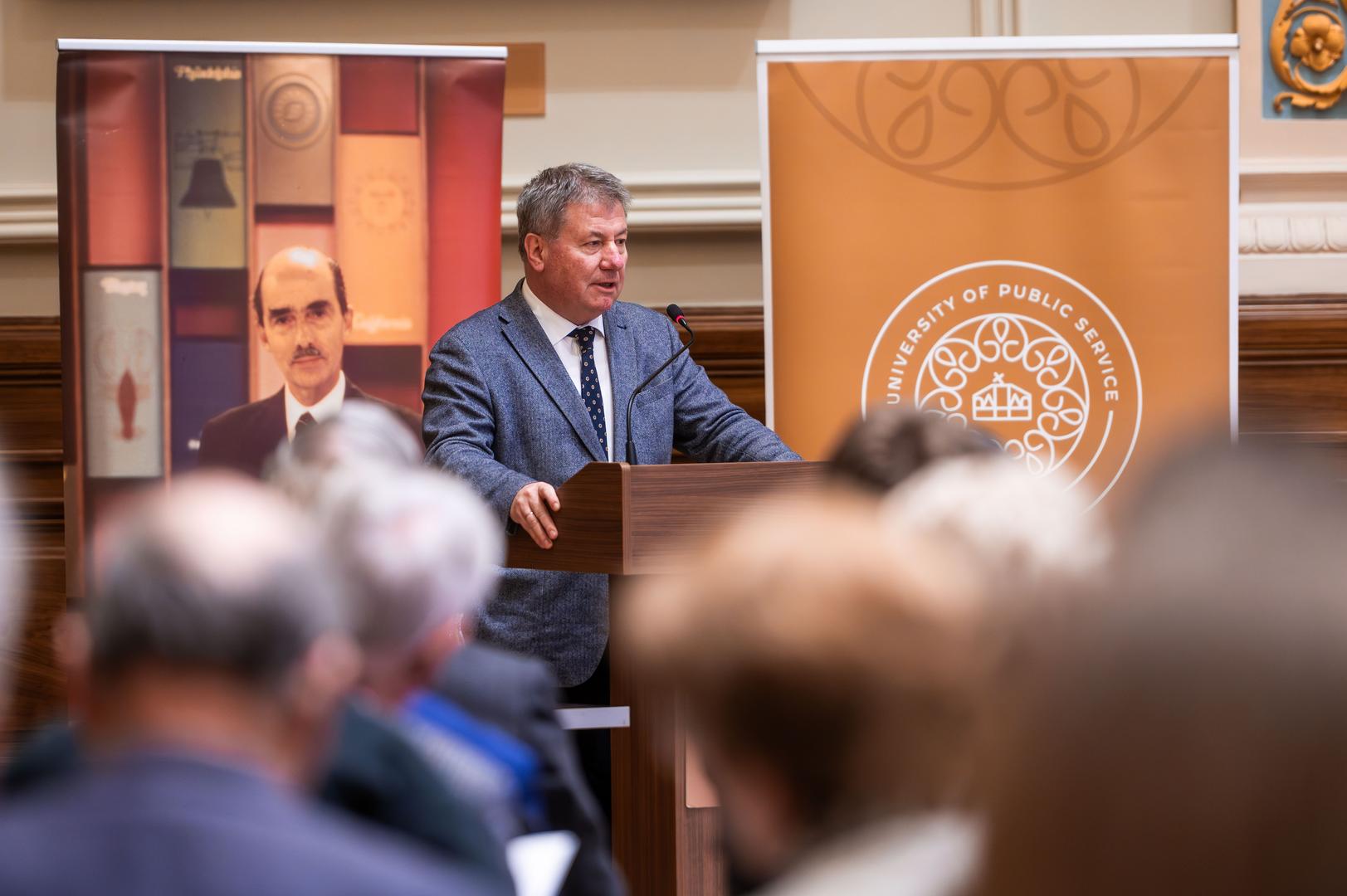
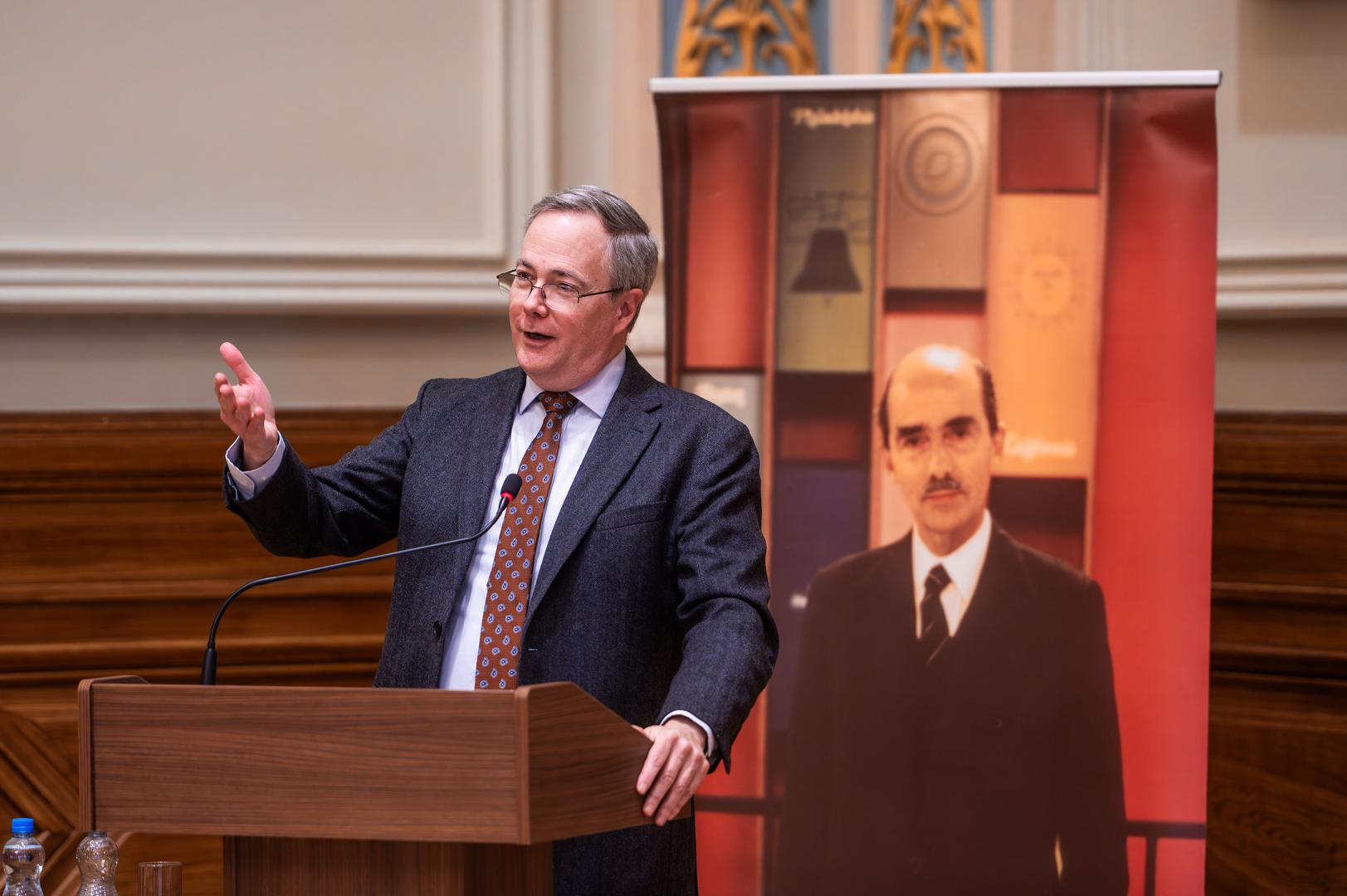
This multifaceted life path is the subject of a forthcoming biography by Professor Richard Gamble. A professor at Hillsdale College and a former colleague and friend of Lukacs, Gamble has been a key figure in Hungarian scholarly discourse on Lukacs for many years. Since the centenary commemoration held two years ago, he has regularly returned to Hungary and has involved his students in researching the materials preserved at the Foundation. On this occasion, he explored the question of Lukacs’s European identity based on previously unpublished texts found in the estate – A Manifesto for Europeans. Propositions of a Conservative Déraciné (1958) and the 1963 version of Historical Thinking – as well as the author’s personal essay The Decline and Rise of Europe (1965), which has since appeared in print. His concluding argument was that Lukacs’s European identity emerged relatively late, becoming conscious of it only during the years of his emigration, when he was studying the history and idea of Europe as a teacher. “I am Hungarian, Western, American, European: in chronological, existential, historical order. This, in a way, is the synopsis of the history of my life, of my thinking, of my historical thinking, of Historical Thinking, of this book,” he revealed after twenty years spent living in the United States.
Professor Gamble’s lecture also conveyed a message of contemporary relevance: both the United States and Europe are experiencing a difficult period, marked by confusion and internal division; both are at odds with one another and within themselves. What both need, he argued, is to strengthen their self-confidence – faith rather than despair.
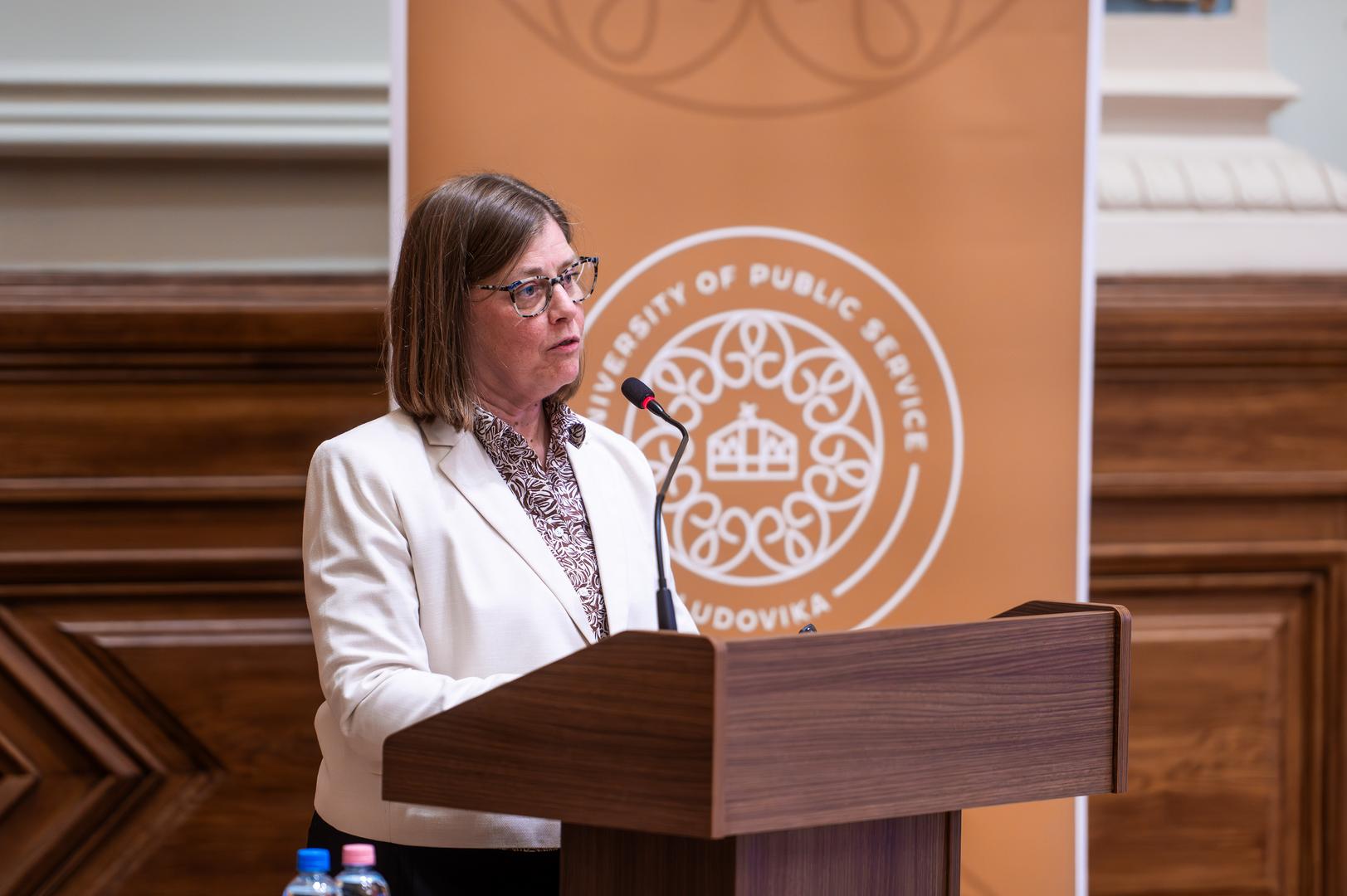
Rachel Bohlmann, Interim Head of the Rare Books and Special Collections of the Hesburgh Libraries at the University of Notre Dame, detailed the composition of John Lukacs’s estate. The legacy of the historian and thinker is an authentic reflection of an engaged intellectual interest in the affairs of the community. In addition to well-known professional connections – such as his correspondence over half a century with the diplomat George F. Kennan, parts of which are already accessible to the broader public – attention was drawn to personal relationships less familiar in Hungary, including his extensive exchanges of letters with the French novelist Jean Dutourd (1920–2011), the Norwegian physicist Torger Holtsmark (1924–2014) and the American writer Wendell Berry (1934–). The typewritten versions of his writings are of inestimable value for the philological study of Lukacs’s oeuvre and for reconstructing the genesis and development of individual books. The written materials contain numerous articles published in journals, weeklies and daily newspapers, as well as collected reviews and critical assessments of his works. These are complemented by a photographic collection numbering in the thousands.
The lecture by the former head of the Rome international office of the Acton Institute analysed the presence of transcendent ideas in Lukacs’s historical oeuvre. Michael Severance has lived in the United States for nearly thirty years and has witnessed several significant changes during this period. Lukacs likewise encountered fundamental shifts in the ideas shaping society over the course of his long life, affecting the moral, aesthetic and religious outlook of individuals and communities alike. These developments occurred, and continue to occur, in parallel with the gradual decline of independent thinking, driven by the growing role of the media and, in recent decades, by technological progress that is increasingly difficult to follow. Today, those who take pleasure in creative thinking and work in the spirit of Roger Scruton’s principle that “we are our own masterpieces” constitute only a very small minority of society – a situation that, it should be added, the American education system does little to alleviate.
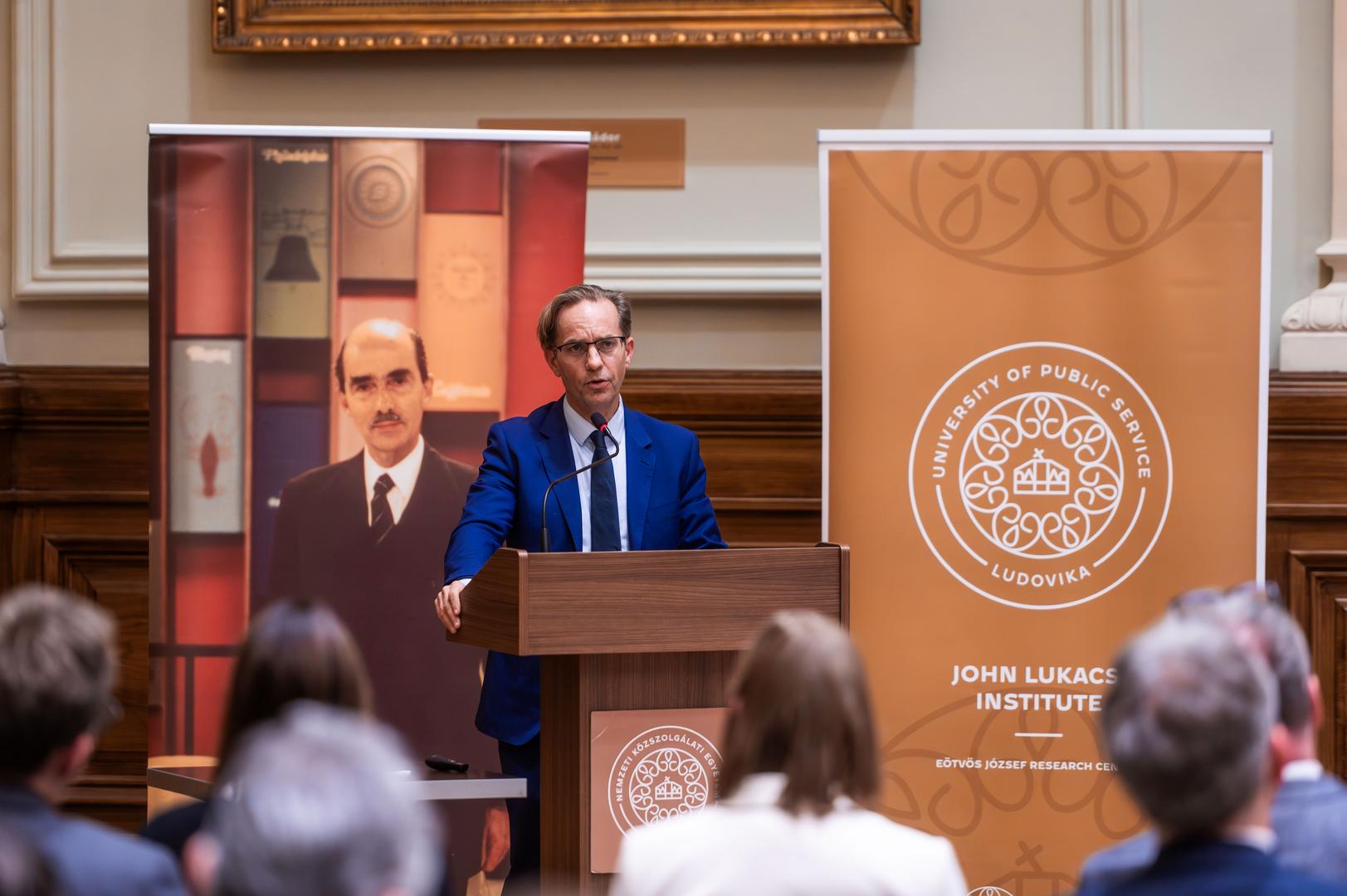
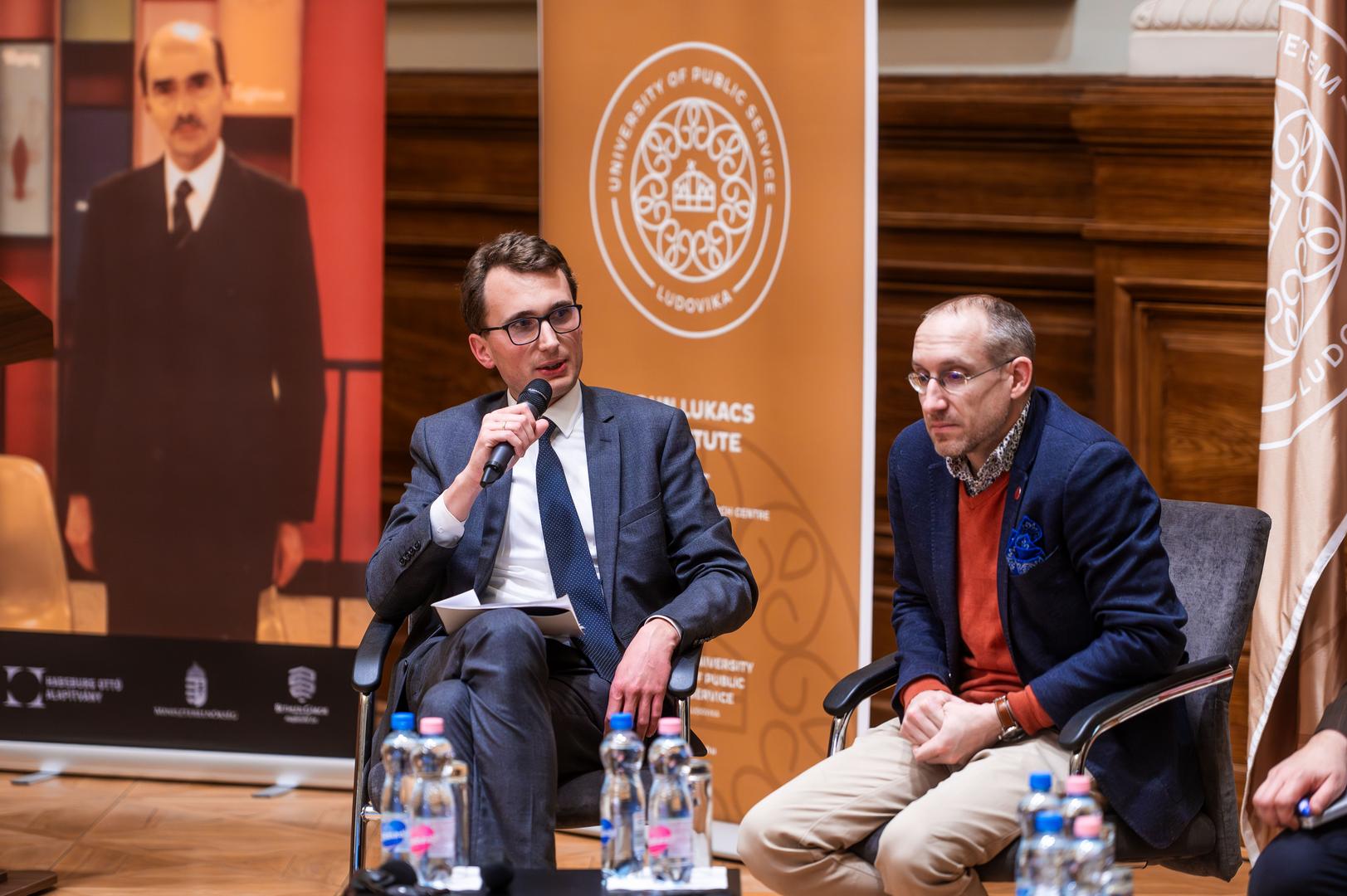
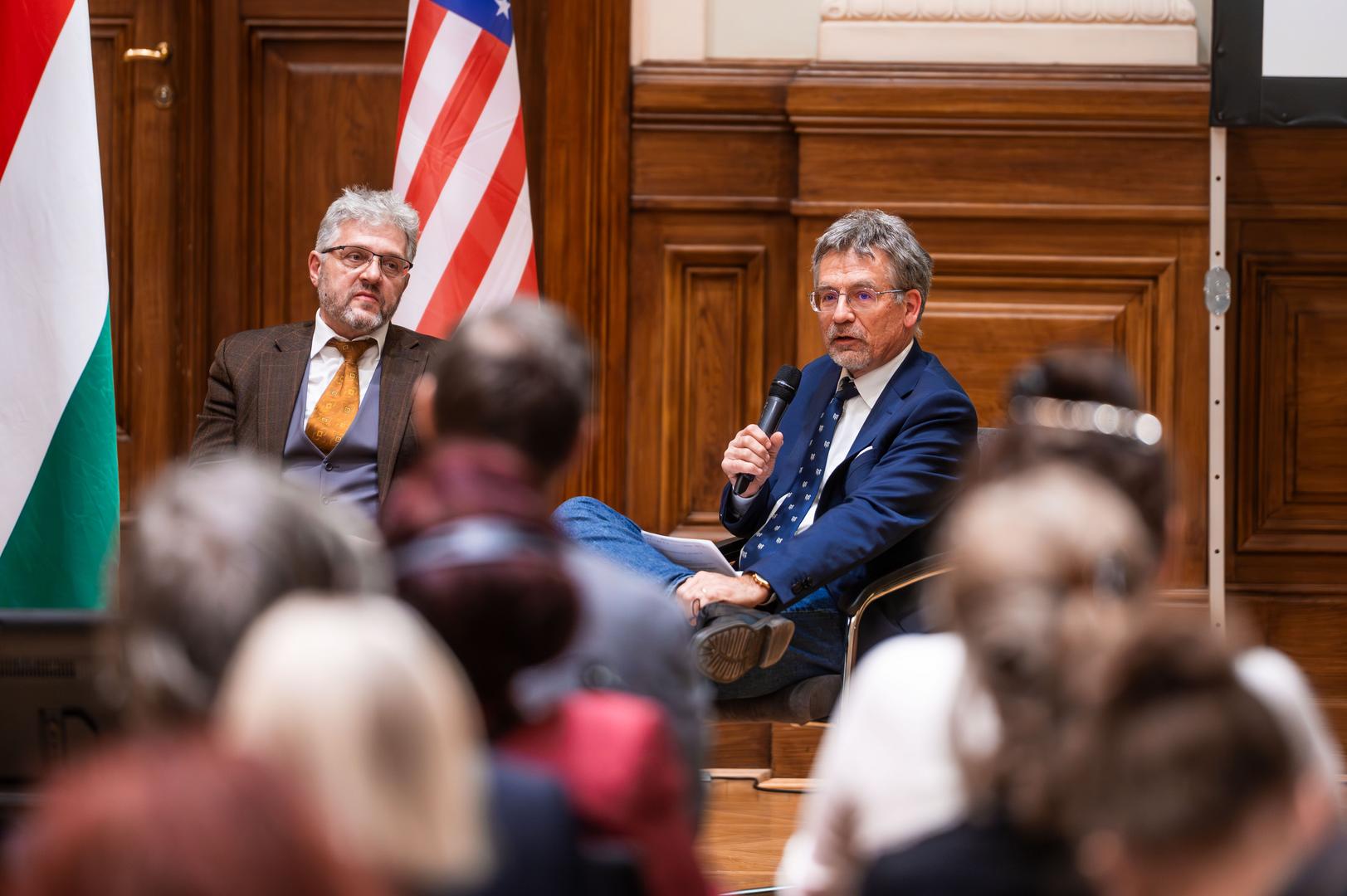
Participants in the roundtable discussion entitled “The Living Reality of History: America’s Democratic Heritage and Present” – moderated by our colleague Bence Kocsev – examined the intellectual-historical connections between Lukacs and his adopted homeland. Ferenc Hörcher, Head of the Institute of Political and State Theory at the Ludovika University of Public Service, compared Tocqueville’s nineteenth-century insights with those of the twentieth-century Hungarian historian. He considered Lukacs’s view well-founded that, prior to the conservative breakthrough associated with Reagan, it is not possible to speak of conservatism in its contemporary sense, and that only the influence of the continental political philosophy represented by Leo Strauss and Eric Voegelin can be identified. Máté Botos raised the question of whether a shared cultural fabric still exists within the intellectual life of the two continents that would make dialogue possible today. The head of the institute at Pázmány Péter Catholic University argued that the most pressing question of our time is whether post-bourgeois society will be capable of sustaining democracy – a concern that can be readily illustrated by viewing a single news summary. Gergely Szilvay, senior editor at Mandiner, explored Lukacs’s concept of “original sin” – which also appears in the title of one of his most influential books – tracing it to a Catholic perspective in contrast to the mainstream Protestant view of the founding fathers. In his assessment, this may also have contributed to the limited impact of Lukacs’s thought on critical evaluations of the period.
The discussion also addressed the “reactionary” character often emphasised by Lukacs, which he defined as rooted in opposition to totalitarianism, before focusing on the relationship between populism and democracy. It was noted that William F. Buckley had already perceived the hollowing out of freedom in the 1970s, and while Gergely Szilvay described societal polarisation as a natural feature of democracy, contemporary developments in the United States call to mind the ideas articulated in Lukacs’s 2006 book: perhaps what is needed is not conservatives, but conservation.
The event concluded with a discussion prompted by the publication of a “counterpart” to John Lukacs’s Budapest 1900, written by a contemporary author. Miklós M. Nagy, publisher of the collected works series, and Attila Pók, former Deputy Director of the Institute of History at the HUN-REN Research Centre for the Humanities, discussed the social and historical perspective of the Lukacs volume that has since become a classic, its past and present reception, and the relationship between Lukacs’s literary and historical achievements. Péter Muszatics, meanwhile, discussed the creative intentions behind Budapest Most and the comparability – or lack thereof – of the periods depicted in the two books, reflecting on how we view our past and ourselves today.
Photos by Dénes Szilágyi, Ludovika University of Public Service