Saint Joseph, the foster father of Jesus, is a unique figure in the Bible. According to the Gospel of Matthew, in him the Word is fulfilled: from the house of Abraham is born the Redeemer. Joseph is the one whom the angel of the Lord reassures in a dream concerning his betrothed, telling him the name of the child to be born; and it is likewise at the behest of the archangel that he leads the Holy Family into Egypt, to escape the massacre wrought by Herod.
Empress Zita arrived in Canada in October 1940—prompted by motives far more prosaic, yet compelled by circumstances no less dramatic. By order of Hitler, she and Crown Prince Otto could have been executed without trial by anyone in Europe. The mother of eight, raising her children alone, sought refuge in French-speaking Québec, where many of her relatives and acquaintances lived, and where the educational environment appeared the most favourable. They found accommodation in the House of Saint Joseph, belonging to the Sisters of Saint Joan of Arc, where Otto von Habsburg, by then residing in the United States, visited them frequently.
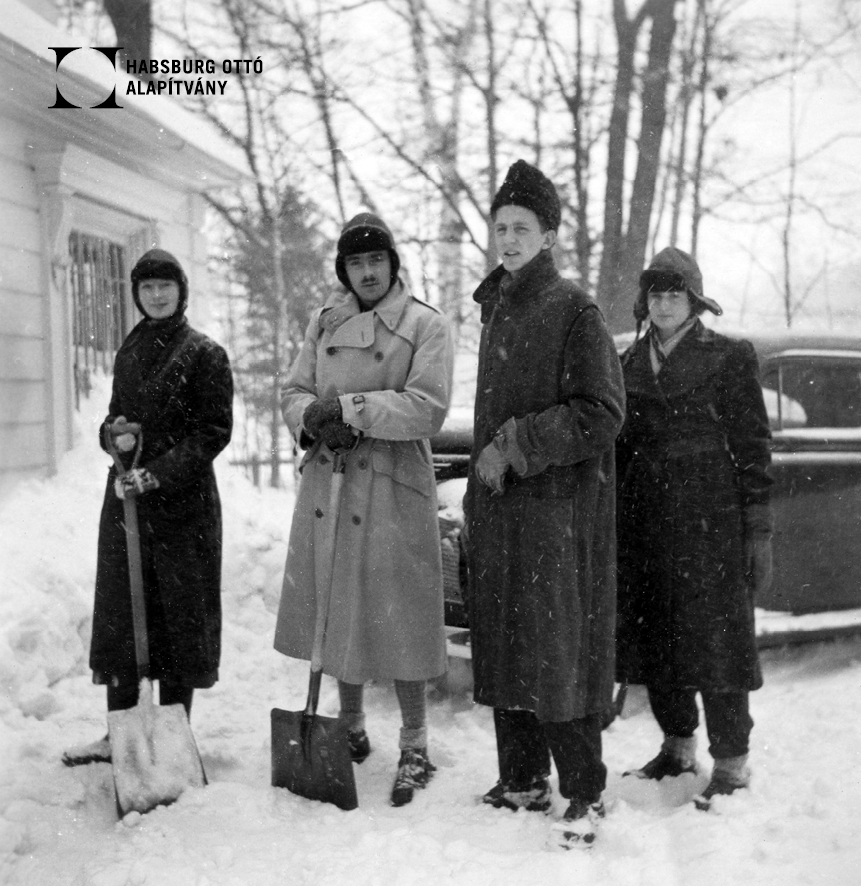
In the photograph taken in the early 1940s, Otto, Rudolf and Charlotte, together with a cousin, are seen shovelling snow in front of the building that bore the name of the carpenter of Nazareth. At that time, they could not yet have foreseen that only a few years later, in 1955, Pope Pius XII would institute the liturgical feast of Saint Joseph the Worker, drawing attention through the example of Jesus’s foster father to the dignity of labour, even for earthly kings and their heirs.