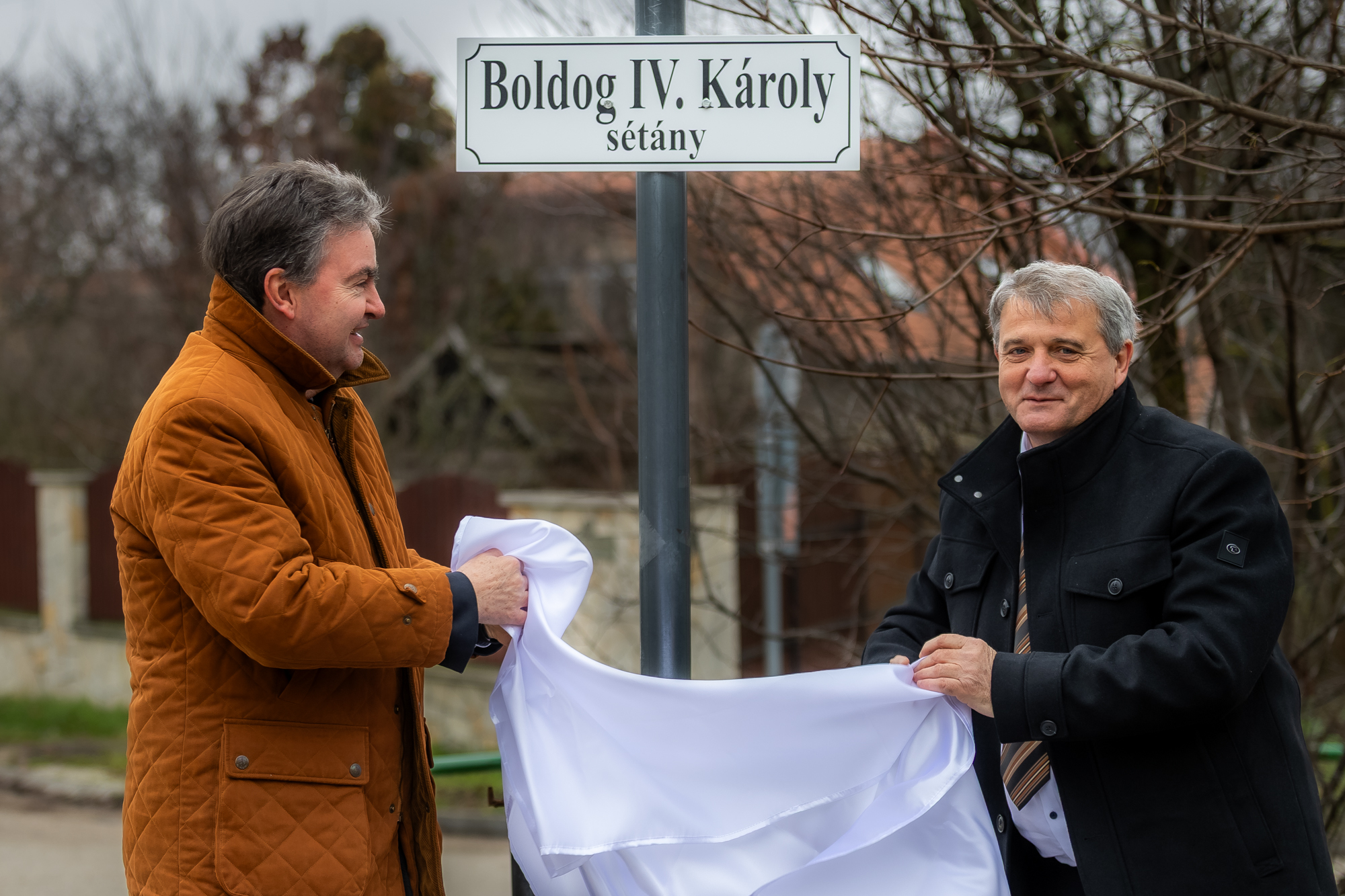
A walkway honouring Blessed Charles I was unveiled in Biatorbágy, a town near the Hungarian capital, which briefly entered the course of national history on 23 October 1921 — at that time still known as Torbágy, prior to its unification with Bia. During the course of the former monarch’s second attempt to return to the throne, Charles and his wife, Empress Zita, attended Holy Mass at the local railway station while travelling towards Budapest. During the service, clashes broke out near Budaörs between supporters of Charles I and the troops of Regent Miklós Horthy. When news reached the monarch that the exchange of fire had already claimed fatal victims, he decided to abandon further resistance and relinquish his plans. These events, which took place more than a century ago, were recalled by Lajos Kocsis, Mayor of Biatorbágy, who emphasised the importance of ensuring that present-day residents of the town are also familiar with these historical facts — a purpose to which the promenade’s new name may contribute.
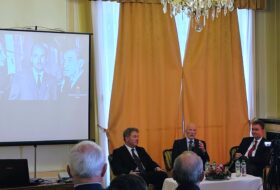
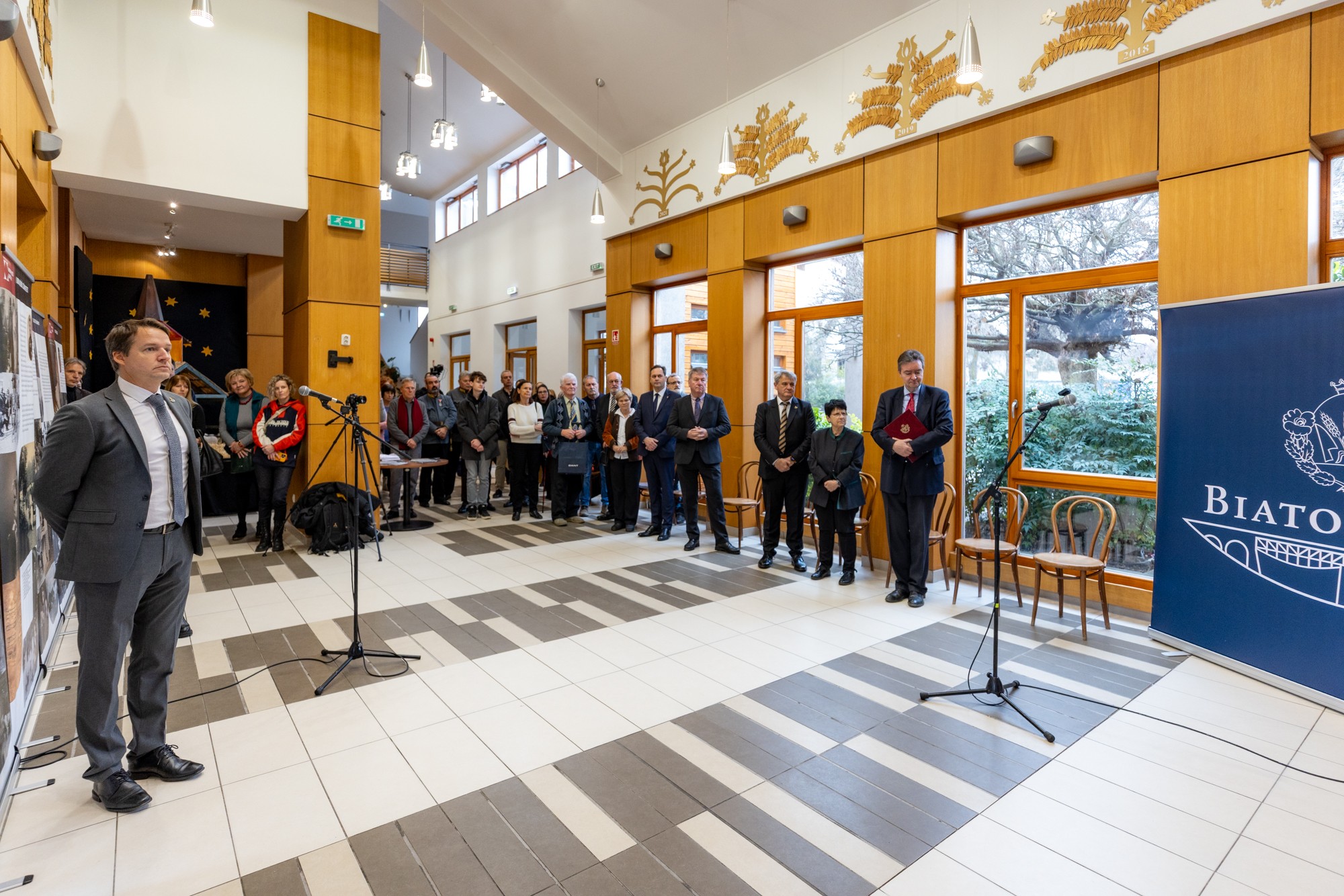
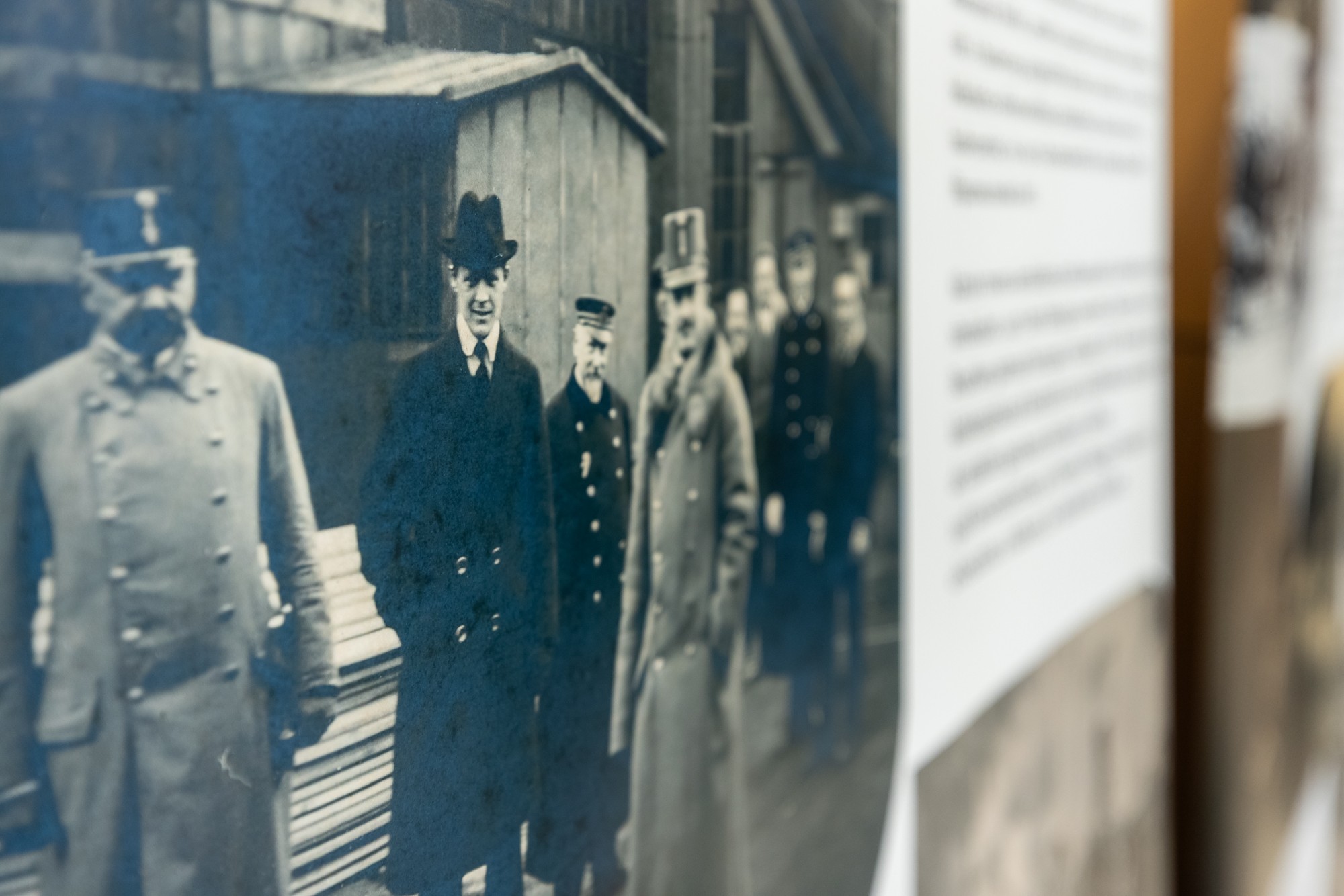
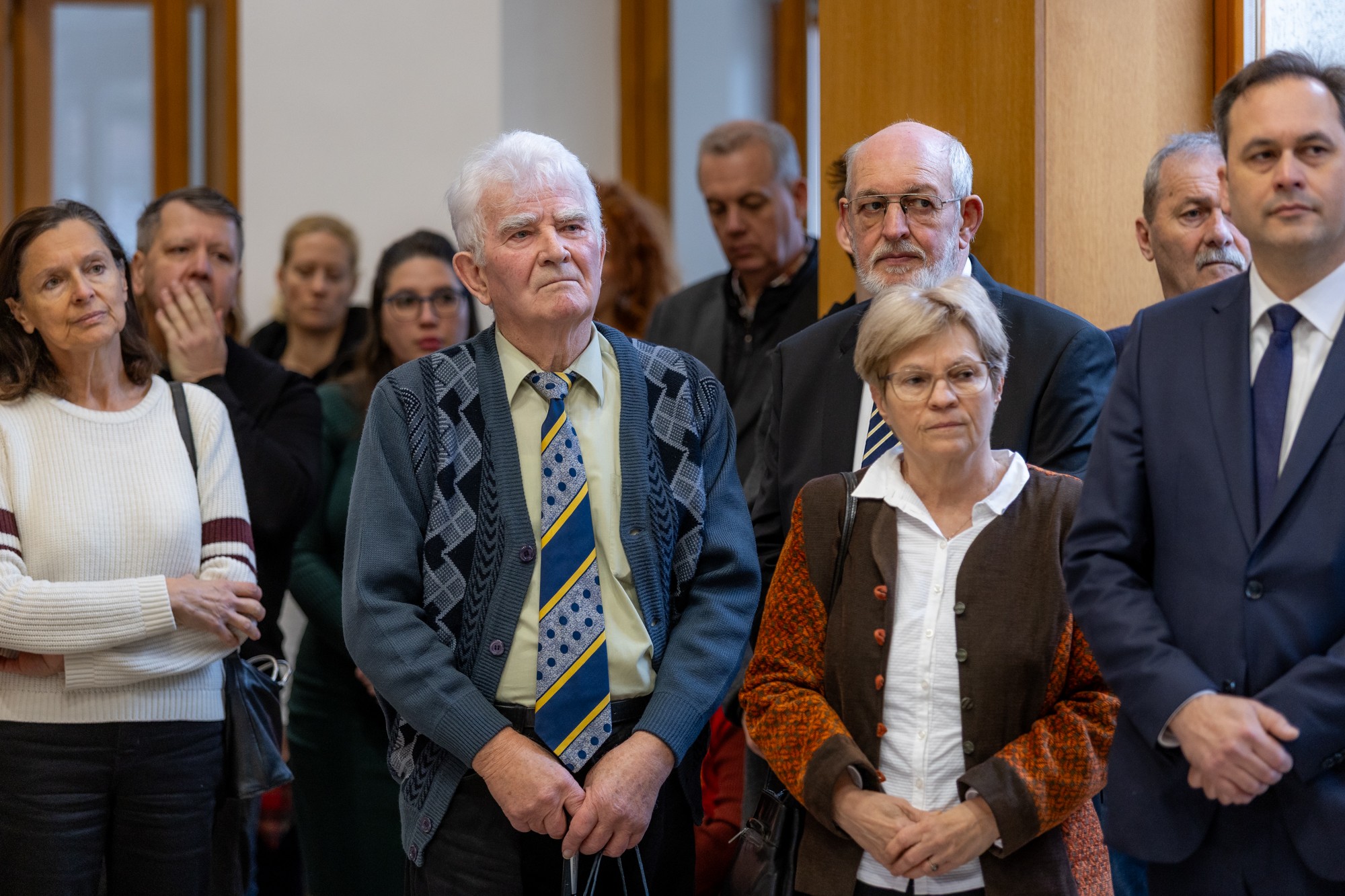
Following the ceremony, the many residents and historical re-enactment groups in attendance proceeded to the nearby Juhász Ferenc Cultural Centre, located on the site of the former railway station, where the commemorative programme continued. In the foyer of the building, our Foundation’s travelling exhibition, entitled Life and Memory, on Charles I, was presented to the public. The opening address was delivered by Georg von Habsburg, Ambassador of Hungary to Madrid, who highlighted his grandfather’s commitment to peace. He noted that Charles I, a man of profound faith, upon ascending the throne, sought to bring an end as swiftly as possible to the First World War and the immense human suffering it entailed. Although these efforts were doomed to failure under the circumstances of the time, this does not diminish his moral stature: While history tends to place victories and success in the foreground, before divine judgement, it is intention that ultimately matters. This was also recognised by the Church when, in 2004, during the pontificate of Pope John Paul II, the former ruler was beatified.
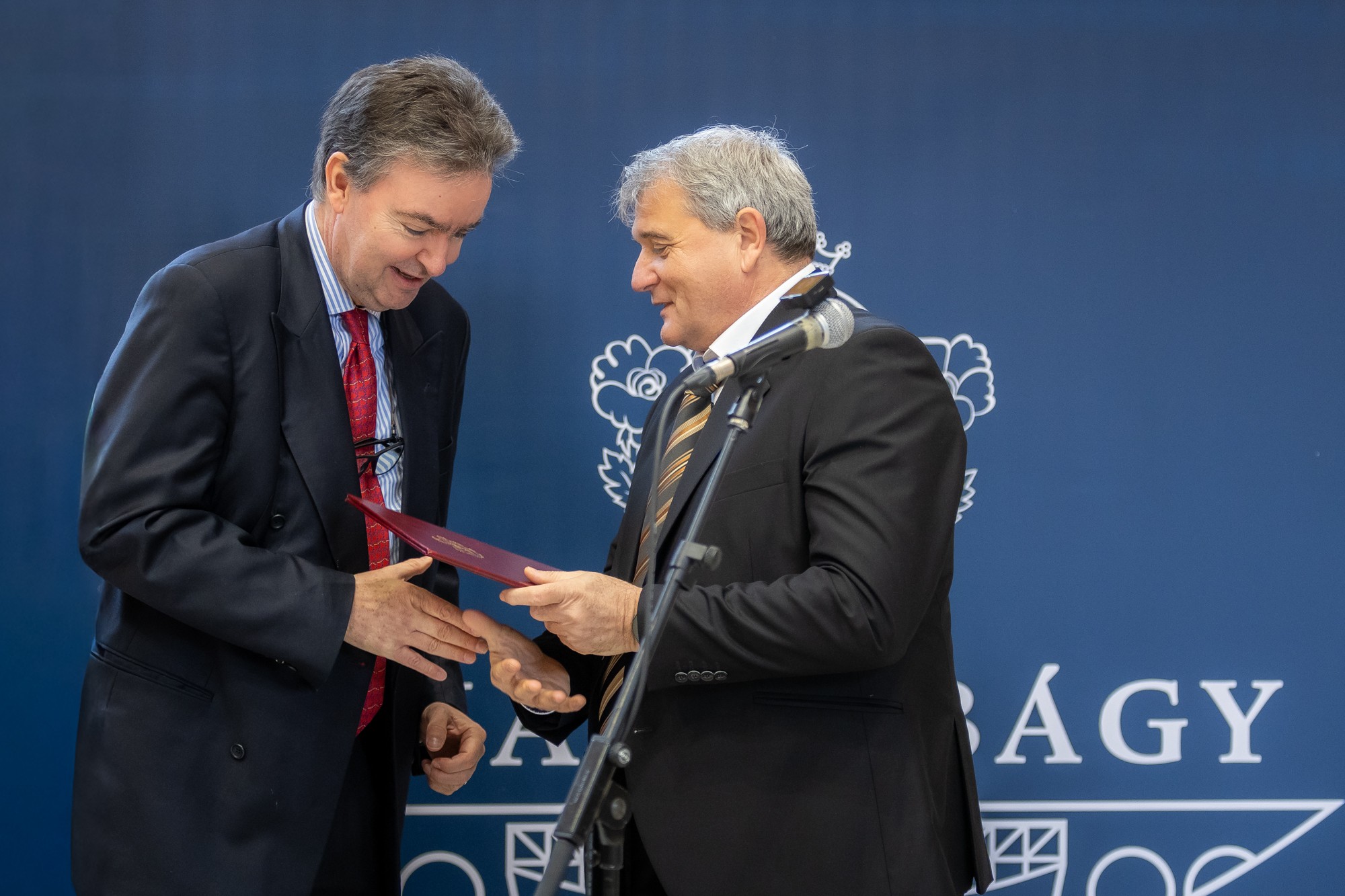
Gergely Prőhle recalled two ideas of the last Austrian Emperor and King of Hungary, which may have appeared anachronistically modern 110 years ago, yet whose relevance has since been vindicated by history. The Director of the Otto von Habsburg Foundation drew parallels between Charles I’s social vision and the principles of the social market economy implemented in Germany after the Second World War, and elaborated on the concept of subsidiarity — rooted in Christian teaching and traceable back to Saint Augustine—which respects the distinct traditions, customs, development and character of peoples, nationalities and communities of different denominations. This principle was formally elevated to the rank of a common European value by the Maastricht Treaty.
The exhibition Life and Memory can be visited at the Juhász Ferenc Cultural Centre until January 4, 2026.
A video report on the ceremony can be viewed here:
Photos: Judit Sass