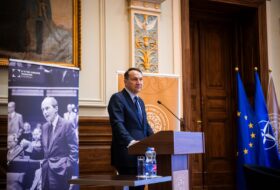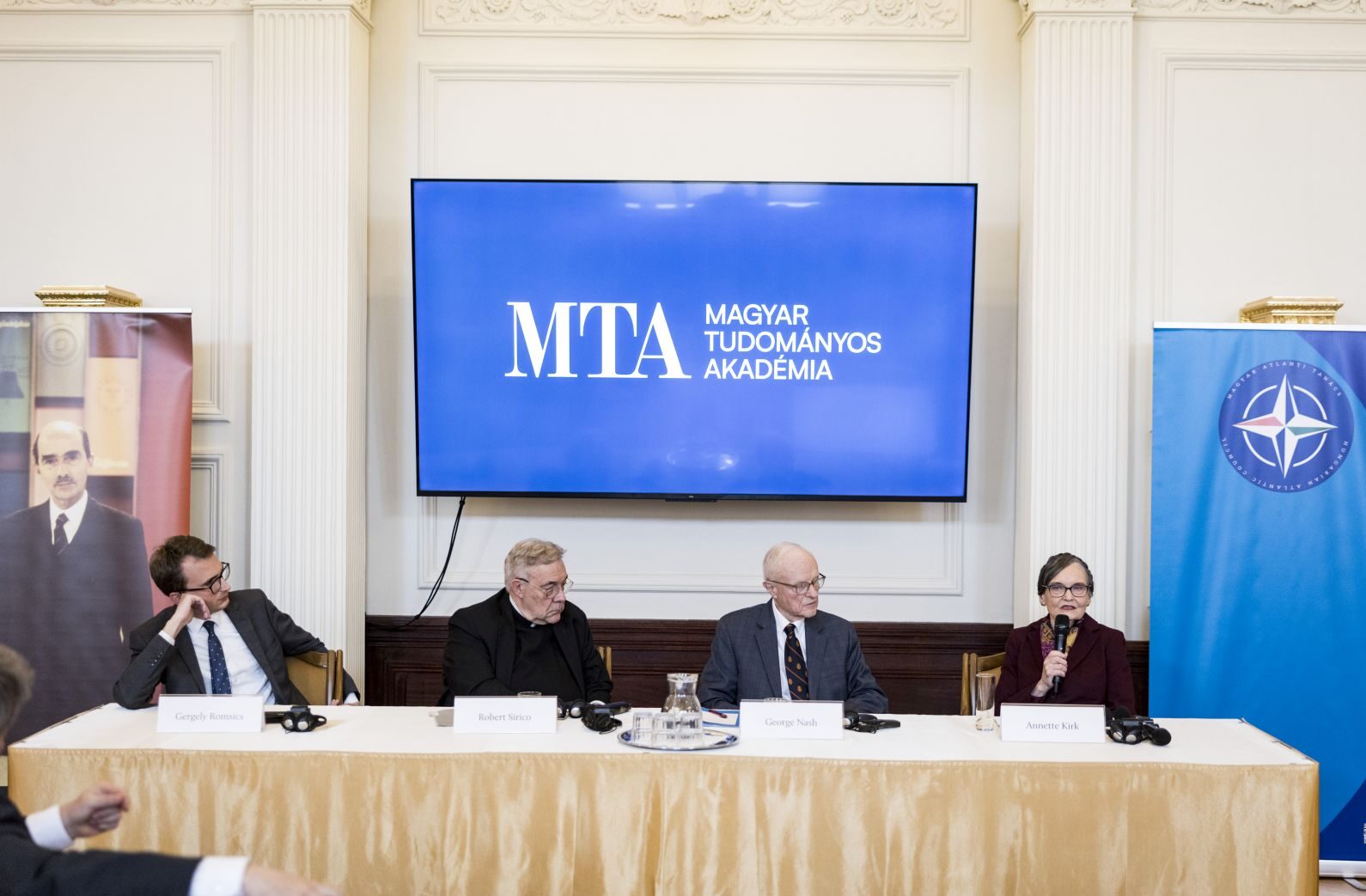
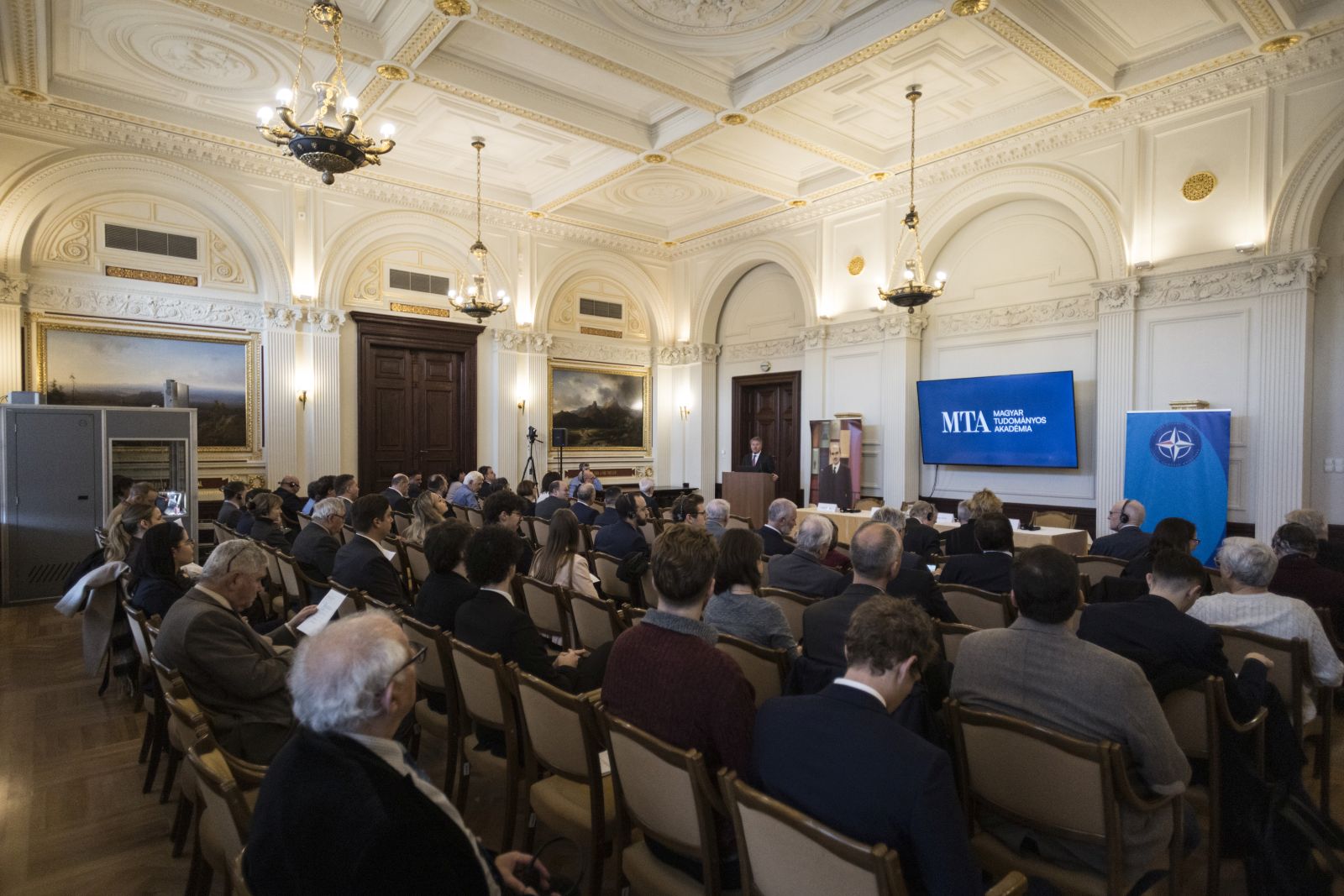
In his opening remarks, Gergely Prőhle explained why the Academy was a particularly fitting venue. Alexis de Tocqueville’s Democracy in America helped shape the outlook of 19th-century Hungarian political thinkers, notably József Eötvös, the liberal statesman and writer who also served as the Academy’s president. Lord Acton’s ideas likewise found a receptive audience in Hungary. That a member of the French philosopher’s family and the founding president of the American institute named after Acton could address the conference in this historic building testified both to the enduring intellectual exchange between Europe and the United States and to the breadth of vision long associated with the Academy, now celebrating its bicentenary.
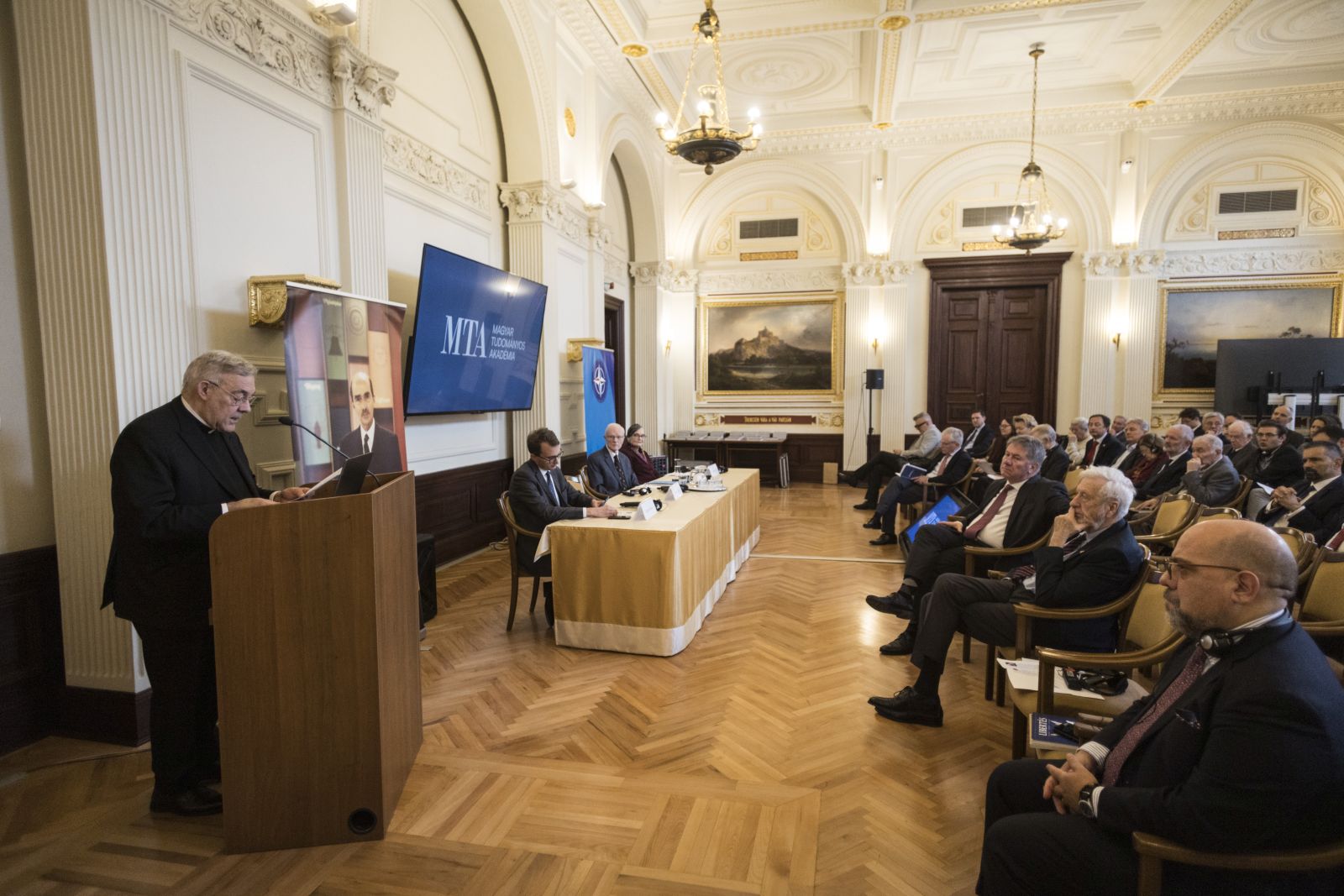
History provided the guiding thread for the morning session. Father Robert A. Sirico, co-founder of the Acton Institute, began with Saint John Paul II’s views on economics and liberty. In his 1991 encyclical Centesimus annus, the Pope cautioned that economic freedom is only one element of human freedom. He placed the person and human action at the heart of the economy. In his understanding, the market depends on virtues that it cannot itself create and flourishes only where they permeate communal life. Institutions, the rule of law, subsidiarity, and the rich fabric of civil society provide the framework in which these qualities can develop and endure. Communism and consumer society, by contrast, both regard people as essentially material beings.
Sirico sees artificial intelligence as the greatest technological, ethical, and indeed civilisational challenge of our age. The chief danger, he argued, is that we may come to think of ourselves as machines. The deeper dimensions of existence – the lives of children and older people, contemplation, prayer, friendship, and love – cannot be measured in terms of efficiency. Technology, like the economy, must serve humanity, not the other way round. Centesimus annus offers an anthropology: an understanding of the human person against which different economic models can be judged, the priest explained. The question is whether a given innovation enriches our humanity. If we answer correctly, things fall into place; if we are mistaken, even the most advanced technology cannot restore our freedom.
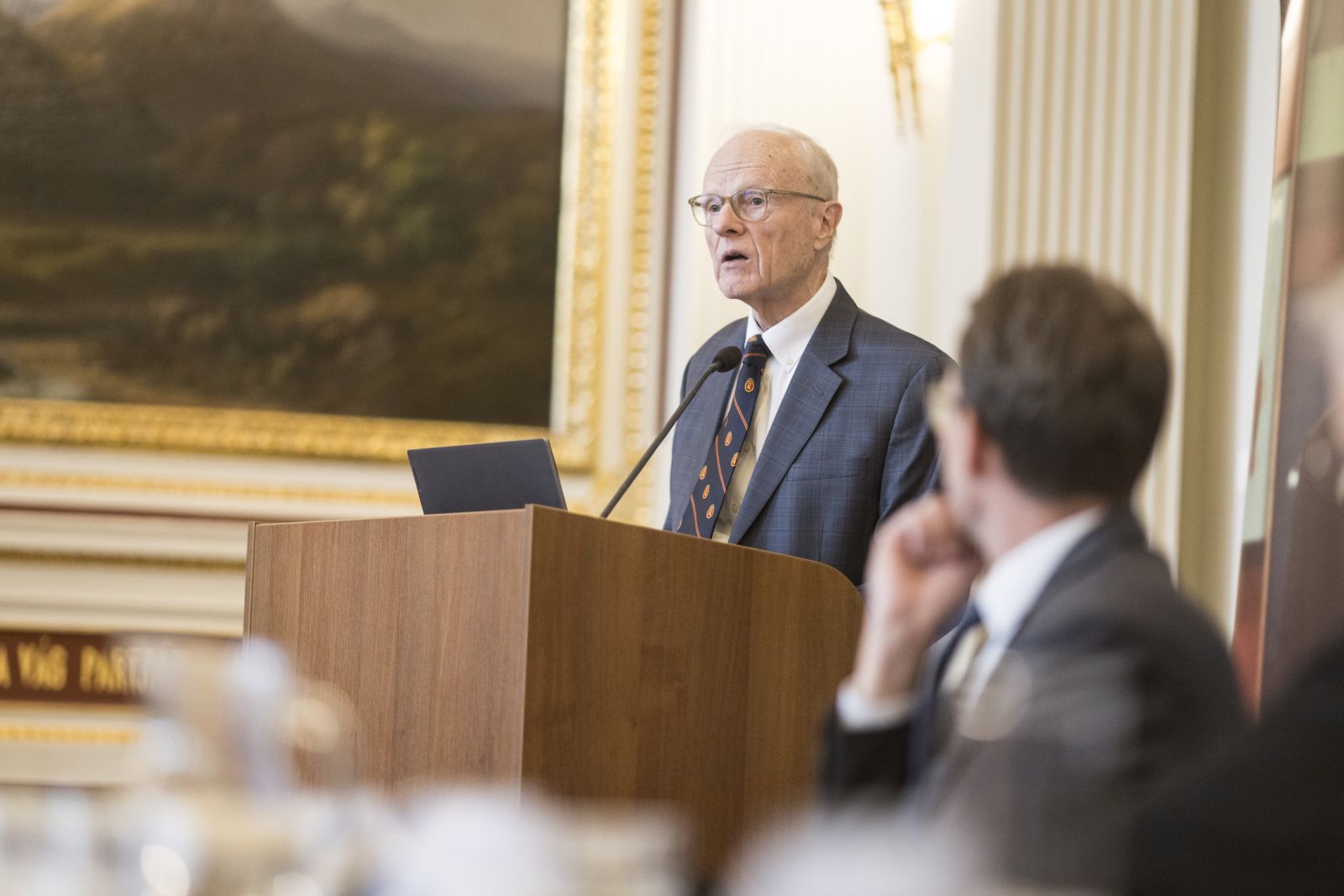
In his lecture “Central European Influences on American Conservatism”, historian George H. Nash traced the movement’s origins and development. In 1945, the conservative camp in the United States comprised three distinct groups: classical liberals and libertarians opposed to socialism, traditionalists concerned about the erosion of religious faith and moral standards, and militant anti-communists. The arrival in America of Friedrich von Hayek, Ludwig von Mises, Eric Voegelin, Leo Strauss, and Gerhart Niemeyer brought fresh perspectives to the debate. The decisive breakthrough, however, came in 1953 with The Conservative Mind by Russell Kirk (1918–1994).
Edmund Burke’s legacy drew Kirk into close contact with two Central European thinkers. Thomas Chaimowicz (1924–2002) was instrumental in establishing the Edmund Burke Society in Salzburg in 1960; Liberty or Equality, by the Tyrol-based Erik von Kuehnelt-Leddihn (1909–1999), appeared a year before The Conservative Mind. Both came from territories that had formed part of the Habsburg Monarchy and shared bonds of friendship and intellectual affinity with Otto von Habsburg, who was by then living in Pöcking. On his lecture tours, Hungary’s last Crown Prince became acquainted with William F. Buckley Jr., the enfant terrible of East Coast conservatism, who founded National Review in 1955. John Lukacs, Thomas Molnar, and the sociologist Paul Hollander also belonged to this circle. The wider institutional network included the Intercollegiate Studies Institute (1953), the journal Modern Age (1957), and the Victims of Communism Memorial Foundation (1993). For Nash, the Central Europeans’ most significant contribution was to remind Americans that they did not live in isolation but were part of a broader culture and civilisation.
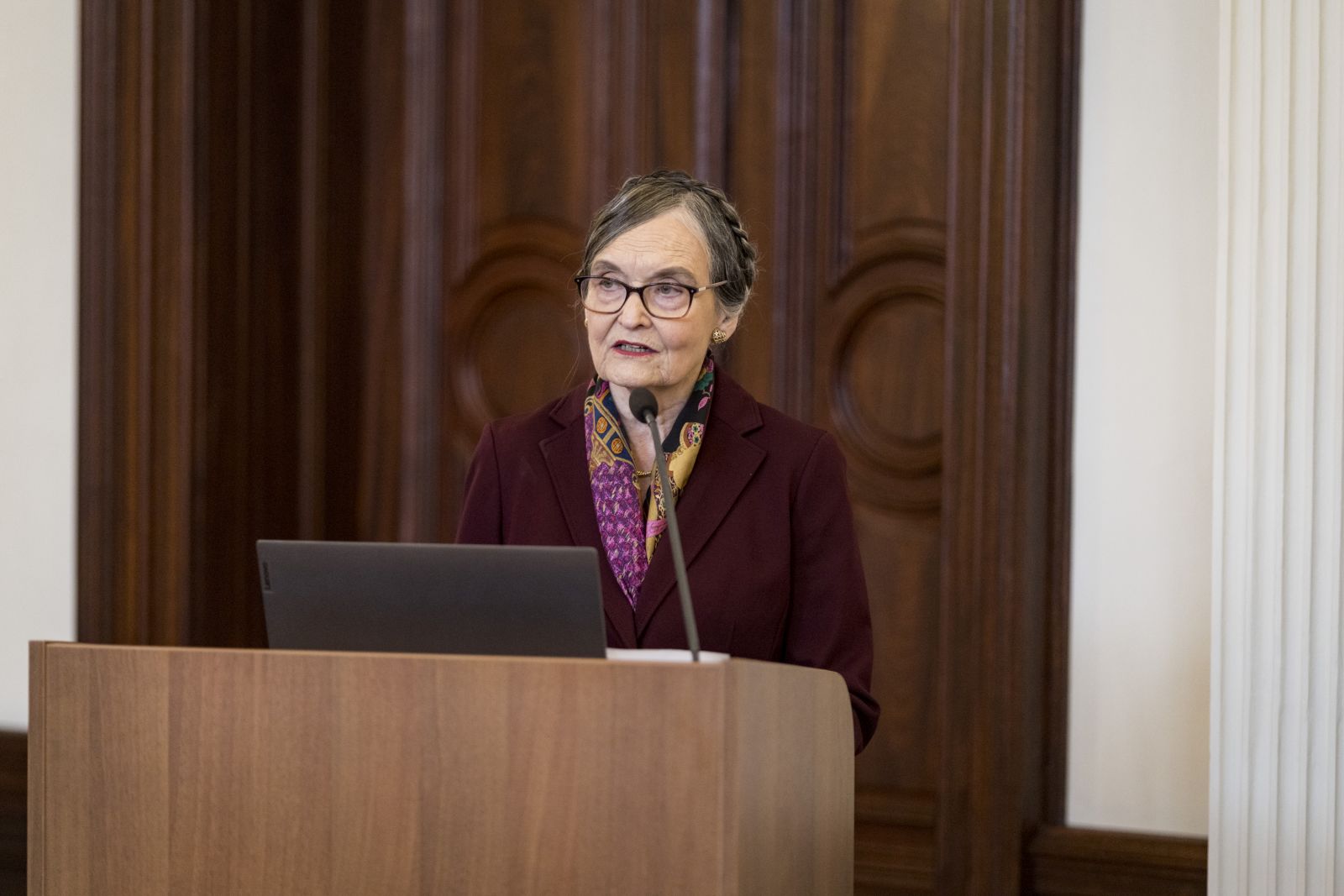
Annette Y. Kirk outlined five defining features of her husband’s work. The author of The Conservative Mind regarded conservatism as a disposition or inclination rather than an ideology. A conservative believes in a transcendent moral order and, following Edmund Burke, understands society as a timeless community founded on a compact between the living, those who came before them, and those yet to be born. The Irish political thinker also gave us the concept of “moral imagination”, which Kirk developed further: through this faculty, we can recognise the realities of human nature and the obligations that arise from living together. The conservative outlook is a form of ethical perception that allows us to see beyond our own experience and the events of the moment. Finally, accepting the “permanent things” – faith, family, and human dignity – can give us the strength to resist the spirit of the age and changing fashions. Russell Kirk’s 32 books and thousands of essays and articles continue to remind America of these values as it marks the 250th anniversary of its independence.
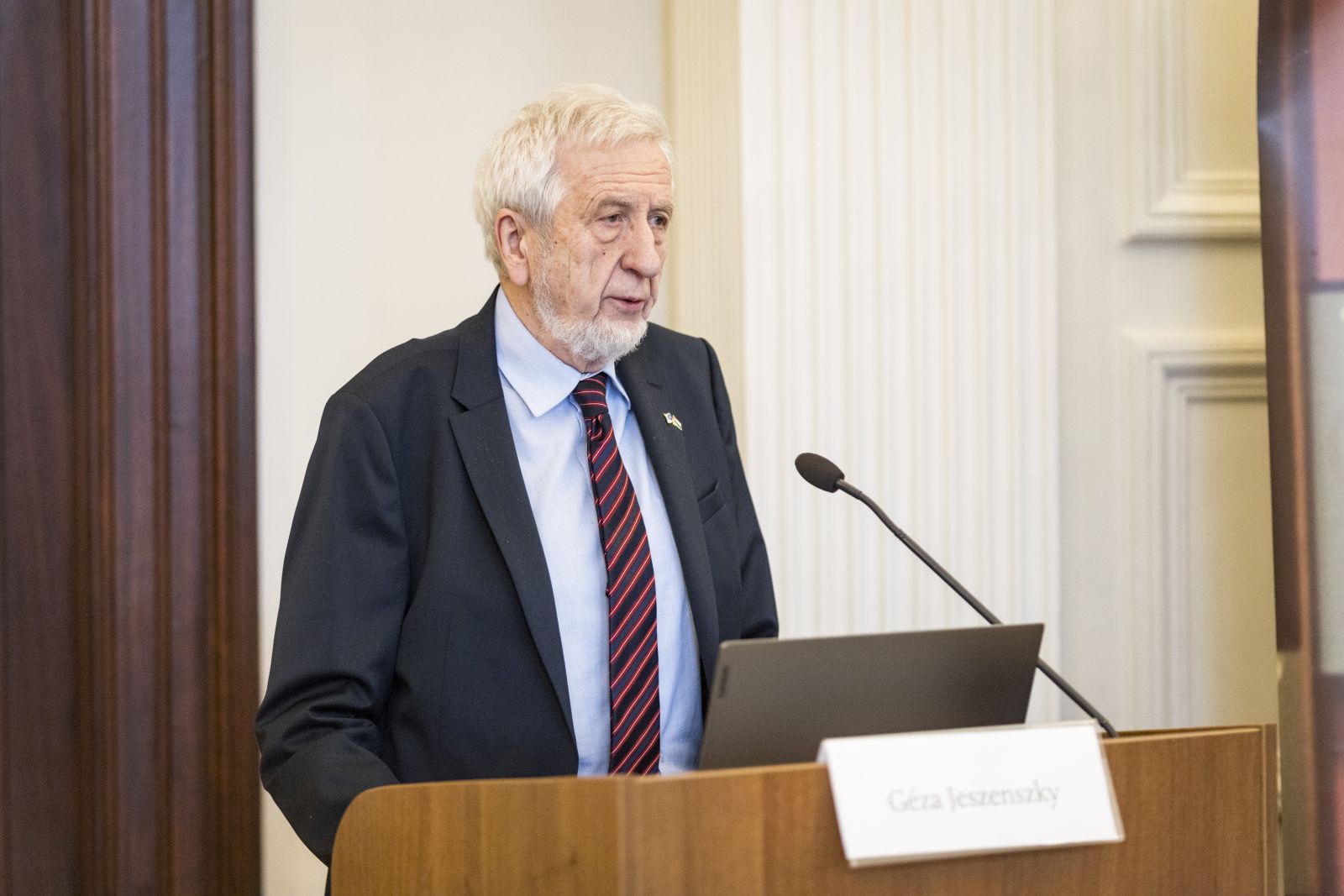
Géza Jeszenszky, Foreign Minister in József Antall’s government, which took office in 1990 after the regime change, offered a sweeping account of Hungarian–American relations. He opened with Sándor Bölöni Farkas’s travelogue Journey in North America, published in 1834. The goodwill generated by Hungarian independence leader Lajos Kossuth’s visit to the United States had faded by the turn of the century, leaving Hungary to confront its “lost prestige”. In Jeszenszky’s reading, the unjust settlement devised in the name of Wilsonian principles after the collapse of Europe’s empires in 1918 severely constrained Hungary’s political choices during the Horthy era. From there, he followed the course of events to Yalta and the continent’s division for four decades. For generations living under totalitarian rule, the United States symbolised freedom. The glory of the Hungarian Revolution of 1956, the shifting climate of the Cold War, the “rediscovery” of Central Europe in the 1980s, and the euphoria of the transitions to democracy all kept the region in the public eye. Today’s geopolitical circumstances vindicate Antall’s resolve as a statesman: his unwavering attachment to Europe and commitment to the Euro-Atlantic alliance.
The afternoon round-table discussion was moderated by Katalin Bogyay, Hungary’s former Ambassador to UNESCO and subsequently to the United Nations. The panel included Wilhelm Molterer, Austria’s former Vice-Chancellor and Finance Minister (2007–2008), and Tibor Glant, Research Professor at the John Lukacs Institute of Ludovika University of Public Service. They were joined by Count Jean-Guillaume de Tocqueville d’Hérouville and his wife, Stéphanie de Tocqueville.
Nearly two hundred years ago, the family’s most celebrated member, Alexis de Tocqueville, warned in the two volumes of Democracy in America (1835, 1840) against transplanting American practices unchanged to the Old World. A new generation discusses the book’s lessons at the Tocqueville Conversations, the forum the couple launched in Normandy in 2018. Our Deputy Director, Gergely Fejérdy, was also invited to this year’s gathering. Molterer considered how states that share common values and belong to an ideological and political alliance can resolve their differences. He saw a way forward in “coopetition”, an approach combining the benefits of competition and cooperation. Glant discussed the political overtones of Washington’s decision to return the Holy Crown to Hungary in 1978 and how Hungarian communities worldwide received the news.
From the Holy Crown’s homecoming to NATO’s future, the talks over the two days illuminated an aspect of relations between Europe and America that is easily overlooked in current debates: the fate of the alliance rests on political decisions, but its intellectual foundations took shape long before the treaties, through the exchange of ideas between the two continents.
Photos by: Ákos Kaiser, Gran Pix Agency