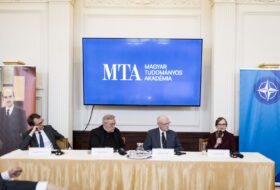
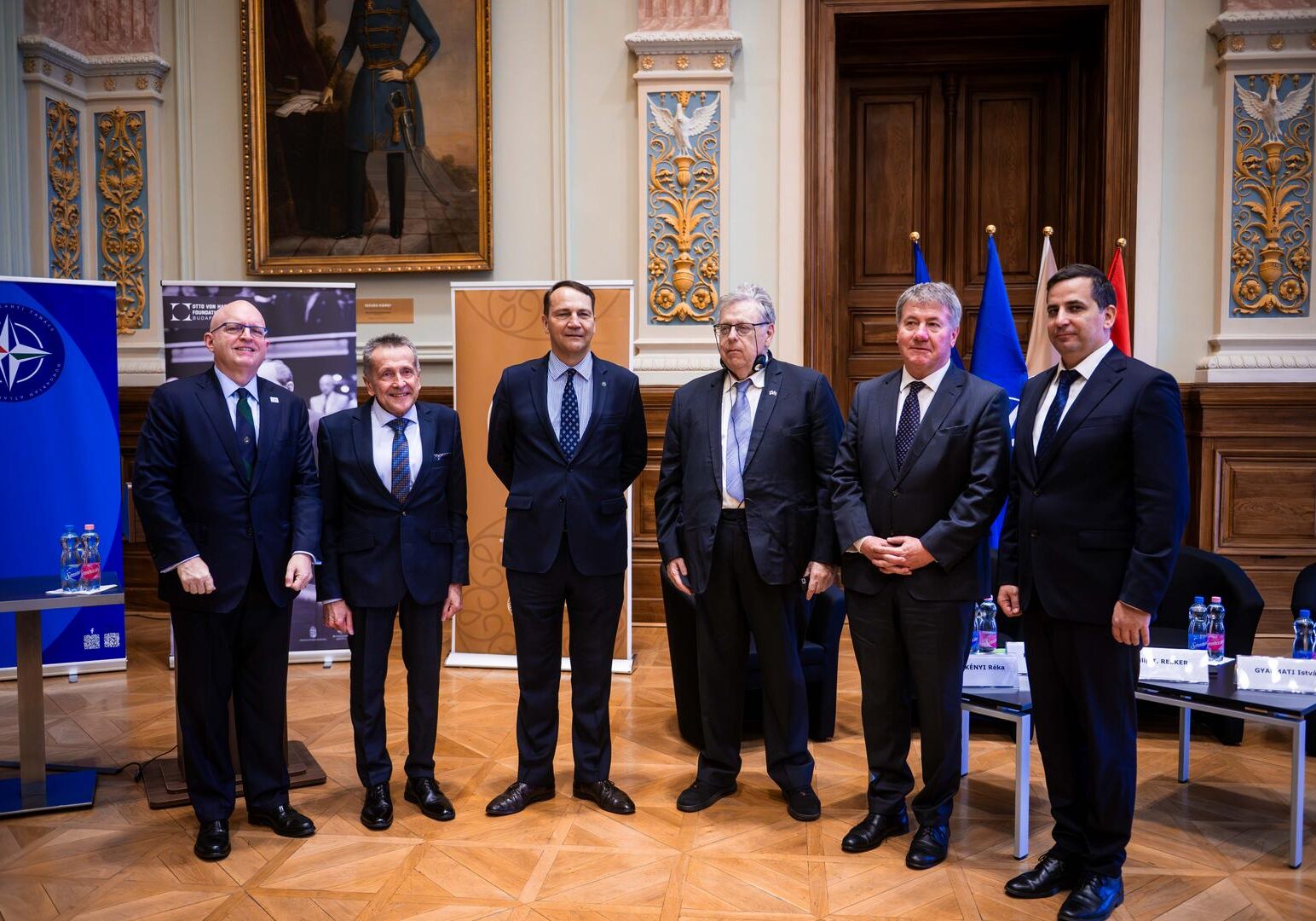
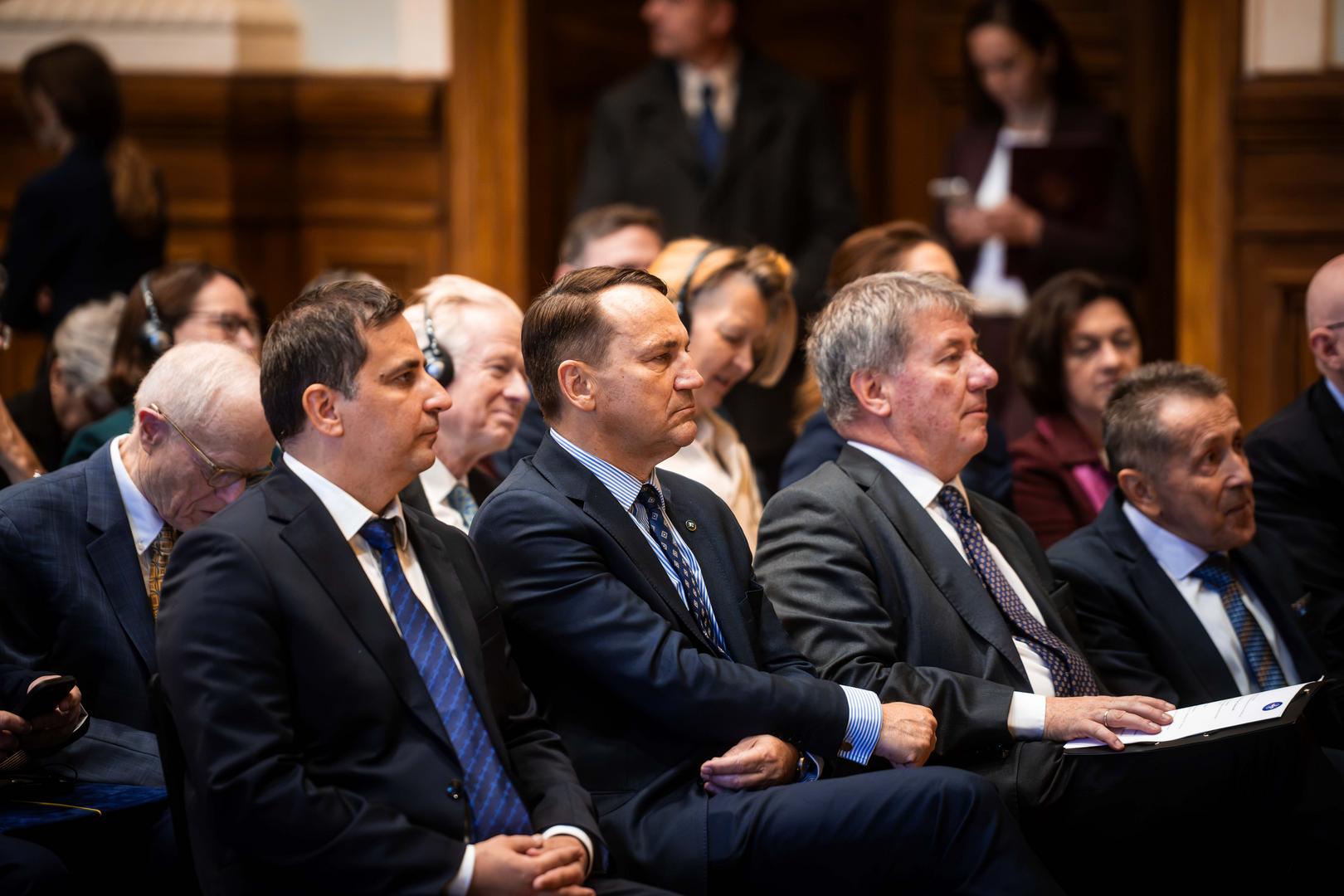
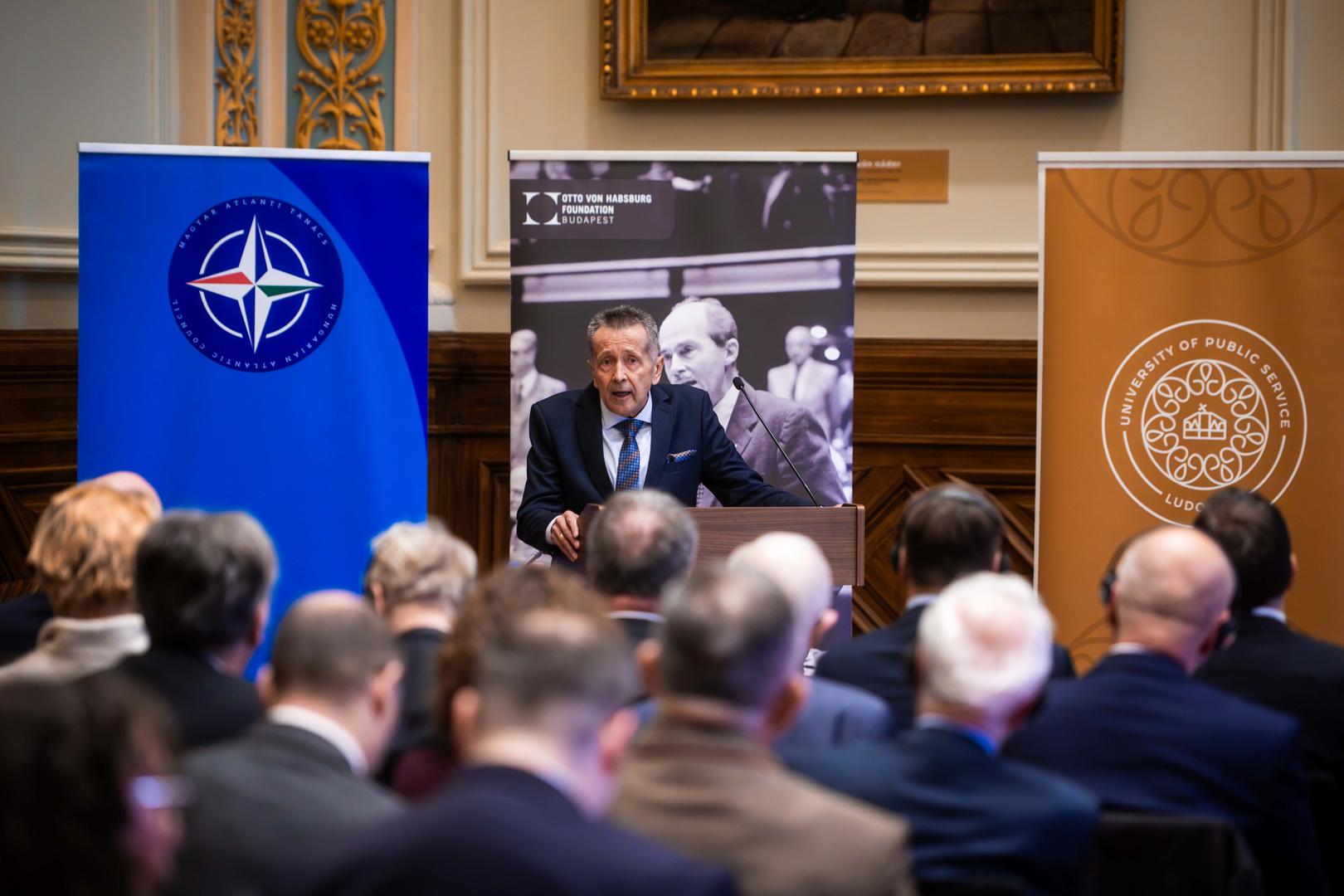
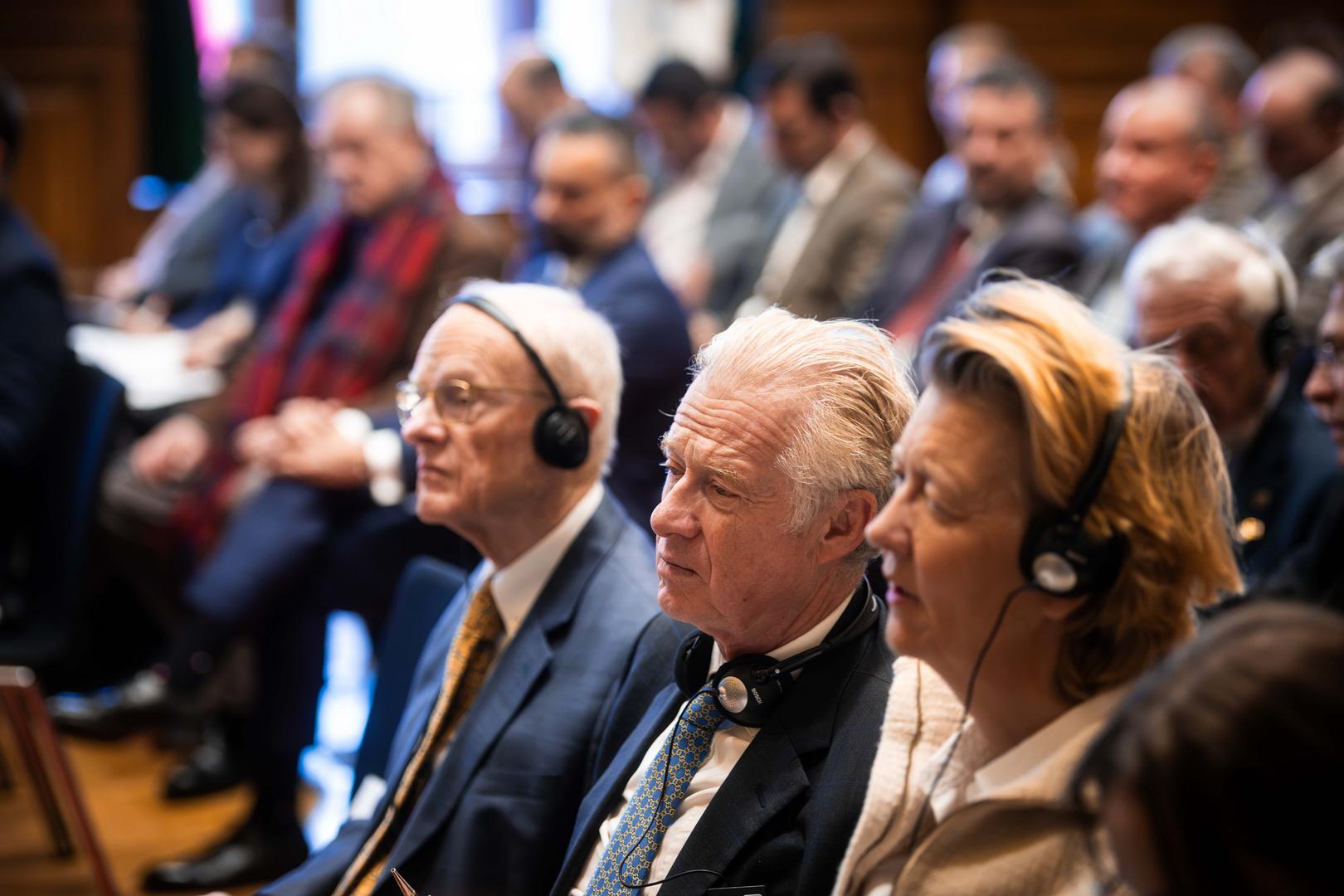
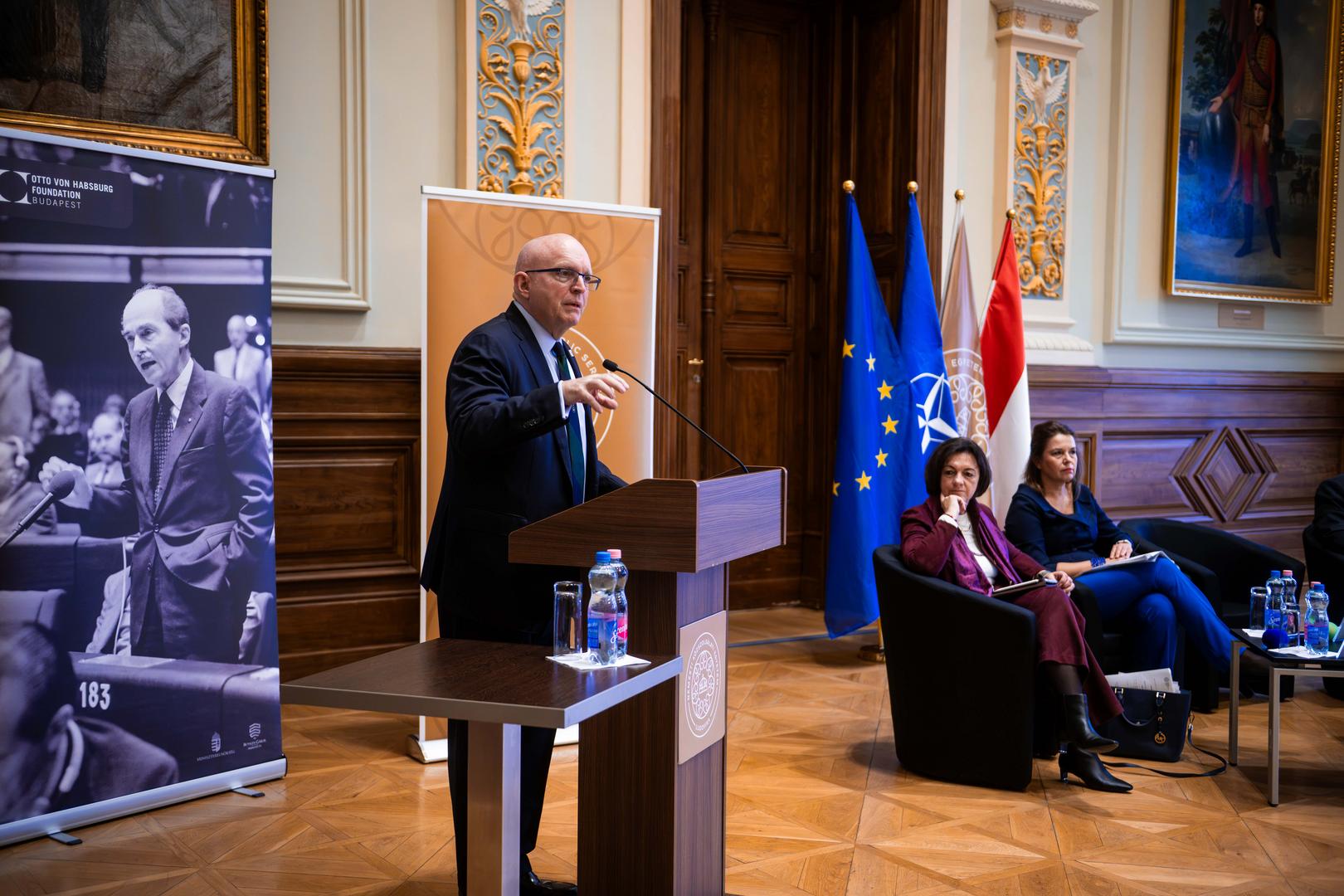
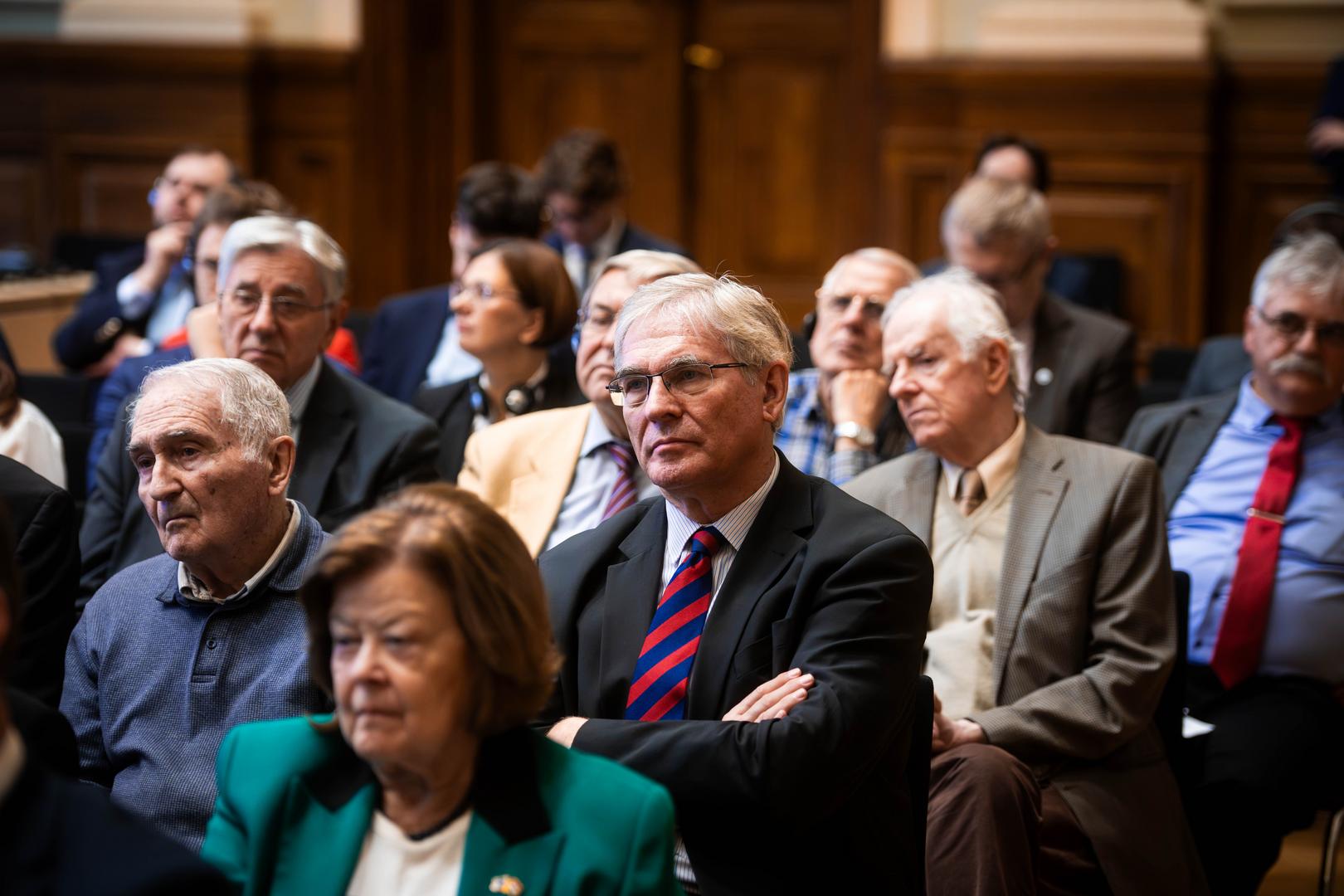
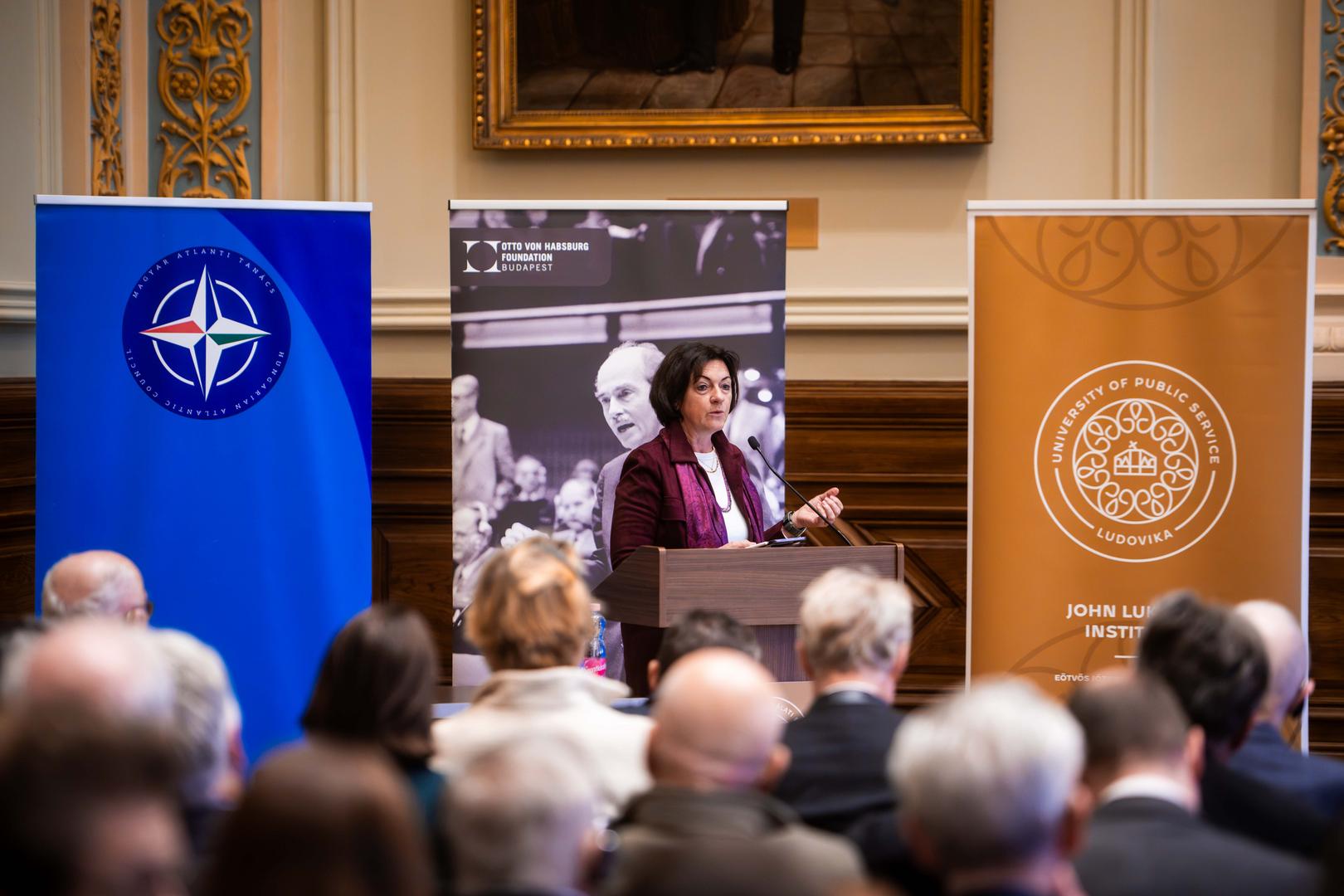
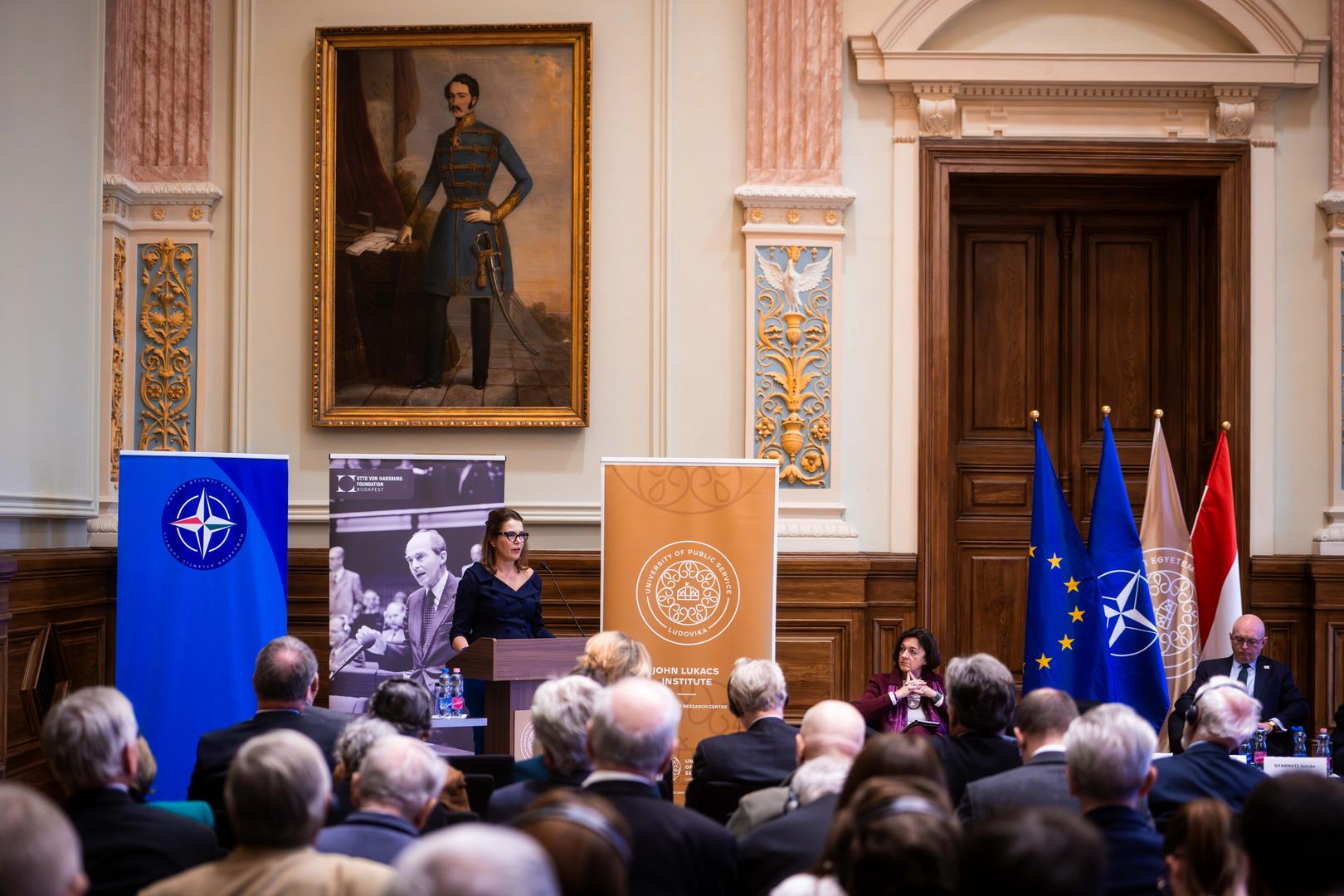
On 19 November, Ludovika University of Public Service hosted the Budapest Security Forum on the theme of “NATO at a Crossroads”. At the invitation of the Hungarian Atlantic Council, the John Lukacs Institute, and our Foundation, more than a hundred guests, including many politicians and diplomats, gathered in the Széchenyi Ceremonial Hall. Rector Gergely Deli welcomed the audience alongside Gergely Prőhle, Director of both the Foundation and the Institute and President of the Council.
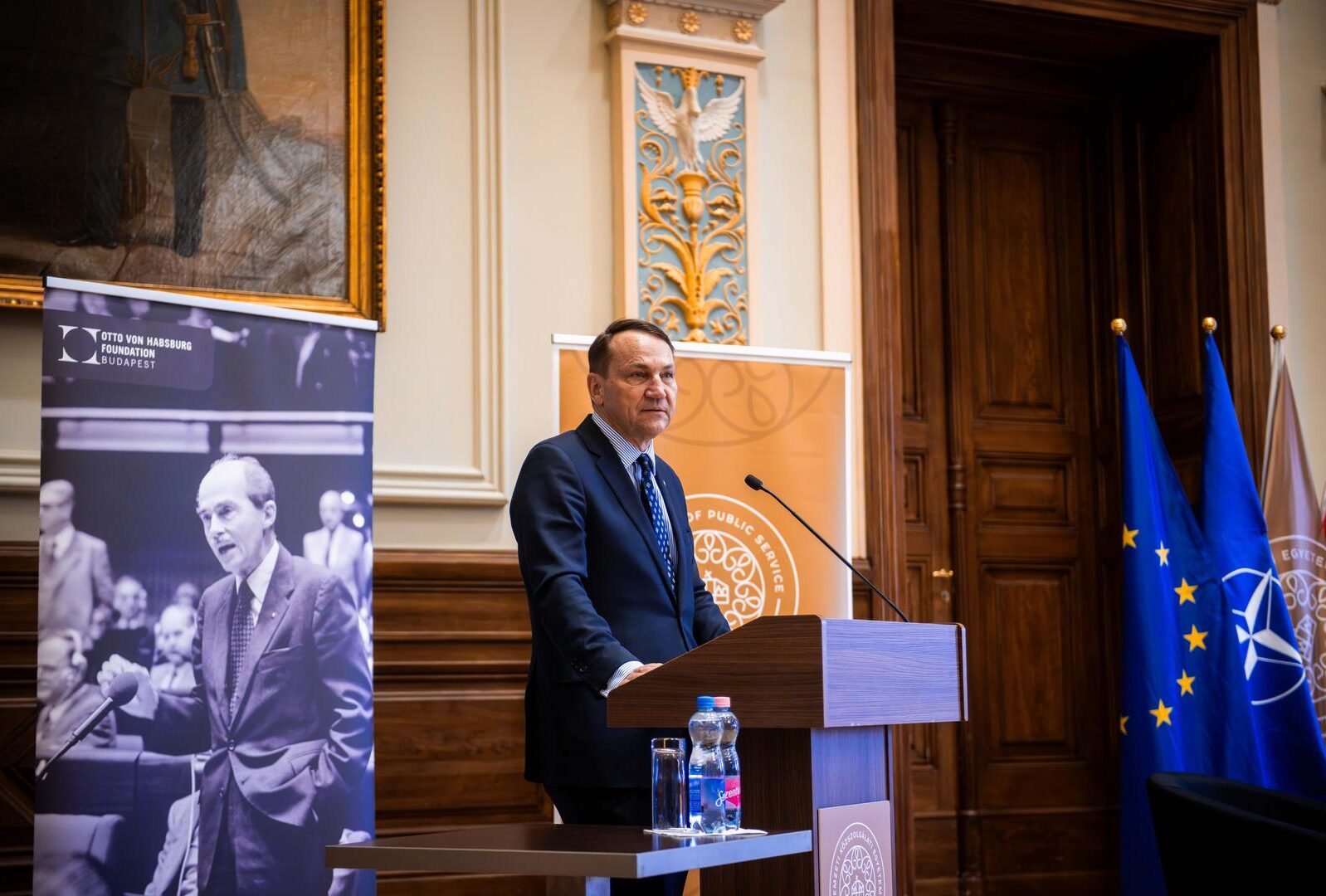
The guest of honour at Thursday’s forum, Radosław Sikorski, Poland’s Foreign Minister, began with the international context of Hungary’s 1956 Revolution and War of Independence. He drew a parallel between the Suez Crisis seventy years ago and the conflict now escalating in the Middle East, but cautioned that the powers upholding the democratic world order must not once again abandon the peoples of Central Europe to their fate. In his view, preventing this requires greater resilience, with NATO and the European Union developing their military capabilities and defence industries in complementary ways. The countries of the region cannot accept any restrictions on the sovereignty they won with the fall of communism. He warned that the loss of security would mean the loss of prosperity.
Global realignment is a lasting process, argued Attila Elek Varga, State Secretary for Defence at Hungary’s Ministry of Defence, making it essential to prepare in good time for the anticipated deterioration in the security environment. Among the threats facing our continent, he cited the Russia–Ukraine war, migration, international terrorism, and events in the Middle East. Numerous forms of hybrid warfare are already evident. The consequences of cyberattacks, sometimes assisted by artificial intelligence, are compounded by climate change, which could ultimately call the future of our entire civilisation into question.
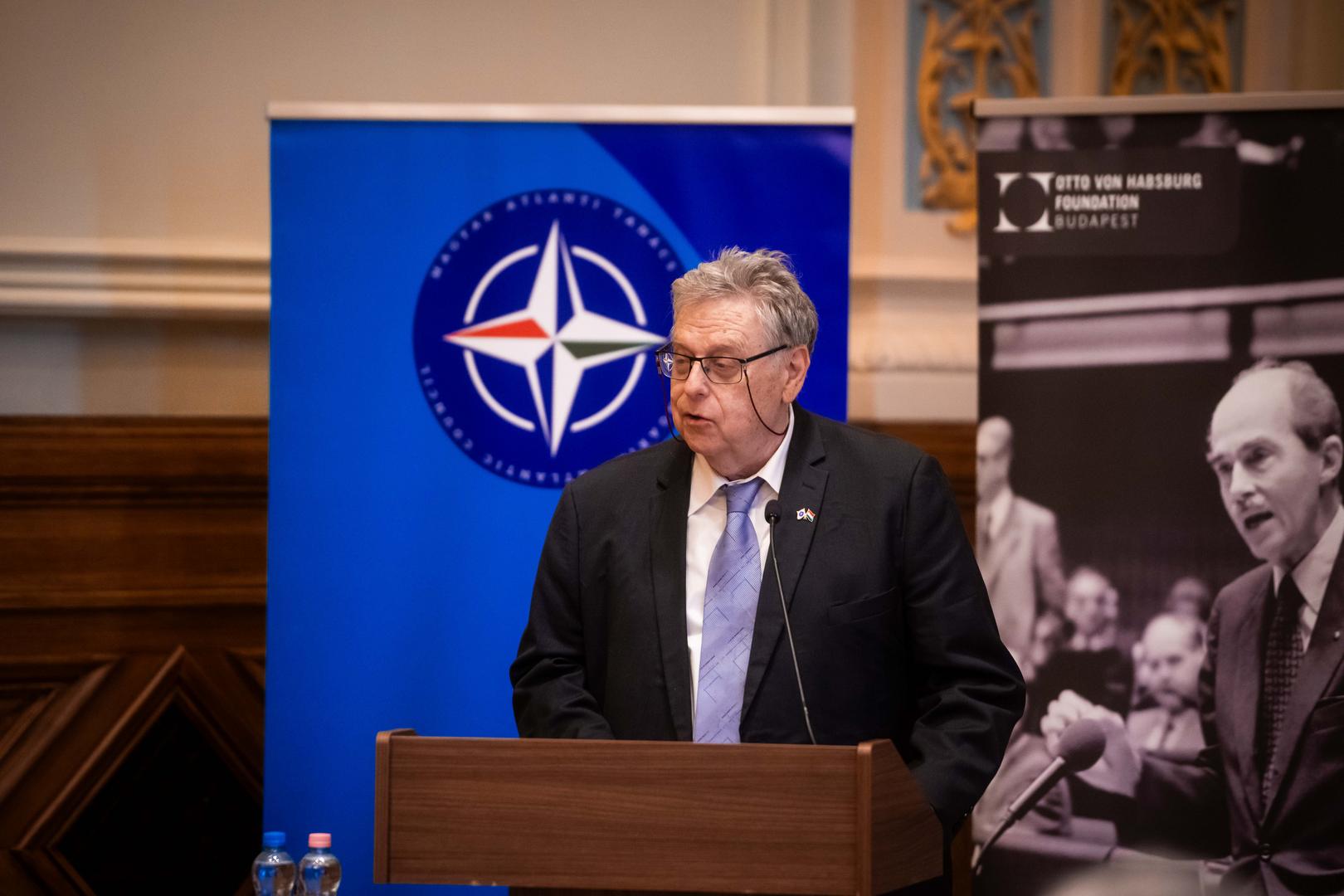
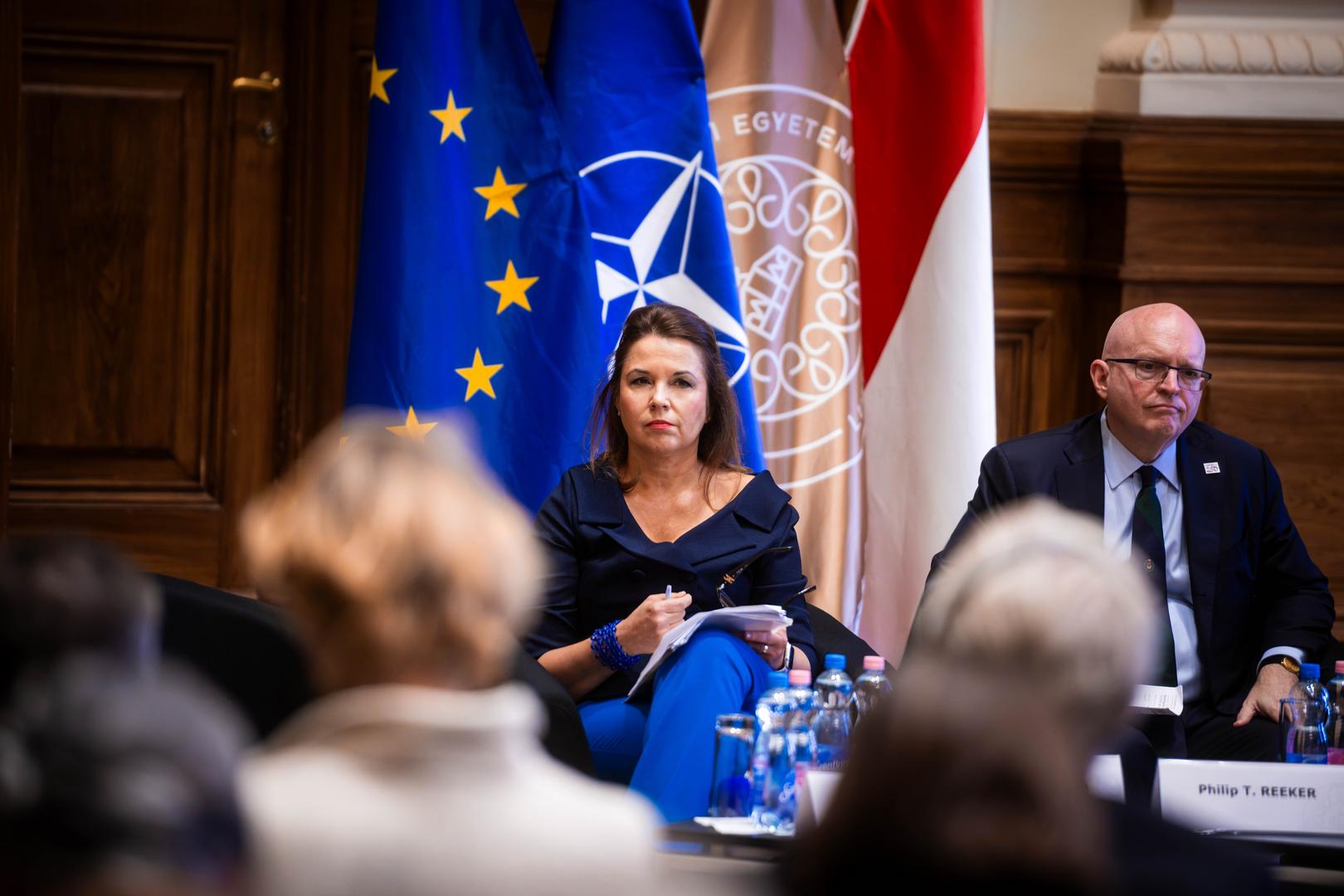
Philip T. Reeker, former US Acting Assistant Secretary of State for European and Eurasian Affairs, identified liberty, democracy, and sovereignty as values that bind the two sides of the Atlantic. Under Donald Trump’s second presidency, the United States is fundamentally redefining its place in the world. This shift has reshaped international relations, yet ensuring that Europe remains secure is still a paramount American interest. Washington expects its European allies to contribute more to peacekeeping missions beyond the continent as well. Reeker stressed the political commitment to raise defence and security expenditure to five per cent of GDP by 2035. Closer cooperation is possible in logistics, training, air defence, and ammunition production, alongside improvements in the interoperability of military systems. A stronger Europe would give America more flexibility. The war in Ukraine is a test for the Alliance, and he urged EU member states to set out in law the terms of their support for the country under attack.
For István Gyarmati, Secretary General of the Hungarian Atlantic Council, the future of NATO is the future of European security. Europe needs to become capable of defending itself independently as soon as possible. It is time to outgrow its sense of inferiority to the United States and respond to the Russian leadership’s blackmail as a sovereign actor. Two questions cannot be avoided: how effectively could Central Europe withstand Russian aggression on its own, and are there contingency plans for a nuclear attack? He considers Hungary vulnerable even to hybrid warfare and maintains that preparing the public should primarily be the responsibility of civil society organisations rather than governments.
Professor Boglárka Koller, a researcher at the university’s Jean Monnet Centre of Excellence, described the period since 2022 as the end of an age of illusions. Russia’s invasion of Ukraine has accelerated efforts to develop a common defence policy after seventy years of delay. National responses were swift, as Finland’s and Sweden’s accession to NATO demonstrates. The EU, however, has yet to act decisively: existing patterns have largely become more entrenched, with no new concept emerging. Koller, who heads the Department of European Studies, used extensive data to assess how much the Alliance’s European members are willing to contribute. She weighed American economic and political interests, together with the arguments for and against expanding the Union’s defence capacity. She called for better mobility, greater competitiveness, a commitment to participation in both principle and practice, and a systematic approach to fostering innovation.
The presentations were followed by a round-table discussion moderated by Réka Szemerkényi, Director of International Affairs at the Equilibrium Institute.
Photos by: Dénes Szilágyi, NKE