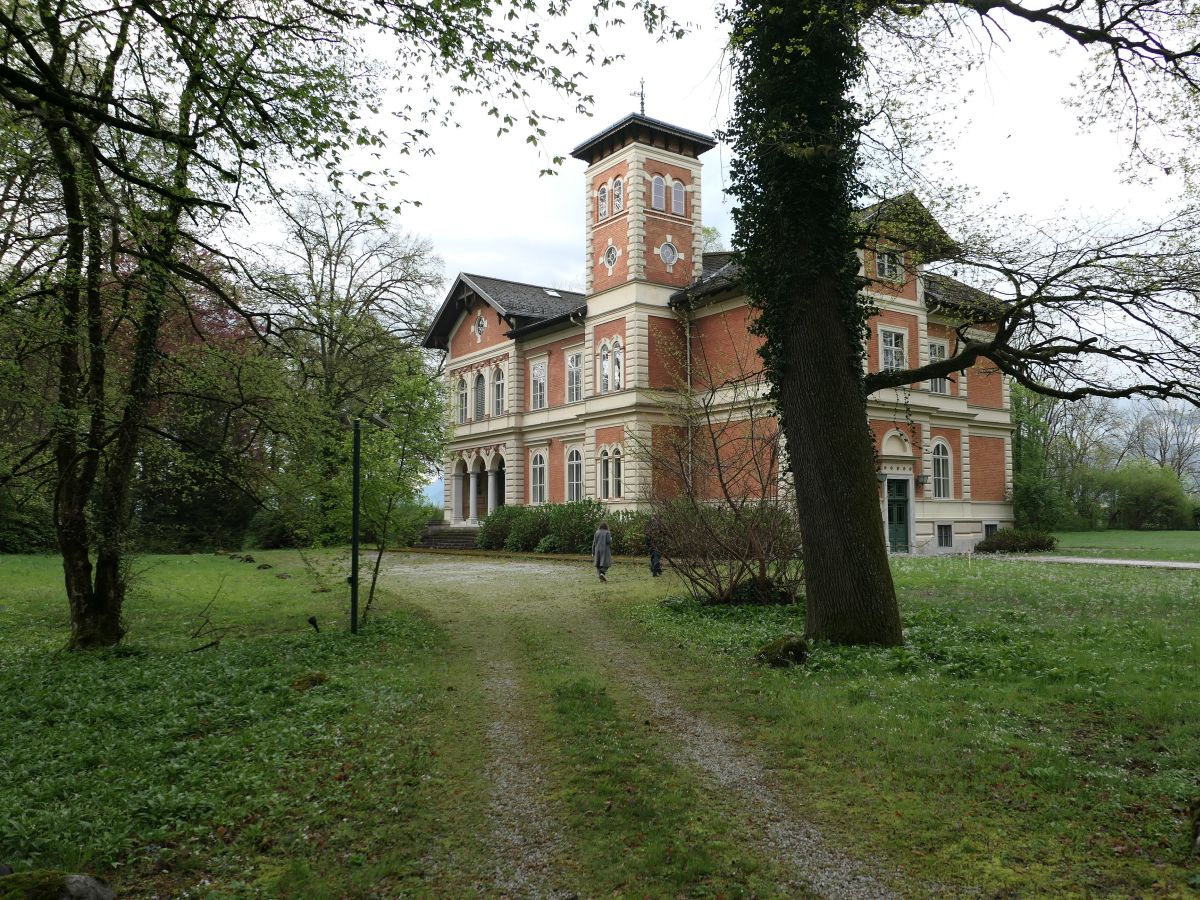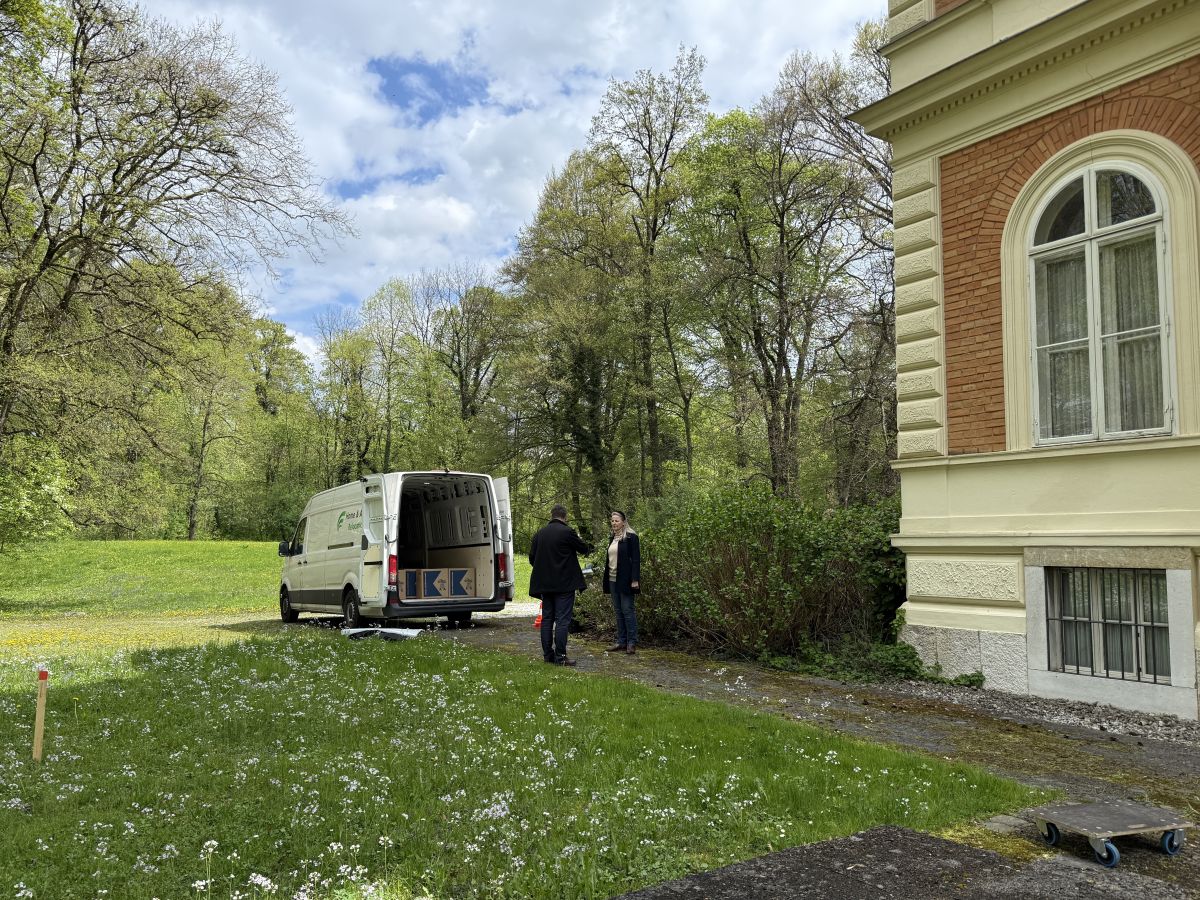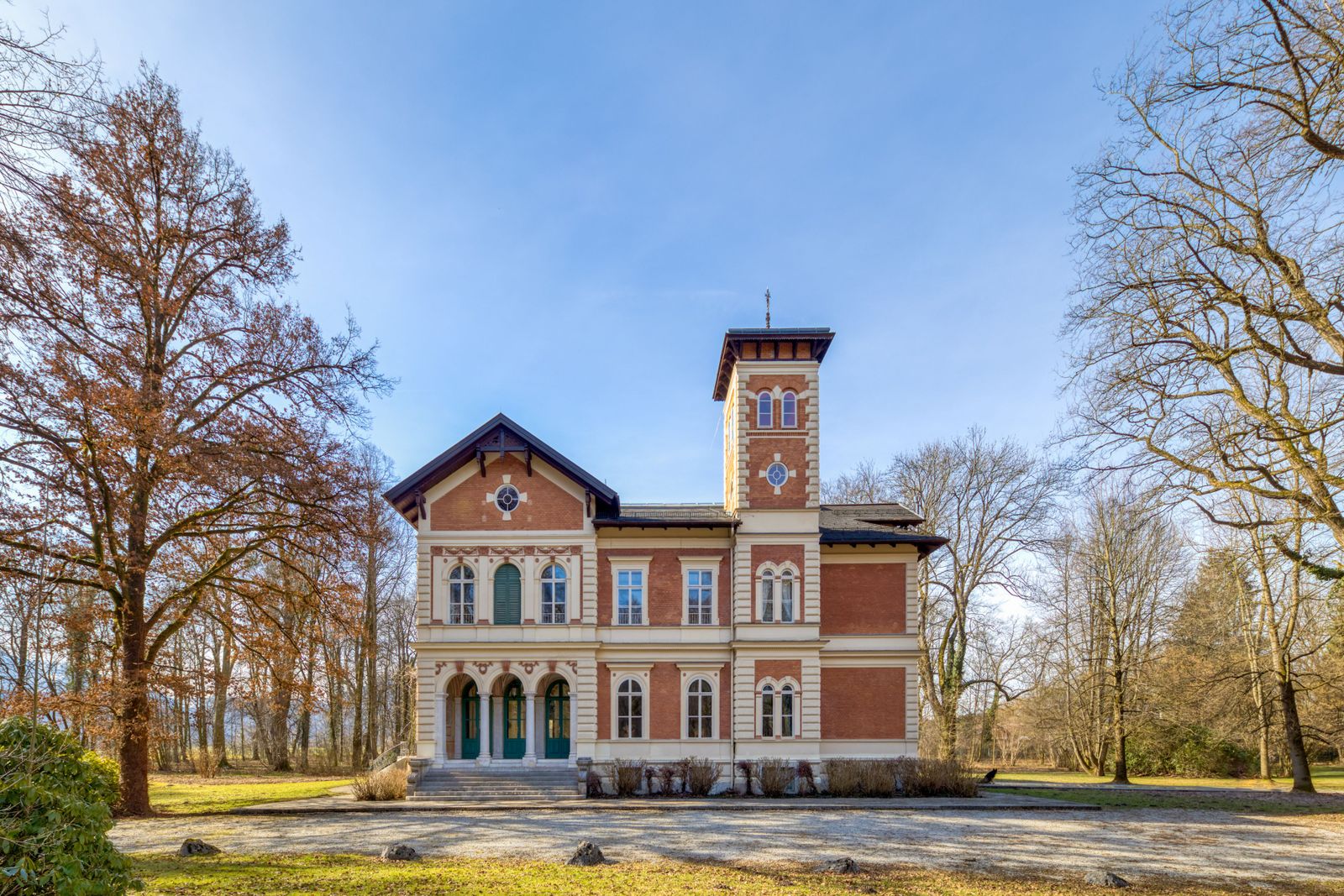
An iconic building of the period following the Austro–Hungarian Compromise of 1867 is the so-called Swoboda Villa, or Casa Austria, situated on the outskirts of Salzburg. The towered, Neo-Renaissance building, completed in 1869 and set within a three-hectare English park, has been the site of numerous historical events. It was commissioned by Wilhelm Swoboda, a Viennese pharmaceutical merchant, and designed by Karl Sattler on land purchased in 1866 from the Bishop of Chiemsee.
In May 1881, the villa hosted Crown Prince Rudolf, the son of Emperor Franz Joseph I and Empress Elisabeth (“Sisi”), and his wife, Princess Stéphanie of Belgium. As the princess disliked the austerity of imperial palaces, the couple chose to stay here rather than at the nearby Hellbrunn Palace during part of their honeymoon.
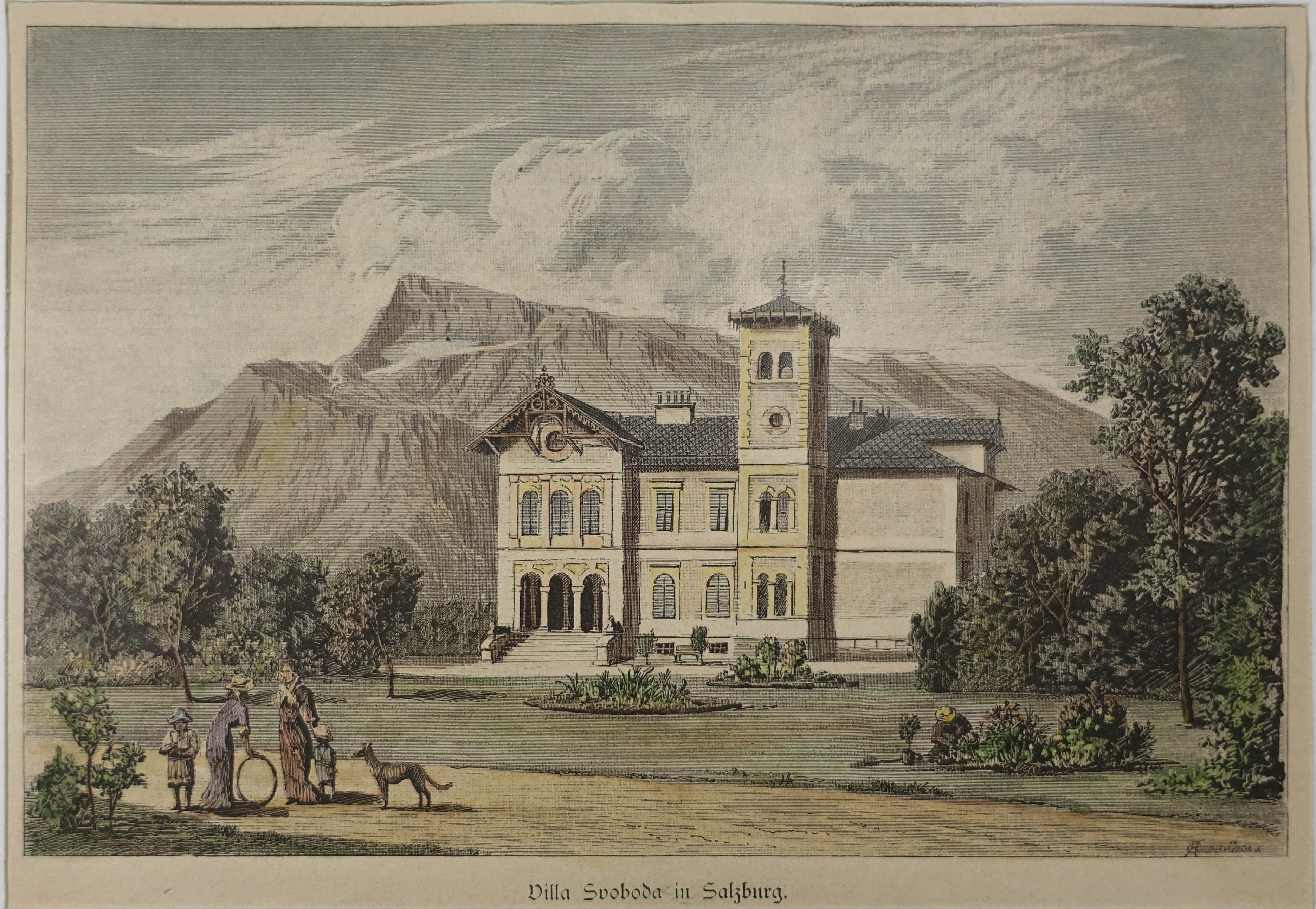
Villa Swoboda in Salzburg. Coloured wood engraving by Angerer & Göschl, after F. Hinterholzer, c. 1890.
The villa was purchased in 1904 by Countess Sophie Moÿ de Sons, of Bavarian-French origin. Upon her death in 1950, it passed to her nephew, Count Johannes von Moÿ. In the 1990s, he placed the property at the disposal of Karl von Habsburg, the eldest son of Otto von Habsburg; it was later acquired by the Habsburg family. The current head of the House of Habsburg kept part of his father’s estate here, which has now been entrusted to our Foundation.
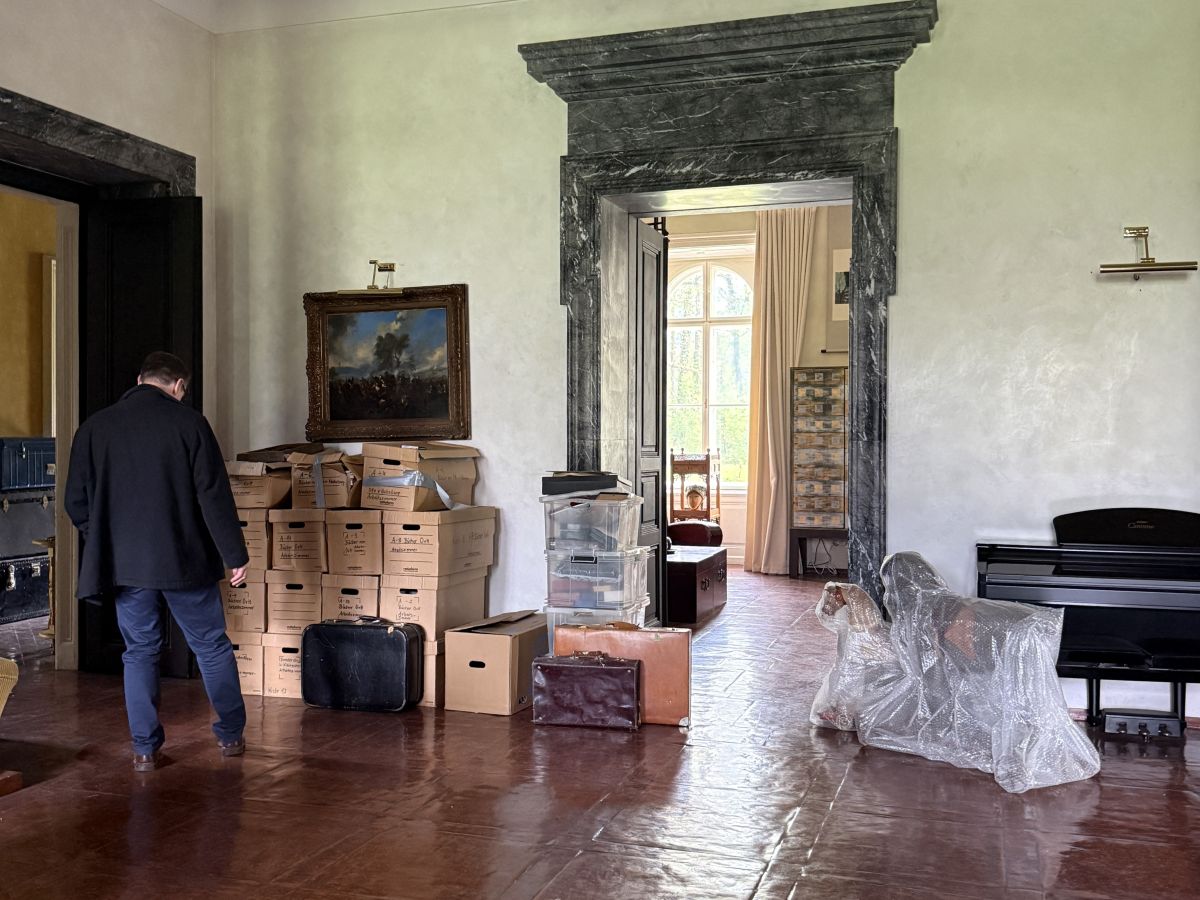
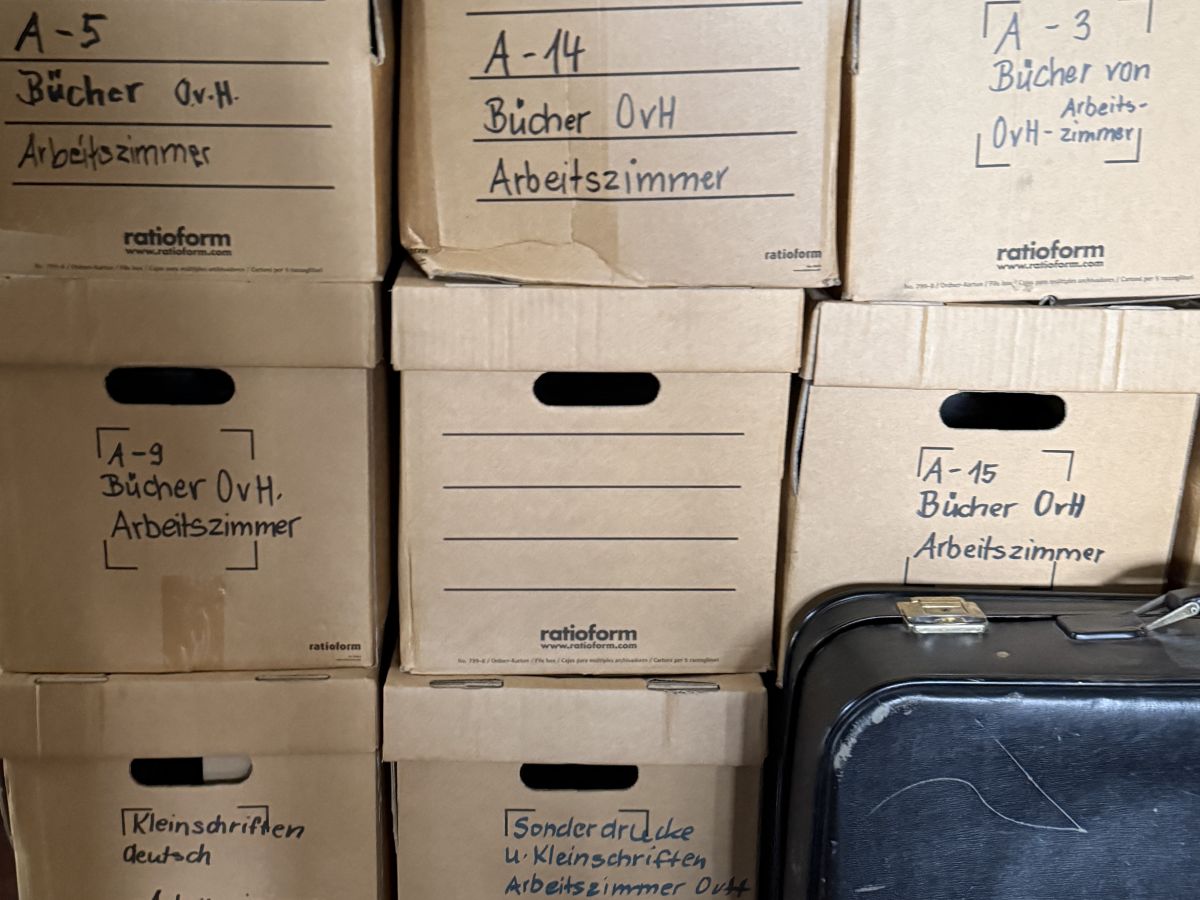
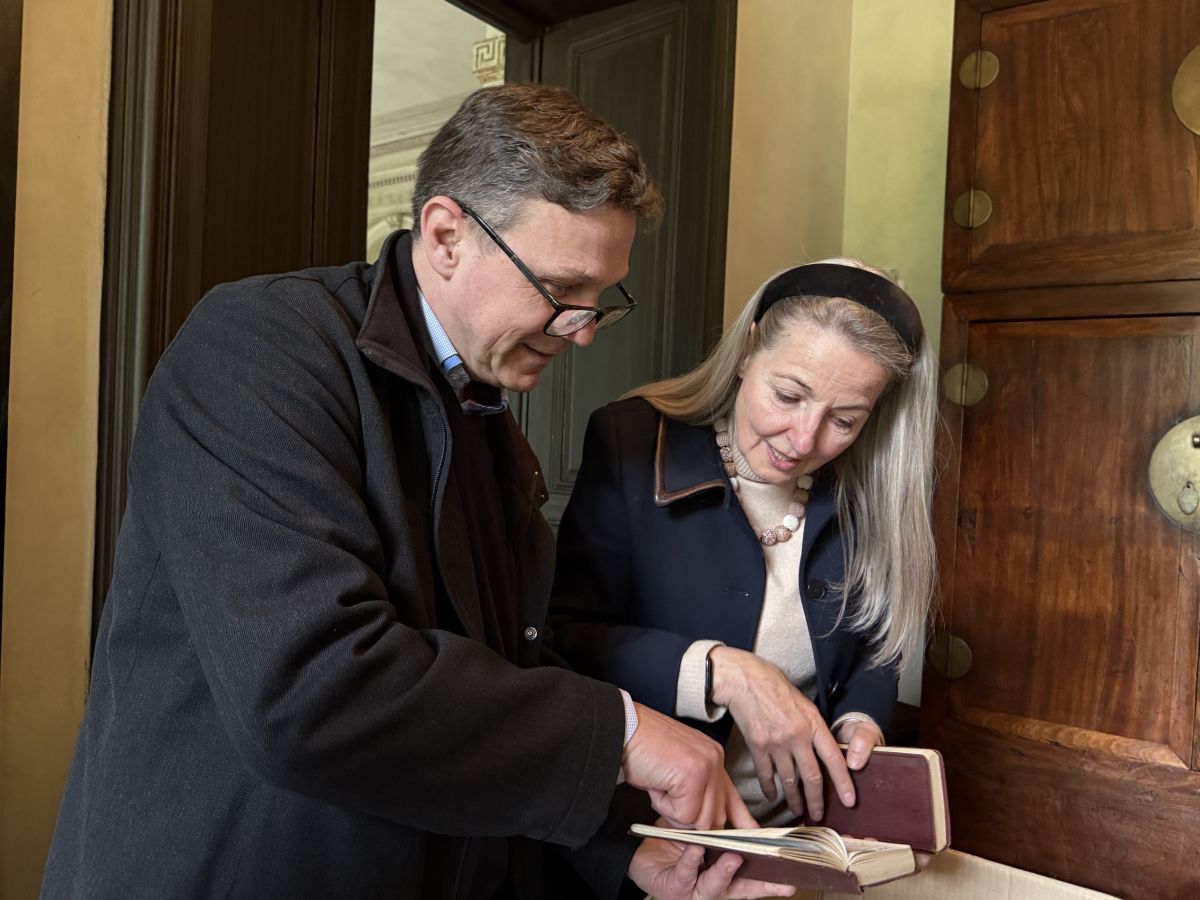
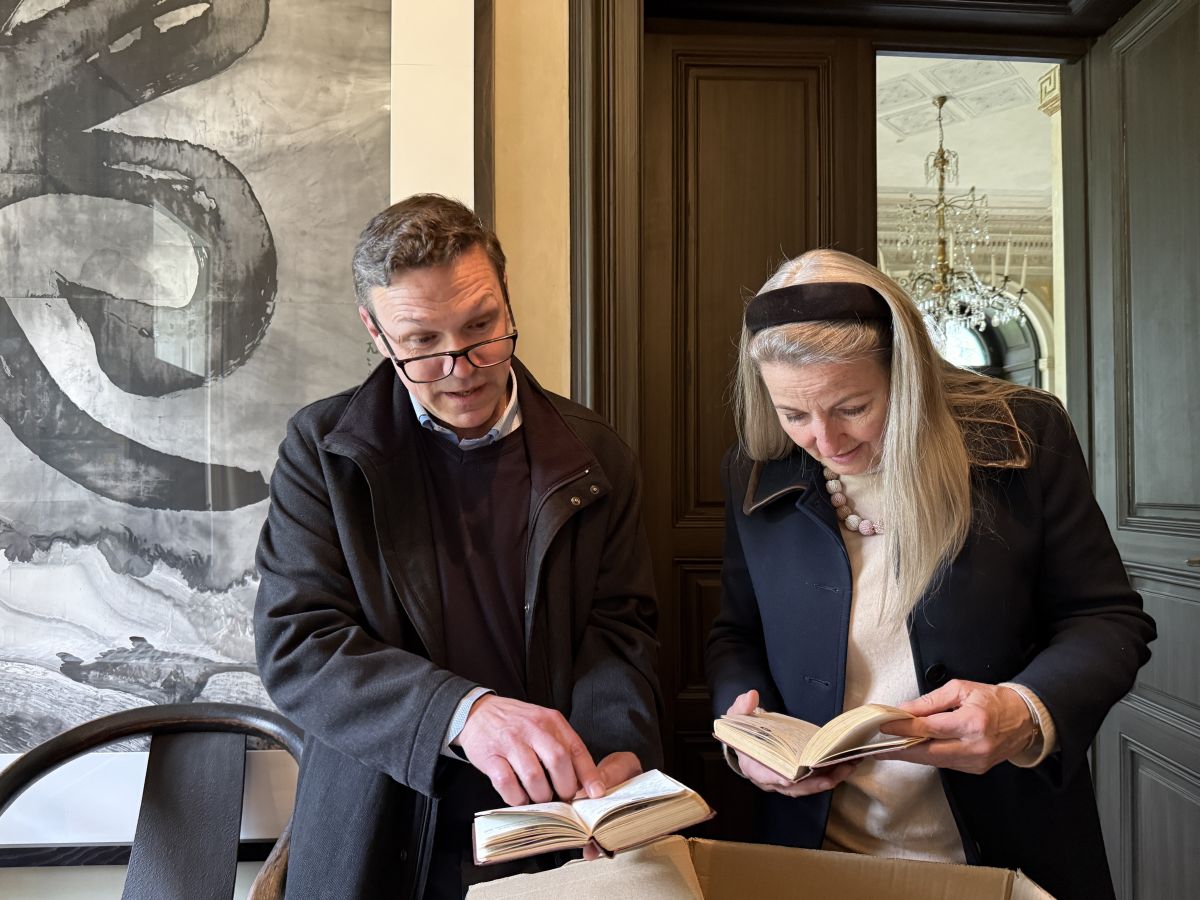
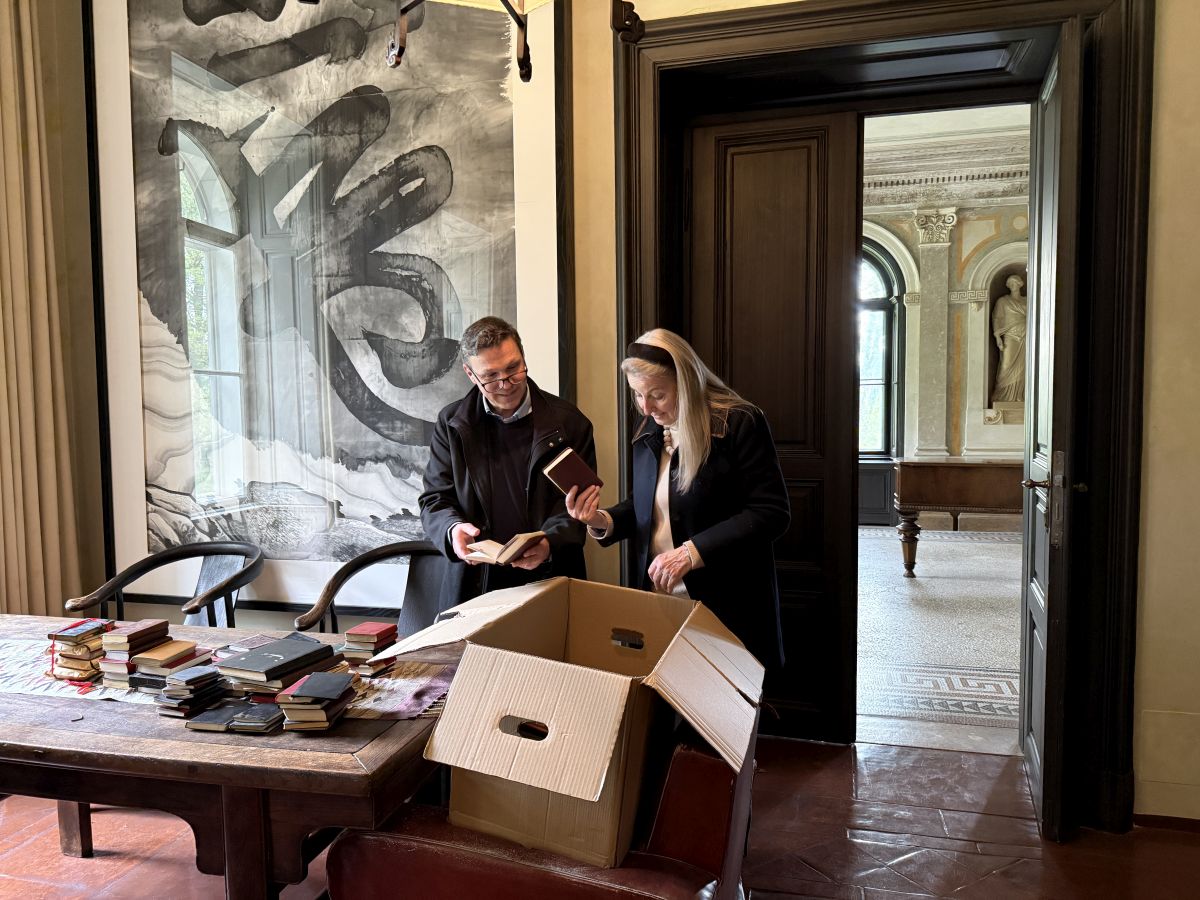
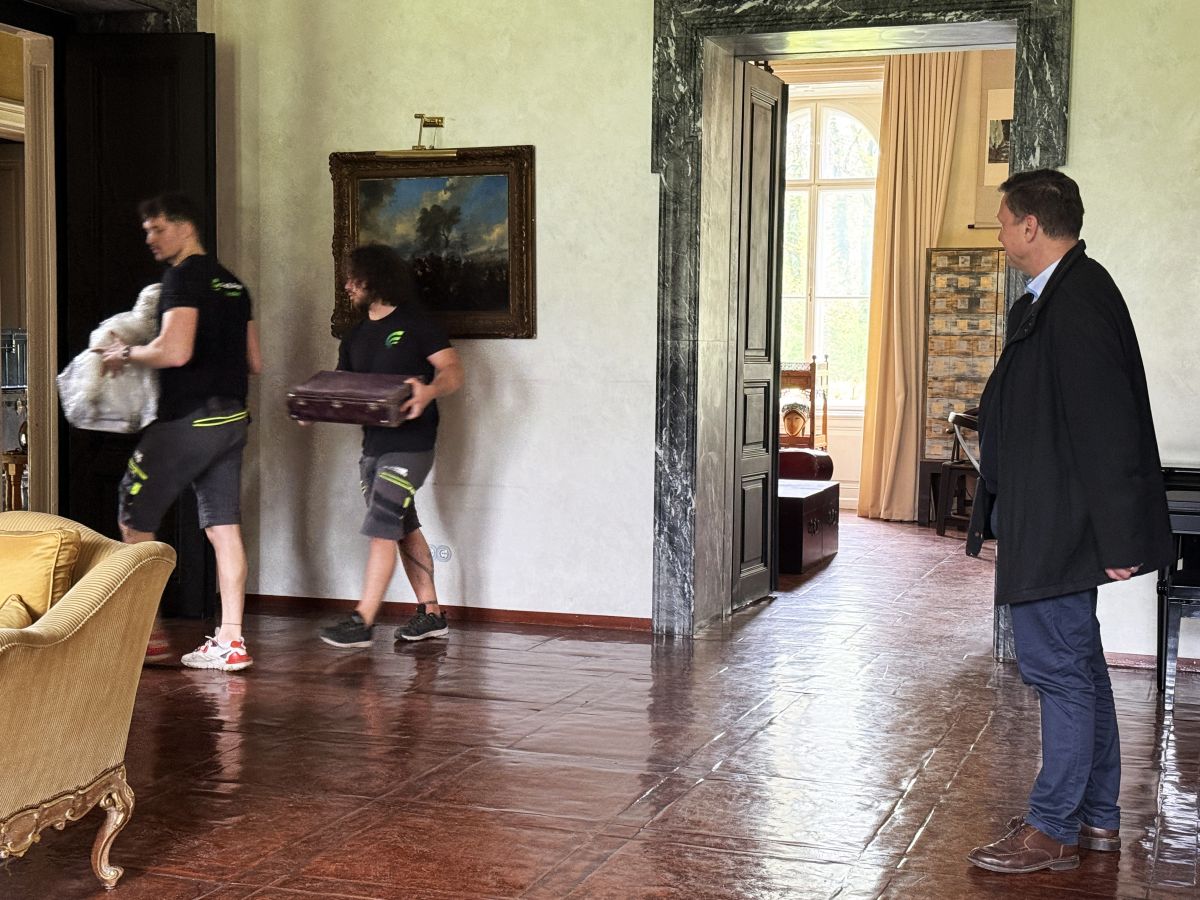
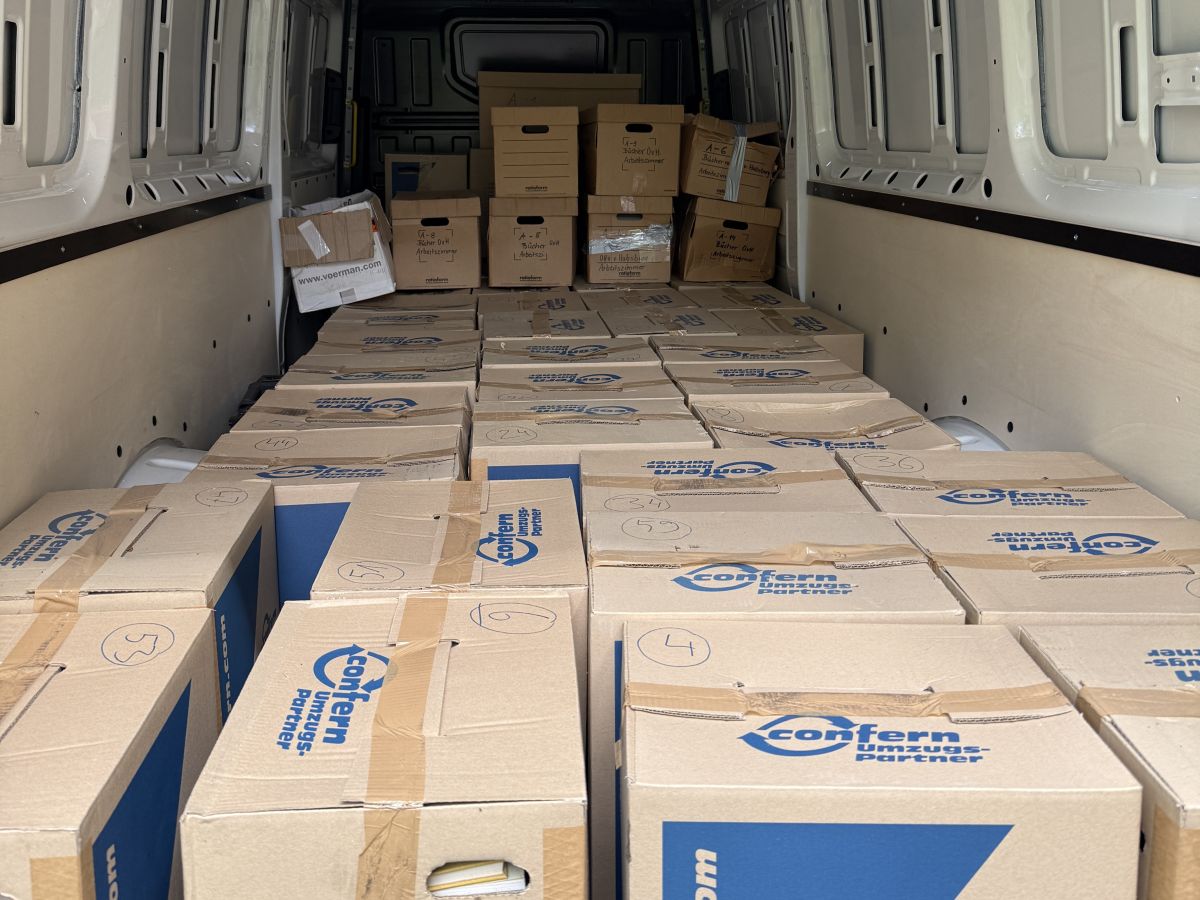
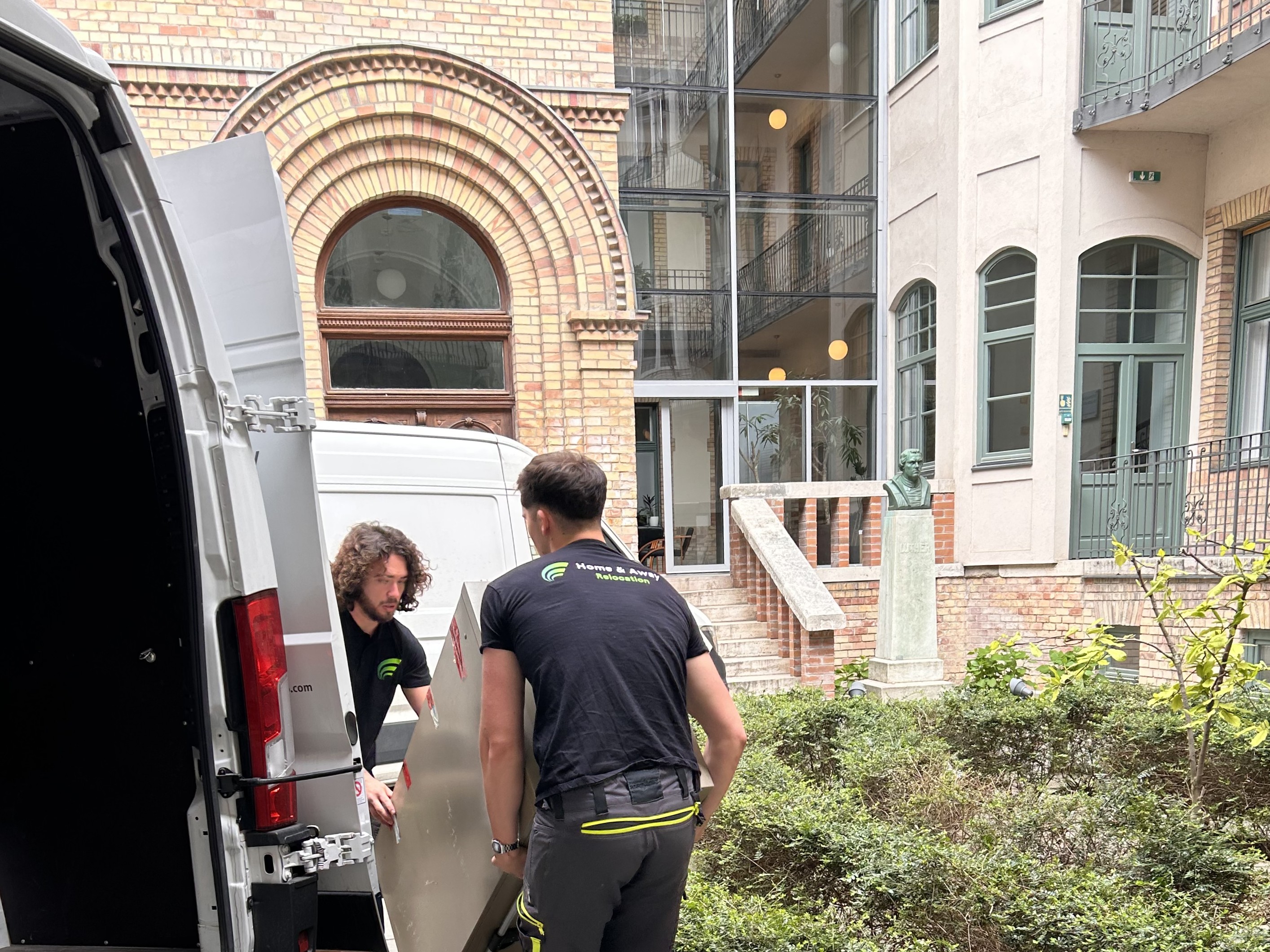
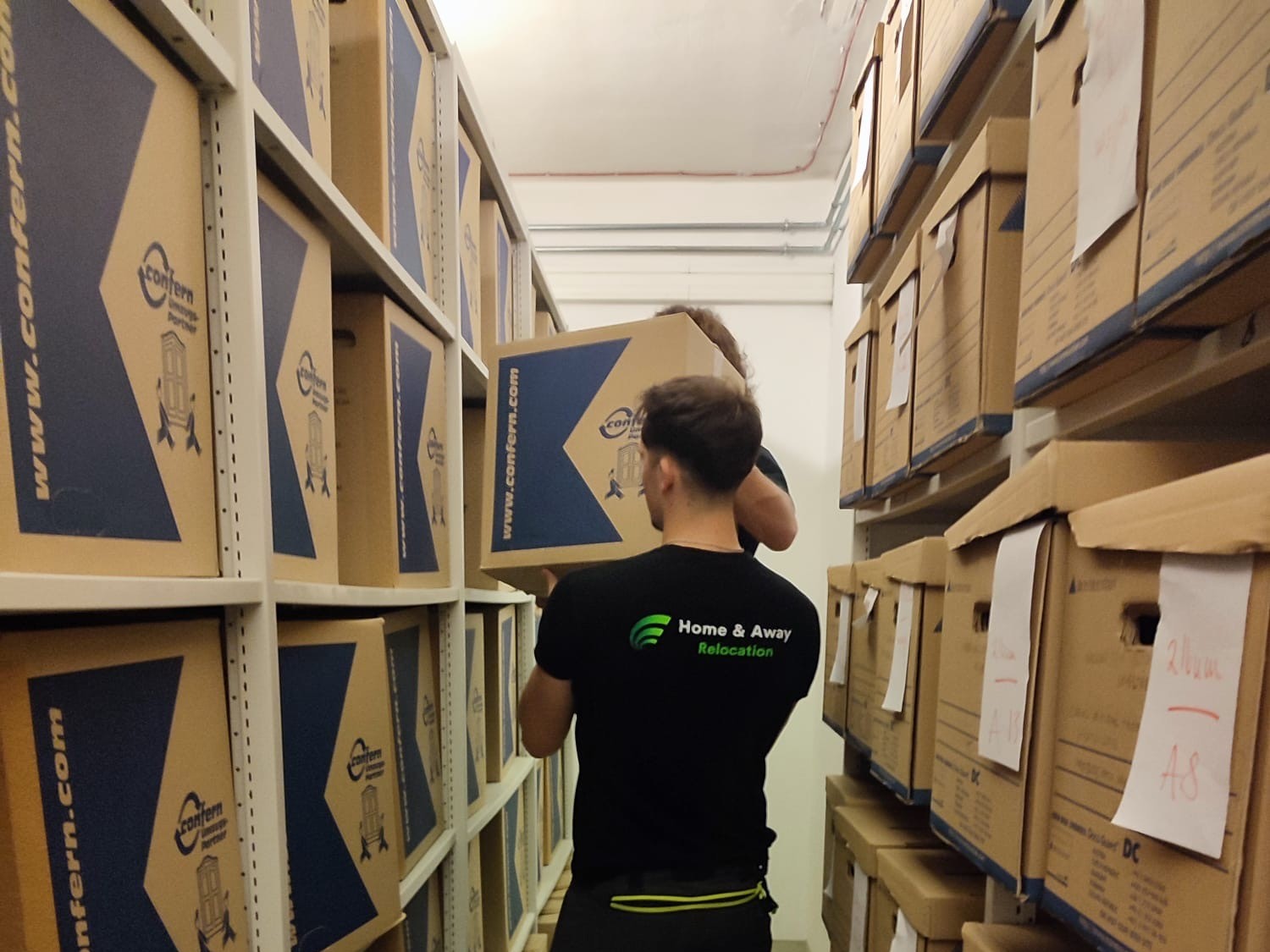
On 19–20 April, under the supervision of Gergely Prőhle, Director of the Foundation, we took custody of the valuable documents and objects and arranged their professional transport to Budapest. Due to Karl von Habsburg’s prior engagements, the carefully prepared material was handed over by his sister, Archduchess Gabriela.
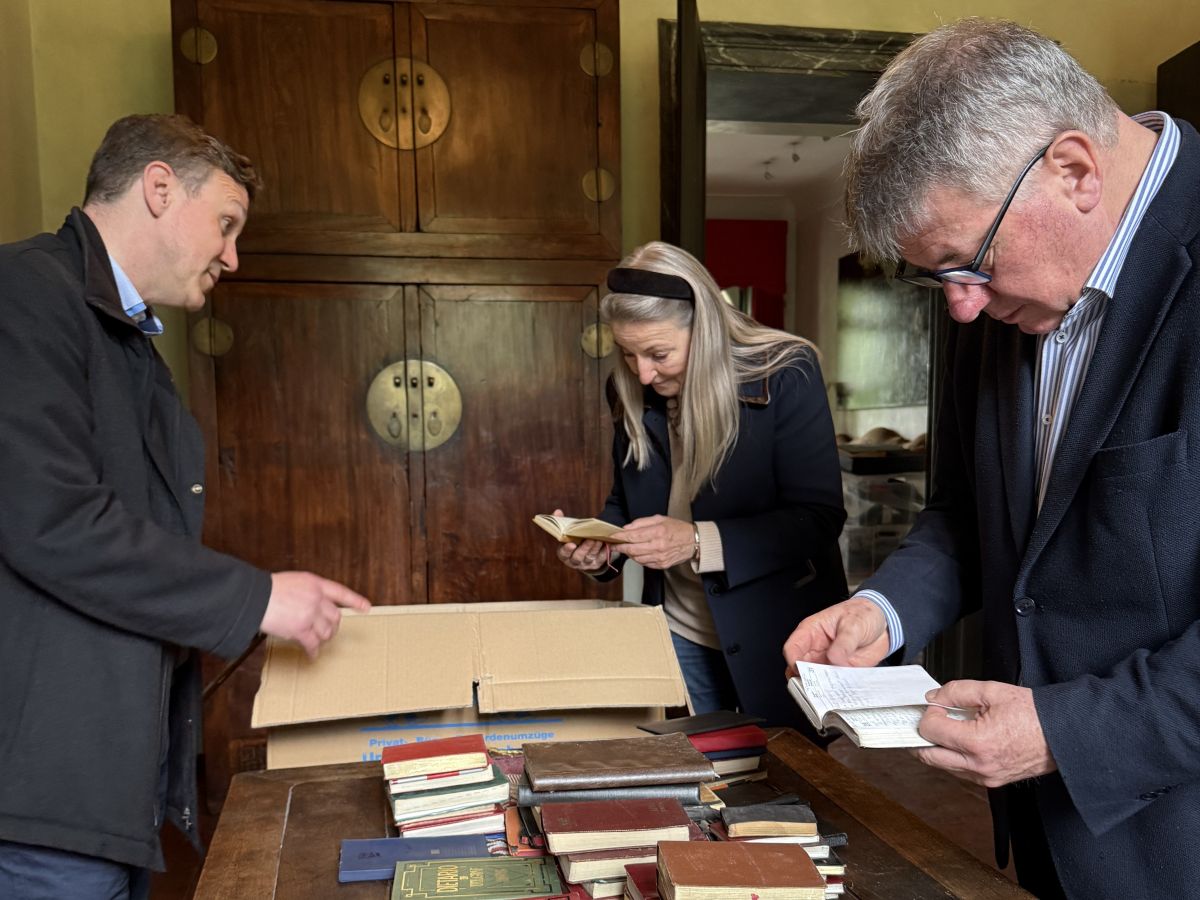
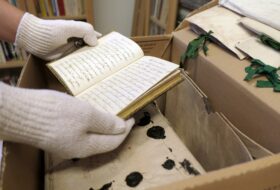
Of particular significance is the discovery among the boxes of the former Crown Prince’s appointment diaries, thought to have been lost. These records are of outstanding historical value: they bear witness to Otto von Habsburg’s exceptionally full schedule and offer essential reference points for reconstructing his life, network of contacts, and the events of the period.
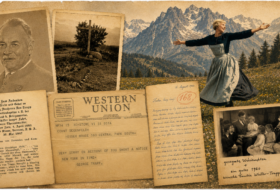
The material transferred to the Foundation also includes a substantial body of documents relating primarily to the 1950s and 1960s, the complete collection of the former Crown Prince’s writings in print, as well as his decorations and childhood toys. In addition, part of the library of Thomas Chaimowicz, a former professor of philosophy in Salzburg and a close associate of Otto von Habsburg, has likewise become part of our holdings.
With the change of ownership of Casa Austria, a new chapter begins in the history of this distinguished villa. The same is true for the Foundation’s endeavours: processing the engagement diaries opens up new perspectives for our research objectives. It facilitates the precise dating of events, allows for a deeper understanding of the former Crown Prince’s life, and contributes to a more nuanced presentation of the enduring intellectual legacy of our namesake.