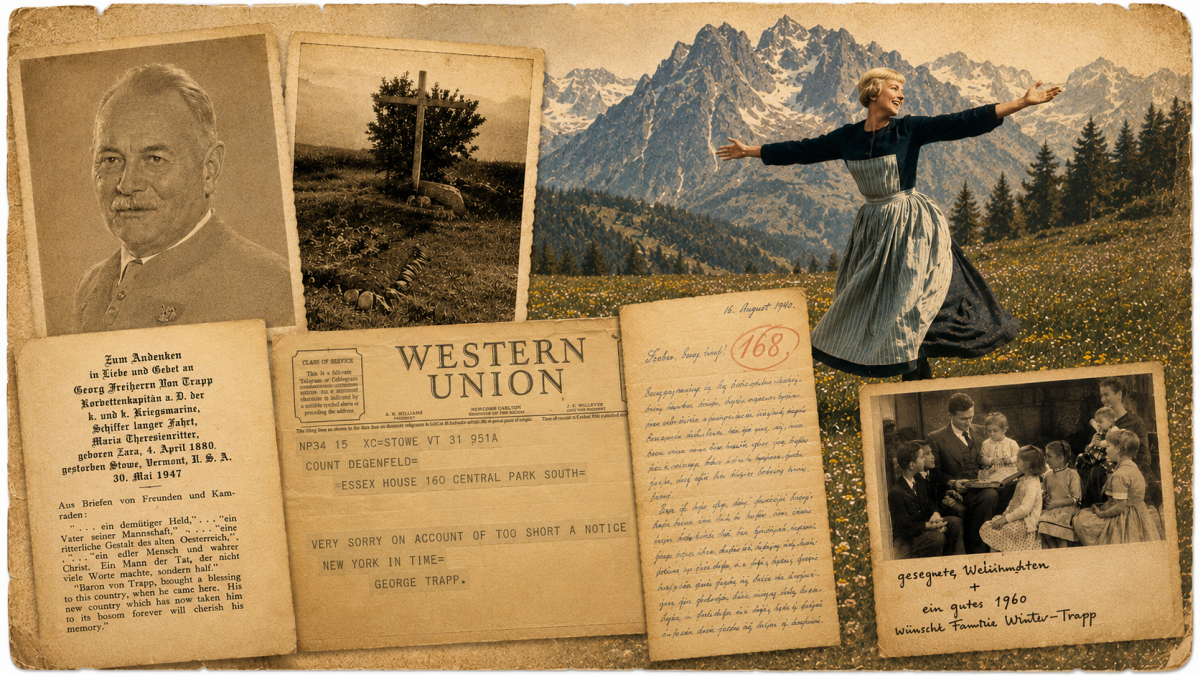
The familiar narrative follows the love story between a singing nun and Captain Georg von Trapp, a widowed naval officer raising seven children alone, set against the shadow of the Nazi occupation and the picturesque backdrop of Salzburg. But the von Trapp family’s fate was also shaped by the legacy of the Habsburg Monarchy, the experience of exile, and a firm resistance to totalitarian regimes.
Among the musical’s many celebrated songs, My Favorite Things stands out as one of the most iconic numbers from the 1959 production. In the scene, Maria – portrayed by Julie Andrews in the 1965 Hollywood adaptation – tries to calm the frightened children gathered around her bed by listing her “favorite things.” Written by Richard Rodgers and Oscar Hammerstein, the song has since become a classic of the Great American Songbook. Even listeners unfamiliar with the full story may notice the line “schnitzel with noodles,” rhyming with “crisp apple strudels”– easy-to-recognize references that clearly convey a distinctly Central European atmosphere, evoking strudel, Wiener schnitzel, and potato noodles.
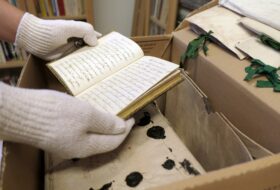
The letters and documents preserved in our Foundation’s collection reveal that the relationship between the von Trapp family and the exiled Habsburgs was far more than a matter of polite acquaintance. Beyond mutual affection, the two families were united by the shared and painful experience of exile.
The musical based on Maria von Trapp’s memoirs — and its later Hollywood adaptation — made the Trapp Family Singers world-famous. Yet for dramatic effect, the story diverges from historical reality in several important ways. Contrary to the stern and emotionally distant father depicted in the film, Georg von Trapp was in fact a warm-hearted family man who loved music himself. Nor did the family flee Austria on foot across the Alps; they left legally by train following the Anschluss. Nevertheless, the decision was rooted in very real political and moral convictions. Captain Georg von Trapp — incidentally one of the Austro-Hungarian Monarchy’s most successful submarine commanders — refused to serve in the Nazi navy and also rejected demands that his children sing in honor of Hitler’s birthday.
His family background almost naturally determined the first stages of Georg’s career, which eventually brought him knighthood and later the title of baron. His father, a respected frigate captain in the Austro-Hungarian Navy (k.u.k. Kriegsmarine), secured his place in military history as the commander of a warship saved from destruction. Georg continued this naval tradition, while his life also became connected in several ways to the Hungarian elite. His wartime achievements and the world of the Monarchy’s navy profoundly shaped the family’s collective memory, and the von Trapps’ ties to the Habsburgs endured even during the years of exile, much like those of many former imperial officers.
Georg’s first wife was Agathe Whitehead, granddaughter of the English engineer Robert Whitehead, inventor of the first effective self-propelled torpedo. The couple spent much of their time in Fiume, where the Whitehead Torpedo Factory operated.
Before their emigration, however, the family’s fortunes took a darker turn. Agathe died young, and during the economic crisis of the 1930s the family lost its wealth in a bank collapse. From that point onward, singing together became a means of survival. Their outlook on life was guided by a motto rooted in Salzburg’s Nonnberg Abbey, embodied above all by Georg’s second wife, Maria von Trapp — born Maria Kutschera and formerly a nun — which rested on the belief that a person discovers their true vocation only through the continual search for God’s will.
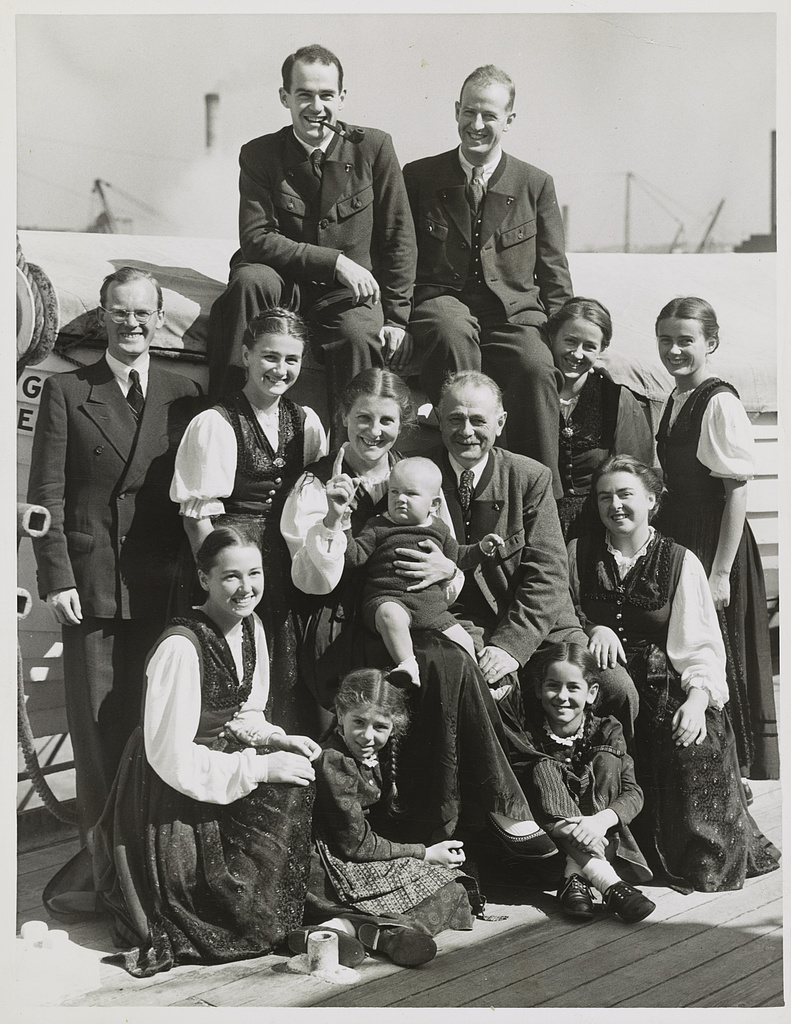
The von Trapp family in the United States, 1939
Photo: Library of Congress, LC-DIG-ds-03556
From Italy, the large family eventually arrived in the United States by way of London. There, the von Trapps soon came into contact with the Habsburg family, who had likewise been driven into exile by the Nazi threat, and they openly expressed their loyalty to the dynasty. In August 1940, Maria von Trapp presented the exiled imperial family with an Austrian Madonna statue and handicrafts made by her children. The deeply moved reply from Queen Zita’s secretariat reveals how meaningful such gestures were for those living far from home:
“All these works, created by faithful Austrian hands for the Empress and the Emperor’s relatives living in exile, brought immense joy to the Imperial Family. I cannot express how deeply Their Majesties and all the Archdukes and Archduchesses were moved when the package arrived and was unpacked. To possess such a beautiful Austrian Madonna here, so far from home, is a truly special comfort.”
A year later, Archduchess Adelheid — Otto von Habsburg’s sister — officially appealed to the American immigration authorities in support of the von Trapps, while surviving records show that Archduke Otto himself, along with several of his siblings, also submitted letters of support to U.S. officials.
During the early years of the war, Otto von Habsburg personally visited the former naval officer who had once served beneath the flag of the Monarchy at his Pennsylvania home, and the relationship endured in the years that followed. When Georg von Trapp died in 1947, the condolences sent by Queen Zita and Otto von Habsburg were greatly valued by Maria von Trapp. In her memoirs she recalled:
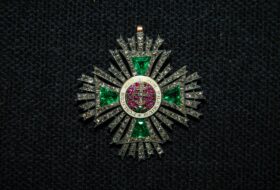
“Two messages in particular moved me deeply. They referred to ‘Baron Trapp, heroic Knight of Maria Theresa.’ One was signed Zita, the other Otto. They came from Austria’s Empress and her eldest son. I placed the two telegrams beside his decoration.” (the insignina of the Military Order of Maria Theresa)”[1]
The shared experience of exile, a common Central European heritage, and a mutual rejection of totalitarianism created a bond between the von Trapp family and the Habsburgs that is vividly illuminated by the documents preserved in our collection. These surviving letters bear witness not only to personal ties, but also to the enduring memory of a disappearing world.
Interest in the story of the von Trapps has not faded to this day. In autumn 2026, the exhibition Sound of Music Salzburg will open at Hellbrunn Palace in Salzburg, presenting both the von Trapp family and the real historical background behind the world-famous film to the wider public.
Eszter Gaálné Barcs
[1] Maria Augusta Trapp: The Story of the Trapp Family Singers. J. B. Lippincott Company, Philadelphia, 1949.