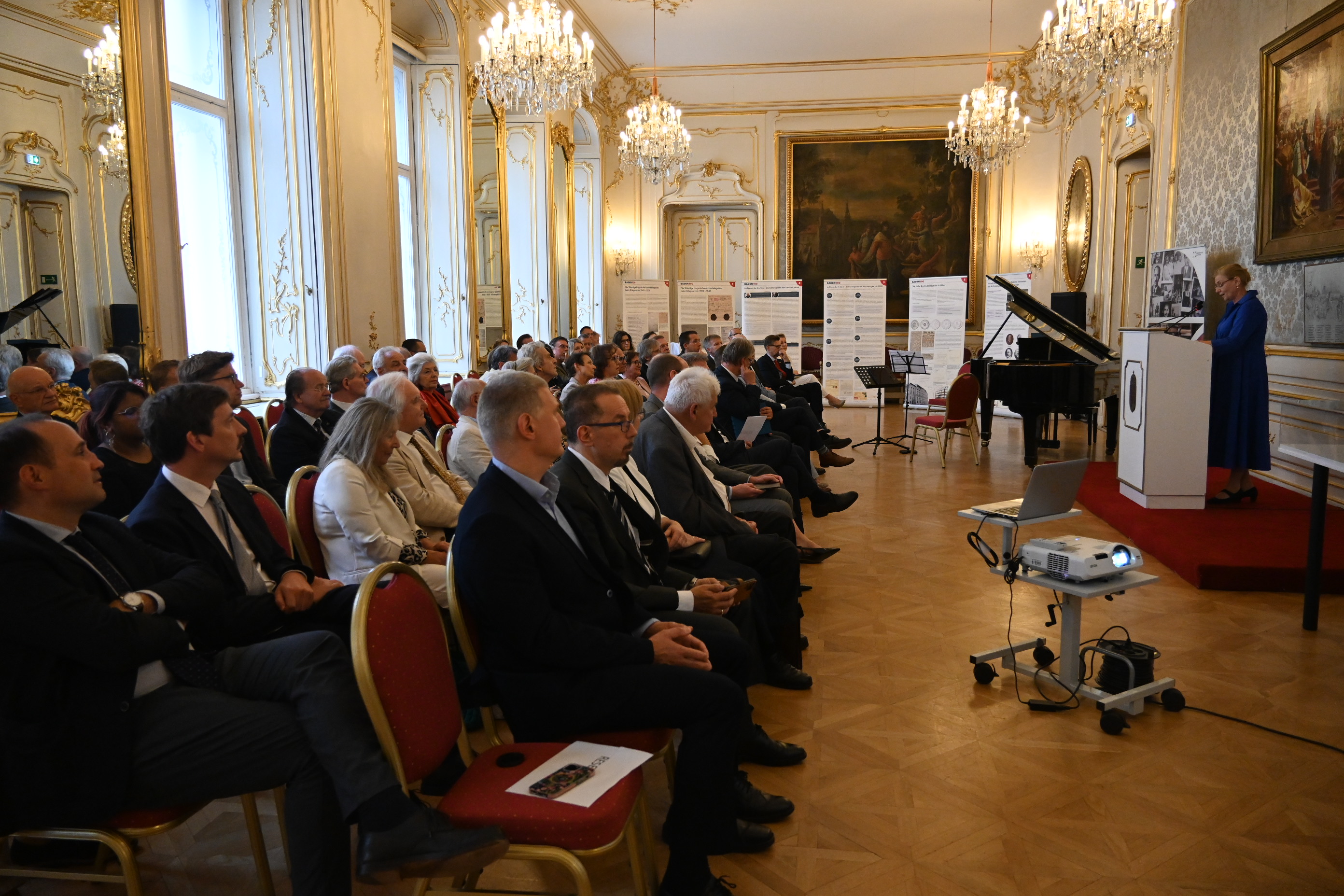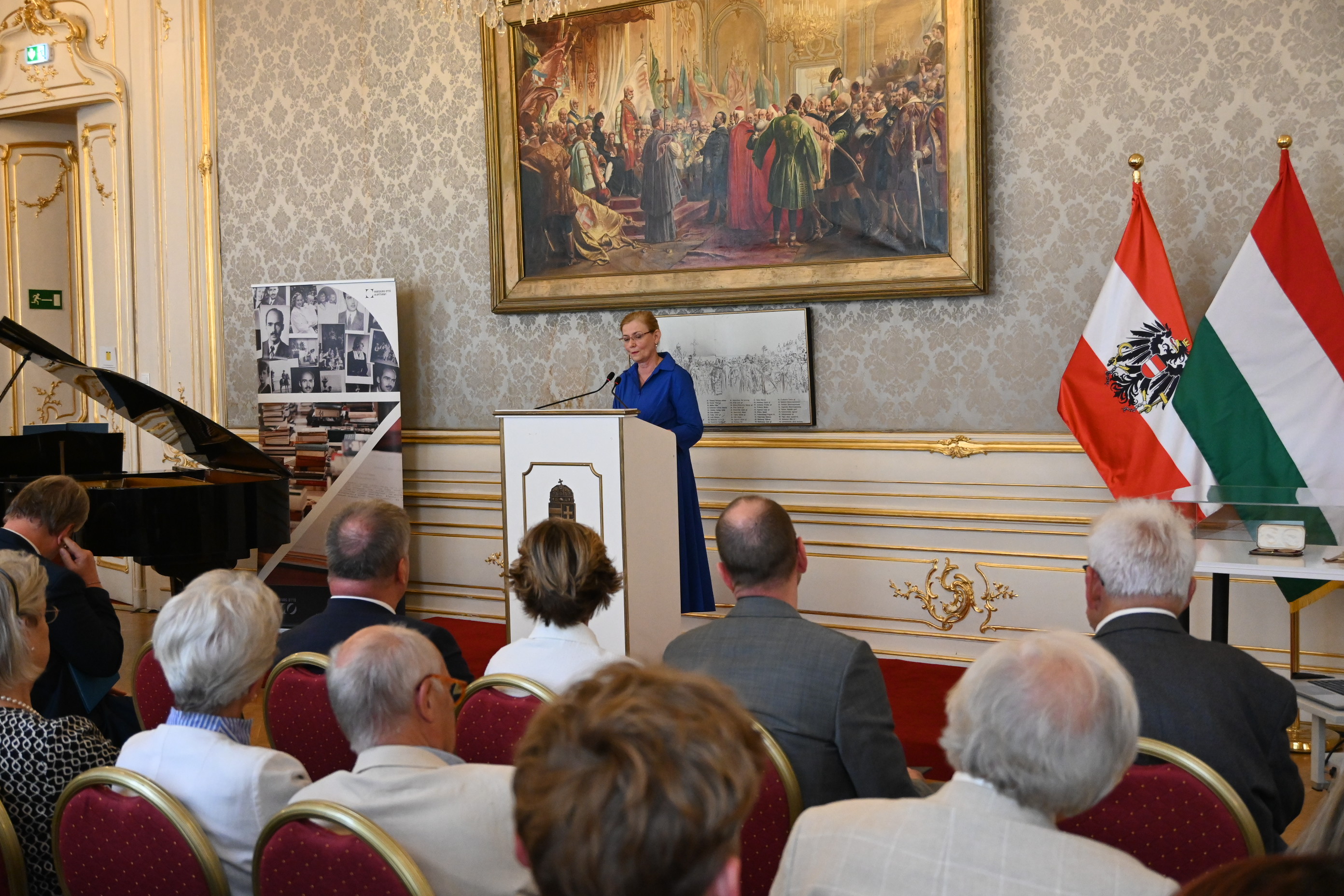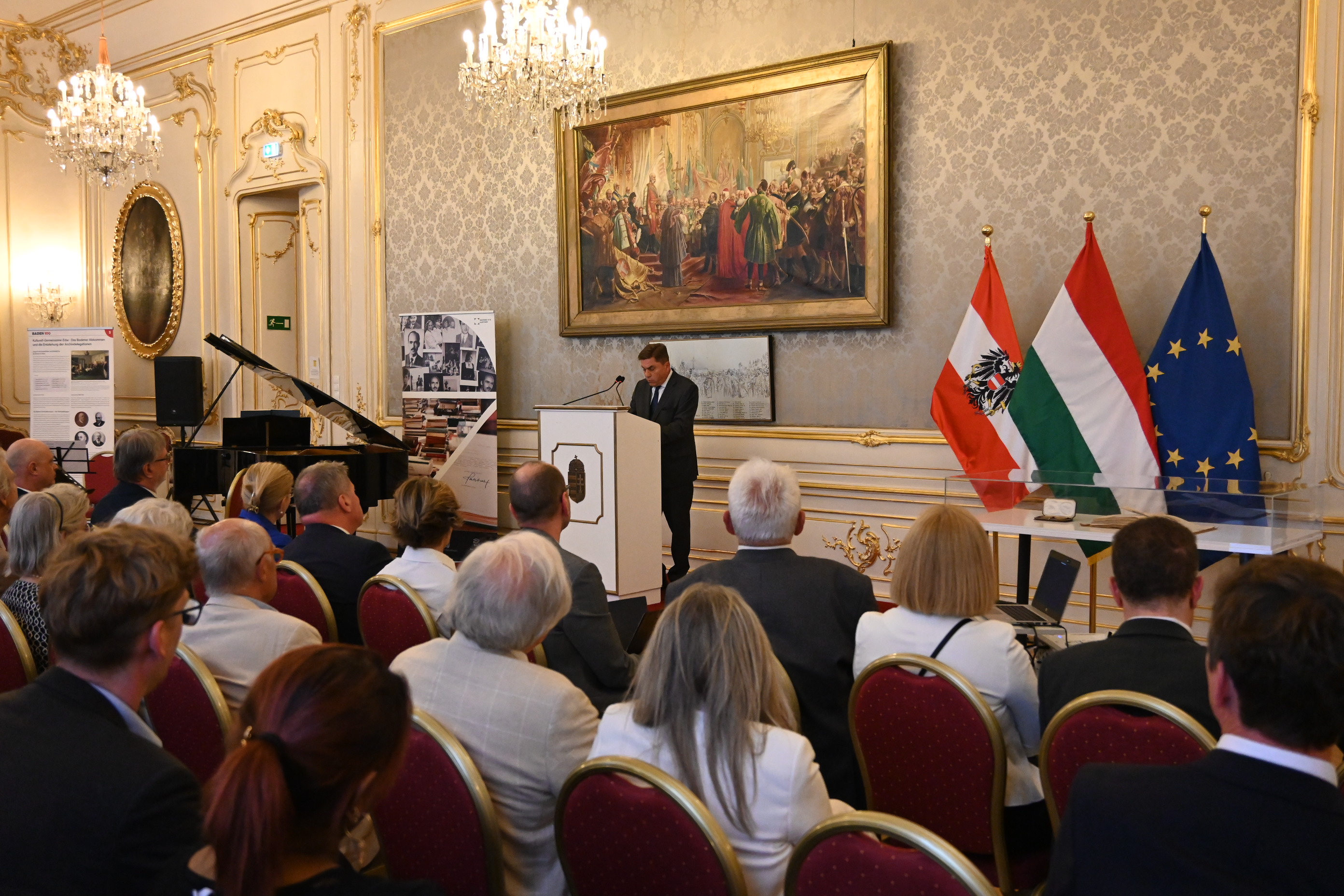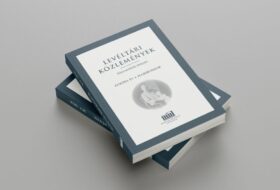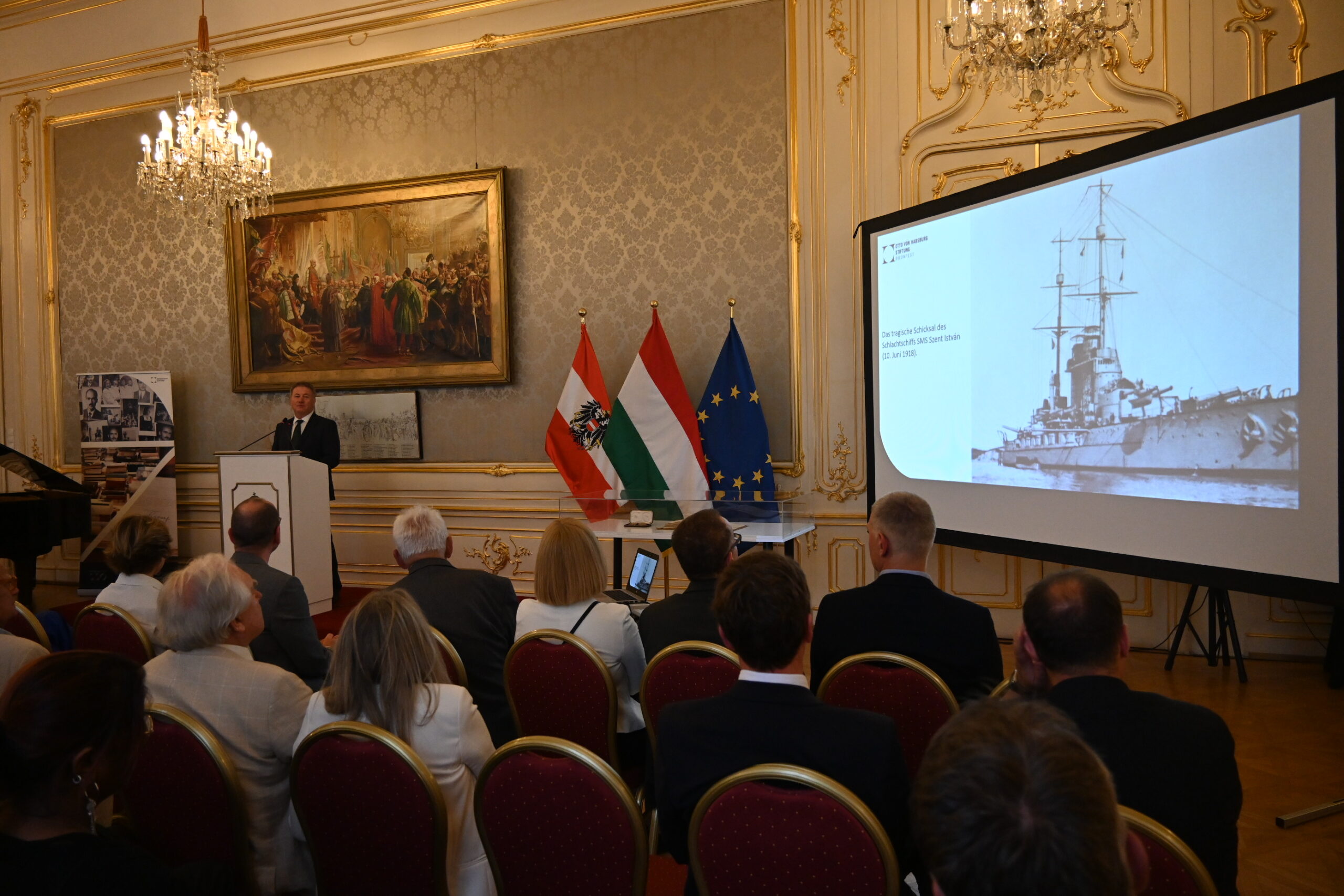
Signed one hundred years ago in the Lower Austrian spa town, the document regulated access to the archival records of the Austro-Hungarian Monarchy after the dissolution of the state. It also provided for the Hungarian state to delegate an archivist to the Austrian capital, whose task was to assist and coordinate the work of scholars conducting research there. Over the past century, this agreement has made numerous noteworthy scholarly achievements possible, recalled Csaba Szabó, Director General of the National Archives of Hungary. Following the welcome address by Ambassador Edit Szilágyiné Bátorfi, he highlighted the benefits of the agreement from a Hungarian perspective.
Helmut Wohnout, Director General of the Austrian State Archives, outlined the history of the Baden Agreement and emphasised the wisdom of the contracting parties. Those who drafted the document recognised that it would not be advisable to divide up the archival records of our shared history, which began in the period following the Battle of Mohács. Instead, in a spirit of mutual trust, the primary objective had to be to ensure access for researchers. Helmut Wohnout also thanked Hungarian archivists personally for their excellent cooperation, mentioning the Otto von Habsburg Foundation among the partner institutions.
Gergely Prőhle expressed his gratitude for the honour of being invited to the event and stressed that our contribution is only a modest addition to all that has been achieved under the agreement over the past hundred years. At the same time, he noted that the work of the Otto von Habsburg Foundation, established ten years ago, also demonstrates that discovering, processing, and making accessible the values of our shared past can bring new momentum to collaboration between the two countries and their researchers.
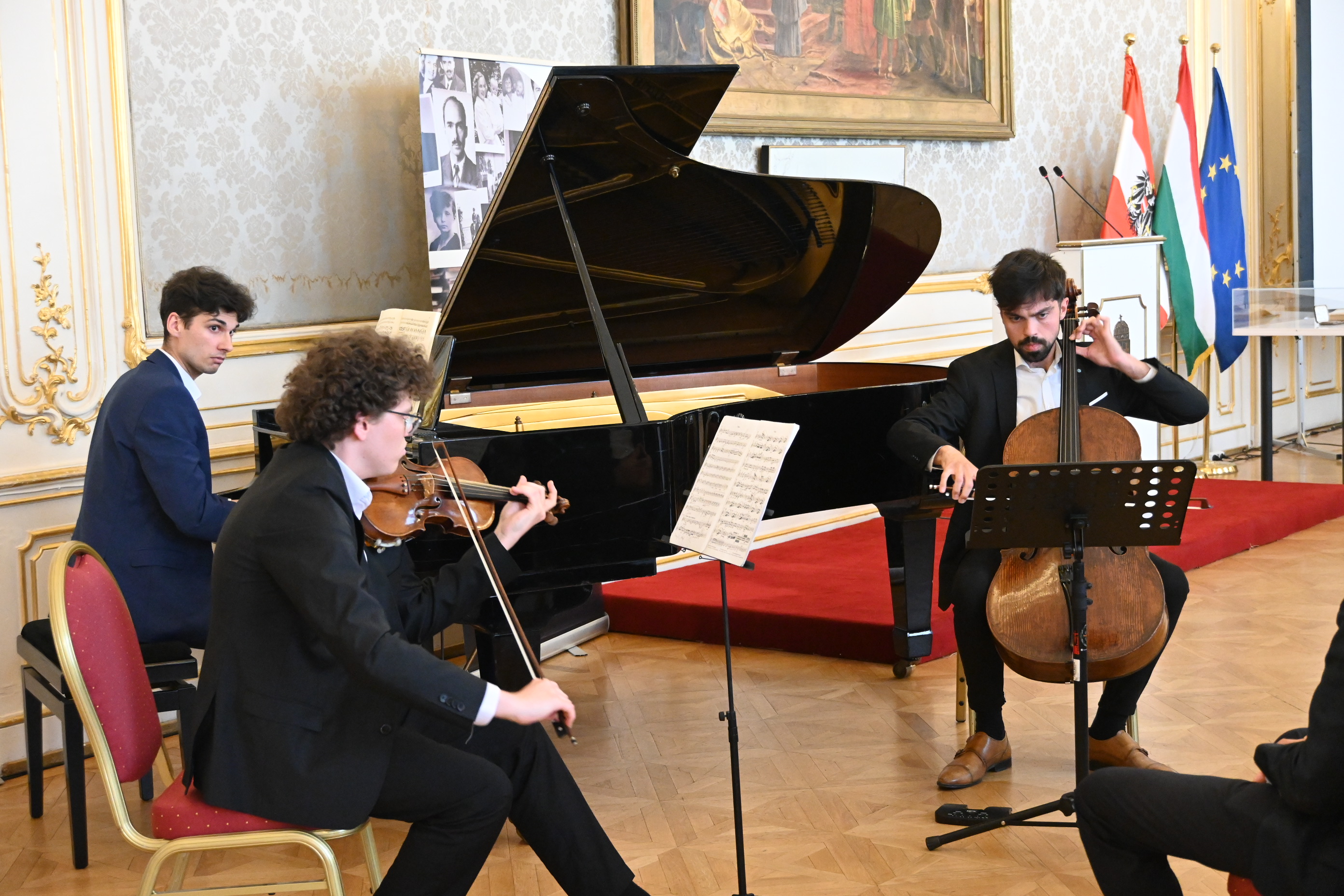
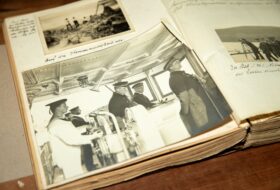
As a striking example of this, the Director of our Foundation presented the logbook of the cruiser SMS Novara, which recently entered our archives. The richly illustrated document, containing numerous photographs, was sent to Otto von Habsburg in 1961 on the occasion of his tenth wedding anniversary and attracted considerable interest among the experts present. Written between 23 May 1915 and 31 October 1918, the logbook also records the fate of SMS Szent István, the largest Austro-Hungarian battleship, sunk on 10 June 1918. The coincidence between the date of this tragic event and the commemoration held 108 years later was given a fitting musical frame by Beethoven’s atmospheric “Ghost” Trio, performed by students of the Liszt Ferenc Academy of Music in Budapest. The event concluded with a reception.