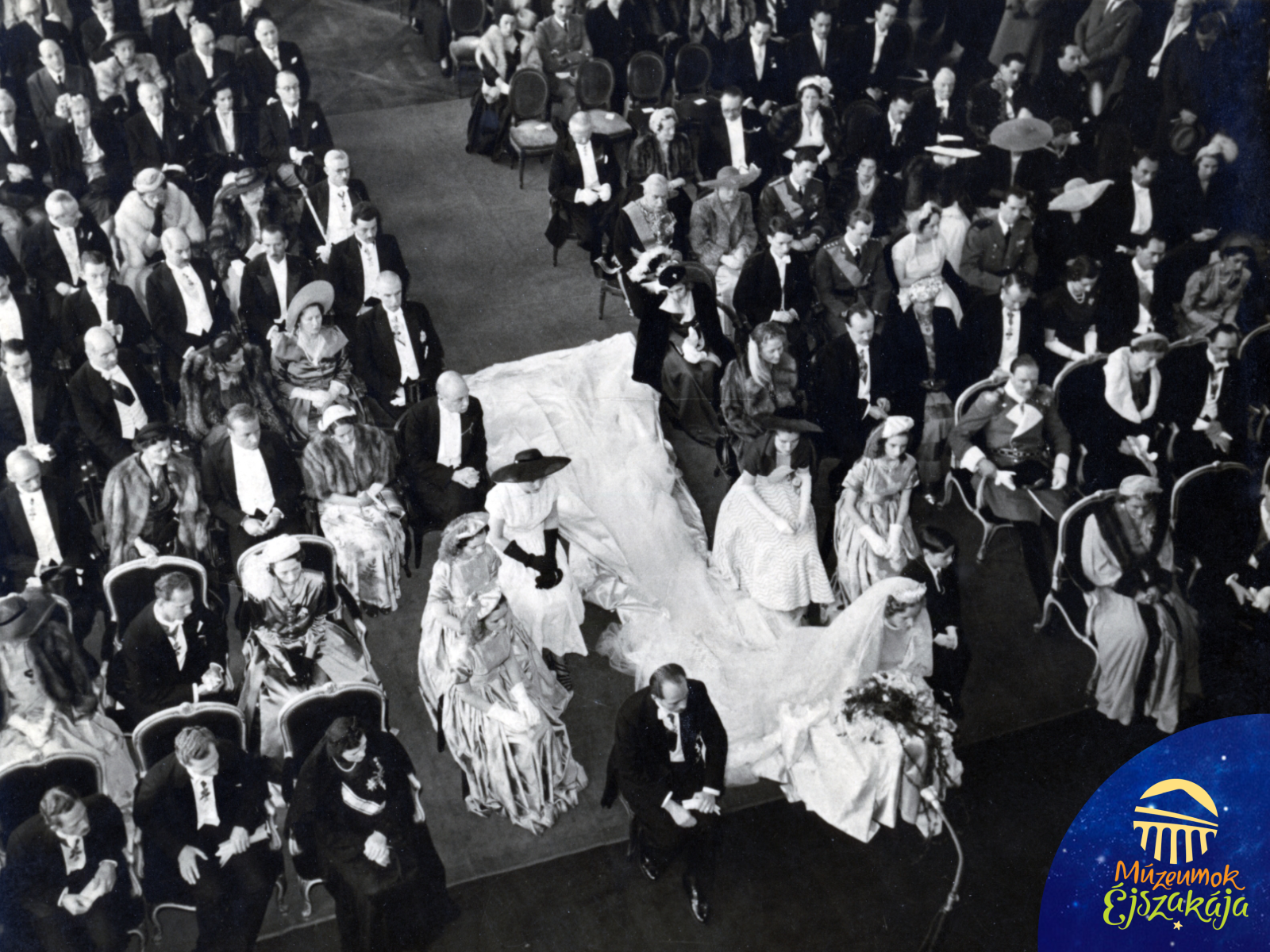
Finding a venue for the 1951 wedding of Otto von Habsburg and Princess Regina of Saxe-Meiningen was far from straightforward. At the time, the Crown Prince was still living in exile, while Europe was undergoing a period of reorganisation in the aftermath of the Second World War. The marriage of the head of the House of Habsburg was therefore not merely a family matter, but also an event of diplomatic and social significance. For this reason, French politicians also played a role in ensuring that the ceremony could ultimately take place in Nancy.
One of the most influential supporters of the young couple’s plan to marry in France was Robert Schuman, known as one of the “Fathers of Europe”. The veteran figure of the National Assembly had maintained good relations with Otto von Habsburg since the late 1930s. In 1951, serving as France’s foreign minister, Schuman intervened to make it possible for the Archduke to marry his bride in Nancy, the capital of Lorraine. Although he was expected to attend as a guest of honour, official commitments ultimately prevented him from being present at the celebration. He informed the groom of his absence by letter two days earlier; during the nuptial Mass, an empty chair was left in tribute to him.
Louis Marin, Nancy’s popular conservative politician, likewise advocated for the wedding to take place in the city. The former minister remained a member of the French National Assembly continuously from 1905 to 1951, except for a few years during the war. Archduke Otto knew him personally: in the 1930s, Marin had supported his efforts on behalf of Austria’s independence. In 1951, at the age of eighty, he championed the cause of the wedding with tireless enthusiasm.
In April 1951, Marin sent the future husband the speech he had delivered before the departmental council of Meurthe-et-Moselle. In his address, he emphasised that Otto von Habsburg was, through his paternal line, a direct descendant of the dukes of Lorraine, and that holding the wedding in Nancy was therefore not only a legitimate aspiration, but also an outstanding moment for the city’s identity. He added that the Cordeliers Church, the venue of the nuptial Mass, had served for centuries as the burial place of the dukes of Lorraine. From Marin’s perspective, Lorraine and the Monarchy were connected by numerous ties. Several members of the dynasty had visited the region: in 1867, the year of the Austro-Hungarian Compromise, Franz Joseph, for example, came to the church and prayed at the tombs of his ancestors. Marin also referred to Maria Theresa’s settlement policy, through which families from Lorraine came to Hungary.
Although they belonged to different political camps, another key figure in the effort, alongside Louis Marin, was the city’s mayor, Jean Lionel-Pèlerin. A dentist by training, Lionel-Pèlerin served in the navy during the Second World War and took part in the Resistance led by Charles de Gaulle. He later became mayor of Nancy and a senator. According to Otto von Habsburg’s diary, the details of the wedding were first discussed with him on 23 January 1951.
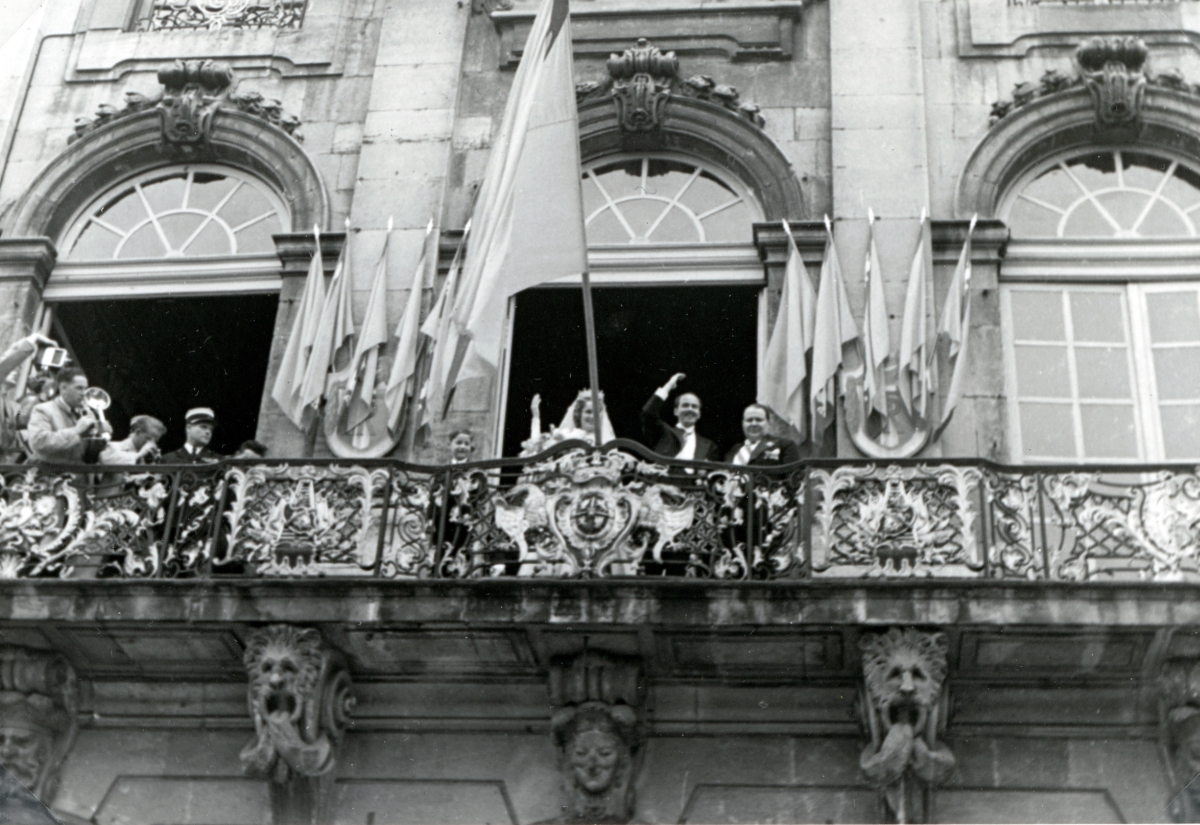
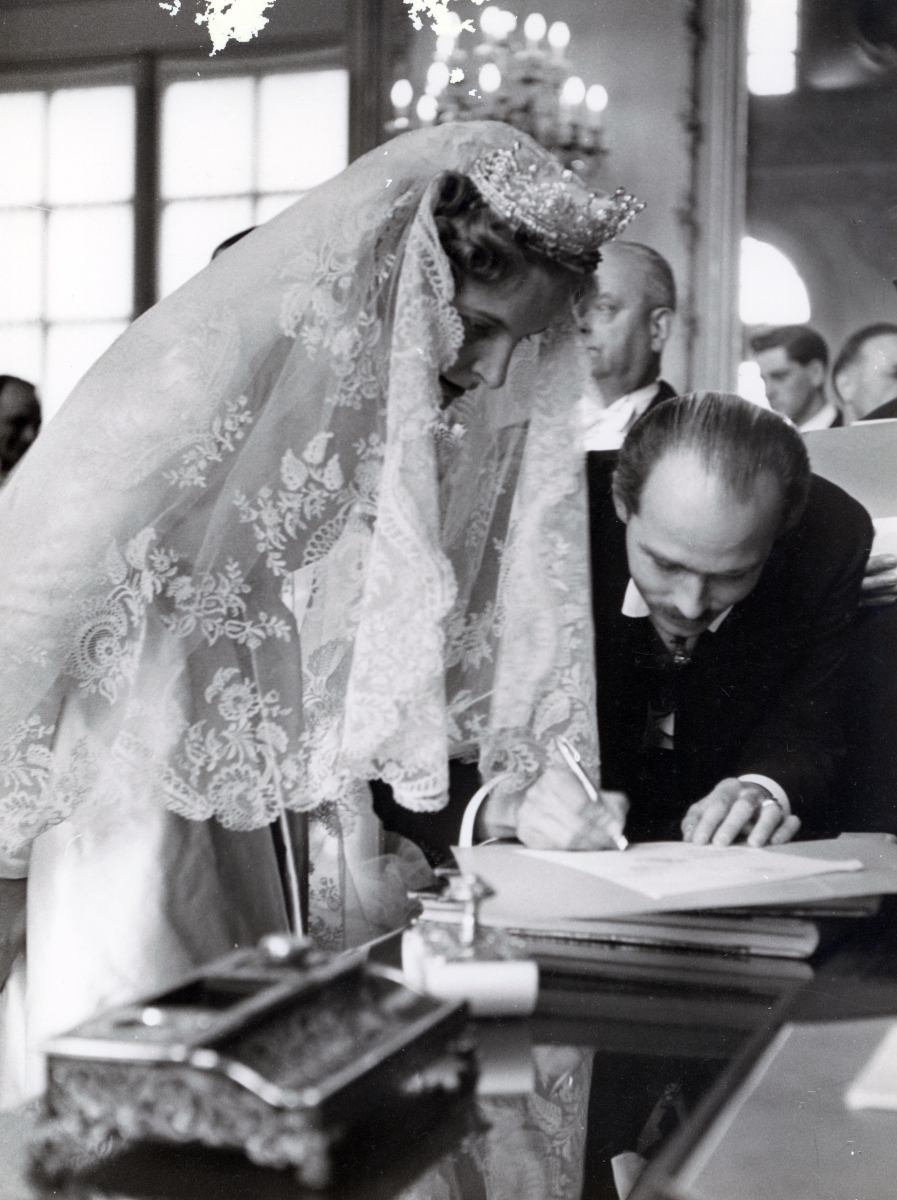
On 10 May, at 10 a.m., Jean Lionel-Pèlerin presided over the civil ceremony at the town hall. In his carefully composed speech, the mayor also drew attention to the shared heritage of the Habsburgs and Lorraine. He further granted permission for the young couple, as an exception, to greet the cheering crowd from the town hall balcony overlooking Place Stanislas, one of the world’s most beautiful Baroque squares.
Jean Lionel-Pèlerin and Louis Marin were both present at the church ceremony, thereby underscoring the significance of the centuries-old bond between the city of Nancy and the Habsburg family, a connection reaching back to Maria Theresa.
Gergely Fejérdy and Eszter Gaálné Barcs
This year, our Foundation is joining the Night of Museums programme series. On 20 June, during the “(Wedding) Night of Museums” event, visitors will be able to discover the history of two Habsburg weddings through special items from our collection. Lectures related to the theme will also offer fascinating insights into the traditions of the period. Further information about the programmes and registration is available here.