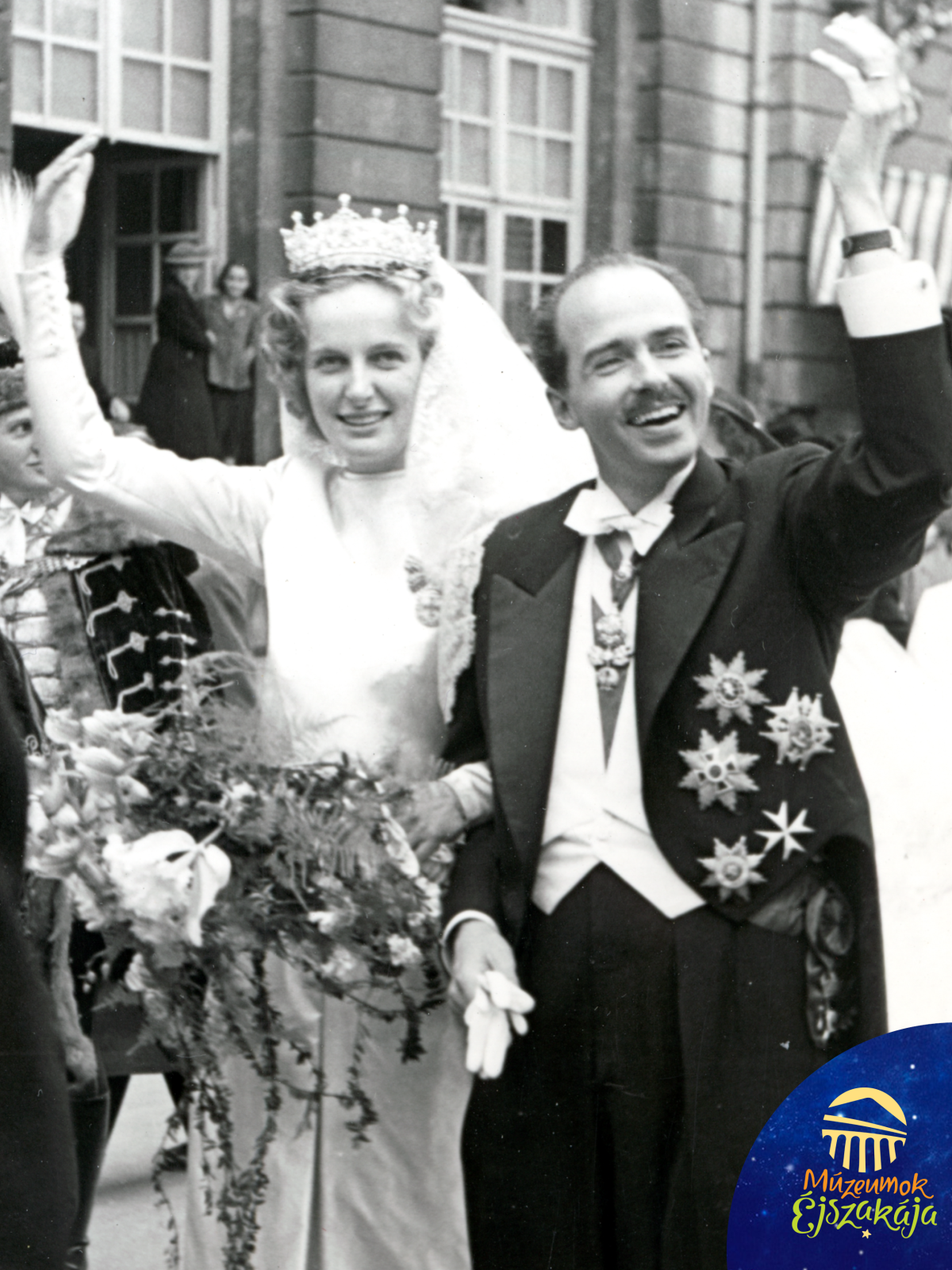
The wedding held on 10 May 1951 was far more than a family celebration. After the fall of the Monarchy, it became a symbol of dynastic continuity for legitimists, as well as one of the last major representative gatherings recalling the old world of Europe’s ruling families. The Crown Prince was well aware of the power of the media. He knew that photographs of the marriage ceremony could appear in newspapers around the world, and therefore paid close attention to every detail of his appearance.
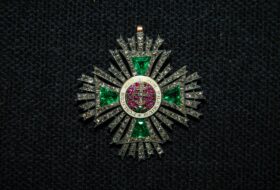
According to the court protocol of the period, such high-ranking events were regarded as semi-official festive occasions, and the wearing of decorations was therefore almost expected. These were not merely ornaments: they simultaneously indicated the rank of the decorated person, membership in chivalric orders, political connections, and state or sovereign honours. Miniature decorations, breast stars, insignia, and orders worn on a tailcoat, and, in rarer cases, the collars of great orders, formed a defining element of royal representation. In Otto von Habsburg’s case, all this carried particular significance, as his appearance referred at once to the heritage of the House of Habsburg-Lorraine, the monarchical traditions of Central Europe, and his extensive network of European connections.
On representative occasions, the Archduke usually wore decorations linked to the Habsburg family, Catholic chivalric orders, and European ruling houses. These included the Order of the Golden Fleece, the insignia of the Sovereign Military Order of Malta, the Hungarian Order of Saint Stephen, the Austrian Imperial Order of Leopold, as well as several Spanish decorations – the Order of Charles III and the Order of Saint Januarius – and a papal honour, the Order of Saint Gregory the Great.
Contemporary photographs clearly show that on 9 May 1951, at the reception, and one day later, during both the civil and religious ceremonies, the bridegroom wore several decorations. In the photographs – apart from the wedding portraits – a total of six insignia can be identified.
Around his neck hung the most prestigious decoration: the collar of the Order of the Golden Fleece, which for centuries had been the principal chivalric symbol of the Habsburg dynasty, representing the defence of the Christian faith, virtue, and knightly tradition. The order was founded in 1429, and since 1477, the head of the House of Habsburg has held the office of Grand Master – today this right belongs to Otto’s eldest son, Karl von Habsburg.
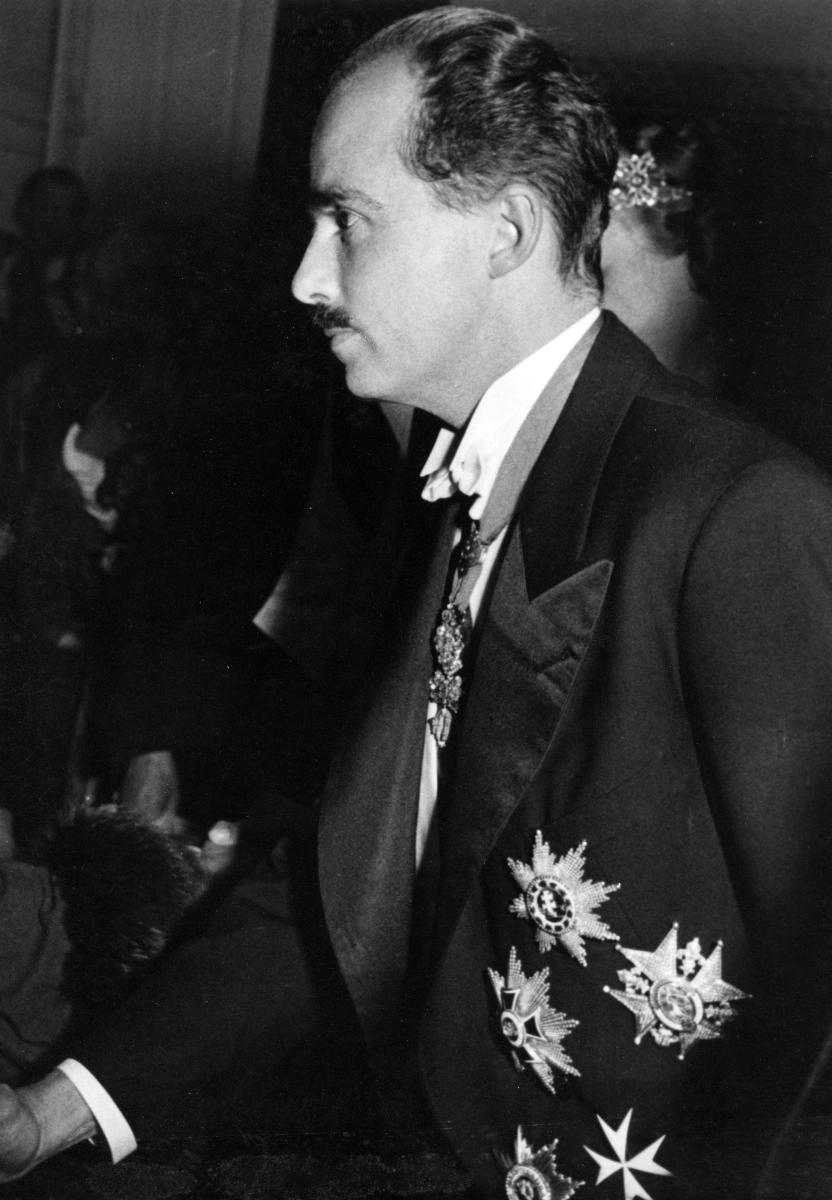
At the top of the left side of his chest shone the star of the Royal Hungarian Order of Saint Stephen, founded by Maria Theresa in 1764. Its placement probably referred to Hungary’s prominent role in the Monarchy’s past and in its future vision. Directly beneath it appeared the insignia of the Austrian Imperial Order of Leopold and the Spanish Order of Charles III: the former symbolised the continuity of Habsburg statehood, while the latter represented connections spanning several countries.
The Order of Leopold, founded in 1808 by Francis I, Emperor of Austria and King of Hungary, was no longer awarded after the death of Charles of Austria-Hungary. Otto regarded it as one of the most valuable among the decorations inherited from his father; it was pinned to his chest not only at his wedding, but also at his funeral in 2011.
The Spanish decorations are particularly telling, as Otto also had family ties to the Spanish royal house. King Alfonso XIII of Spain offered refuge to the exiled family in 1922. The monarch was, on the one hand, the son of Maria Christina of Habsburg-Teschen, and, on the other, like Empress Zita, a descendant of the Bourbons. It is therefore no coincidence that the Archduke also wore these decorations at the official ceremony, reserved for the Catholic nobility, which he had received shortly before the great occasion.
The insignia of the House Order of the Golden Lion of Nassau and the Order of Malta also appeared on his tailcoat. The former can still be conferred today by the House of Nassau – both the Luxembourg and Dutch branches – jointly and separately. This rare order was traditionally bestowed only on a small number of high-ranking figures, primarily sovereigns. Next to it the commander’s star of the Sovereign Military Order of Malta was visible, awarded in 1932. The order’s exceptional status is reflected in the fact that, apart from its own orders, the Holy See recognises only two secular chivalric orders. These insignia referred simultaneously to service, loyalty, and attachment to the Church.
After the wedding, all the decorations were returned to the family’s care. Some of them, however, will once again be on display to the public on 20 June 2026, evoking an era in which dynastic representation still served as a highly expressive medium in Europe’s political and cultural life.
Ádám Suslik
This year, our Foundation is joining the Night of Museums programme series. On 20 June, during the “(Wedding) Night of Museums” event, visitors will be able to discover the history of two Habsburg weddings through special items from our collection. Lectures related to the theme will also offer fascinating insights into the traditions of the period. Further information about the programmes and registration is available here.