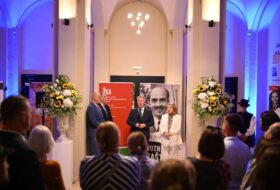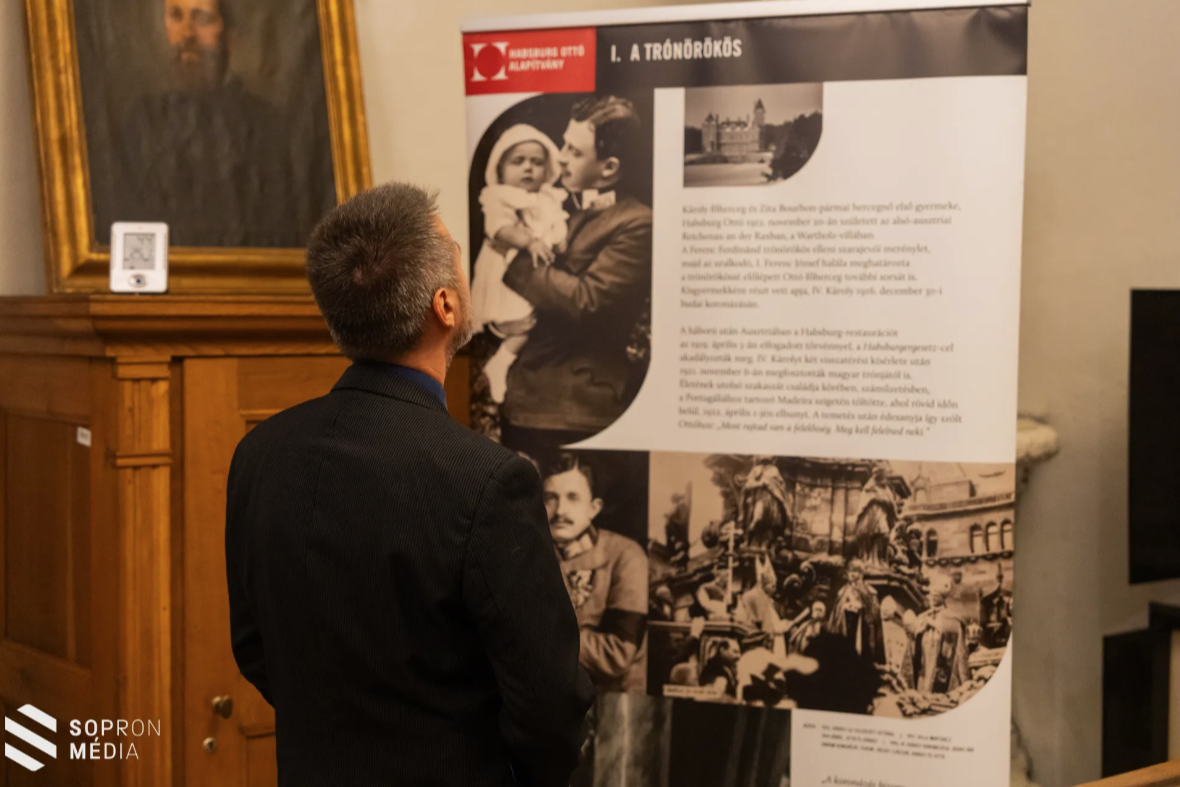
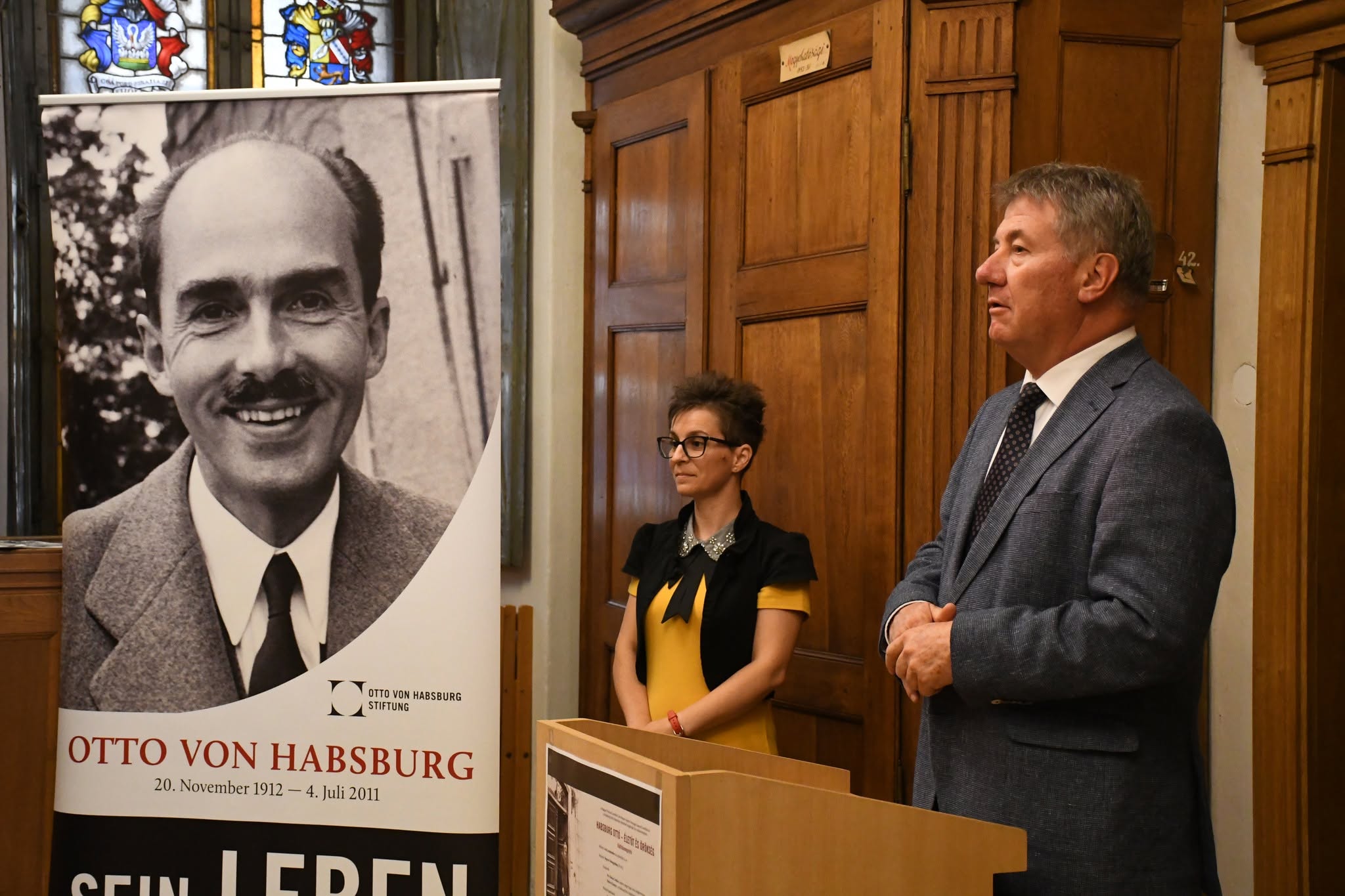
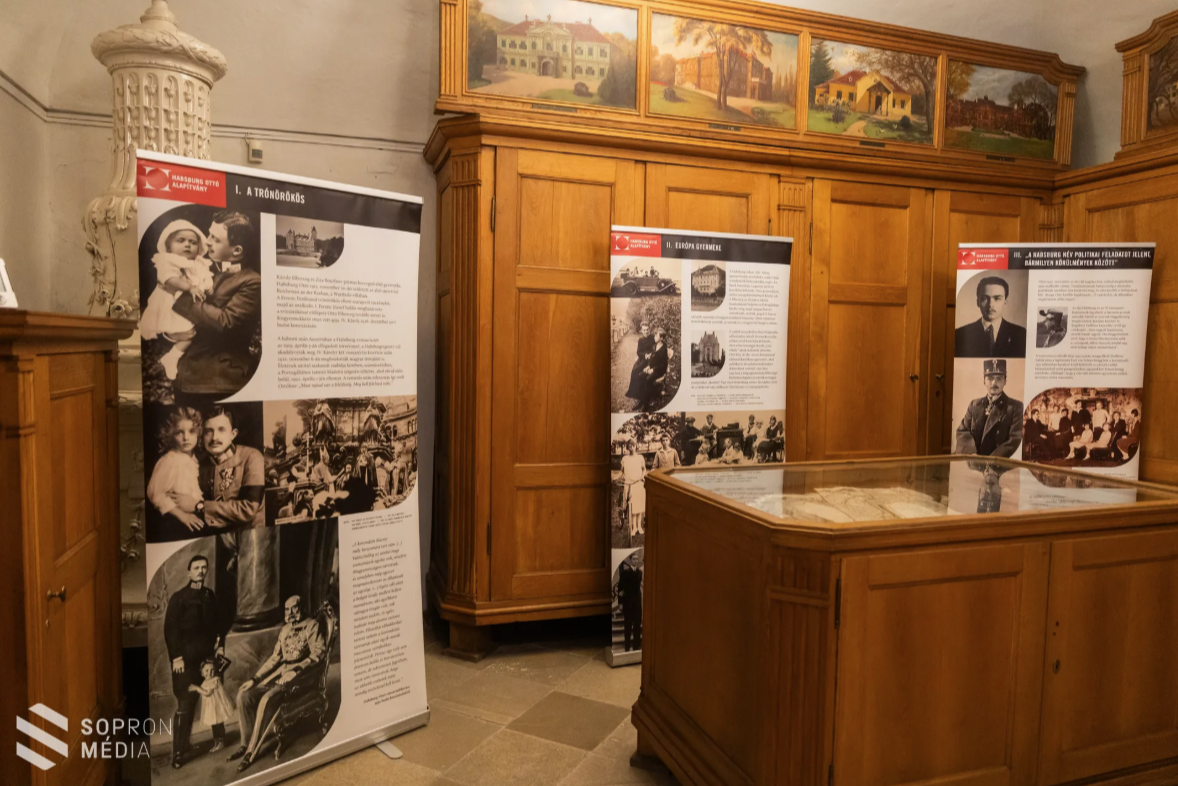
For the second time this year, the Otto von Habsburg Foundation is presenting an exhibition at the Sopron Archives. In April, to mark the anniversary of the death of Emperor and King Charles, an exhibition opened at the institution recalling the life of our namesake’s father and his connections with Sopron. A few months later, the focus has shifted to the life and legacy of his son, Otto von Habsburg, this time in connection with another anniversary of particular significance in the history of Sopron.
The timing of the September opening is closely linked to the events of 1989: on 11 September, Hungary opened its western border to East German refugees. As patron of the Pan-European Picnic, Otto von Habsburg himself played an important role in the developments that led to the dismantling of the Iron Curtain and the reunification of Europe.
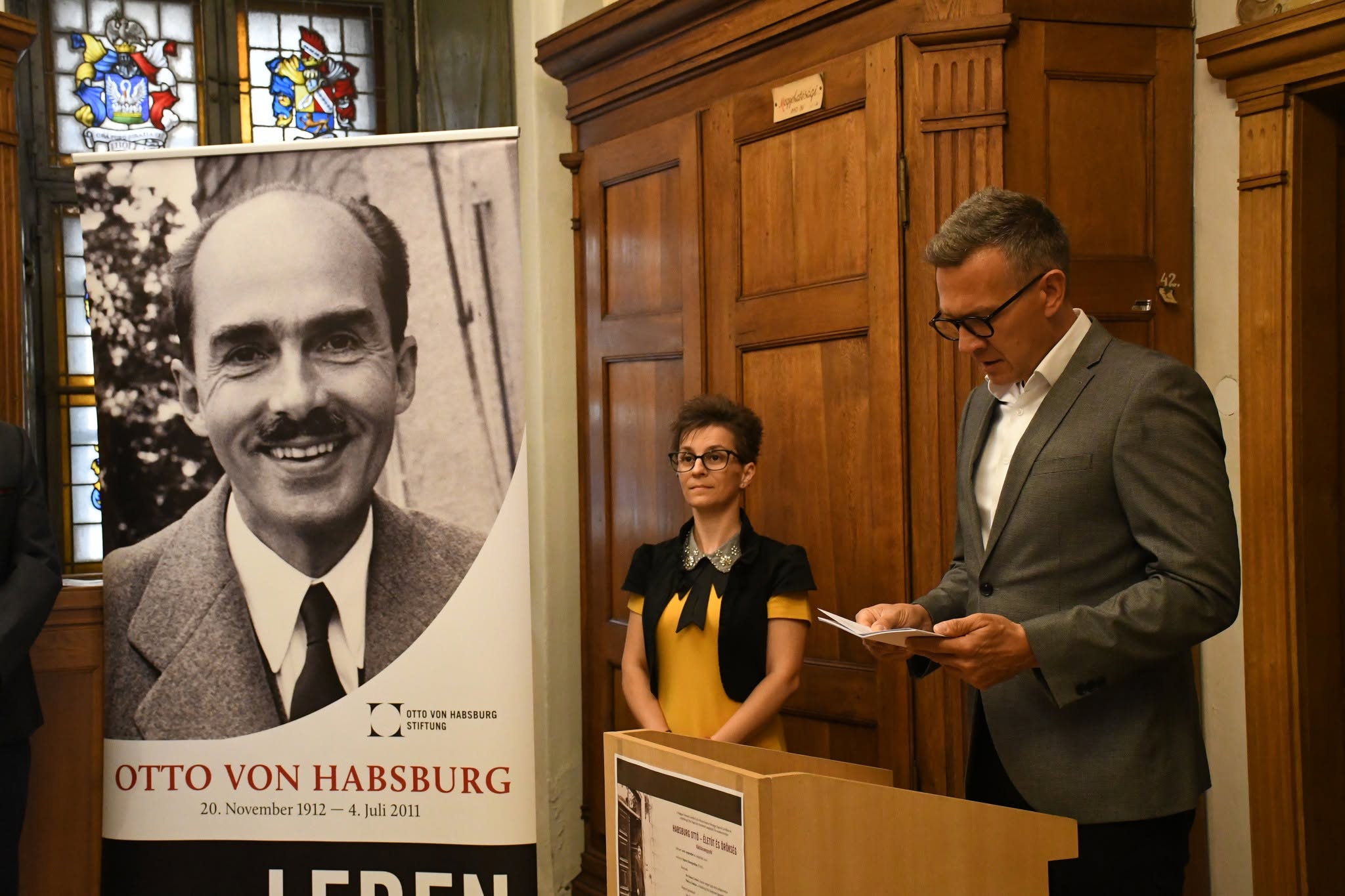
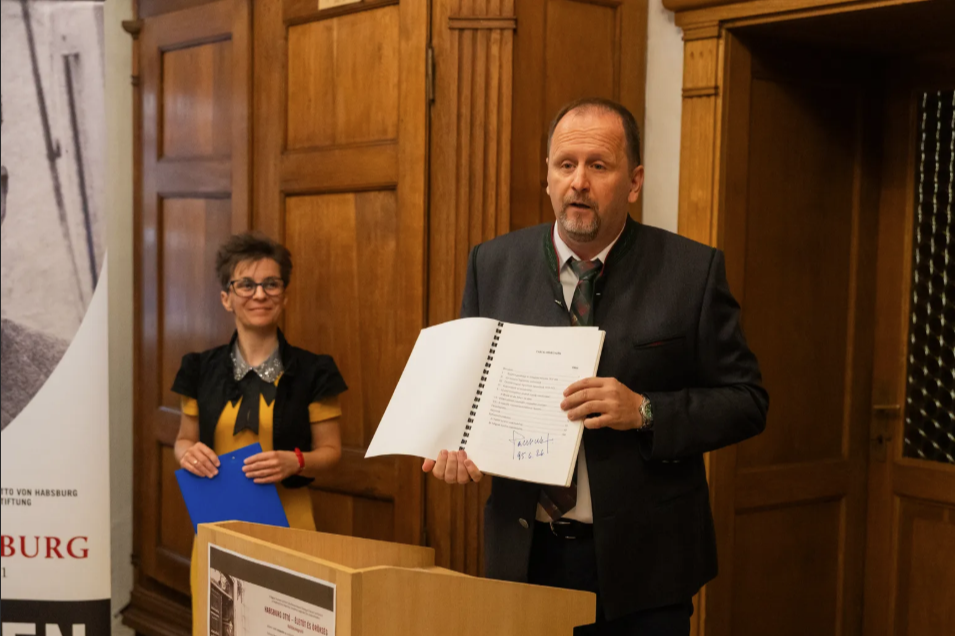
At the opening, Róbert Fiziker, Director of the Sopron Archives, welcomed those in attendance. In his remarks, he highlighted Otto von Habsburg’s patriotism and commitment to Central Europe, stressing that throughout his decades in exile he consistently championed the interests of Hungary and the peoples of the region.
Ciprián Farkas, Mayor of Sopron, reflected on Otto von Habsburg’s ties to the city and drew attention to the significance of the Pan-European Picnic. He emphasised that in our namesake’s political thinking, national commitment and European cooperation were mutually reinforcing values, and that his life’s work was closely intertwined with the emergence of a free and reunited Europe.
Gergely Prőhle, Director of our Foundation, recalled that Otto von Habsburg’s political objective was not to restore the former empire, but to create a united Europe. As a Member of the European Parliament, he consistently advocated for the nations living behind the Iron Curtain, which made the opening of the border in 1989 an event of great personal significance to him.
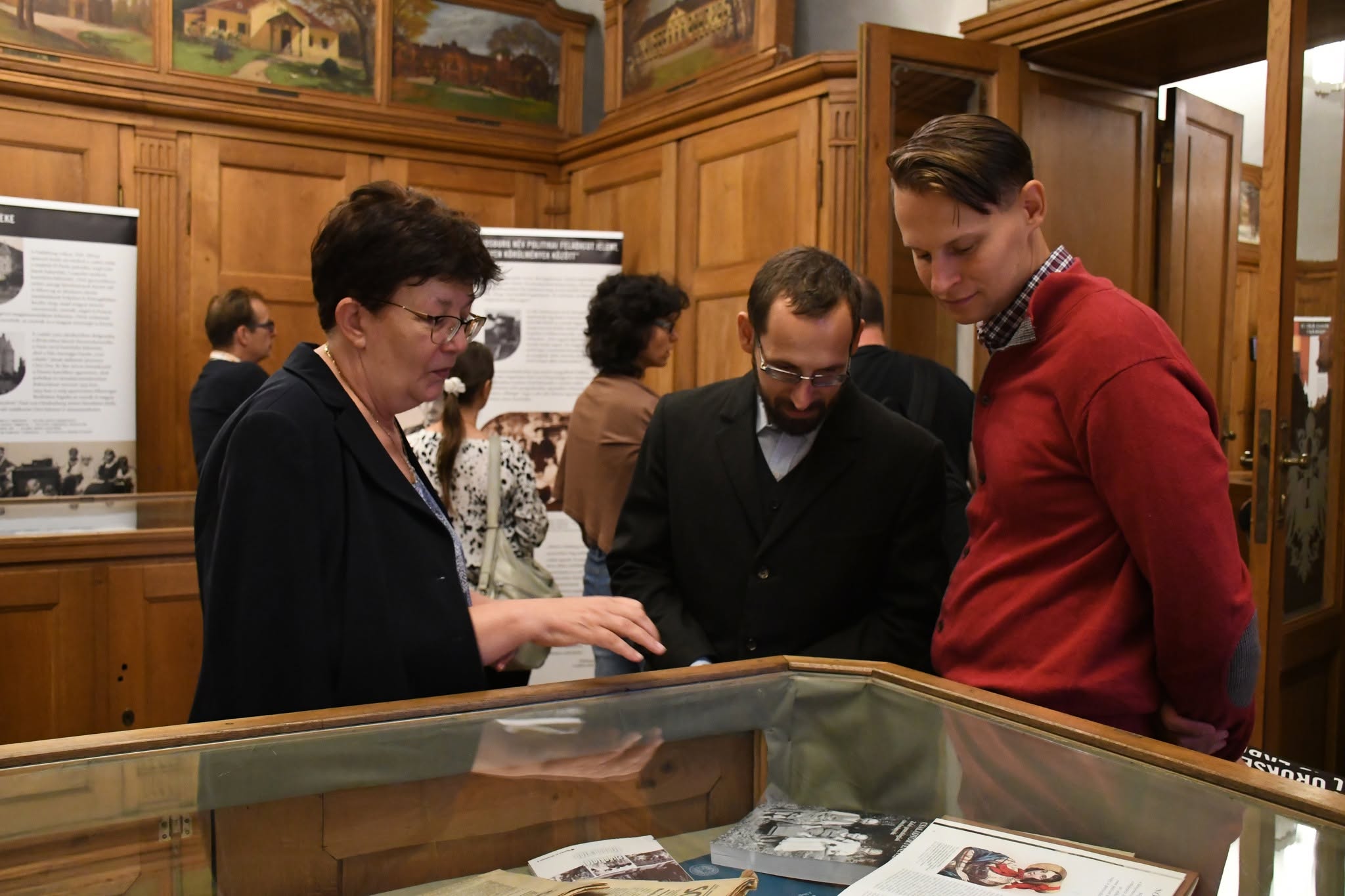
Following the welcoming remarks, Bence Kocsev, Research Fellow at our Foundation, introduced the exhibition. Through the major stages of Otto von Habsburg’s life, the exhibition traces the process by which the former heir to the throne became a committed advocate and political champion of European unity.
The exhibition can be visited at the Sopron Archives by prior appointment until the end of 2026.
Photos: Bence Lendvai, Tamás Pluzsik