During her reign, Maria Theresa founded several orders and decorations. Within the Habsburg Monarchy and the Kingdom of Hungary, alongside the Military Order of Maria Theresa (1757), the Royal Hungarian Order of Saint Stephen (1764) was a decoration awarded exclusively for merit and could also be conferred upon civilians. The latter was established primarily to secure the support of the Hungarian Estates and consequently bore distinctly Hungarian characteristics. For this reason, its statutes stipulated that its Grand Master could only be the lawfully crowned monarch of Hungary.[1] At the first investiture, on 5 May 1764, Maria Theresa appeared in Hungarian attire, accompanied by Hungarian nobles and members of the Hungarian Royal Guard (königlich ungarische Leibgarde).
After 1918, the Kingdom of Hungary and Austria engaged in protracted negotiations over the division of works of art and other valuables belonging to their shared Austro-Hungarian heritage. Under the Baden Agreement of 1926, important archival records were transferred to Hungary, while the Venice Agreement of 1932 provided for an exchange of works of art from the collections of the Imperial Treasury in Vienna and the Habsburg family entail.
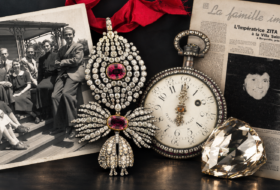
Among the Habsburg jewels presented in Québec on 6 November 2025, two particularly striking pieces are a bow-shaped brooch and a hatpin. Following the reappearance of the bow brooch, researcher Dániel Molnár had already suggested that it might constitute one half of a unique insignia of the Royal Hungarian Order of Saint Stephen made for Maria Theresa.
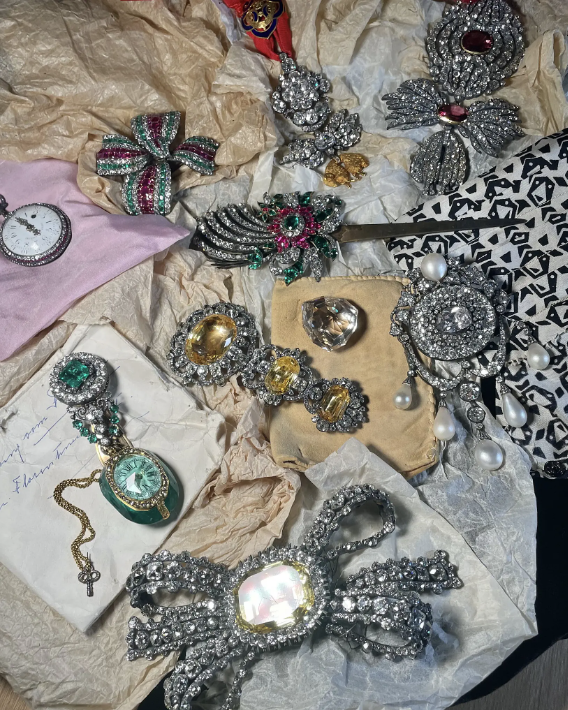
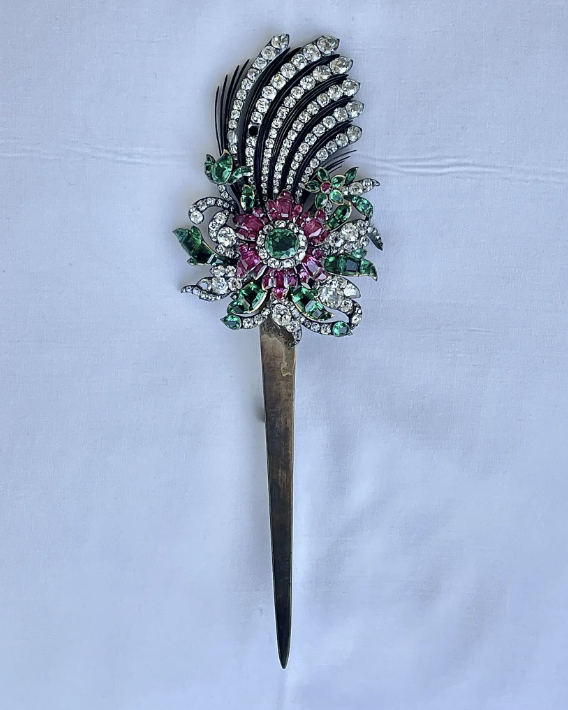
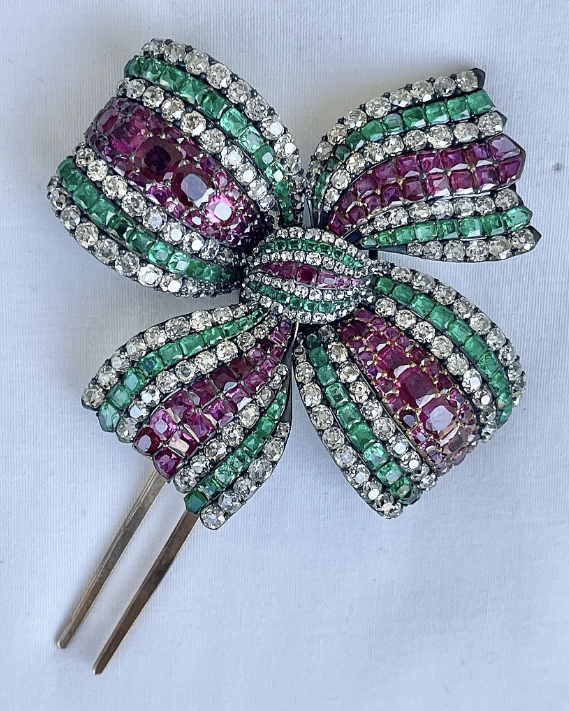
Images: APA / ANDREA LEITNER COMMUNICATION / A. E. KÖCHERT
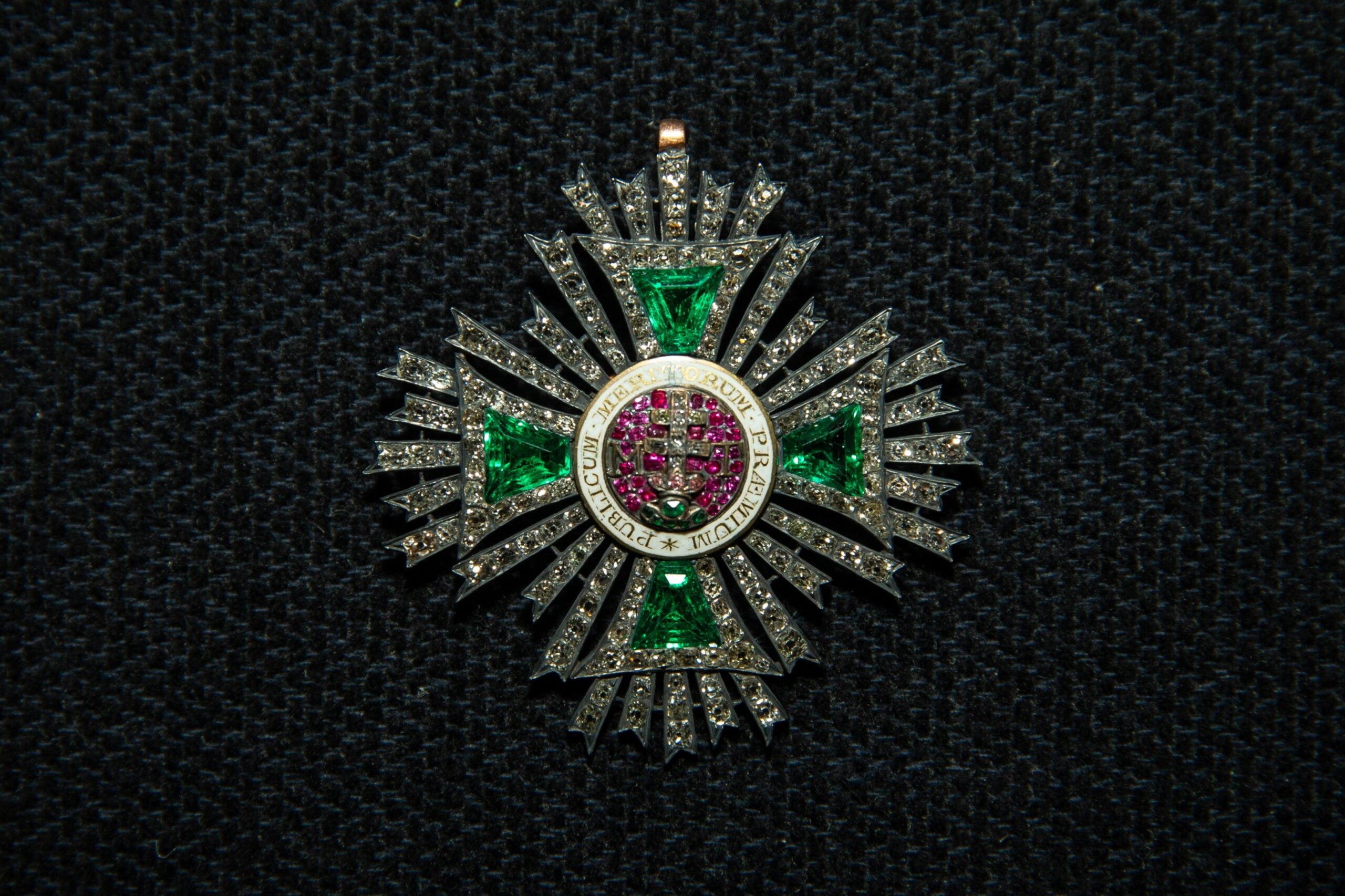
This discovery also helped to identify the diamond-set insignia that entered the collection of the Otto von Habsburg Foundation in 2023. The research was facilitated by the existence of numerous portraits of Maria Theresa dating from between 1765 and 1780, in which the widowed queen, dressed in mourning, can clearly be seen wearing this insignia – with both of its constituent parts together. Previously, however, the diamond-set Grand Cross depicted in portraits of Maria Theresa as a widow had been regarded merely as an artistic variation.
At our invitation, on 26 March 2026, members of the A. E. Köchert family, formerly jewellers to the Imperial and Royal Court, examined the Grand Cross in our collection in order to help resolve questions that remained unanswered. Following a meticulous visual examination, they too concluded that the piece could indeed be Maria Theresa’s insignia.
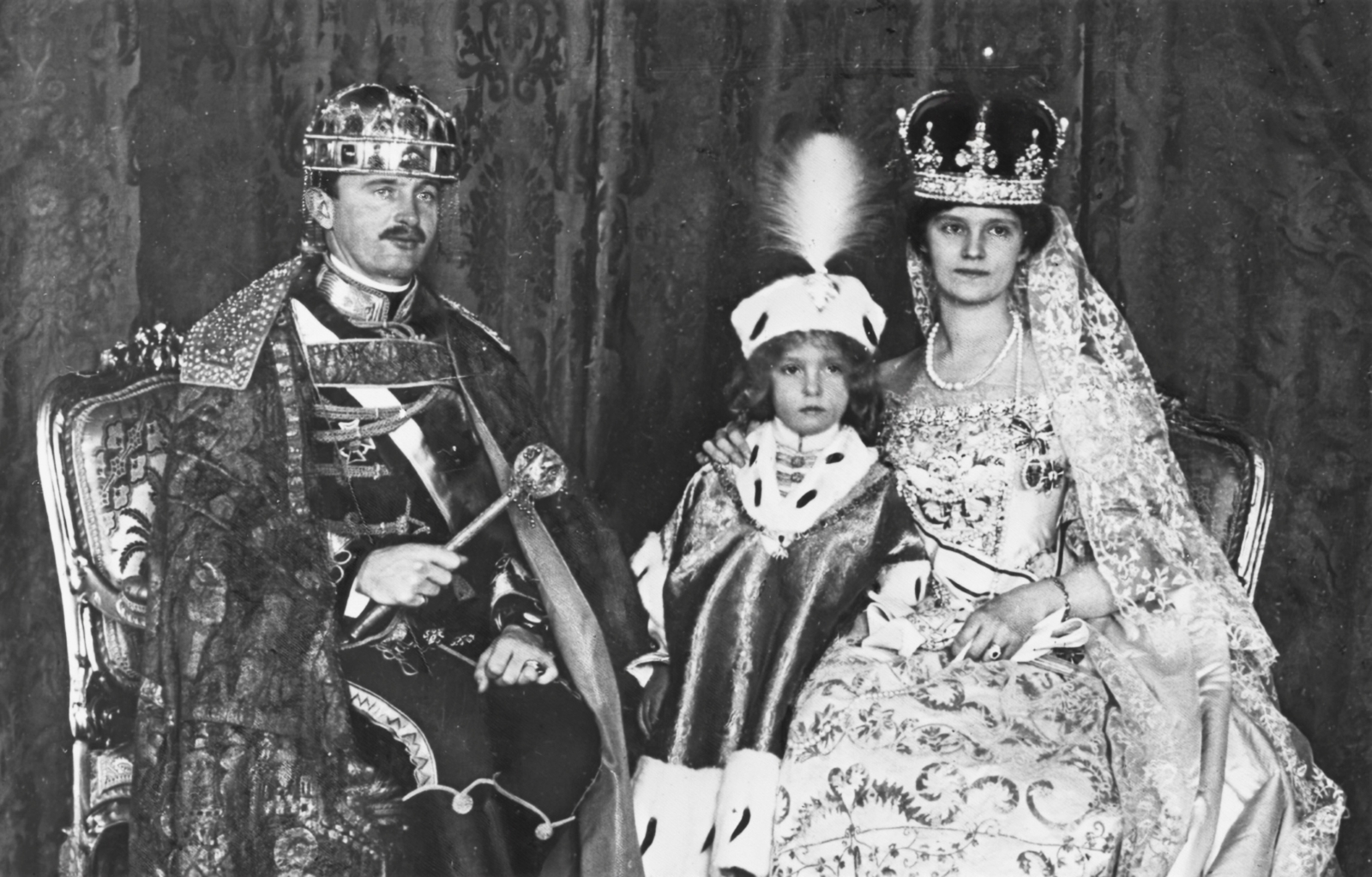
The brooch and the cross of the Order were probably separated on the occasion of the coronation of King Charles IV and Queen Zita on 30 December 1916, after which both parts of the insignia were regarded as pieces of jewellery. Photographs show Zita wearing the bow brooch over her heart, with the insignia of the Order of the Starry Cross suspended from it. The brooch was subsequently classified among the women’s jewellery, while the Grand Cross remained in its original place, in display case XXII of the Imperial Treasury (Kaiserliche Schatzkammer), which contained insignia of orders. The same case also held crowns considered to be the dynasty’s private property, together with other orders and pieces of jewellery.
The insignia was Maria Theresa’s personal property and did not form part of the assets of the Order. The Empress probably commissioned this exceptional jewel primarily for political and representational purposes. As ruler of the Habsburg Monarchy, Maria Theresa had to assert her position in a world of sovereigns dominated by men. The diamonds, arranged in radiating patterns resembling stylised sunbeams or stars, would have brilliantly reflected the candlelight at court ceremonies. Their dazzling radiance was intended to symbolise the divine legitimacy of her rule and the enduring strength of her dynasty. In 1921, the Office and Treasury of the Order of Saint Stephen were formally transferred to Hungary at the Hungarian Legation in Vienna, but the insignia in question was no longer included in the inventory of assets.[2] It does, however, appear in inventories of jewellery preserved by our Foundation, where it is listed as family jewellery,[3] under the descriptions Familienschmuck or Dem Kaiserlichen Haus gehörend, and identified as the property of Maria Theresa.
The diamond-set Grand Cross of the Order of Saint Stephen made for Maria Theresa is exceptional for several reasons. As the founder of the Order, Maria Theresa was the only woman to wear this insignia, since membership of the Order was restricted exclusively to men. Furthermore, Article 11 of its statutes stipulated that only the incumbent Grand Master and the heir to the throne were permitted to have the insignia of the Order adorned with precious stones. Until now, only one insignia of the Order of Saint Stephen associated with Maria Theresa had been known to Hungarian and international specialists; however, the piece preserved by the Hungarian National Museum since 1933 is considerably simpler in design.
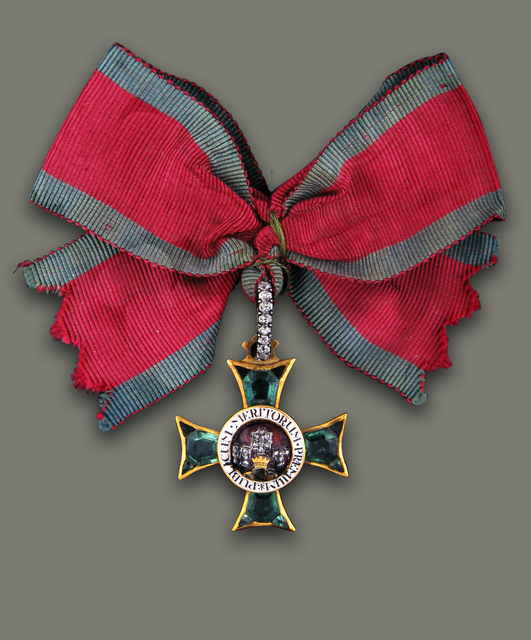 |
Maria Theresa’s unique jewel-set insignia of the Order of Saint Stephen, together with its original bow, in the collection of the Hungarian National Museum. Image: Hungarian National Museum
Both pieces were probably made between 1765 and 1770. No other surviving insignia of the Order from this period is known. As this particular insignia was designed for a woman, while thereafter only men could be awarded the Grand Cross of the Order, following Maria Theresa’s death no one else could – or was entitled to – wear it as an insignia of the Order. This may explain how the upper part of what could by then be used only as a piece of jewellery came to be separated from the Grand Cross and subsequently appeared among Zita’s coronation jewels.
Some of the articles published in November 2025 associated the brooch and hatpin displayed in Québec with Elisabeth of Wittelsbach, Queen of Hungary. This, however, is incorrect: the jewel does not appear in any known painting or photograph of Empress Elisabeth, not even in depictions of her Hungarian coronation. As a woman, she could not have been a member of the Order.
What is certain, however, is that the hatpin and brooch, together with the Grand Cross preserved in the collection of the Otto von Habsburg Foundation, form an ensemble of exceptional and unique significance in the history of Hungarian orders and decorations.
The Queen’s insignia can be seen in several paintings:
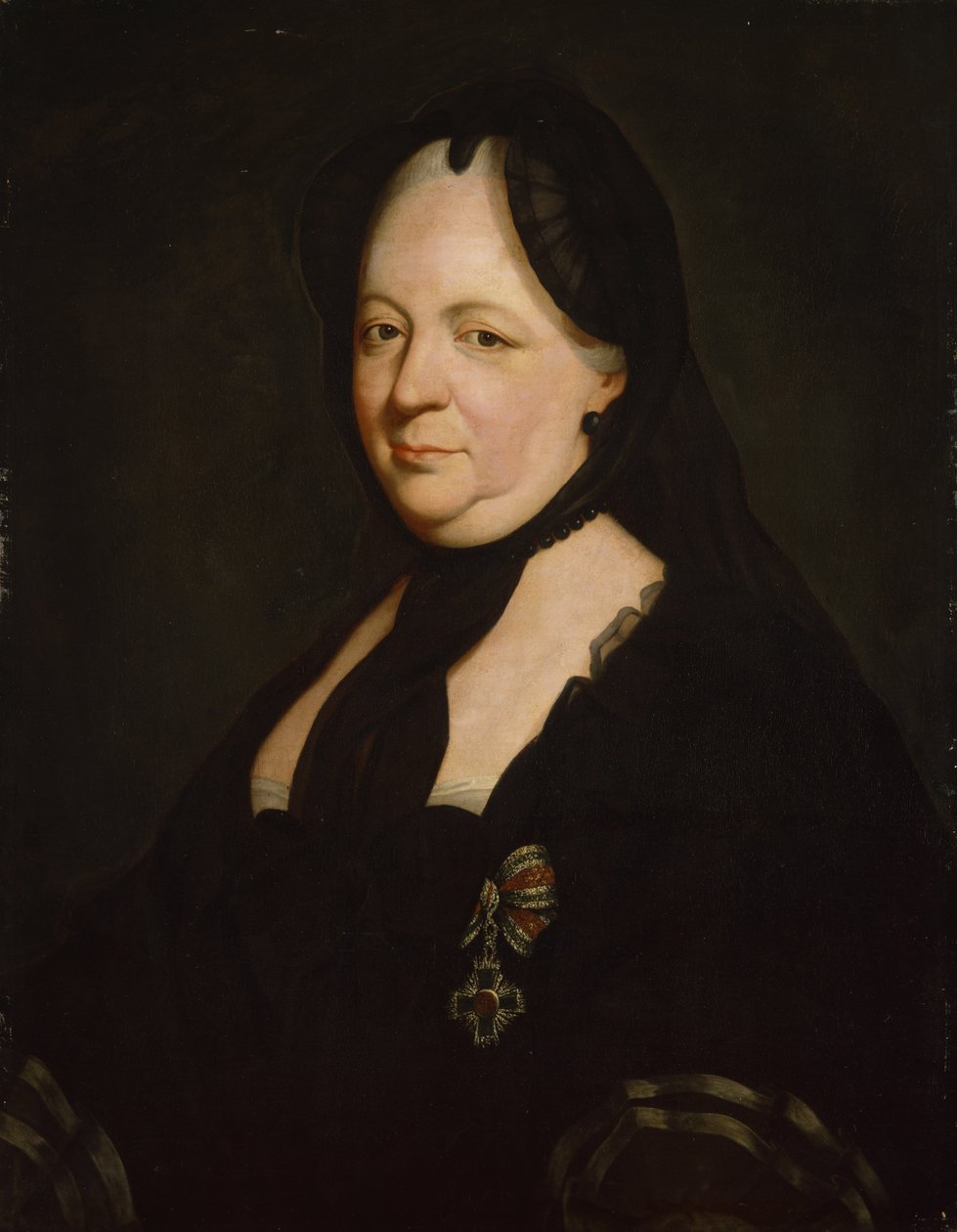 |
Joseph Ducreux: Maria Theresa in Mourning (1770)
Academy of Fine Arts Vienna
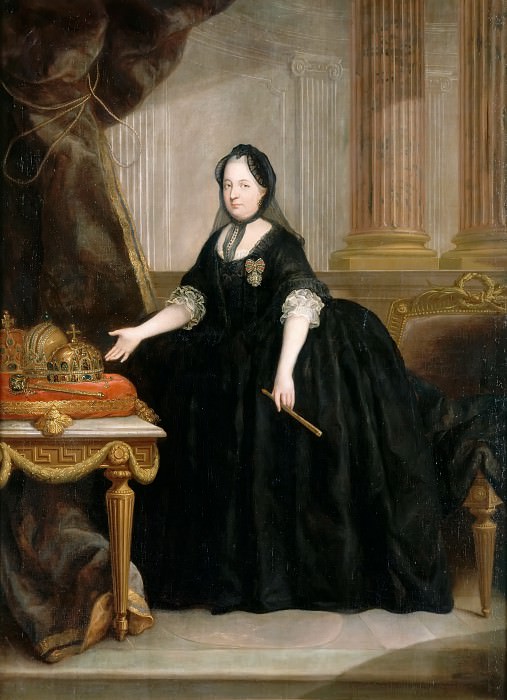 |
Anton von Maron: Maria Theresa as a Widow,
Presenting the Crowns of Bohemia and Hungary and the Imperial Crown (1772)
Palace of Versailles
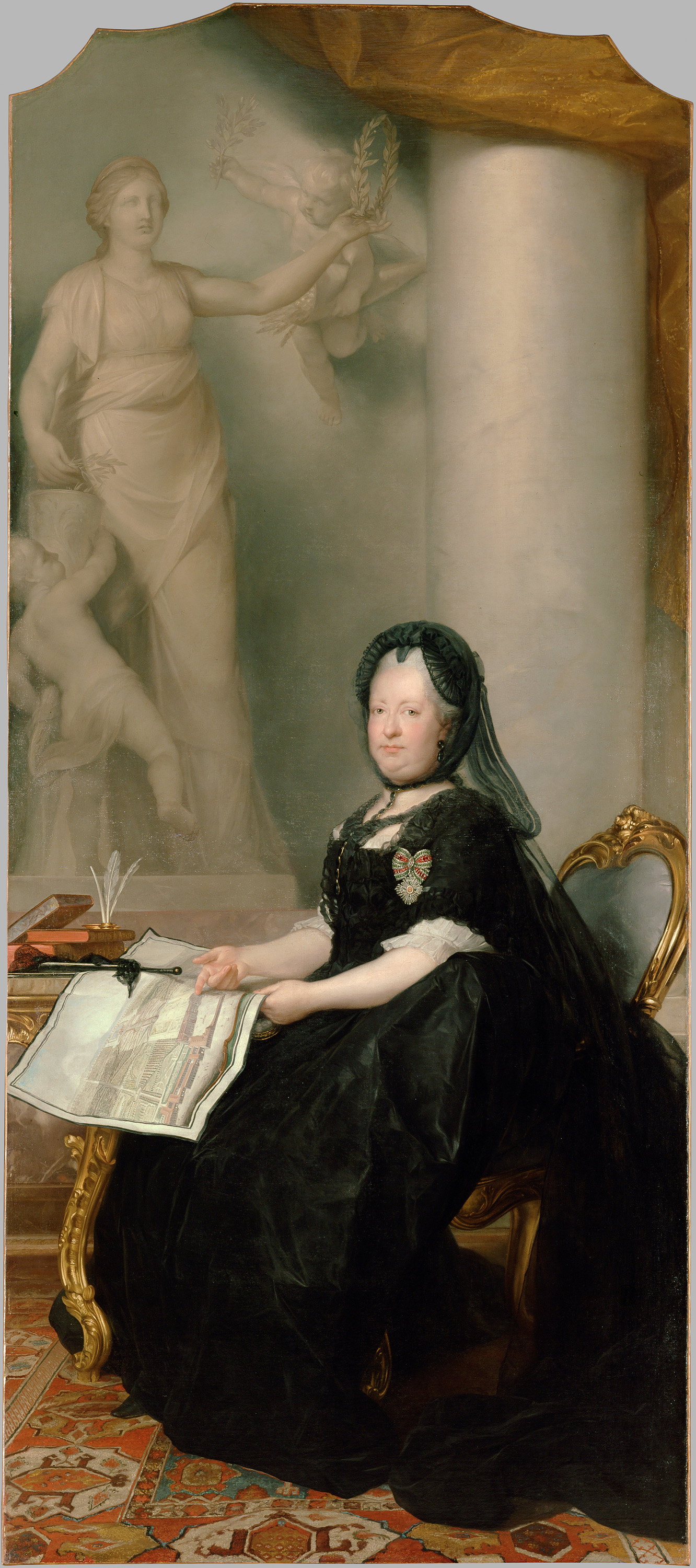 |
Anton von Maron: Empress Maria Theresa with the Statue of Peace (1773)
Kunsthistorisches Museum Vienna, Picture Gallery
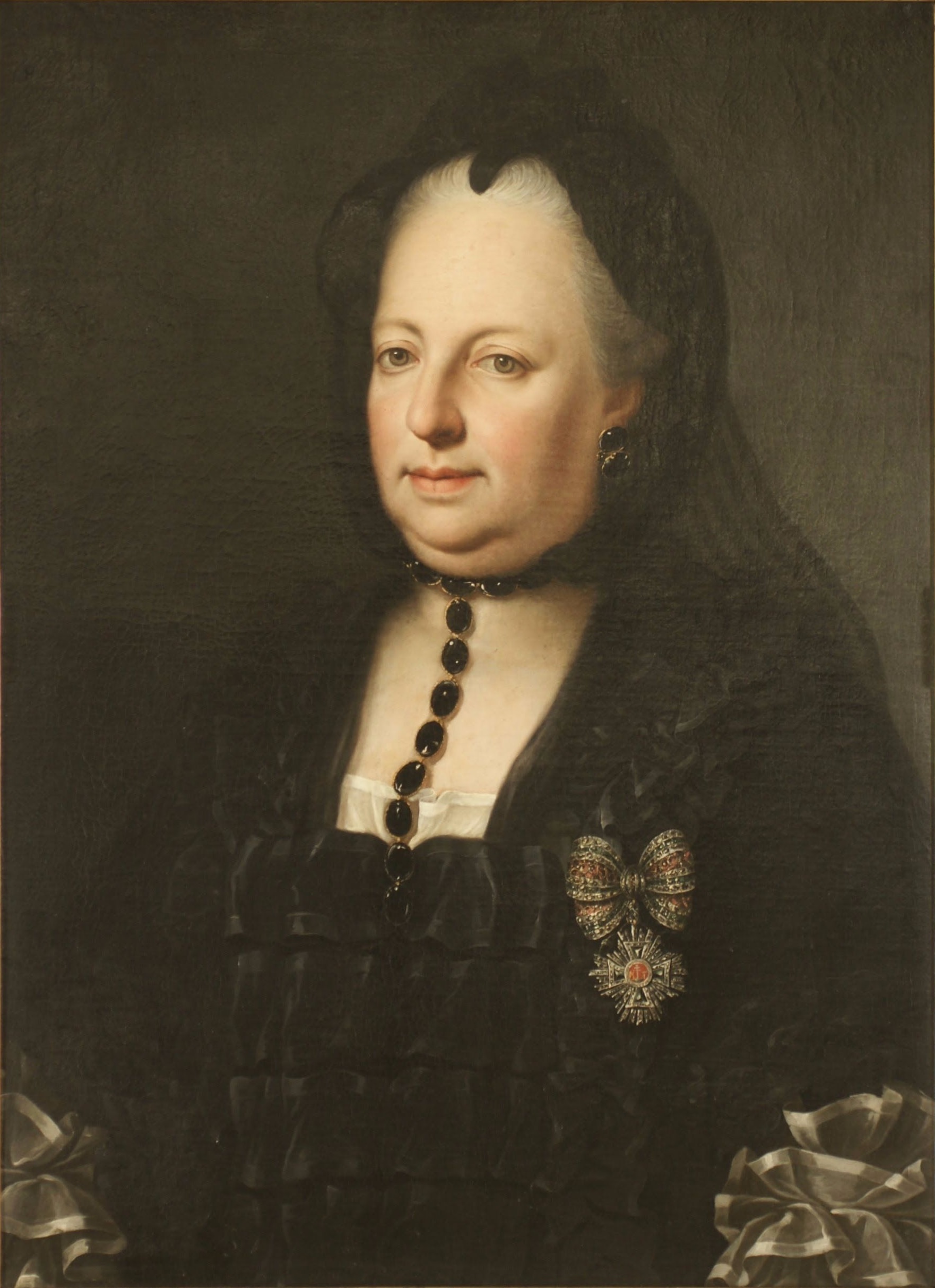 |
Anton von Maron: Maria Theresa (c. 1772)
Schönbrunn Palace
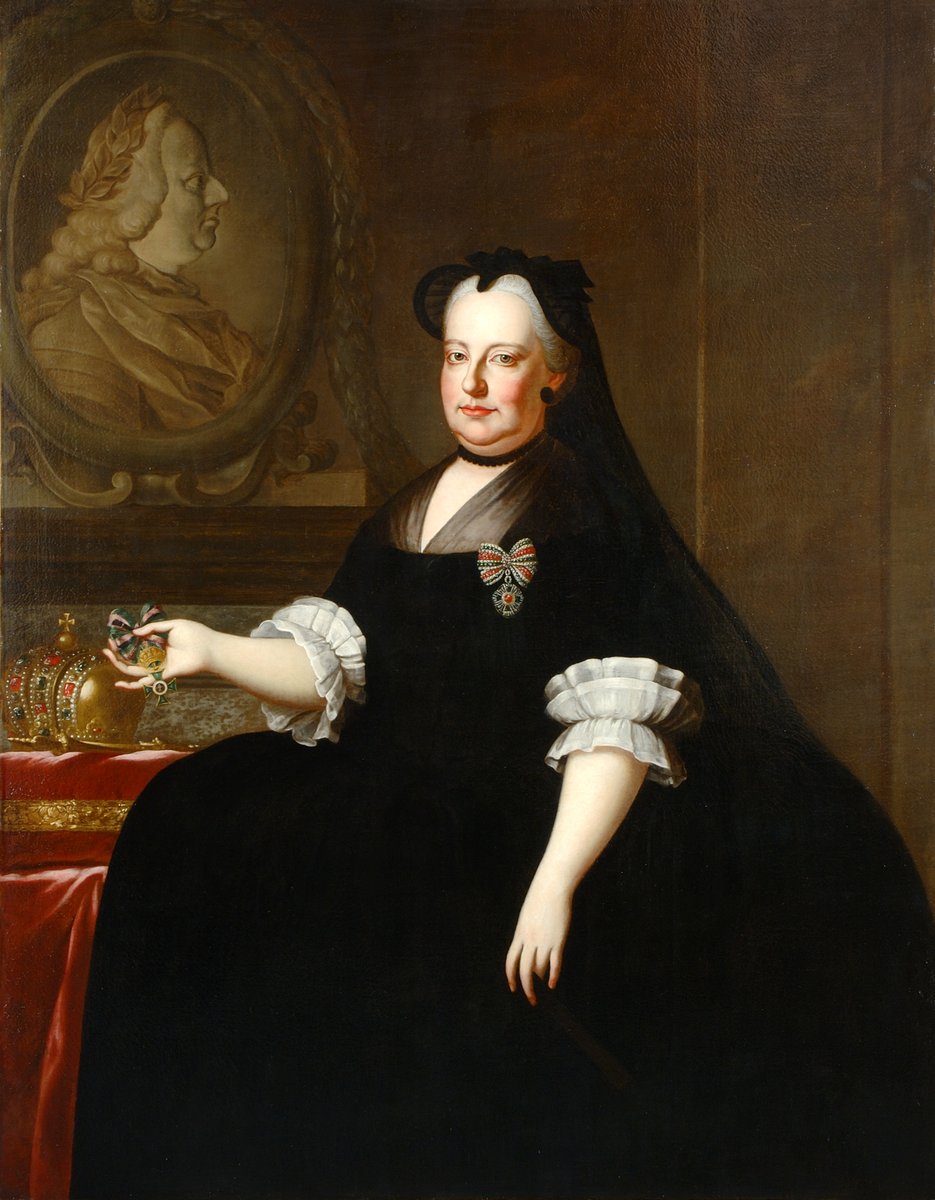 |
Johann Michael Millitz: Portrait of Maria Theresa as a Widow (c. 1770)
Museum of Fine Arts–Hungarian National Gallery, Budapest
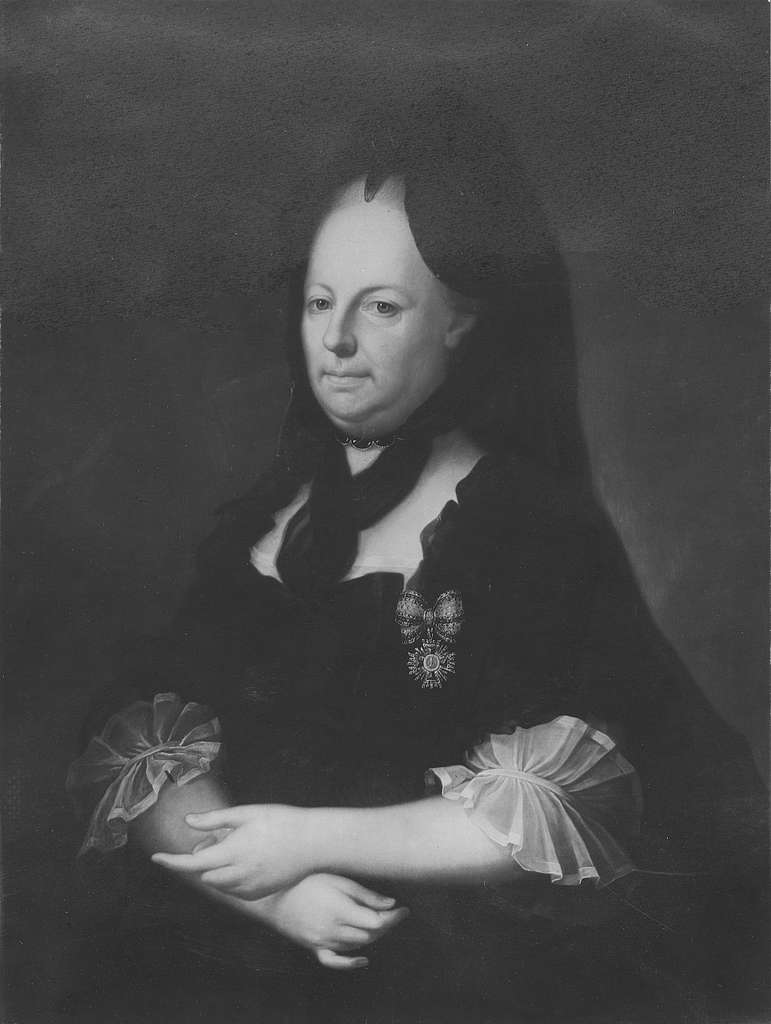 |
Joseph Hickel: Maria Theresa, Archduchess of Austria, Queen of Bohemia and Hungary (1773)
Nationalmuseum, Stockholm
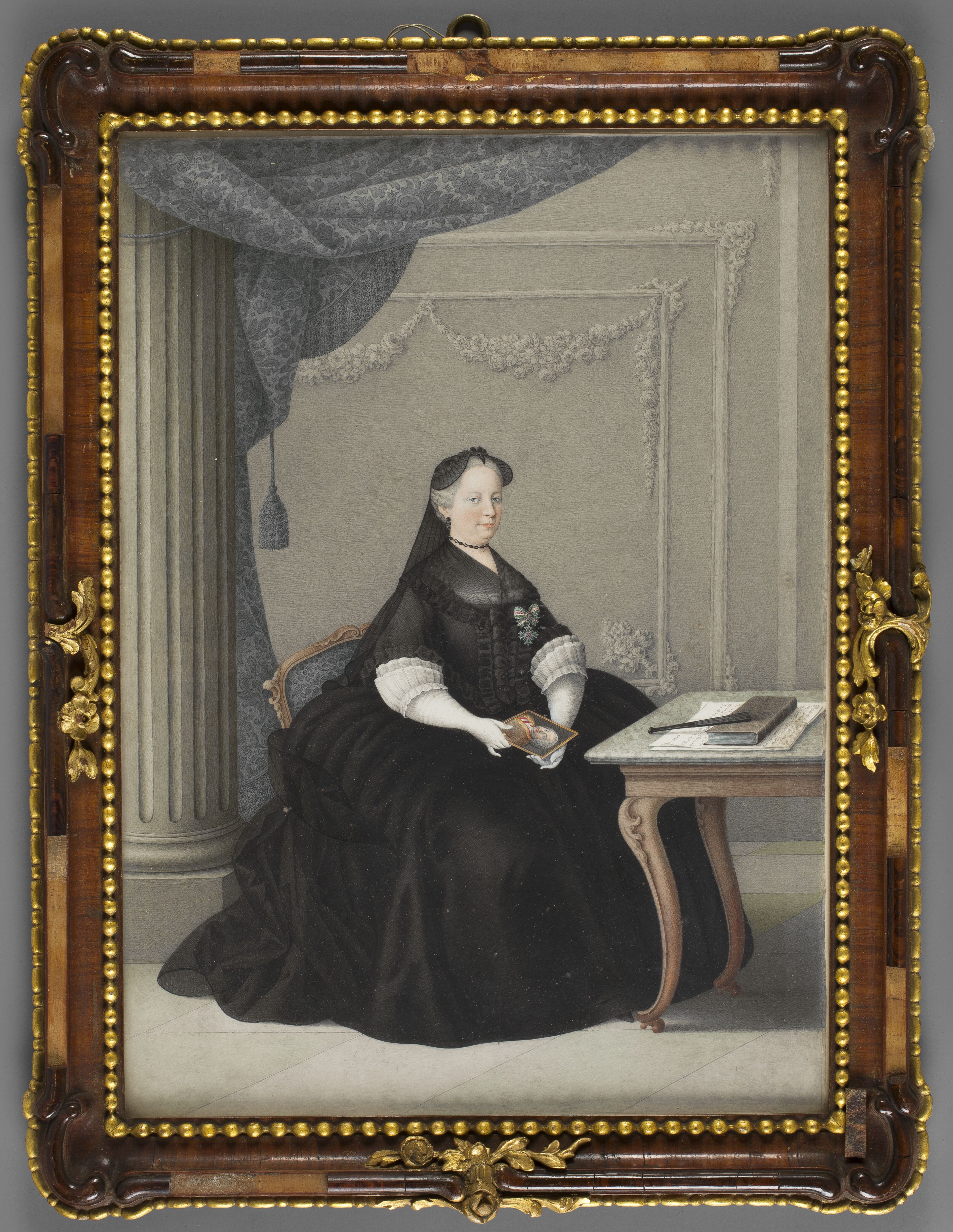 |
Anonymous: Empress Maria Theresa as a Widow
with a Miniature of Her Late Husband, Francis I (1765)
National Museum in Warsaw
Ádám Suslik
[1]A rendjelek és kitüntetések történelmünkben [Orders and Decorations in Hungarian History], ed. Ferenc Felszeghy et al. (Budapest, 1943), pp. 282–287; Ignácz Kisfaludy Kassics, Érdem Koszoruk vagy Értekezés A’ Felséges Austriai, Császári és Királyi uralkodó Házat illető Jeles Rendekrűl, megtiszteltetésekrűl és jutalmazásokrúl, toldalékkép pedig Europában most virágzó egyéb jeles Rendekrűl is (Vienna, 1840), p. 143.
[2] Attila Pandula, ‘A Magyar Királyi Szent István Rend (1764–1918, 1938–1945) és a Magyar Szent István Rend (2011–)’ [The Royal Hungarian Order of Saint Stephen (1764–1918, 1938–1945) and the Hungarian Order of Saint Stephen (2011–)], in Mátyás Gödölle and Lajos Pallos (eds), Szent István lovagjai. A legrangosabb magyar kitüntetés 250 éve [Knights of Saint Stephen: 250 Years of Hungary’s Highest Decoration] (Budapest: Hungarian National Museum, 2014), pp. 62–63.
[3] HOAL-I-10-1308-1948, Paris jewellery inventory; HOAL-I-10-Sz.n. 1-1939, Québec jewellery inventory; HOAL-I-10-Sz.n. 1-1925, Lekeitio jewellery inventory; HOAL-I-10-Sz.n. 1-1930, Lekeitio jewellery inventory.