In the summer of 2001, at a meeting of the International Pan-European Movement in Vienna, Otto von Habsburg delivered a short exposition entitled Neues in Bulgarien (New Developments in Bulgaria), in which he analysed the political, economic, and social situation of the Southeast European country. He examined in detail Bulgaria’s prospects for accession to the European Union and assessed the challenges of the post-socialist transition. He also expressed clear support for Simeon Sakskoburggotski – who had briefly reigned as Tsar Simeon II before the war – with whom he maintained a close relationship spanning nearly half a century.
Otto von Habsburg, who frequently visited Spain, met Simeon II on several occasions after the Second World War during the latter’s exile on the Iberian Peninsula. In the 1960s, Simeon joined the European Documentation and Information Centre (CEDI), established by our namesake together with his Spanish partners to promote European integration. Their shared values and political vision ensured that their relationship remained close in later decades. Their careers reveal notable parallels: both reinterpreted their monarchical heritage and assumed roles in public life. Otto served for two decades as a Member of the European Parliament, while Simeon II, after founding a political movement, was the Prime Minister of Bulgaria between 2001 and 2005 during the country’s democratic transition. Both were committed advocates of Euro-Atlantic cooperation and actively contributed to the Western integration of Central and Eastern Europe.
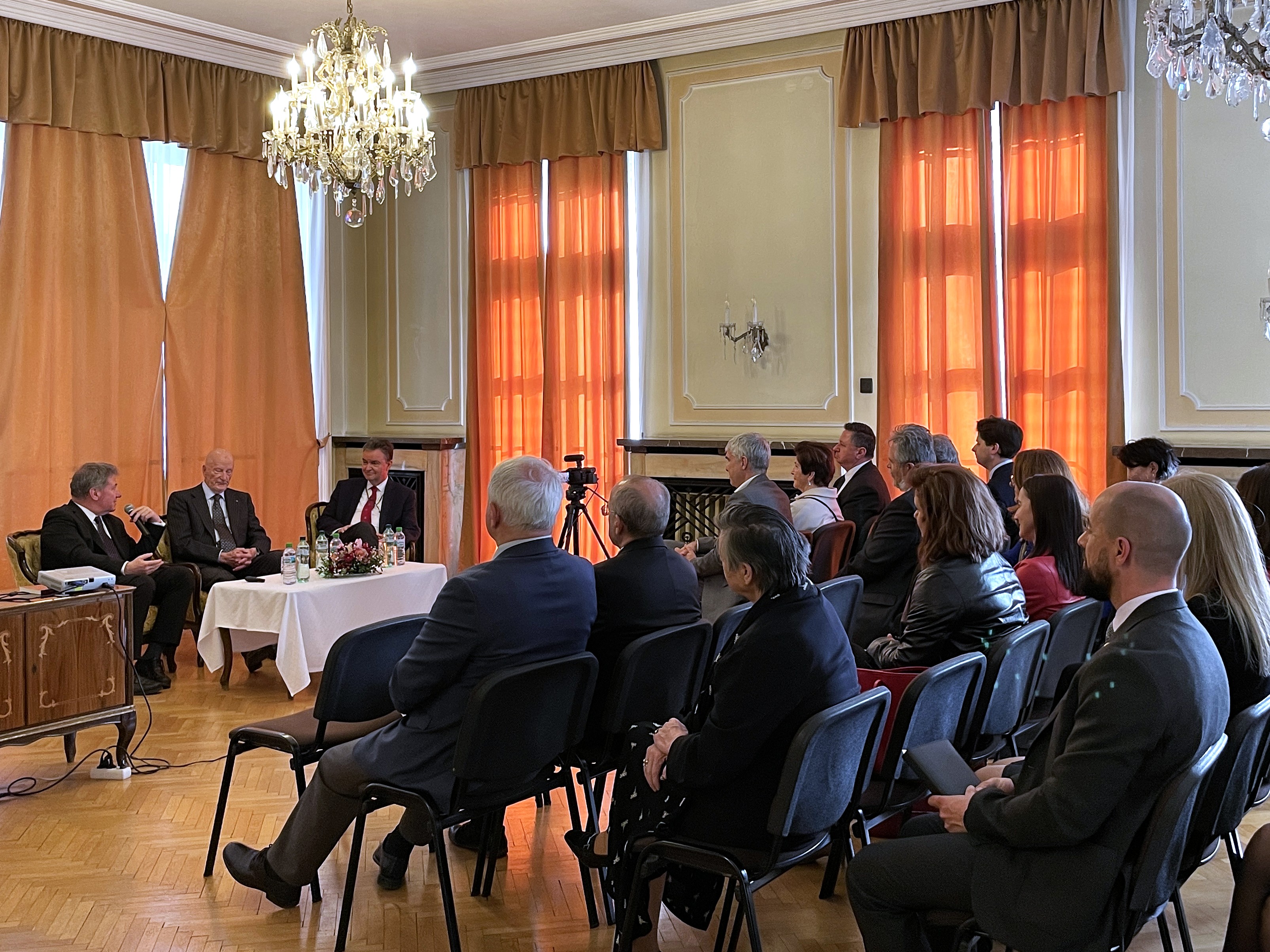
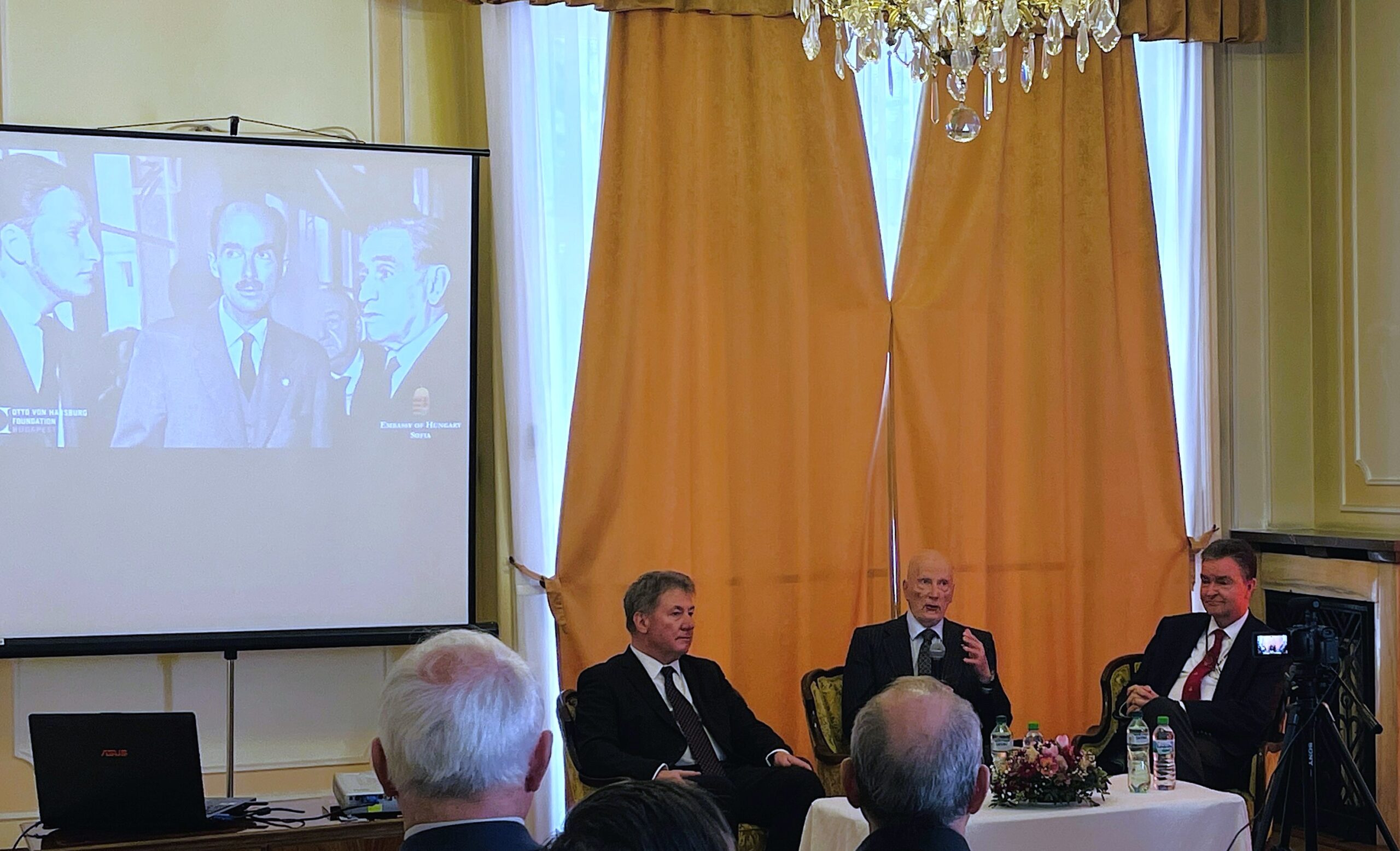
Against this background, the event explored how the sense of public responsibility derived from the imperative of noblesse oblige can be linked to modern political engagement and how this connection may serve to promote a value-based Europe and strengthen emerging democracies. The discussion took place in the Embassy Palace of Hungary, originally designed in Neo-Baroque style by the prominent interwar Hungarian architect Gyula Wälder, reflecting a certain nostalgia for the Austro-Hungarian Monarchy and its lost prestige. Following the welcome address by Miklós Boros, Hungary’s Ambassador to Bulgaria, Gergely Prőhle outlined the Foundation’s main activities and described the relationship between our namesake and his family and the Bulgarian royal house.
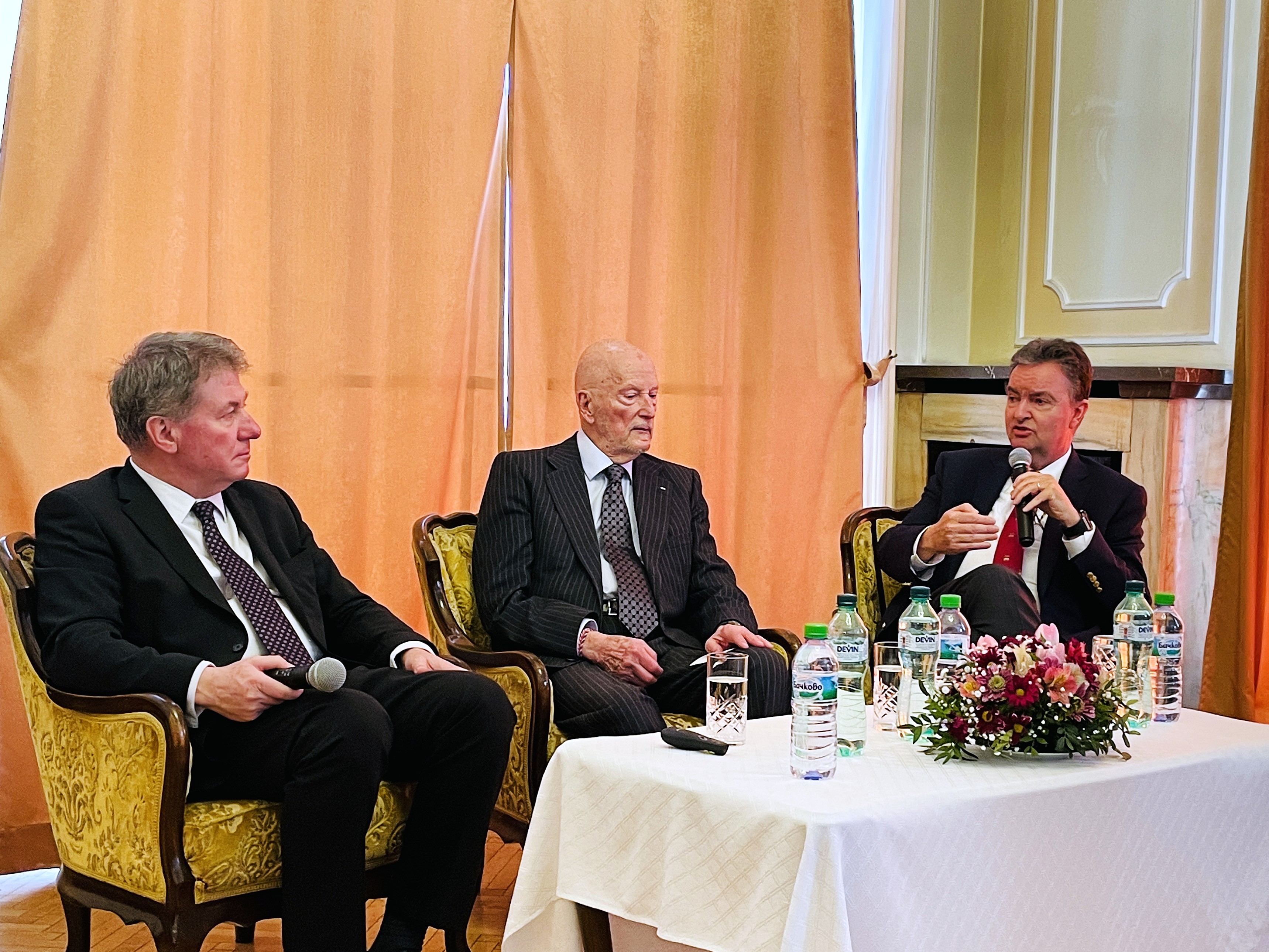
The roundtable discussion, moderated by Gergely Prőhle and featuring Simeon II and Georg von Habsburg, Hungary’s Ambassador to Madrid, first reviewed Christian democratic initiatives in Spain in the 1950s. In addition to CEDI, the speakers presented the broader networks in which both Simeon and Otto were actively involved. These organisations pursued the long-term objective of fostering European unity, based on the conviction that only a stable and cohesive Europe can provide genuine security and form the basis of collective prosperity and well-being.
For the former Tsar and the last Crown Prince of the Monarchy, participation in public life was far from self-evident. As Simeon II noted, day-to-day political activity often conflicted with the principles he had inherited from his family and upbringing, particularly the idea that a monarch should stand above everyday political struggles. Historical circumstances, however, called for a decision, prompting him to enter political life. Otto von Habsburg, for his part, saw in the European Parliament an opportunity to serve the cause of a united Europe and to support the countries of East-Central Europe. His commitment to the region is well illustrated by his reply to a congratulatory telegram sent by the Bulgarian politician upon his election to the European Parliament: “From now on, your Bulgaria – a free Bulgaria – has at least one vote in the European Parliament.”
The panel highlighted the role of upbringing in shaping their political outlook and sense of vocation. Both learned that responsibility extends beyond short-term, particular interests, and that the trust placed in them entails serious obligations and sustained effort. A key element of this approach was the conviction that value-based politics – a value-rational perspective – is not naïve idealism, but a conscious strategy that can be reconciled with realpolitik. This outlook was complemented by a strong sense of historical awareness, which for them did not imply nostalgia for the past but rather provided a perspective that enriches present-day political decision-making. The dynastic traditions upheld by their families, as well as the imperial idea (Reichsidee) frequently invoked by our namesake, anticipated the concept of European integration well before its institutional realisation.
The conversation ultimately shifted to contemporary Europe, examining to what extent current institutional frameworks and political practices reflect the ideas of the founding fathers. The principle of subsidiarity, strongly advocated by our namesake, was also addressed as a means of ensuring a decentralised and value-based functioning of integration. The speakers also addressed changes in political style, concluding that there is a particular need for consensus-building, open dialogue, and historical awareness – all of which were characteristic of Otto von Habsburg and remain indispensable for responsible political action oriented towards the common good.
Georg von Habsburg recalled Simeon II’s address delivered on the night of his electoral victory in June 2001, which reflected on the country’s actual condition and the shared challenges facing society. The discussion’s central message, as well as the strong sense of vocation and inherited responsibility characteristic of both figures, is aptly summarised by the final thought from Otto’s aforementioned speech: “Today, Simeon has undertaken one of the most difficult and demanding offices. Yet this was not merely a matter of choice: one in whom the majority of the people place their trust has no right to refuse the task entrusted to him.”
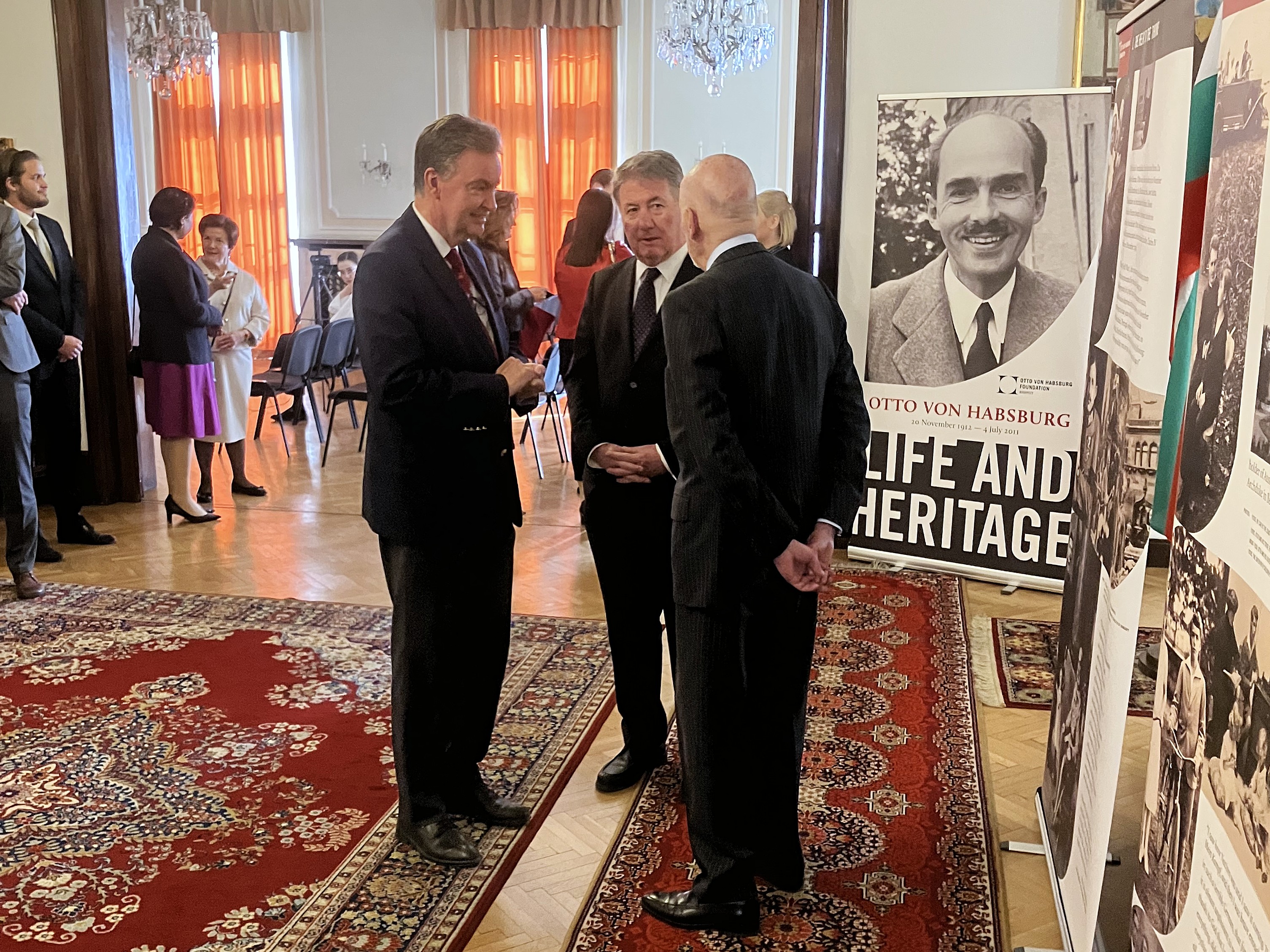
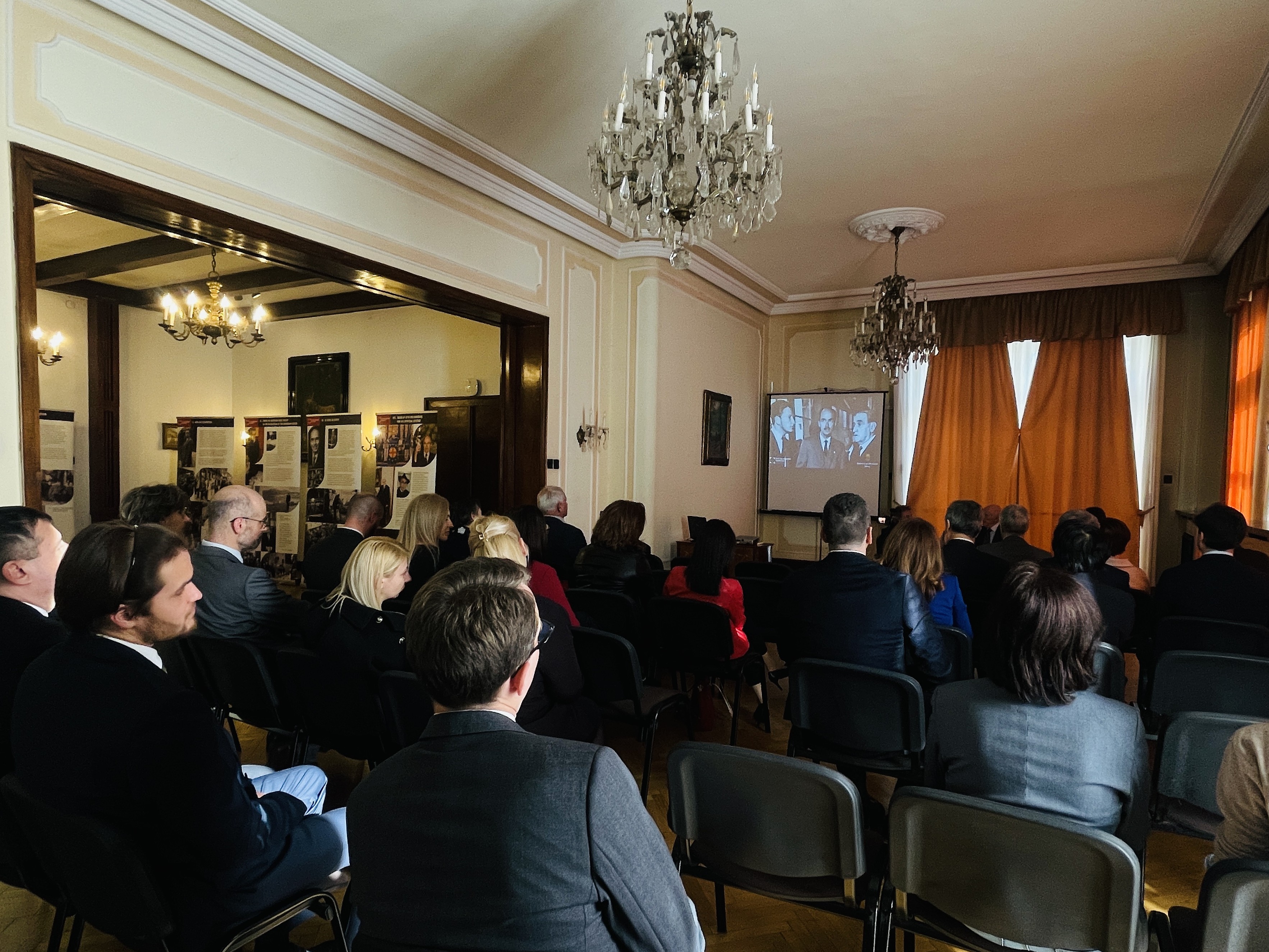
Following this, participants had the opportunity to view the exhibition presenting the life and heritage of Otto von Habsburg.