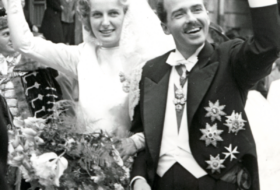
We tend to think of Otto von Habsburg primarily as a politician and public figure, yet this alone cannot fully explain his character. He never took a purely technocratic approach, but considered the broader social, historical, and cultural context. His varied interests were reflected in the ties he maintained with musicians, actors, writers, and other members of the artistic community. As the last crown prince of Austria-Hungary, he paid particular attention to those whose experiences or family memories preserved something of the former empire.
In an earlier article, we explored the Trapps’ friendship with Otto von Habsburg and his younger sister, Adelheid. For the celebrated singers, performing began as a financial necessity rather than a chosen vocation. Yet it was music that brought them together with the Habsburgs on a European tour in 1939, and their bond endured during the years of exile in America.
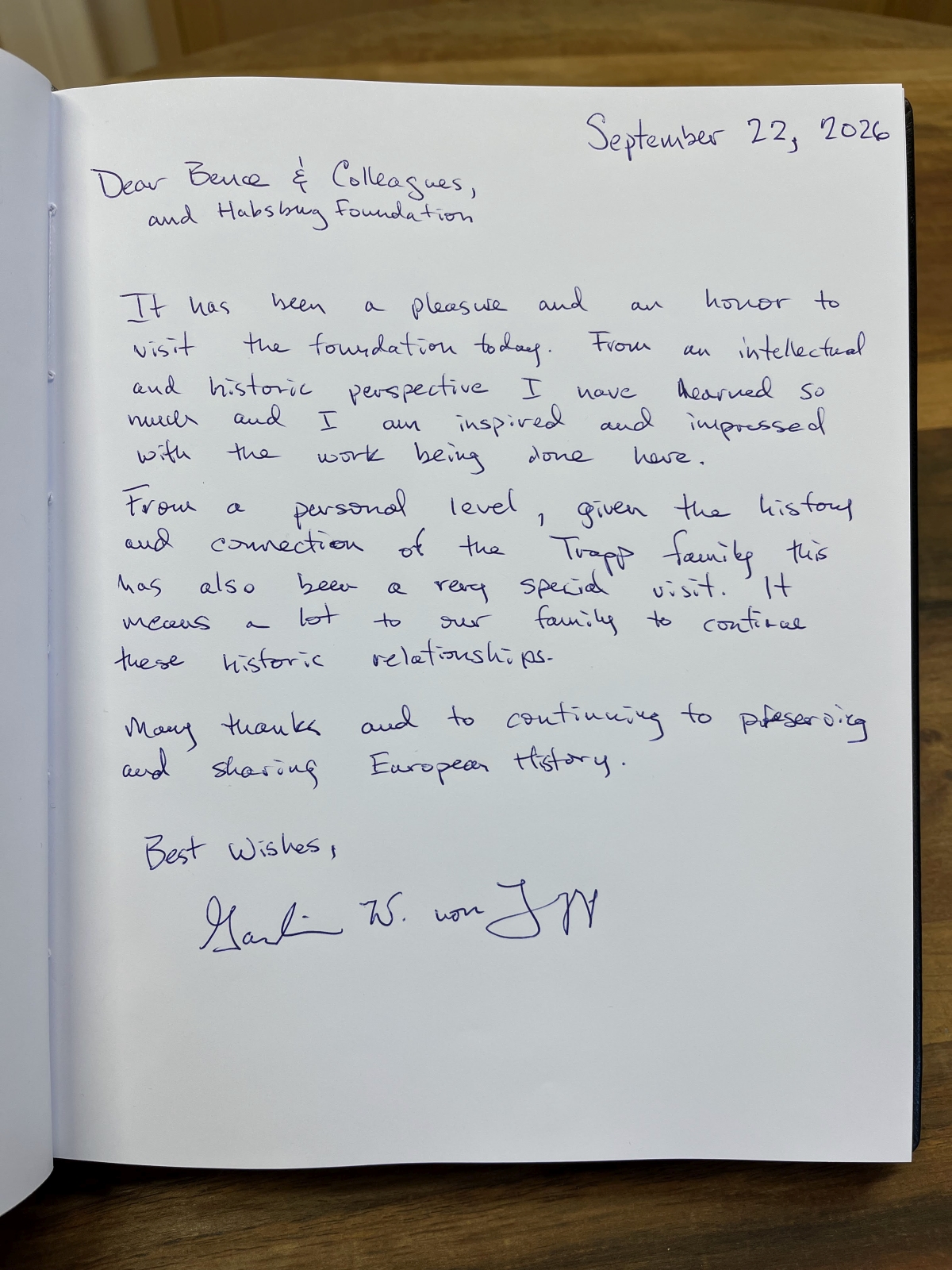
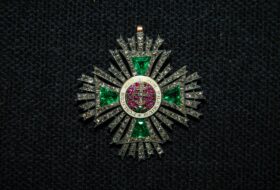
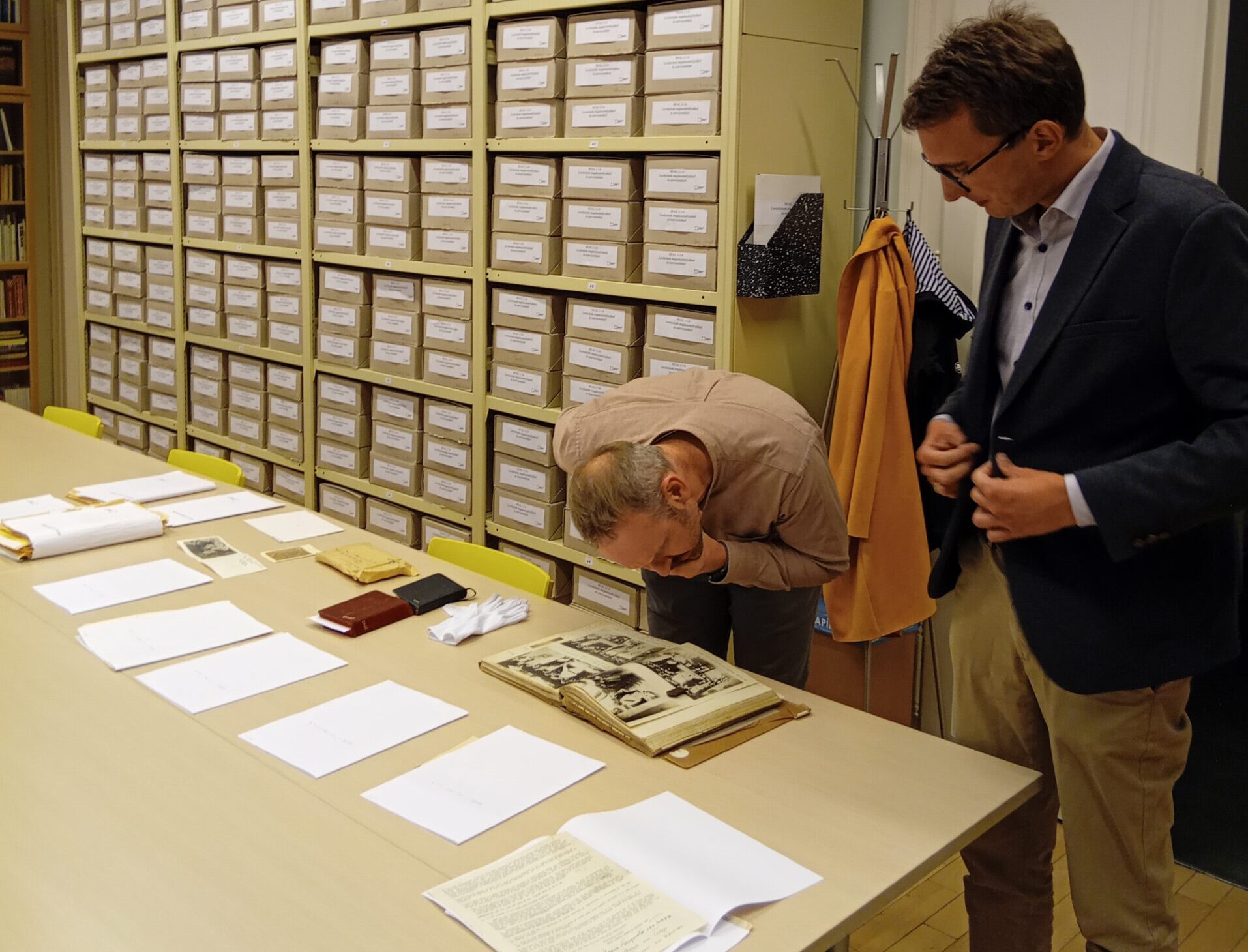
Eszter Barcs’s account had an unexpected sequel: it prompted Gardiner von Trapp, who has lived in Vienna for the past decade, to visit us. A neurobiologist by training and an accomplished cellist, he is now conducting systematic research into his family history. Alongside the documents on which the publication was based, we showed him other material in our collection relating to the von Trapps. This included sources on the Austro-Hungarian navy and the Grand Cross of the Military Order of Maria Theresa. Georg von Trapp, the patriarch whose portrayal in the musical departs considerably from reality, received the order’s Knight’s Cross in 1924 for his distinguished service as an officer in the imperial and royal fleet.
Our guest described how his forebears had found a new home in the early 1940s in rural Vermont, surrounded by mountains and forests that recalled the Heimat they had left behind. From the outset, the estate enjoyed a lively social life centred on music. A curious connection links these gatherings to a visitor we welcomed this spring: Professor Pieter Judson, whose mother had taken part in them in the latter half of the decade. We also discussed the possibility of an exhibition in Vermont that would set the two families’ stories against the background of their times.
Such encounters enrich the picture emerging from the records with personal accounts. They illuminate less familiar aspects of the everyday lives of Otto von Habsburg and his relatives, including the gestures that helped shape their experience but are so often overshadowed by public affairs.