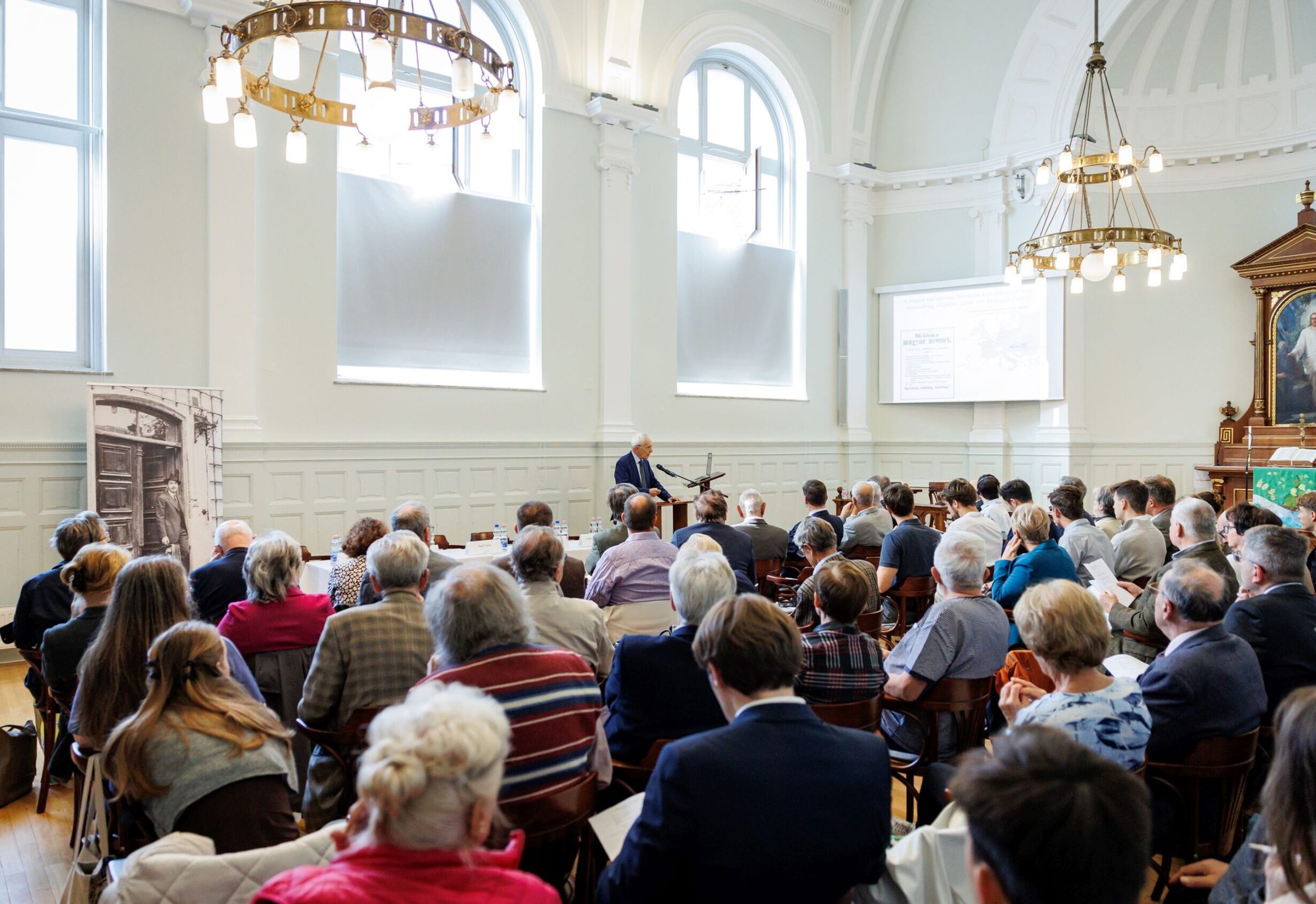
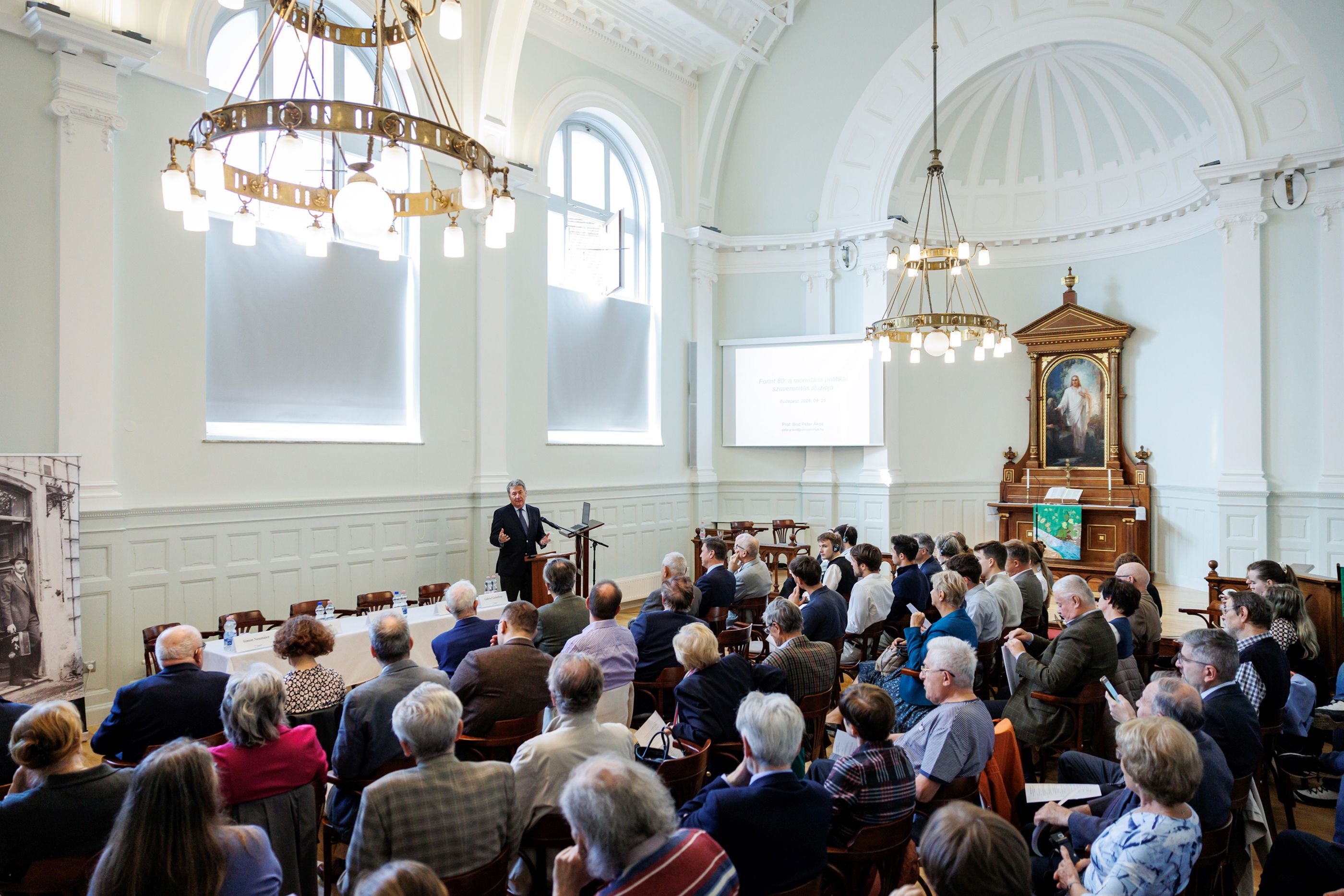
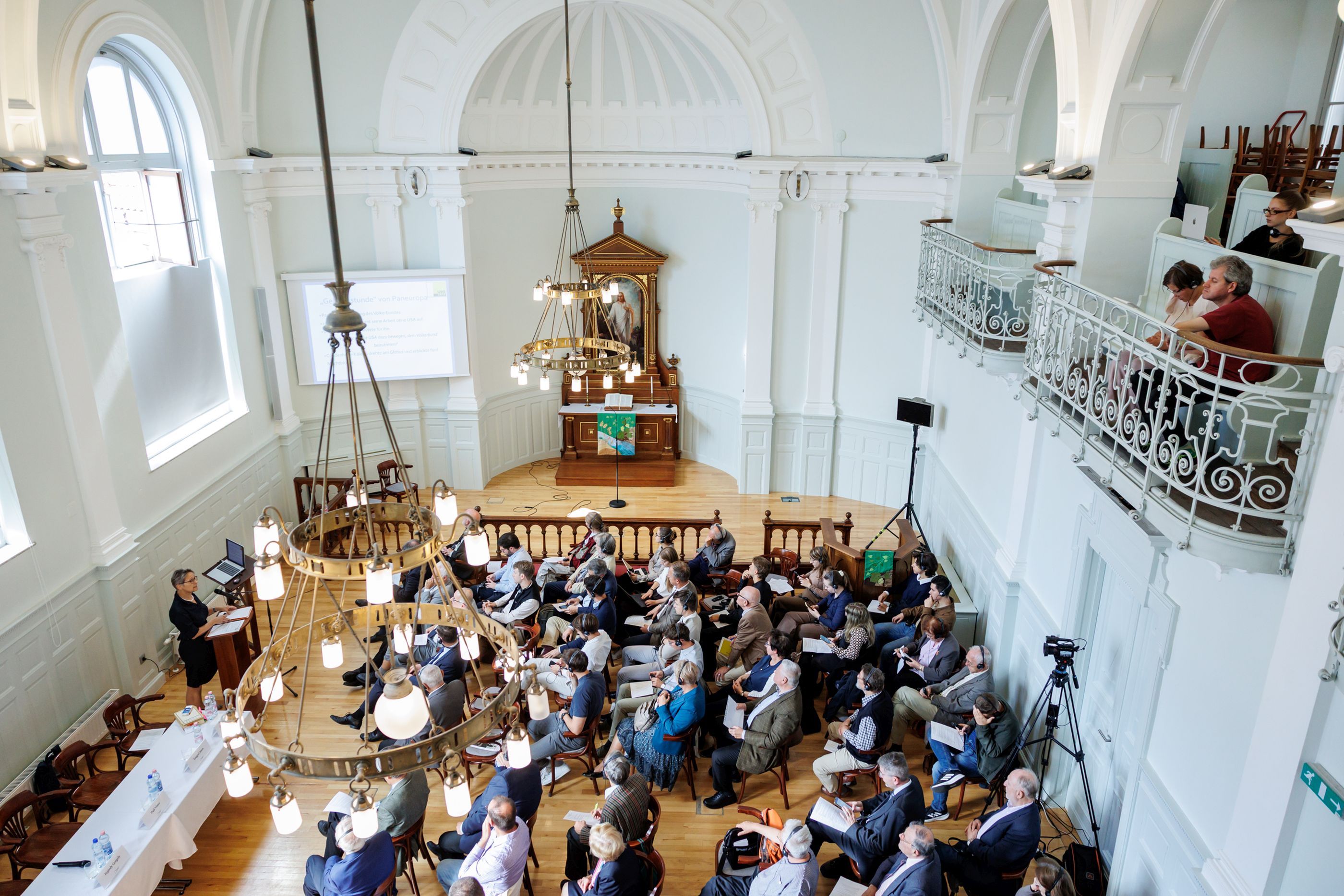
Gergely Prőhle welcomed our guests to the chapel of the Evangelical Lutheran Church in Hungary on Szentkirályi Street. He illustrated the link between the venue and the subject by referring to two prominent figures: Friedrich Naumann (1860–1919), a Lutheran pastor and liberal politician who wrote Mitteleuropa (1915), and Elemér Hantos, who had attended the Lutheran Lyceum in Sopron.
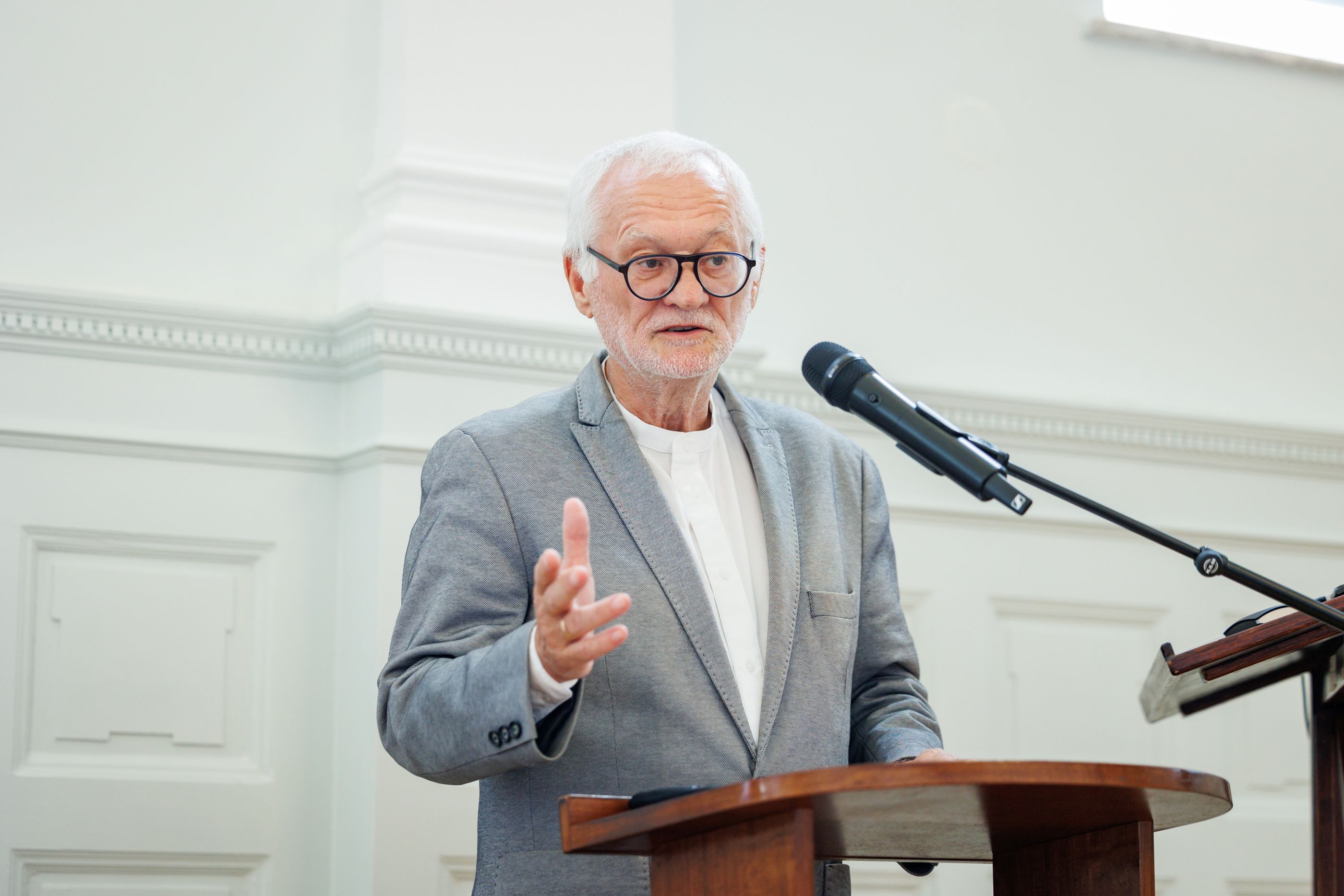
The opening lecture addressed present-day dilemmas. It was delivered by Péter Ákos Bod, Professor Emeritus at Corvinus University of Budapest, Hungary’s former Minister of Industry and Trade, and former Governor of the Hungarian National Bank. In “The Forint at 80: The Illusion of Sovereignty in Monetary Policy”, he surveyed the Hungarian economy over recent decades to mark the anniversary of the currency’s introduction in 1946. He also assessed the Tisza Party’s pledge to adopt the euro in 2030, following its victory in the parliamentary election.
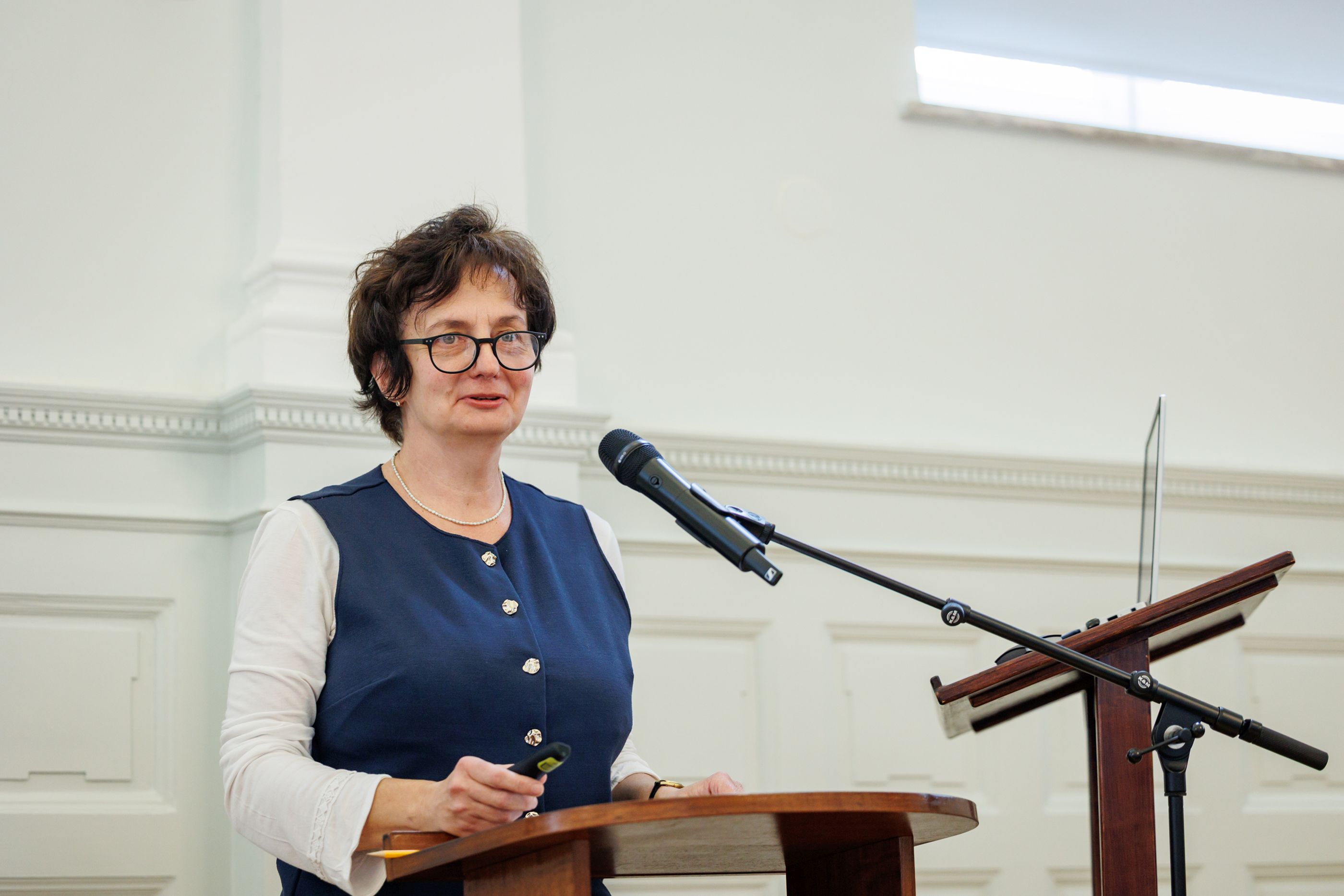
Catherine Horel provided the historical context. The Research Director at the French National Centre for Scientific Research (CNRS) and former President of the International Committee of Historical Sciences discussed France’s interwar plans for integration. Each treated Central Europe as a counterweight to German influence and took French patronage of the Danube Basin for granted. As she explained, Hantos’s activities attracted the attention of the foreign ministry in Paris. Suspicion among the successor states concerned, followed by the rising Third Reich’s policy towards Central Europe, made it impossible to implement his proposals.
Richard Coudenhove-Kalergi’s work and the early history of the Pan-European movement remain unjustly neglected chapters in the story of our continent’s unification, stressed Anita Ziegerhofer, Professor of Law at the University of Graz. The son of an Austrian father and a Japanese mother, the aristocrat drew lessons from the horrors of the First World War and sought to prevent another armed conflict by bringing Europe together. He envisaged a vast economic area capable of competing with the United States, Russia, and the Far East. He considered action against the Bolshevik threat equally urgent. In a book published in 1923, he set out a nine-point programme, specifying the practical steps to be taken.

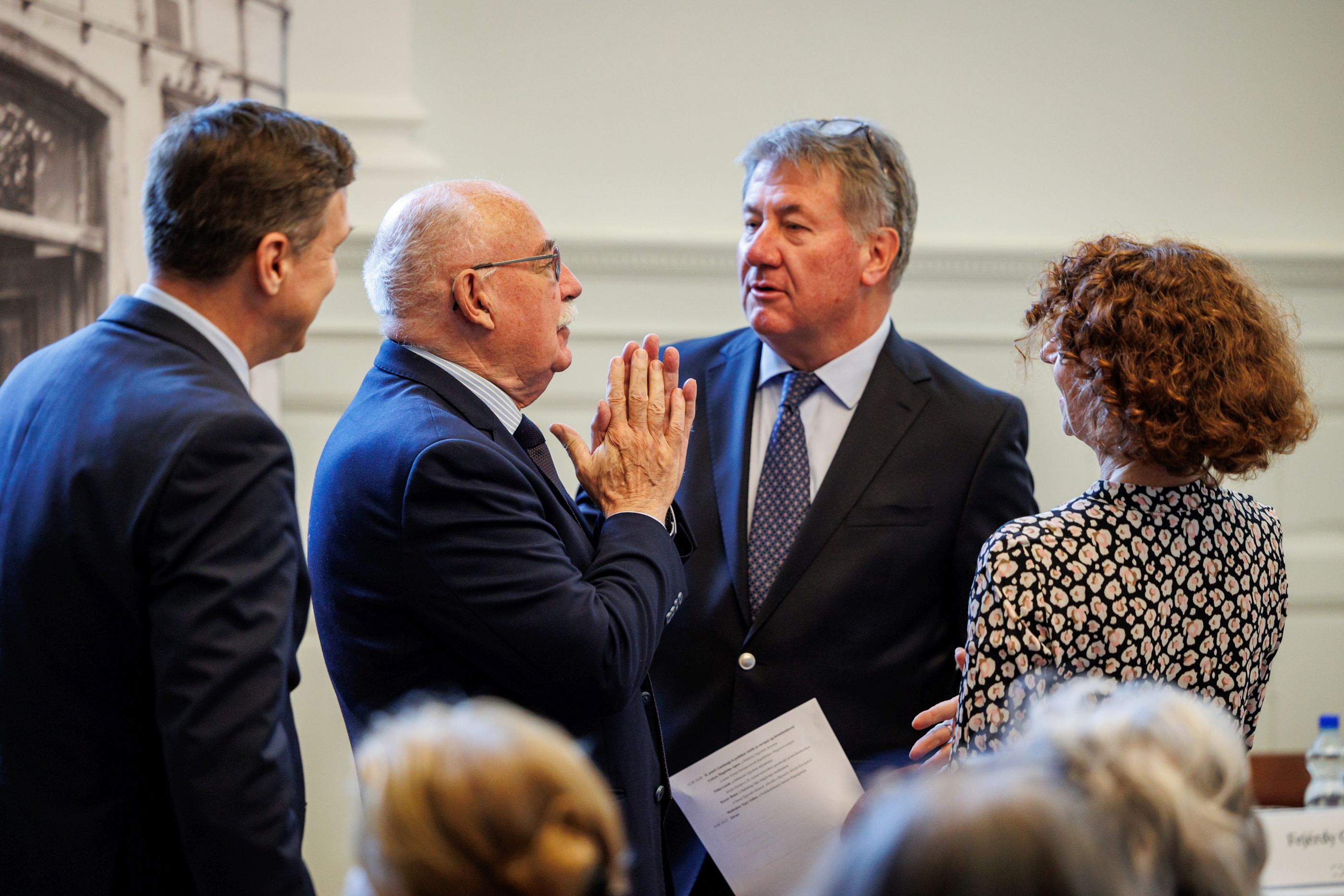
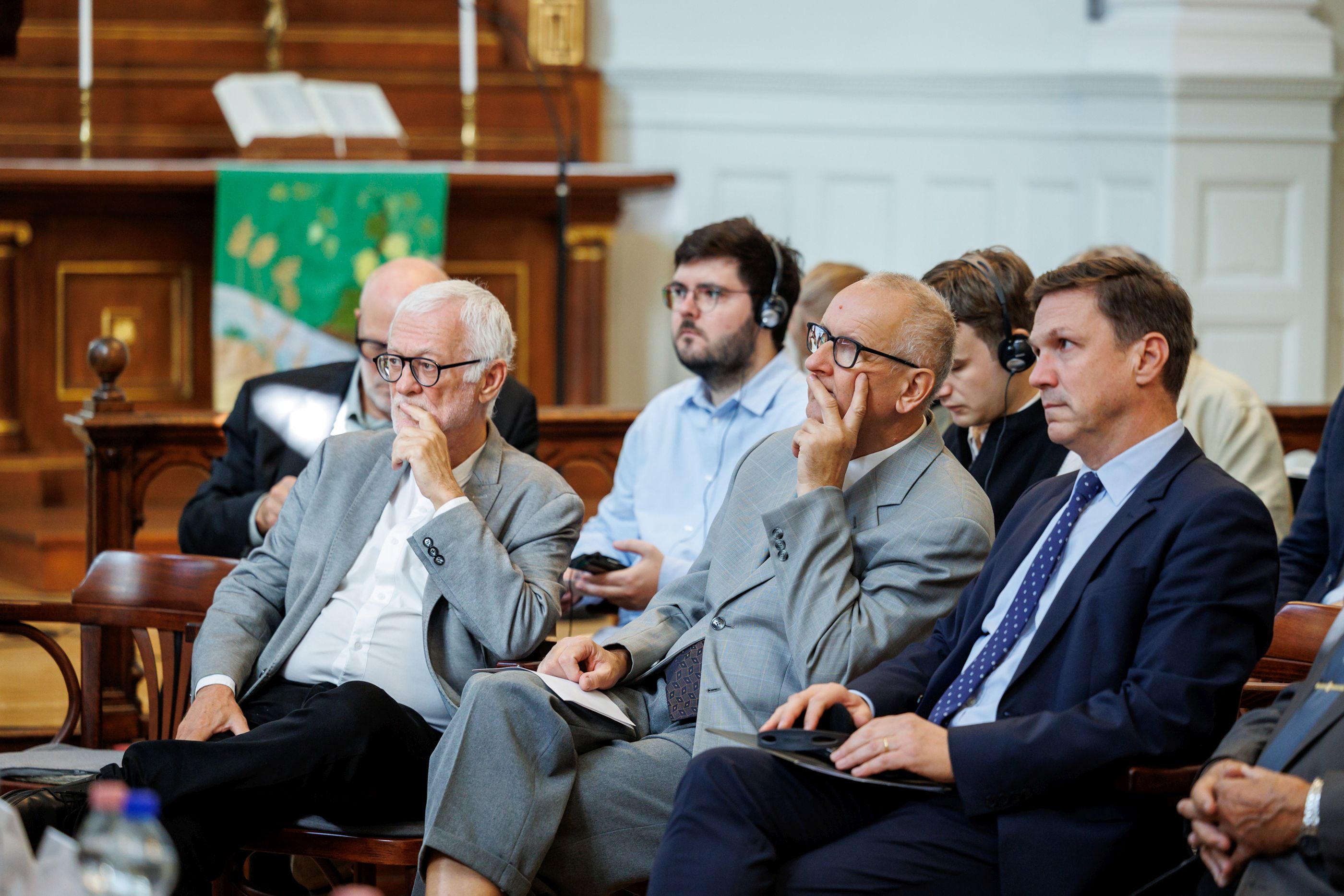


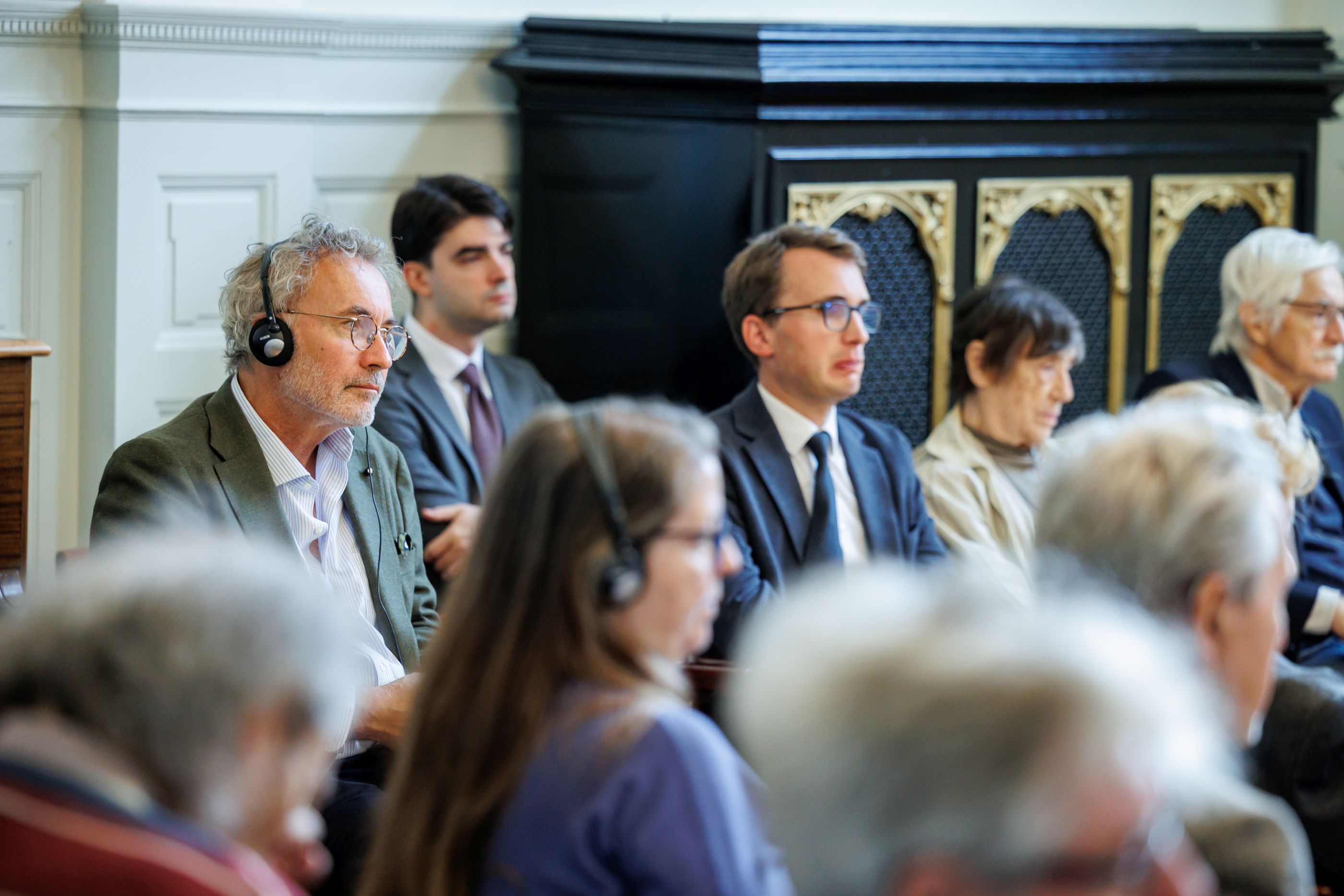
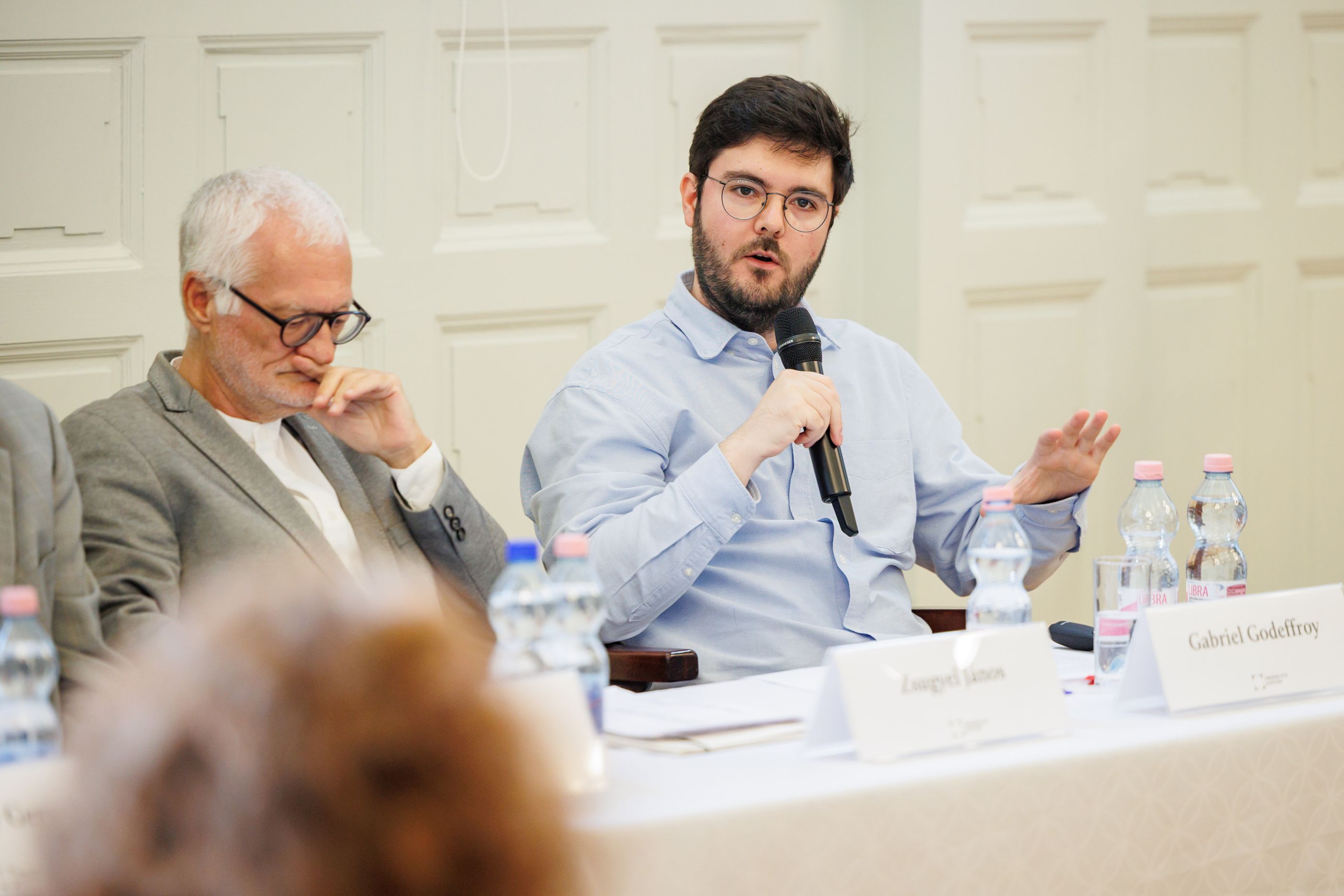
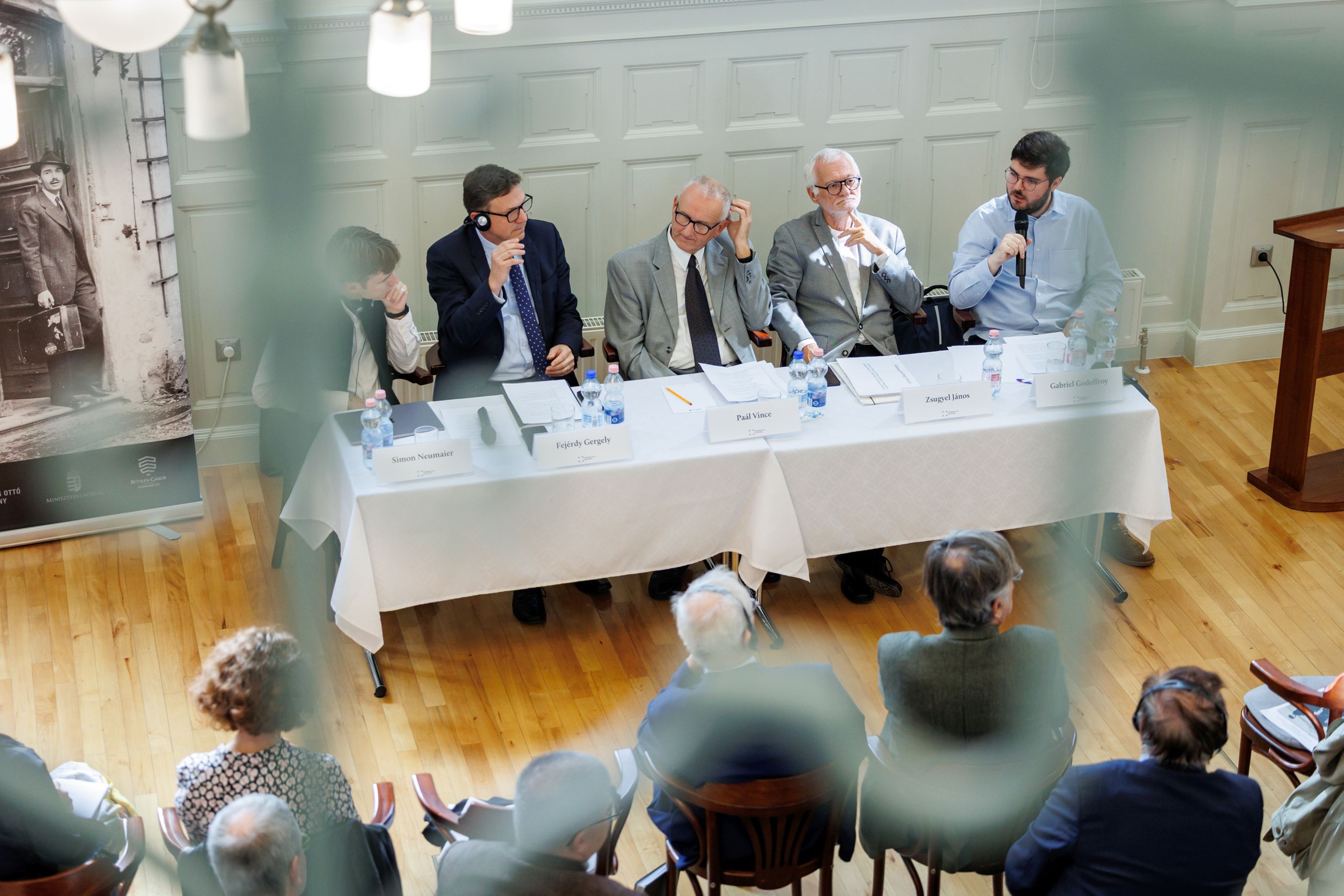
Gabriel Godeffroy, a research fellow at Collegium Carolinum, introduced Elemér Hantos (1880–1942), one of the central figures under discussion. Born in Budapest with the surname Hecht, Hantos attended secondary school in Sopron before studying law and political science at several renowned European universities and embarking on a career as a financial expert. In 1910, he won a parliamentary seat for István Tisza’s National Party of Work.
Hantos sought to remedy the economic disruption caused by the war in post-Habsburg Central Europe through regional and sectoral cooperation. This link with Pan-European ambitions led Godeffroy to regard him as a forerunner of European integration, although no direct influence on Jean Monnet can be established. Therefore, in the speaker’s view, we should look as far back as 1918 for the “year zero” of this process. Central Europe’s 20th-century trajectory can thus be understood through its own initiatives, rather than merely as an adjunct to the Western plans developed after 1945.
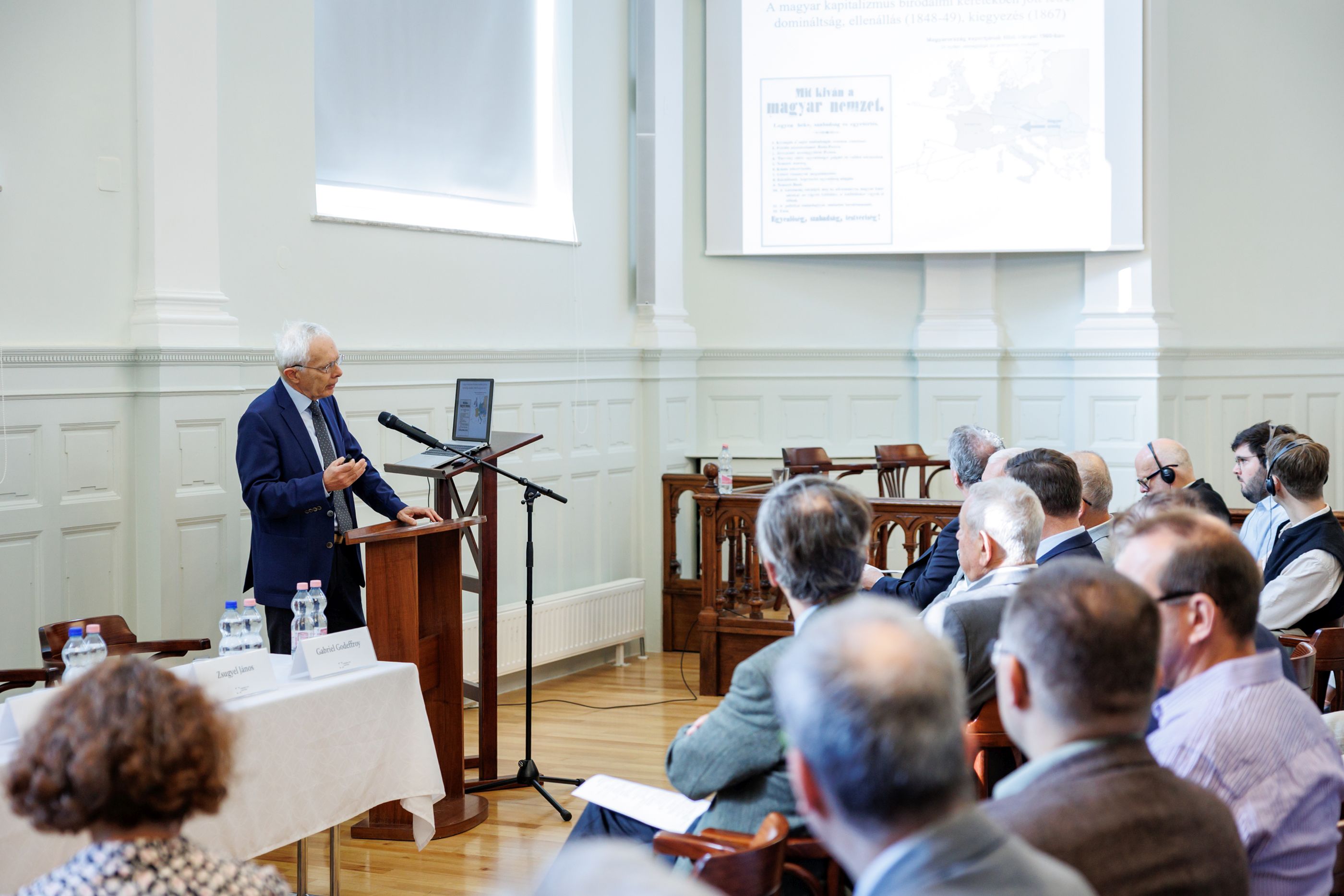
The obstacles Hantos faced during the war and in the decades following the peace settlement were examined by János Zsugyel, a retired associate professor at Budapest University of Economics and Business. Military successes encouraged a proliferation of schemes for large economic blocs among the Central Powers. The best known was Friedrich Naumann’s Mitteleuropa concept (1915), intended to harness the potential of an area stretching from the North Sea to the Persian Gulf. That same year, Hantos published A világháború gazdasági és pénzügyi hatásai [The Economic and Financial Effects of the World War]. Enthusiasm soon gave way to the stark reality of the peace treaties. With Hungary struggling to survive, he urged the establishment of workable relations with the successor states, while keeping the future of the Danube Basin as a whole in view. These questions informed his policy studies: A pénz problémája Közép-Európában [The Problem of Money in Central Europe] (1925), A jegybankok együttműködése [Cooperation between Central Banks] (1931), and A dunai államok valutarendezése [Currency Stabilisation in the Danubian States] (1936). Historical upheavals, however, swept aside his far-sighted vision.
Vince Paál, a historian and research fellow at the Institute for Media Studies of the National Media and Infocommunications Authority, compared the thinking of Gusztáv Gratz and Elemér Hantos. His analysis drew on Gratz’s articles in newspapers and specialist journals to trace the latter’s changing views on Central European cooperation between the two world wars.
The career of Pál Auer (1885–1978), less familiar to the wider public, was recalled by Gergely Fejérdy, our Foundation’s Deputy Scientific Director. A lawyer, Auer served on the Hungarian peace delegation and participated in the work of the newly established League of Nations. He joined the Hungarian section of the Pan-European Union at its inception and became its president in 1932. Like Hantos, he argued in his writings for closer economic and political ties between the countries of the region. Unequivocally opposed to Germany during the 1930s, he also exchanged ideas with Otto von Habsburg in 1939. After the Second World War, he continued to pursue these aims in exile as Vice-President of the European Movement’s Central and Eastern European Commission.
Magdolna Ágnes Gedeon, Associate Professor at the University of Miskolc, considered the Hungarian reception of German plans for Central Europe. Friedrich List’s criticism of customs barriers and his emphasis on the Danube’s commercial importance provided the background. An account by Géza Lengyel conveyed the lively debate provoked by Naumann’s book in Hungary: it compelled readers to take a position, with supporters and opponents alike engaging with its arguments.
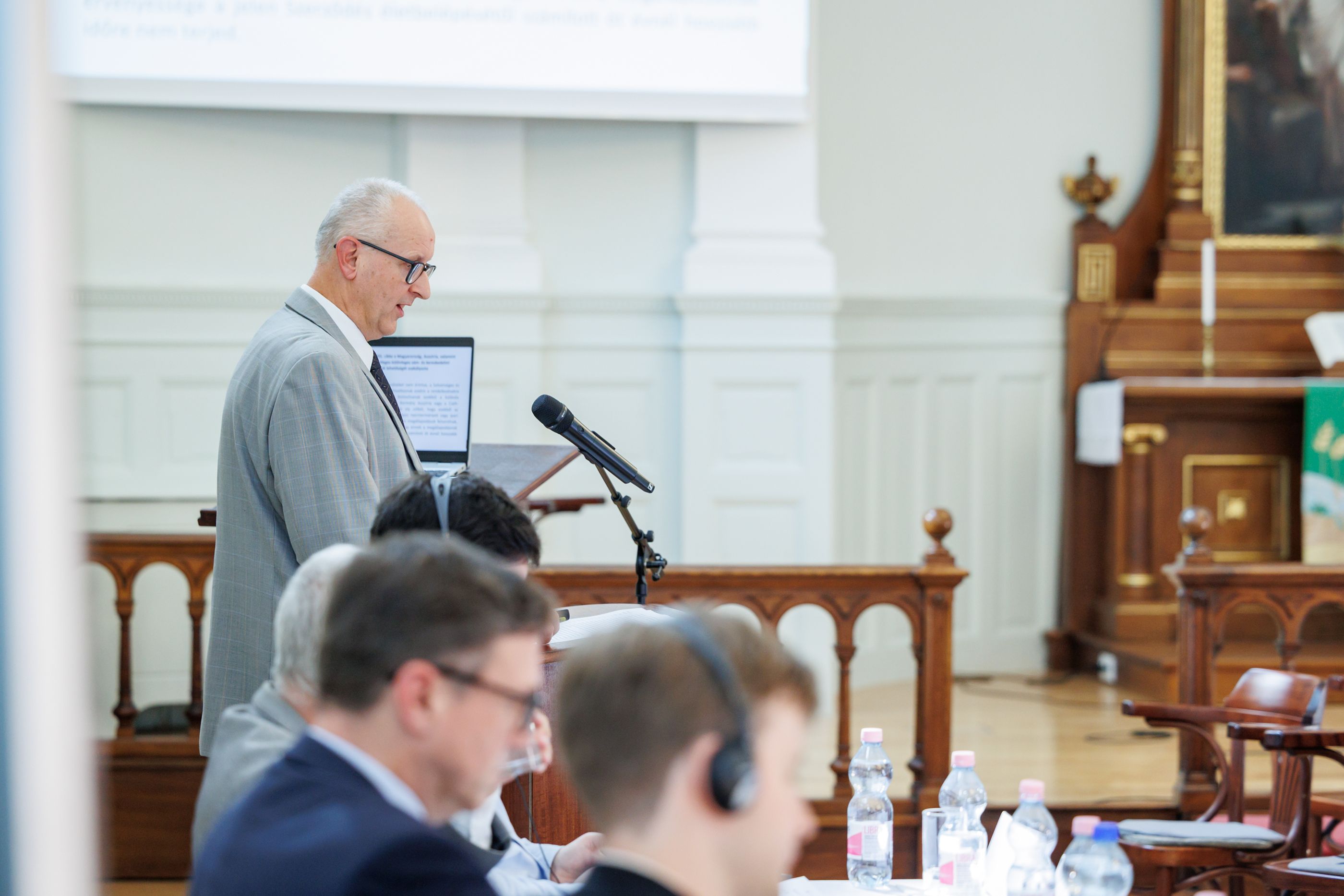


Resistance to closer cooperation in Hungarian foreign policy during the Horthy era was the focus of László Pallai’s contribution. The assistant professor at the University of Debrecen explained the priorities behind this position. For the country’s diplomats, the decisive question was whether these efforts would advance their two main objectives: peaceful territorial revision with the support of the great powers, reflecting the actual distribution of ethnic groups, and the protection of minorities guaranteed by international treaties. The former took precedence, so Hungary’s leaders generally responded with suspicion or outright rejection and saw no prospect of implementing such projects. Hantos’s contemporaries accordingly regarded his initiatives as premature and misguided; the theorists lacked sufficient political influence to put their ideas into effect.
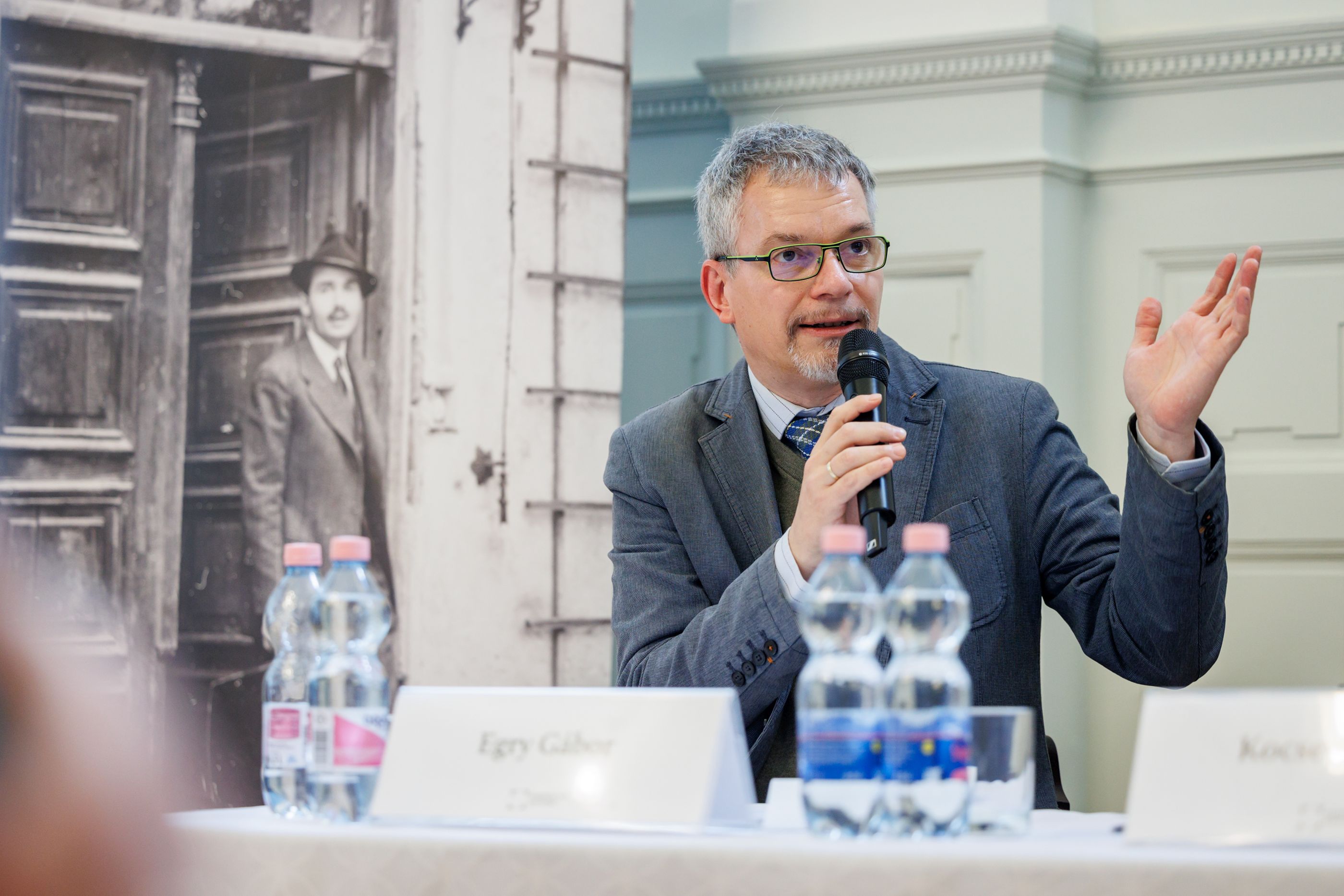
Otto von Habsburg’s 1942 vision of a federation was the subject of Bence Kocsev’s analysis. Our namesake’s study on the reorganisation of Central Europe revealed his commitment to classical liberalism, as well as the seldom-discussed depth and breadth of his intellectual work. Drawing on Ludwig von Mises’s Eastern Democratic Union, written the previous year, the former Crown Prince argued that nation states alone could not ensure lasting peace, security, political room for manoeuvre, and economic stability there. The challenge was to form a federation across the former territories of Austria-Hungary while preserving the autonomy and freedom of nations, regions, and communities. According to our colleague, Otto’s answer anticipated later European integration: it combined free trade, a reduction in the economic significance of borders, common institutions, and constitutional guarantees with national and regional self-determination.
The European University Institute (EUI), a close academic partner of our Foundation, was also represented at the conference. Researcher Simon Neumaier conveyed greetings from the Secretary General, who expressed the hope that Hungary would soon join the EUI. Based in Florence, it is a major centre for scholarship on the history of European integration. It houses the Historical Archives of the European Union, which hold both the records of EU institutions and the papers of individuals and movements involved in the process of unification.
From today’s perspective, these early endeavours are particularly instructive: Central Europe’s economic interdependence alone proved insufficient to reconcile conflicting national and great-power interests.